

Let businesses boldly shoulder the responsibilities of the nation.
Following Vinspeed's bold and sensational proposal, Truong Hai Group ( Thaco ) recently also proposed undertaking the North-South high-speed railway project. Without discussing the details of the proposal, the fact that two private enterprises have proposed investing in a key national project immediately after the Politburo issued Resolution 68 and the National Assembly passed Resolution 198 is considered a positive sign, showing that private enterprises are ready to shoulder major national responsibilities.
Economist Dr. Le Dang Doanh, former Director of the Central Institute for Economic Management Research (CIEM), assessed that the participation of many domestic enterprises in investing in large projects is a positive sign for the entire economy. This provides the Government with more good options for implementation. In particular, the North-South High-Speed Railway, a key national project with the largest capital investment ever, has seen enthusiastic participation from private enterprises, demonstrating their confidence in the policies of the Party and the State. At the same time, this also shows that domestic private enterprises have become stronger, more confident, and capable of anything.

The government is aggressively pursuing the North-South high-speed railway project with the goal of commencing construction in December 2026.
IMAGE: AI Graphics
According to Dr. Le Dang Doanh, given the enthusiastic response from businesses, along with the policies paving the way for the development of the private economy that the Party and Government have introduced, it is necessary to boldly entrust domestic businesses with the implementation of large projects such as the North-South High-Speed Railway. Granting more power and responsibility to private businesses to participate in strategic and important national projects will allow them to further enhance their capabilities and affirm the role of this business sector. "Domestic businesses proposing to invest in large projects is welcome. The government can establish a scientific council to appraise and evaluate the businesses' proposals and, from there, select units with sufficient potential in terms of technology, finance, and resource management… Entrusting large projects to private businesses not only shows that the government has changed its thinking but also takes concrete action. This is also a condition for the private economic sector to develop rapidly and sustainably in the future," said Dr. Le Dang Doanh.
The government could establish a scientific council to appraise and evaluate business proposals, thereby selecting entities with sufficient capabilities in terms of technology, finance, and resource management. Entrusting large-scale projects to private businesses not only demonstrates a shift in the government's mindset but also concrete action. This also creates conditions for the rapid and sustainable development of the private sector in the future.
Dr. Le Dang Doanh, former Director of the Central Institute for Economic Management Research.
Sharing the same view, Associate Professor Vo Dai Luoc, former Director of the Institute of World Economics and Politics, repeatedly used the phrase "excellent" when referring to the two domestic enterprises that proposed to participate in investing in the North-South High-Speed Railway. According to him, the proposal to take full responsibility for the largest project in history shows that Vietnamese enterprises are confident and capable of shouldering the nation's major responsibilities. This is not to mention that private enterprises will perform better than state-owned enterprises because they have their own interests and prestige. Since enterprises have boldly proposed, the Government should also boldly entrust important projects to the private sector. Supporting and assigning important projects to domestic enterprises shows that the state is acting correctly according to the new policies on private sector development that the Party and Government have put forth. At the same time, it opens up a new perspective, "rejuvenating" the country's governance in general, and also promotes the entrepreneurial and innovative spirit of the business community and entrepreneurs. This is the moment when the government is showing a radical shift in its words and actions.
"If we look at developed countries, we'll see that most activities are carried out by private enterprises, except for a few projects that the private sector cannot handle, in which case the state will undertake them. For the North-South High-Speed Railway , the investor must be a private enterprise. Even then, the state can confidently entrust the investor with the operation and exploitation. Of course, during the implementation and operation process, the state will have supervisory agencies to accompany and promote progress, ensuring that the investor implements the project according to the approved quality and technical standards," Associate Professor Vo Dai Luoc emphasized.
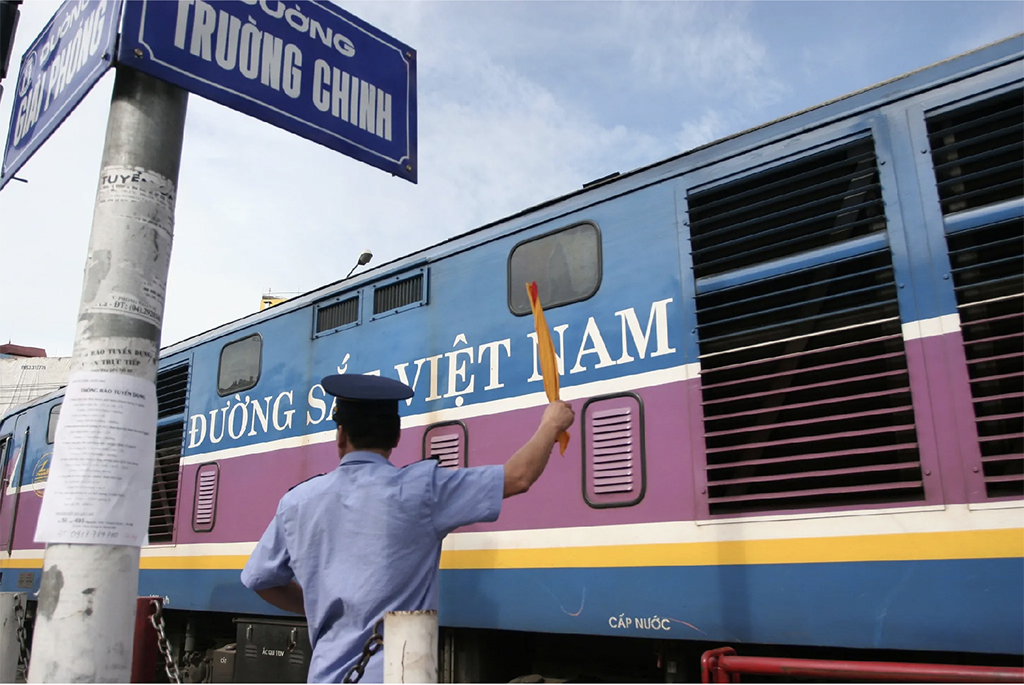
Building Vietnam's railway industry is a grand dream that requires the joint efforts of the Vietnamese business community.
PHOTO: NGOC THANG
Mastering technology is a crucial factor.
Right from the restart of the North-South High-Speed Railway project, the Government emphasized the need to master technology, increase the localization rate, and resolutely build a railway industry. This included the transfer of technology for construction, locomotive and carriage manufacturing, and especially for maintenance, repair, and upgrading. This is a crucial issue because maintenance, repair, and upgrading require significant costs; relying on foreign partners is extremely expensive. Only through localization and domestic enterprises being able to independently source supplies can investment and operating costs be reduced. Simultaneously, it will help ensure proactive maintenance and contribute to the development of the country's industries, especially heavy industry.
With such ambitious goals, Vinspeed's proposal was highly praised by experts because, in its plan, the company committed to cooperating with partners to receive technology transfer, and to organize personnel training to master the technology, thereby proactively operating, repairing, maintaining, and upgrading the railway infrastructure and transportation system, creating self-reliance in the development of the railway industry and technology for the country.
Associate Professor Vo Dai Luoc commented: Vietnam has large corporations, but not many have the capacity to implement key national projects like the North-South High-Speed Railway. According to Professor Luoc, currently only Vingroup has the potential to fulfill its commitments. This is because Vingroup has a strong ecosystem, the ability to attract resources and talent, and has demonstrated the capacity to complete large projects in a short time.
"They have sufficient credibility to mobilize capital from both domestic and international sources. This is a crucial factor, because completing a key national project requires significant funding. Furthermore, the head of the corporation is a prominent businessman, not only in Vietnam but also internationally. I think they will be more concerned with reputation and social impact than just the project's profit. They will certainly adhere to the committed schedule. Completing the project on time is extremely important and will bring many benefits to the entire economy," Mr. Luoc emphasized.
Looking at how VinFast broke the stereotype about the limitations of Vietnam's industrial sector, it's clear that Vinspeed's strategy of localizing the railway industry is entirely feasible. At the time Vingroup decided to make cars, the domestic automotive industry had been underway for nearly three decades but remained limited to importing and assembling with low localization rates and rudimentary supporting industries. However, just over seven years after officially starting construction of its car factory, VinFast announced it had achieved a localization rate of over 60%, a feat that economic experts called a miracle.
To achieve this, VinFast first collaborates with existing partners in Vietnam, leveraging the network of supporting businesses to optimize domestic supply chains and reduce reliance on imports. With domestic partners, VinFast partners with Vietnamese businesses experienced in manufacturing parts and components or in supporting fields such as logistics, assembly, and processing… to reduce transportation costs, increase supply speed, and promote the development of domestic businesses. Simultaneously, the company collaborates with foreign-invested enterprises (FDI) in Vietnam operating in the supporting industries or component manufacturing sectors, enhancing access to advanced technology and modern management skills.
VinFast also works with companies specializing in the design and production of complex components requiring world-leading expertise and technology to collaborate on technology transfer to VinFast's partner companies in Vietnam. Simultaneously, it develops internal capabilities by training domestic engineers and workers to operate the technology efficiently and creatively. This activity helps increase proactive control in the supply chain, reduce import costs, and gradually build a sustainable production ecosystem.
Most recently, VinFast officially issued a call for collaboration and sharing of development opportunities with domestic businesses – strategic partners in the journey to elevate the domestic supply chain, with the goal of gradually making Vietnam an important automotive manufacturing and supporting industry center in the region. The Vietnamese car brand is expected to share its roadmap to increase the localization rate to 80% by 2026, as well as its plan to expand its supplier network to meet the growing demand for up to 1 million vehicles per year for both the domestic and export markets.
Associate Professor Tran Dinh Thien, former Director of the Vietnam Institute of Economics, assessed this as a very smart "approach." Instead of investing in the traditional way, VinFast invested financially to develop the industry. "You spend money to buy all the components that make up a car, then localize it step by step, stage by stage. This can be understood as buying intellectual property rights, acquiring intellectual assets from around the world to bring to Vietnam for production. In the early years, anything that cannot be produced domestically is imported. This approach helps solve all the most important stages, from production of accompanying parts, and accelerates the process extremely quickly. As a result, the path to establishing Vietnam's automotive industry is shortened and more feasible," Mr. Thien explained. He expressed confidence that VinFast is very close to achieving its goal of raising the localization rate to 80% and that Vinspeed will continue VinFast's success, building a strong railway industry for Vietnam.
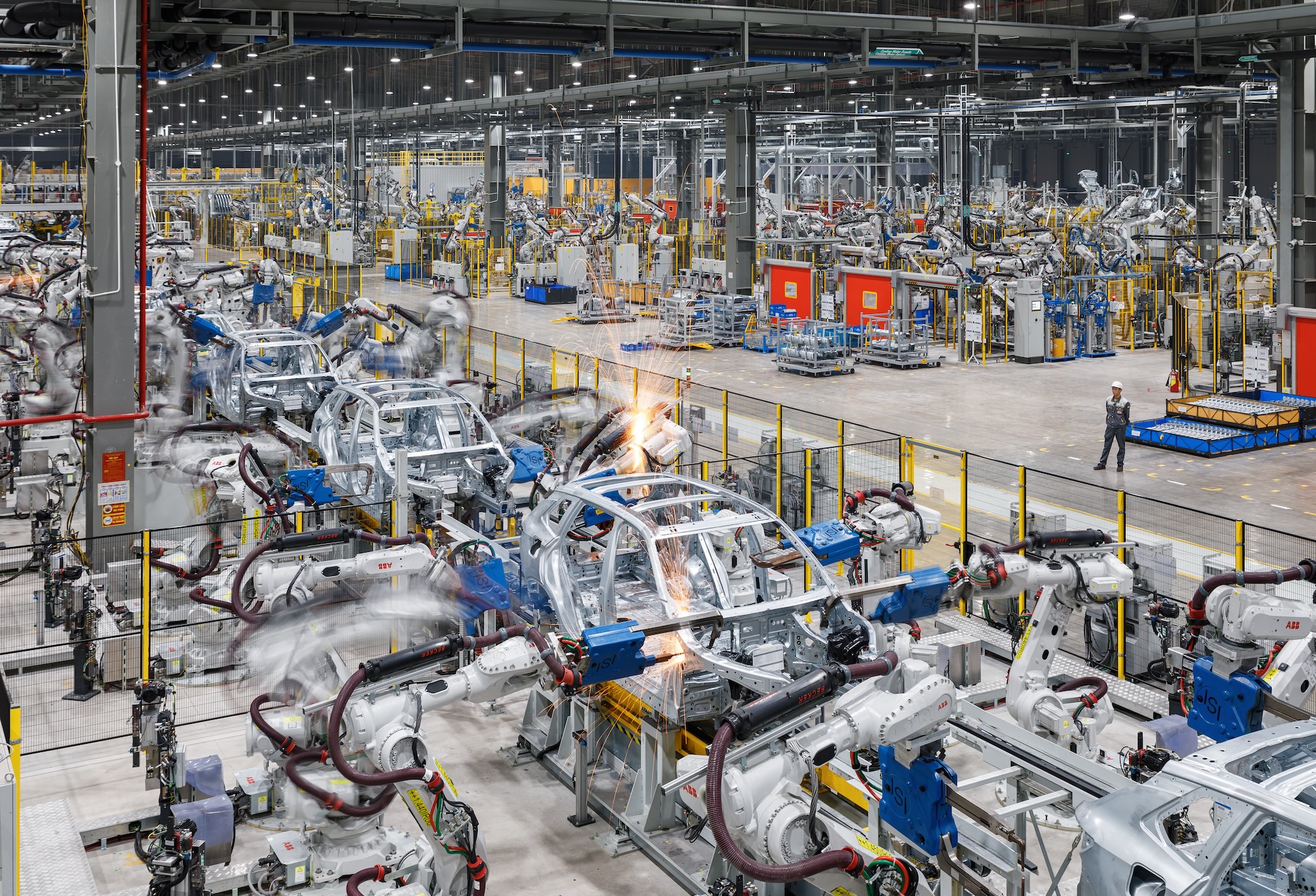
Entrepreneurs and businesses are ready to shoulder the responsibilities of the nation in the new era.
PHOTO: VG
A mechanism is needed to localize the domestic industrial sector.
National Assembly representative Hoang Van Cuong, Vice Chairman of the State Council of Professors, former Vice Rector of the National Economics University, affirmed that the North-South High-Speed Railway project has a positive impact on economic development and trade exchange. Furthermore, the project aims to implement the policy of localization to develop the domestic railway industry, built by Vietnamese people, with Vietnamese businesses investing, and products primarily manufactured in Vietnam based on technology transfer from foreign countries. This is one of the goals to be achieved when investing in this railway line. Therefore, when a domestic investor is willing to undertake the project with the same quality standards, operational functionality, and ripple effect as public investment, there is no reason not to entrust it to them. This contributes to the implementation of the policy of localizing the railway industry and simultaneously spreads to other sectors and fields.
"The most important issue is that it must be genuine domestic investment, developing the domestic industry, not domestic investors registering to invest but then importing foreign products and components and only assembling and processing them. That would not achieve the goal. Therefore, it is necessary to consider whether the investor commits to localization, and whether they will collaborate with other domestic businesses and investors to produce components, accessories, and equipment based on foreign technology. This is arguably the most important goal and condition when considering whether to approve a project for a domestic investor," Mr. Hoang Van Cuong noted.
Sharing the view that the North-South High-Speed Railway project should be entrusted to domestic enterprises, Associate Professor Vo Dai Luoc further analyzed: The most difficult aspect of building a high-speed railway is manufacturing the locomotives. Vietnamese enterprises are capable of handling the remaining components. The locomotives themselves can be imported using technology. Previously, when China started its high-speed railway project, it also had to import technology and hire foreign experts. Any technologies that Vietnam doesn't have, we can import or lease… The important thing is that when Vietnamese enterprises are the main investors, we have the right to choose the best and most suitable technology for the country. Of course, we must choose and entrust the project to enterprises with sufficient resources to successfully implement the project. These resources will be considered in terms of overall factors, from capital and labor to the influence of the leader and management capabilities…
Empowering and delegating responsibilities to private enterprises is what truly drives the growth and development of Vietnamese businesses. For a long time, we've argued that the majority of private enterprises are small and weak; these opportunities are for them to grow larger and expand into the region and the world.
Associate Professor Vo Dai Luoc , former Director of the Institute of World Economics and Politics.
Railways are considered the backbone of transportation infrastructure and a national asset. By regulation, these projects can only be invested in through public investment or public-private partnerships. Currently, Vietnam lacks standards and regulations that mandate domestic investors to undertake these projects, thus preventing their participation. Furthermore, there is no mechanism to localize the domestic industry for producing materials and equipment for these transportation projects. To promote the implementation of high-speed rail projects, Vietnam needs a policy to develop its railway industry. Therefore, legal changes are necessary to create opportunities for domestic businesses and investors to participate.
National Assembly representative Hoang Van Cuong
Thanhnien.vn
Source: https://thanhnien.vn/khat-vong-viet-nam-san-ready-to-enter-the-railway-era-185250531203824621.htm

![[Photo] Prime Minister Pham Minh Chinh holds a phone call with the CEO of Russia's Rosatom Corporation.](/_next/image?url=https%3A%2F%2Fvphoto.vietnam.vn%2Fthumb%2F1200x675%2Fvietnam%2Fresource%2FIMAGE%2F2025%2F12%2F11%2F1765464552365_dsc-5295-jpg.webp&w=3840&q=75)


![[Photo] Closing Ceremony of the 10th Session of the 15th National Assembly](/_next/image?url=https%3A%2F%2Fvphoto.vietnam.vn%2Fthumb%2F1200x675%2Fvietnam%2Fresource%2FIMAGE%2F2025%2F12%2F11%2F1765448959967_image-1437-jpg.webp&w=3840&q=75)









































![[OFFICIAL] MISA GROUP ANNOUNCES ITS PIONEERING BRAND POSITIONING IN BUILDING AGENTIC AI FOR BUSINESSES, HOUSEHOLDS, AND THE GOVERNMENT](https://vphoto.vietnam.vn/thumb/402x226/vietnam/resource/IMAGE/2025/12/11/1765444754256_agentic-ai_postfb-scaled.png)











































Comment (0)