

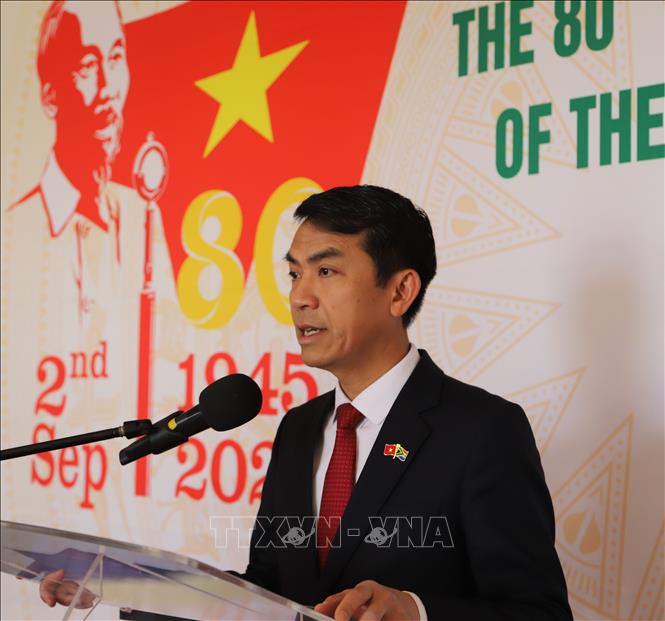
Dear Ambassador, the State visit of South African President Cyril Ramaphosa to Vietnam marks a special event after nearly two decades since the visit of a South African President. Could you share the significance and focus of this visit for the Vietnam - South Africa bilateral relationship?
The Vietnam - South Africa relationship is steeped in history, originating from the historic meeting between representatives of the Government of the Democratic Republic of Vietnam and the African National Congress (ANC) at the Bandung Conference, Indonesia in 1955. Vietnam's victory in the struggle for national liberation and reunification has become a strong source of inspiration and a valuable lesson for the South African people in the fight against the apartheid regime, moving towards democracy in 1994. Since the establishment of diplomatic relations on December 22, 1993, the two countries have continuously cultivated their friendly relationship, achieving remarkable achievements in many fields. As each other's leading partners in Southeast Asia and Africa, South Africa is currently the only African country with which Vietnam has established a Partnership for Cooperation and Development.
President Cyril Ramaphosa's State visit to Vietnam this time, after his visit 9 years ago as Vice President, is the first visit by a South African President in 18 years (since President Thabo Mbeki's visit in 2007), will be an important milestone in the relationship between the two countries, following the historic phone call between General Secretary To Lam and the President on April 22. The event demonstrates the special importance and determination of the two countries in elevating bilateral relations. The visit not only strengthens the traditional friendship but also opens up opportunities for the leaders of the two countries to comprehensively assess the cooperative relationship, orientate the promotion of economic , trade and investment cooperation, and exploit new potentials, towards a more comprehensive and profound relationship in the future.
Given the special significance of the visit, what specific results does the Ambassador expect to achieve, and what are the strategic orientations to promote Vietnam - South Africa relations?
President Ramaphosa’s State visit is expected to create an important turning point, consolidating and expanding Vietnam-South Africa relations in many aspects: First of all, the visit will lay a solid foundation to move towards upgrading the bilateral relationship framework, transforming political determination into substantive cooperation results, especially in the fields of economics, trade and investment. Second, the two sides will promote specific commitments, accelerate negotiations and soon sign cooperation agreements in priority areas, while expanding to new areas such as green energy, e-commerce and innovation. Third, on the international level, the visit is an opportunity for the two countries to reaffirm common values, promote multilateralism, respect international law, and support reform of global institutions in a more equitable and positive direction. Vietnam expressed its strong support for South Africa's G20 Presidency in 2025, thanked South Africa for inviting the Vietnamese Prime Minister to attend this important event, and pledged to actively contribute to the success of the summit.
President Ramaphosa's visit, combined with diplomatic activities in Southeast Asia and participation in the 47th ASEAN Summit in Kuala Lumpur (Malaysia), affirms South Africa's desire to strengthen comprehensive relations with the Southeast Asian region, including Vietnam.
What areas of cooperation can Vietnam and South Africa exploit to create new growth momentum for bilateral relations, and what are the highlights in economic cooperation between the two countries?
Vietnam, with its impressive economic growth rate, and South Africa, Africa's largest economy with strong development potential, possess many complementary advantages. Bilateral economic relations have achieved remarkable results, with trade turnover increasing from 192 million USD in 2007 to nearly 1.8 billion USD in 2024, remaining stable even during the COVID-19 pandemic. Vietnam exports to South Africa key products such as electronics, phones, textiles, footwear, agricultural products (coffee, rice, cashew nuts, pepper), while importing from South Africa minerals, coal, fruits, wood and chemicals.
To fully exploit the potential, the two sides can focus on new areas of cooperation such as: green energy and equitable energy transition, taking advantage of South Africa's experience in renewable energy and Vietnam's experience in solar energy development; e-commerce, banking and finance and innovation, taking advantage of the two countries' gateway positions in Southeast Asia and Southern Africa; tourism and investment, an area with much room for development, especially when both countries participate in regional free trade agreements. Connecting businesses and promoting investment projects in each other will be the key to bringing bilateral economic relations to new heights, commensurate with good political relations.
In the context of globalization and the need for sustainable development, how does the Ambassador assess the potential for cooperation between Vietnam and South Africa in the fields of green energy, climate finance and equitable energy transition? What can the two countries learn from each other?
Vietnam and South Africa, with their strong commitment to sustainable development, have potential for cooperation in green energy, climate finance and a just energy transition. South Africa, with its US$8.5 billion Just Energy Transition Partnership (JETP), is leading the way in renewable energy and green hydrogen development, particularly through the JET IP Investment Plan (2023-2027), creating thousands of green jobs in coal-mining areas such as Mpumalanga province. Vietnam, with its US$15.5 billion JETP and Power Development Plan VIII (PDP8), is promoting wind and solar energy and supporting communities in transitioning from coal. The two countries can cooperate in specific areas such as: sharing technology in green hydrogen production and developing smart grids; co-financing green funds; supporting small and medium-sized enterprises to participate in sustainable value chains. In terms of mutual learning, Vietnam can refer to the model of the South African President's Climate Commission, where stakeholders jointly develop policies for a just transition and green job creation.
In turn, South Africa can learn from Vietnam’s “solar boom”, with 16 GW of capacity installed in two years thanks to competitive auctions and digital transformation, helping to reduce energy poverty and sustain economic growth. This cooperation will not only strengthen the Partnership for Cooperation and Development but can also contribute to creating a model of South-South cooperation.
Thank you very much Ambassador!
Source: https://baotintuc.vn/thoi-su/chuyen-tham-cua-tong-thong-mo-ra-tam-cao-moi-cho-quan-he-nam-phi-viet-nam-20251022195019307.htm




































































Comment (0)