


The people and cooperatives play a central role in decision-making.
The "running out of money means running out of projects" dilemma is a major concern for agricultural extension workers. In the past, many models only worked well when funding was available but quickly declined or stopped when support ended.
There are many reasons, but in summary, there are a few main points such as a lack of financial sustainability, a lack of proactive participation from the people in the model, a lack of market linkages, and inconsistent and uncoordinated support policies from local authorities...

Director of the National Agricultural Extension Center, Le Quoc Thanh, shared the objectives of the agricultural extension projects. Photo: Bao Thang.
Therefore, the development of agricultural extension models and projects in the new phase requires a fundamental change in approach. The National Agricultural Extension Center advocates for "normalizing project results," meaning the agricultural extension system will "safely withdraw," ensuring that the model and achieved results will continue to be maintained after the implementation period ends.
This is partly demonstrated in the project "Strengthening the value chain of safe crops in the northern provinces" which the National Agricultural Extension Center is implementing in collaboration with the Japan International Cooperation Agency (JICA) during the period 2022 - 2026.
From the outset, we have consistently pursued a market-oriented approach. In this model, producers play the primary role, directly deciding what crops to plant and when to plant them to maximize economic value. Experts and agricultural extension officers provide guidance and in-depth training on market trends, participate in surveys, and assist in developing operational plans for each season.
This flexibility is absolutely essential. At the end of 2024, the project faced a major challenge from Typhoon Yagi , which affected winter crop production plans in many localities. Together with JICA experts and local authorities, we held numerous meetings to respond, and immediately implemented two training courses to help people in the project area change their crop structure. Winter crops such as cauliflower, cabbage, and kohlrabi were postponed until the end of November, making way for shorter-term crops like cucumbers, pumpkins, and squash, allowing farmers to utilize the land that was freed up early and generate immediate income.
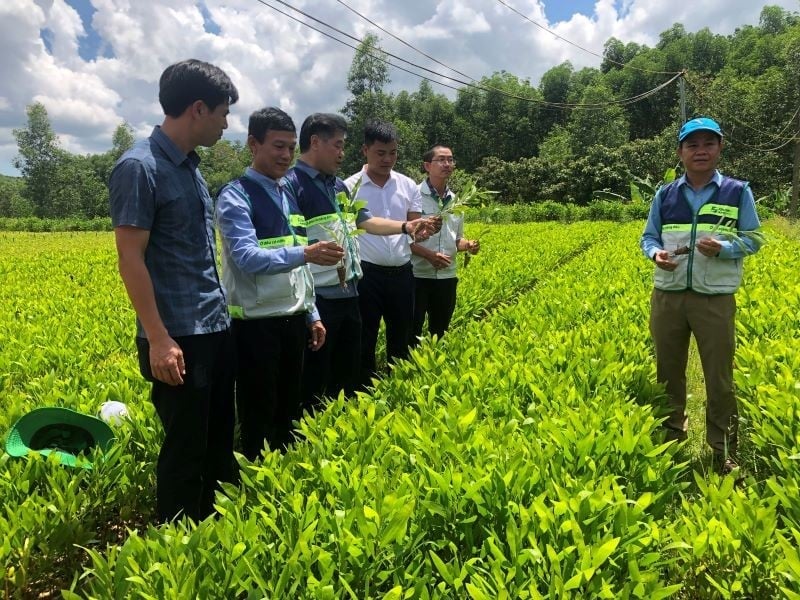
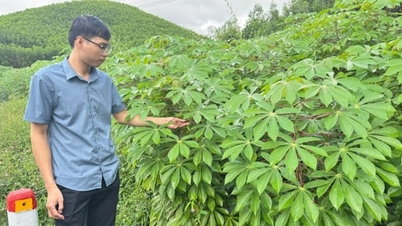
Director Le Quoc Thanh visits a model forestry nursery in Vinh Ha commune, Vinh Linh district, Quang Tri province. Photo: NNVN.
For a long time, agricultural extension projects have simply focused on transferring technological advancements and building models in a traditional way. But in the project currently being implemented in 7 provinces and cities – Hanoi, Hung Yen, Ha Nam, Nam Dinh, Bac Ninh, Hai Duong, and Son La – we have made an effort to connect producers with the market. Farmers need to know what products the market needs, where the target market is, and what strengths they have when deciding to join the supply chain.
Our aspiration is to build, maintain, and develop transparent production chains, creating more added value for agricultural products. More importantly, we aim to ensure that farmers' products are known to the market, empowering producers to be more proactive in connecting with the market, from evaluation and analysis to product promotion and marketing.
Let me share a reality: most people, before planting a tree or raising a fish in a pond, always believe that they must rely on technical expertise and thoroughly research all related technical issues, without truly appreciating the role of the market. As a result, even if the product is of very good quality, they still worry about finding a market for it.
That's also why the National Agricultural Extension Center is determined to further strengthen the role of cooperatives in linking and selling agricultural products. Clearly, with fragmented, small plots of land, it's very difficult for farmers to connect and ensure a consistent supply for the market. But when working together, with each person doing their part, the cooperative will take charge of coordination, marketing, image building, and brand promotion. The cooperative's capacity to better understand its members is enhanced, and members feel secure and work closely with the cooperative, bridging the gap between them and enabling centralized sales. This, in turn, increases negotiating power with buyers and reduces operating costs.

Pham Thi Dao, Deputy Director of the Hai Duong Department of Agriculture and Environment, along with agricultural extension workers, guides people in restocking livestock after Typhoon Yagi, using materials from the National Agricultural Extension Center. Photo: Bao Thang.
Boosting public-private partnerships after the project.
From a "safe exit" perspective, right from the start of projects with JICA, as well as subsequent agricultural extension projects, grassroots agricultural extension officers need to clearly understand that achieving the desired goals will lead to financial withdrawal. Understanding this is crucial so that each extension worker doesn't become overly dependent on or focused on unrealistic statistics and sky-high results, only to find themselves unable to continue when the funding runs out.
So what will be the goal of each agricultural extension project? It could be to establish connections, especially in the final stages of the project. Looking at the project to strengthen the value chain of safe crops, we have established raw material areas, supply chains, markets, and brands. Therefore, the space after the project will be available to businesses – those already aware of the quality of the output, or provinces and cities with similar conditions who wish to receive the transfer of production processes and guidance materials.
Regarding the project documentation with JICA, we are very confident because Viet-SHEP has been refined and improved to closely match the actual conditions of each locality. It also represents a long-term, sustainable "output" that future agricultural extension projects should consider. We are implementing one project, but the results obtained can meet multiple objectives, be suitable for various soil types, and even lead to nationwide distribution.
For the project to remain sustainable, the role of local authorities and public-private partnerships are crucial. Along with agricultural extension workers, everyone must constantly consider the question, "What will happen after the project?" To achieve this, it's necessary to promptly and efficiently address outstanding issues, avoiding delays and complications that would be difficult to resolve. If funding is a concern, the plan needs to be reviewed, and objectives carefully controlled to ensure clear content and products, while simultaneously strengthening and expanding linkages with the private sector.
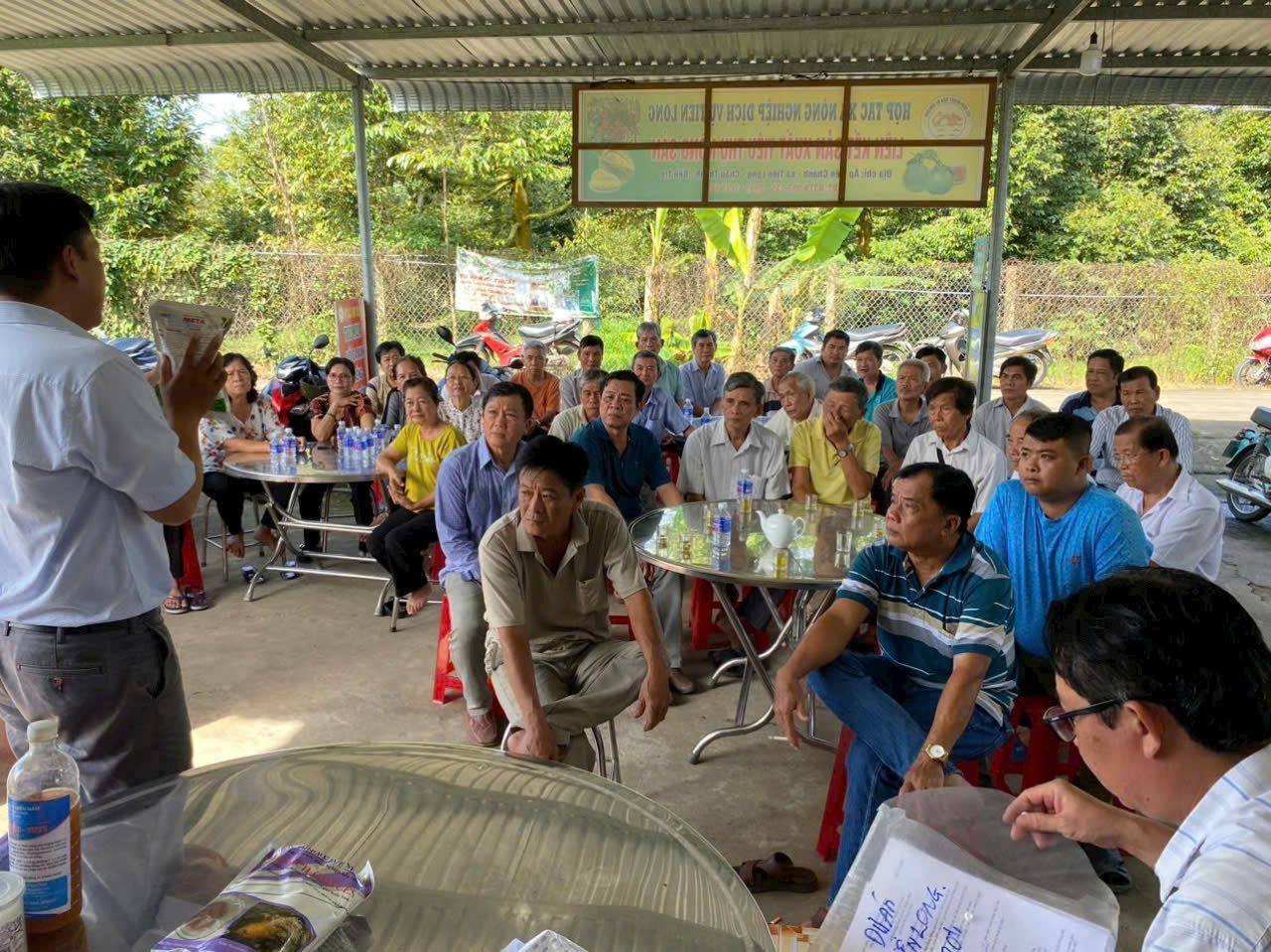
A meeting of the community agricultural extension group. Photo: Minh Đảm.
Who will maintain the sustainability of the supply chain after the project ends? We believe it's the public-private partnerships, or in other words, the suppliers of raw materials and the distributors of the output. The regulatory body plays a role in promoting, creating, or establishing communication forums to disseminate the project's results. This approach is relatively new, focusing on the market as the target and the decisive factor in the supply chain, and we cannot afford to ignore it.
From an agricultural extension perspective, besides conveying new ideas to the people, perhaps the agricultural extension system also needs to expand its reach to experts in more fields. We should not differentiate between those within and outside the sector, nor should we remove the boundary between ODA funding and Vietnam's counterpart funding. All efforts should aim to serve the interests of producers so that they can truly make a living from the products they produce.
Lessons learned, good results, and successful models also need to be analyzed and dissected so that agricultural extension projects become increasingly relevant and true to the slogan: "Wherever there are farmers, there is agricultural extension."











![OCOP during Tet season: [Article 4] Elevating local products](https://vphoto.vietnam.vn/thumb/402x226/vietnam/resource/IMAGE/2026/01/29/1769652810578_2935-z6982071462129_649e82db06fb2f2ea701388b1f5f5b0b-173322_176-185229-202804_457.jpeg)












































Comment (0)