

Ho Chi Minh City – After dyeing his hair himself using a gray hair coverage product advertised as being made from herbs, Mr. Nam, 56, experienced itching, stinging, red patches, and scaling on his scalp.
He went to the University Medical Center in Ho Chi Minh City for examination, where the doctor diagnosed him with allergic contact dermatitis, suspected to be caused by hair dye used to cover gray hair. The doctor prescribed oral antihistamines and anti-inflammatory drugs, along with a topical product to dry, heal, and relieve itching, burning, and scaling on the scalp.
Similarly, Ms. Ngan, 32 years old, experienced pain, burning, and stinging sensations on her scalp after a day of dyeing her hair at the hair salon. The doctor noted red patches of skin, some areas of edema, and blisters, diagnosing irritant contact dermatitis suspected to be caused by hair dye. After a week of treatment with antibiotics, anti-inflammatory drugs, and anti-allergics, the patient's skin became less red and less itchy.
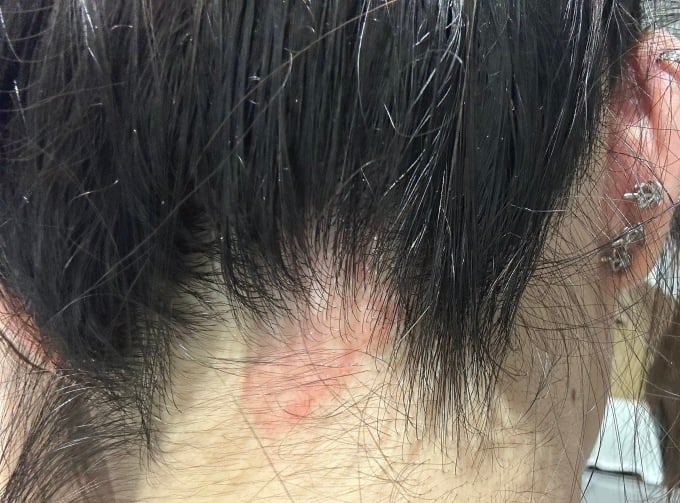
Ms. Ngan's skin developed red patches, swelling, and blisters a day after dyeing her hair. (Photo: Provided by the doctor)
According to MSc. Dr. Nguyen Phuong Thao, Department of Dermatology - Cosmetic Dermatology, University Medical Center of Ho Chi Minh City, the department receives an average of 3-5 patients per week related to allergic reactions and irritation after hair dyeing.
According to Dr. Thao, depending on how long the dye remains on the hair, the concentration of hydrogen peroxide in the dye's composition is divided into three types: permanent, semi-permanent, and temporary. "The degree of color retention of the dye is directly proportional to the degree of hair damage," Dr. Thao said.
The main components of hair dye are ammonia and peroxide. Ammonia expands the hair cuticle, allowing the active ingredients in the dye to penetrate deep into the hair shaft, while peroxide bleaches the hair. In addition, hair dyes contain coloring agents such as p-phenylenediamine (PPD), p-aminophenol, and 1-naphthol. They also contain solvents such as water, propylene glycol, and ethanol; foaming agents and thickeners like sodium lauryl sulfate and cocoamide MEA; and buffering agents.
Studies have shown that more than two-thirds of hair dyes contain PPD, a low molecular weight aromatic amine. This substance has a high penetration rate into the hair follicle and shaft, readily binds to proteins, and polymerizes, thus posing a high risk of allergic reactions.
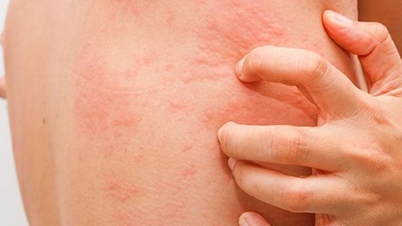
Dr. Thao stated that the active ingredients in hair dye can damage hair, causing it to lose its shine, become dry and brittle, and fall out. Additionally, hair dyeing can cause irritation, leading to redness, itching, blisters, and scaling of the scalp or surrounding areas. Allergic or irritating symptoms may appear immediately or within 48 hours after dyeing.
Individuals with allergic conditions such as eczema, asthma, or allergic rhinitis may experience a systemic allergic reaction upon direct contact or inhalation of these chemicals. Symptoms include swelling of the eyelids and lips; itching and a generalized rash; and in more severe cases, difficulty breathing, fatigue, nausea, or abdominal pain. Hairdressers who frequently come into contact with hair dyes may also develop eczema on their hands.
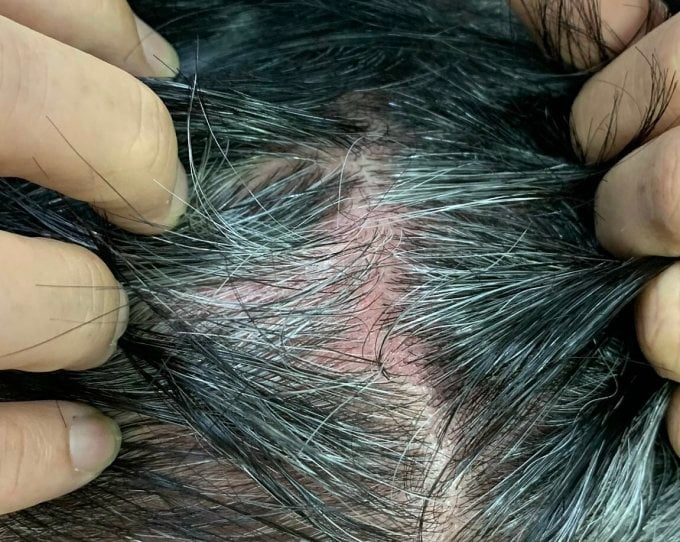
Mr. Nam's scalp became red, itchy, and stinging after using hair graying treatment. (Photo: Provided by the doctor)
According to Dr. Le Vi Anh, a specialist in Dermatology and Cosmetic Dermatology, in addition to damaging hair and causing allergies and skin irritation, people who frequently use low-quality hair dyes may experience joint pain, especially in small joints such as the hands, elbows, knees, and ankles. There is also a high risk of developing bladder cancer, hematological cancers, brain tumors, meningiomas, and auditory nerve disorders when using low-quality hair dyes.
For safe hair dyeing, Dr. Vi Anh recommends choosing hair dye from reputable brands with clear origins and sources. It's advisable to choose a shade that is 3 tones lighter than your natural hair color. "Generally, dyeing hair darker is better than dyeing it lighter, and lightening hair by more than 3 tones requires a higher amount of peroxide, causing more damage to the hair," Dr. Vi Anh explained.
Doctors suggest using allergy patches before applying hair dye. If you experience a rash or redness, swelling, burning, or itching, you may be allergic to the hair dye. The best course of action is to avoid dyeing your hair and consult a dermatologist.
Dr. Vi Anh advises against mixing different hair dyes as this can damage the hair and scalp. Gloves must be worn when dyeing. Schedule an appointment to know when to wash off the dye solution. Always follow the instructions for use. If you experience excessive itching or burning after applying hair dye to your scalp, wash it off immediately and consult a dermatologist for examination and treatment.
After dyeing your hair, you should rinse your scalp thoroughly with water. "It's important to protect your hair and scalp from sunlight; ideally, wear a wide-brimmed hat when going outdoors to prevent your hair from becoming weak, dry, faded, and brittle after dyeing or bleaching," Dr. Vi Anh further advises.
America and Italy
* Character names have been changed
Source link

![[Photo] General Secretary and President To Lam receives Amazon's Senior Vice President David Zapolsky](https://vphoto.vietnam.vn/thumb/1200x675/vietnam/resource/IMAGE/2026/05/22/1779466547770_a1-bnd-3513-6601-jpg.webp)





























































































Comment (0)