

Try a new direction.
Due to harsh climatic conditions, people in some mountainous areas of Quang Tri province face difficulties in choosing suitable saplings for their livelihoods. However, in recent years, naturally growing trees on the hills have become a source of livelihood for many households in Tuyen Hoa and Phu Trach communes (Quang Tri).
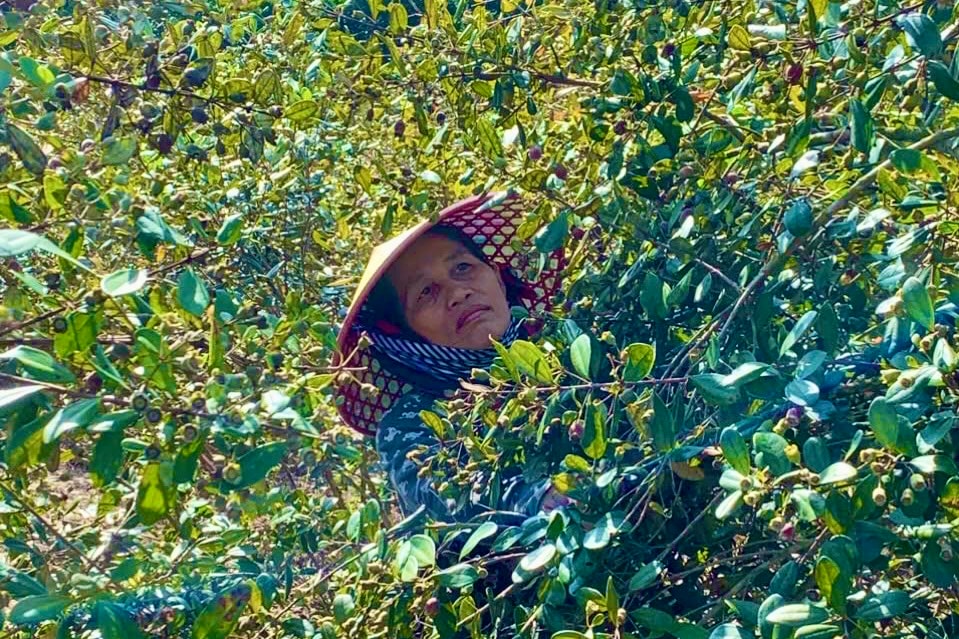
In Quang Hoa village, Tuyen Hoa commune, there are currently about 5 hectares of myrtle trees cultivated as a monoculture, with each household farming about 1 hectare. The trees bear fruit regularly during the harvest season, yielding about 20 kg of myrtle berries, which sell for over 25,000 VND/kg. Ms. Dam Kim Hue said that for the past three years, myrtle trees have been one of the main sources of income for her family, bringing in about 500,000 VND per day. Along with raising pigs and growing vegetables, the income from myrtle trees has helped her family stabilize their income and cover living expenses. Myrtle trees grow naturally on hillsides, requiring little care and are less susceptible to pests and diseases, so there is no need for significant investment, and customers can buy them with confidence without too much concern about safety.
According to locals, sim fruit can be sold fresh, dried, or processed into wine, a product that is popular in the local market and many other provinces, including OCOP sim wine products. The purchase price at the farm ranges from 25,000 to 30,000 VND/kg. After about four years of care, the sim tree begins to bear fruit, with each harvest lasting about a month. With good care, the yield can reach 10kg per harvest, providing each household with an income of 10-15 million VND per season. This is a figure many mountainous farmers aspire to, given the challenging production conditions. Importantly, the sim fruit harvest coincides with the start of the school year, helping families support their children's education expenses.
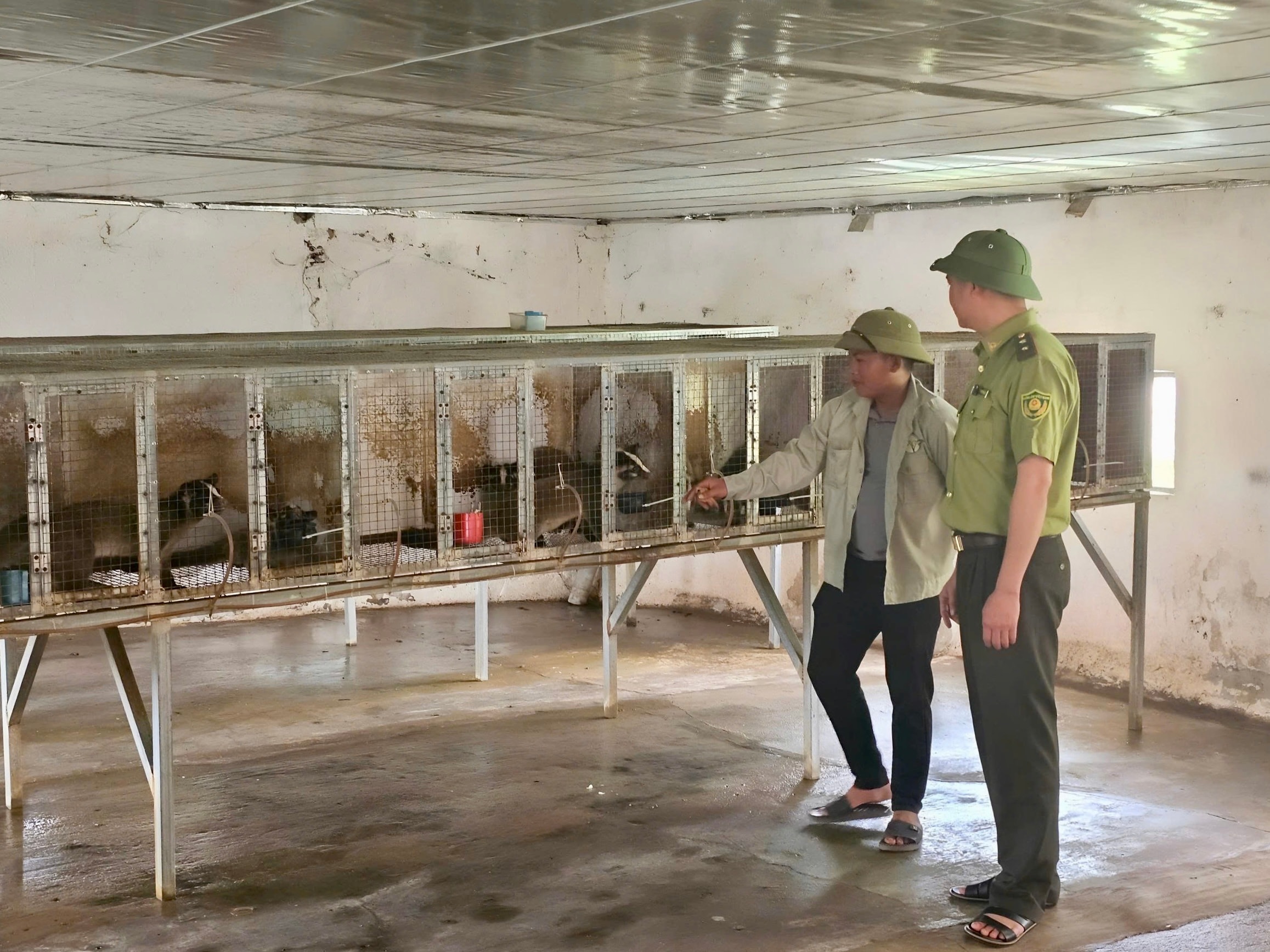
Along with the myrtle plant, several new animal breeds have also helped many farmers change their lives, bringing in significant income. Mr. Nguyen Quoc Vuong, from Trung Thuan commune (Quang Tri province), failed after raising free-range chickens, so he researched and tried his hand at raising civets. Raising this animal requires research to ensure safe living conditions and limit disease outbreaks, but finding food sources is relatively simple.
Nguyen Quoc Vuong invested in a modern civet farm consisting of four rows, each with three levels, divided into separate compartments to ensure a moderate temperature and regular disinfection. Besides ensuring hygiene, the civets are fed simple foods like bananas and tilapia porridge, which are quite inexpensive. Through careful care over a long period, Mr. Vuong has raised over 100 civets, earning a considerable income each year, becoming a model for local people to learn from.
Community economic development
From new crops and livestock breeds, pioneering households have shared their experiences with villagers, and with the support of local authorities, have created a local community united by a common goal of escaping poverty and becoming wealthy.
Regarding the sim tree, the Chairman of the Farmers' Association of Tuyen Hoa commune said that the sim tree cultivation model has helped people utilize vacant hillside land; at the same time, it has created more jobs and increased stable income. The Farmers' Association of the commune is coordinating propaganda, providing technical support, finding markets, and calling on businesses to participate in the value chain of sim tree products.
According to the Chairman of the Farmers' Association of Tuyen Hoa commune, sim fruit can be developed into a local product, helping to increase its value and expand its market. From a few households experimenting with planting, the sim fruit cultivation model in Quang Hoa has now spread throughout the village, creating a specialized cultivation area for this unique plant, while also supporting stable livelihoods for the people.
For some households, mink farming presents a life-changing opportunity to escape poverty and become wealthy, as this animal brings in a high economic return. A representative from the Economic Department of Trung Thuan commune stated that the locality is very interested in developing livestock farming models in the commune. Among them, the mink farming model, which has been operating for some time, has shown high economic value, minimal environmental impact, and holds great potential. The locality also hopes to receive attention and investment to further expand this model.
However, for new plant and animal breeds, farmers also need to be aware of legal regulations regarding the breeding and keeping of wild animals for commercial purposes. For civets, breeding facilities need to be assigned a facility code and be managed periodically according to regulations.
According to Doan Van Ngai, Head of the Bo Trach Forest Ranger District, forest rangers have coordinated with local authorities to guide households and individuals in managing, updating, monitoring, and accurately recording the number of animals during breeding and sale, ensuring environmental safety and hygiene. "Raising wild animals in compliance with the law contributes to the economic development of households and individuals, and reduces the hunting of wild animals in nature," added Doan Van Ngai, Head of the Bo Trach Forest Ranger District.
Source: https://daibieunhandan.vn/kinh-nghiem-hay-cach-lam-tot-mo-loi-thoat-ngheo-tu-nhung-giong-cay-trong-vat-nuoi-moi-10390505.html













![[Photo] Prime Minister Pham Minh Chinh holds a phone call with the CEO of Russia's Rosatom Corporation.](/_next/image?url=https%3A%2F%2Fvphoto.vietnam.vn%2Fthumb%2F1200x675%2Fvietnam%2Fresource%2FIMAGE%2F2025%2F12%2F11%2F1765464552365_dsc-5295-jpg.webp&w=3840&q=75)











































Comment (0)