

Attending the ceremony were Mr. Bui Van Nghiem, Deputy Head of the Central Internal Affairs Committee and former Secretary of the Vinh Long Provincial Party Committee; Mr. Tran Van Lau, Secretary of the Provincial Party Committee; along with current and former provincial leaders and family members of the late Prime Minister Vo Van Kiet.
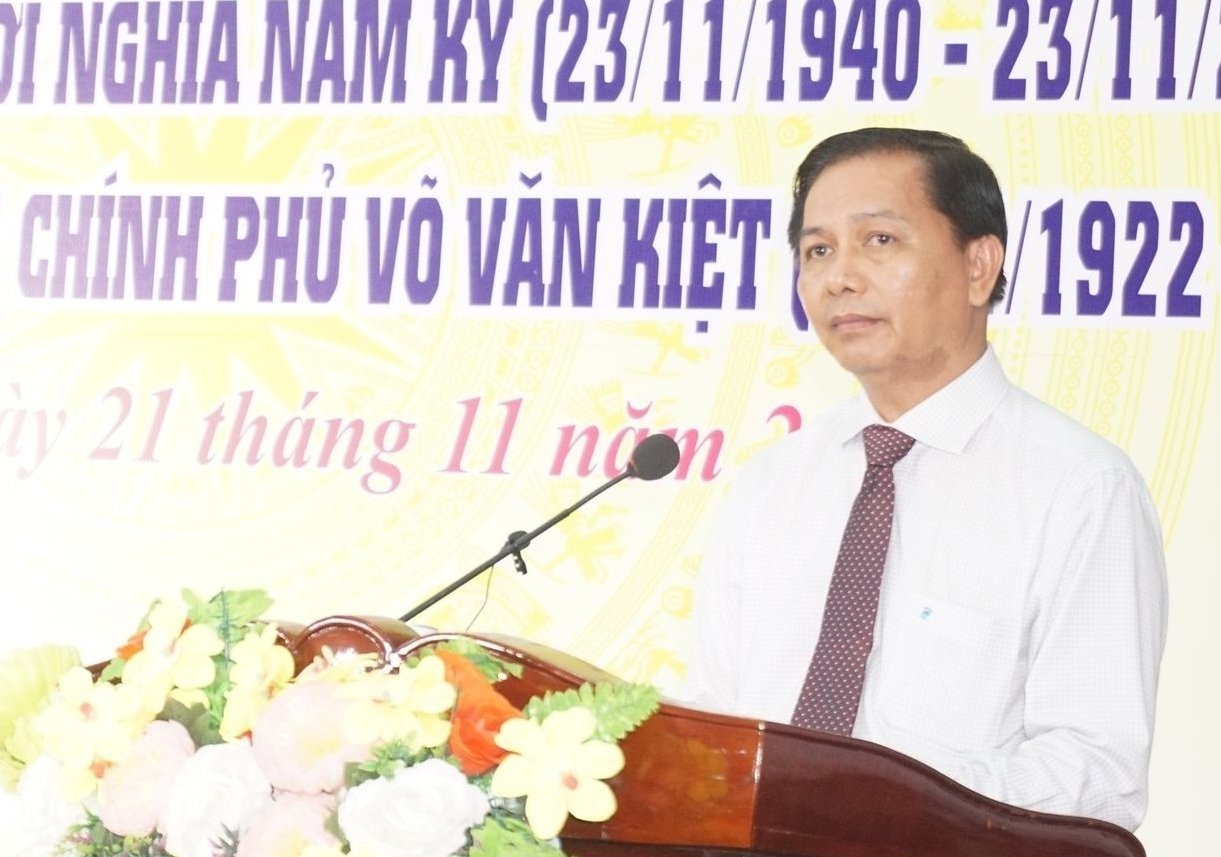
Provincial Party Secretary Tran Van Lau recalled the patriotic tradition of the Southern Uprising movement. Photo: Ho Thao.
In his speech commemorating the traditions, Provincial Party Secretary Tran Van Lau emphasized that Vinh Long is a land of "spiritual and talented people," the birthplace of many outstanding revolutionaries and leaders such as Vo Van Kiet, Pham Hung, Tran Dai Nghia, Ca Van Thinh, Nguyen Thi Dinh, Huynh Tan Phat... It was here that the indomitable fighting spirit of the people of Southern Vietnam was nurtured during the dark years of the late 1930s.
He reviewed the historical context when the French colonialists intensified exploitation after the economic crisis of 1929-1933, suppressed the democratic movement of 1936-1939, and arrested thousands of cadres and party members. Despite this, the fighting spirit of the people of Southern Vietnam remained strong. When World War II broke out, France tightened its rule, but the Central Committee of the Party, led by General Secretary Nguyen Van Cu, resolutely shifted its strategy, placing the task of national liberation first.
In July 1940, the Southern Regional Party Committee decided to launch an uprising. Although the plan was exposed and the Central Committee requested a postponement, the order to revolt still spread to the localities. On the night of November 22-23, 1940, the movement erupted throughout the eastern and western parts of Southern Vietnam.
In Vinh Long, the Provincial Party Committee made thorough preparations, building Party bases, training armed forces and the masses. When the uprising broke out, revolutionary forces simultaneously seized district capitals, military posts, destroyed bridges, and cut off communication in Long Ho, Chau Thanh, Tam Binh, Vung Liem, etc., in some places controlling district capitals for many hours. Although it did not achieve ultimate victory, the Southern Uprising left a profound mark, igniting faith in the path of national liberation.
For those contributions, on March 13, 1948, President Ho Chi Minh signed a decree awarding the First Class Military Merit Order to the Southern Uprising Army of 1940.
Provincial Party Secretary Tran Van Lau stated that Vinh Long province will continue to uphold its revolutionary traditions, striving to build a rapidly and sustainably developing province, becoming a marine economic center and a renewable energy center with modern infrastructure and effective connectivity within the Mekong Delta region.
The province focuses on building a clean and strong Party; reforming the growth model, developing culture and human resources; promoting science and technology, innovation, and digital transformation.
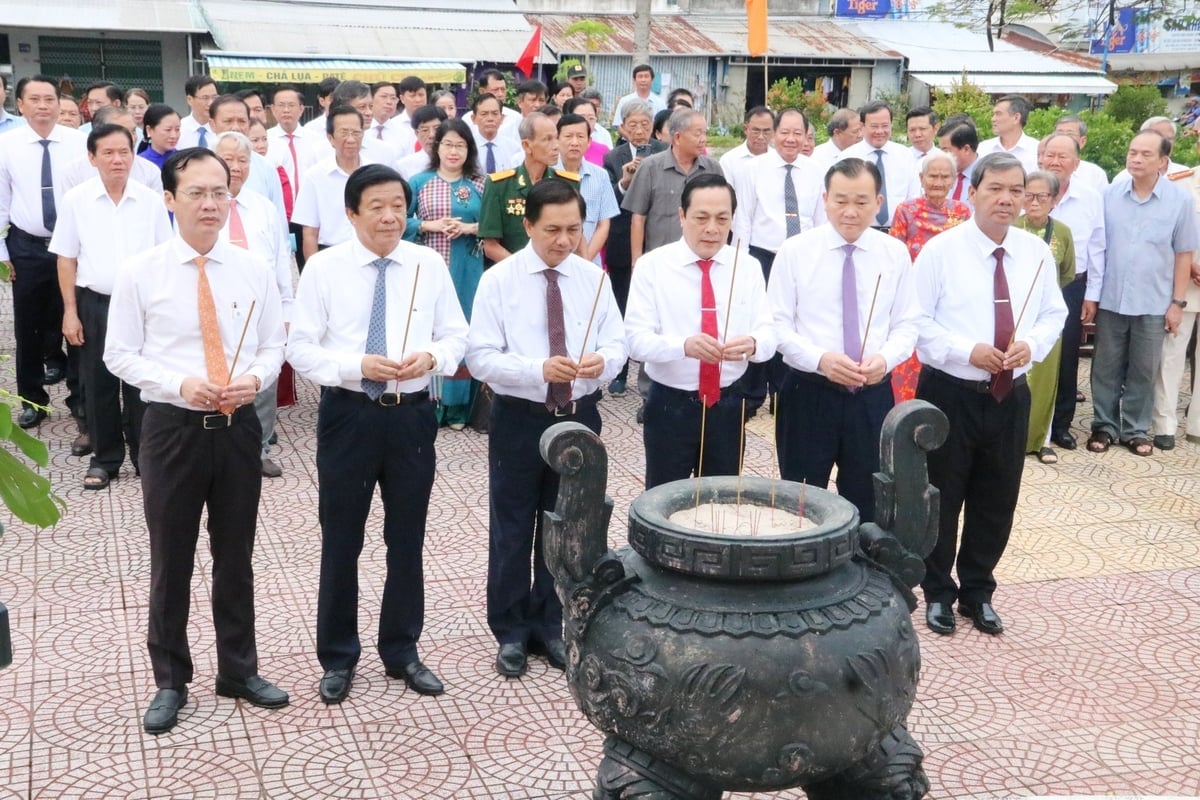
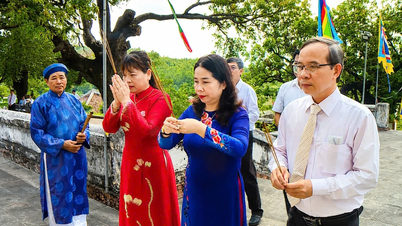
Provincial leaders and former leaders offer incense in commemoration at the memorial site of the late Prime Minister Vo Van Kiet. Photo: Ho Thao.
Next, the delegates offered incense at the Lê Cẩn - Nguyễn Giao Monument complex, the Southern Uprising Memorial, the statue of Comrade Nguyễn Thị Hồng, and the Vũng Linh Lake historical site.
At the Vo Van Kiet Memorial Area, the delegation laid flowers and offered incense to commemorate the steadfast leader who made significant contributions to the cause of reform, with projects bearing the "Vo Van Kiet imprint" such as the North-South 500kV power line, the Tri An Hydroelectric Power Plant, and the Dung Quat Oil Refinery.
Source: https://nongnghiepmoitruong.vn/ky-niem-85-nam-khoi-nghia-nam-ky-d785649.html













![[Photo] Reception to welcome General Secretary and President To Lam and his wife on their State visit to the Philippines](https://vphoto.vietnam.vn/thumb/1200x675/vietnam/resource/IMAGE/2026/06/01/1780295488620_vna-potal-chieu-dai-chao-mung-tong-bi-thu-chu-tich-nuoc-to-lam-va-phu-nhan-tham-cap-nha-nuoc-toi-philippines-8798060-7855-jpg.webp)





































Comment (0)