

Raising the growth target to 8% or higher in 2025, while requiring public debt to reach a critical level, poses numerous challenges regarding capital efficiency, inflation control, macroeconomic stability, and debt repayment capacity.
Raising the growth target to 8% or higher in 2025, while requiring public debt to reach a critical level, poses numerous challenges regarding capital efficiency, inflation control, macroeconomic stability, and debt repayment capacity.
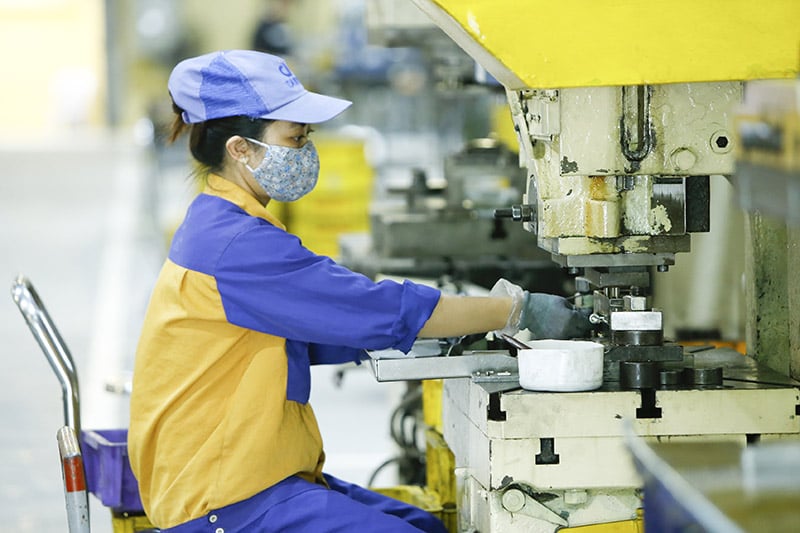 |
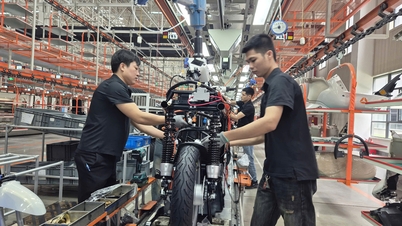
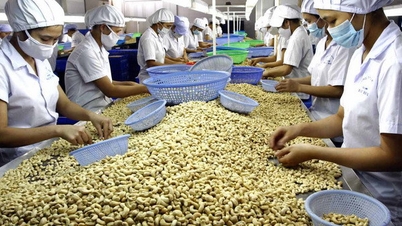
| In 2025, the manufacturing industry is projected to grow by 9.7% or more. Photo: Duc Thanh |
Economic regions are expected to grow by 0.7-1.3% or more in 2024.
In order to contribute to creating a solid foundation for achieving double-digit growth rates over a sufficiently long period (starting from 2026), the Government has submitted to the National Assembly a supplementary proposal on socio-economic development for 2025 with a growth target of 8% or more.
Here, the Government submits to the National Assembly for consideration and feedback the adjustment of several key indicators, namely the growth rate of gross domestic product (GDP) to 8% or higher (the target set by the National Assembly is approximately 6.5-7%), and the average consumer price index (CPI) growth rate to approximately 4.5-5% (the target set by the National Assembly is approximately 4.5%).
The growth scenario has also been revised to achieve new targets. Growth in the industrial and construction sector is projected at approximately 9.5% or higher (of which, manufacturing is expected to grow by 9.7% or higher); services by 8.1% or higher; and agriculture, forestry, and fisheries by 3.9% or higher.
According to this scenario, economic sectors accelerate, achieving higher growth rates than in 2024, ranging from 0.7-1.3% or more; in which, industry and construction, especially manufacturing, continue to be the driving force behind economic growth.
According to the new scenario, the GDP in 2025 will reach over $500 billion, and the GDP per capita will exceed $5,000.
Regarding growth drivers (investment, consumption, and exports), the Government estimates that total social investment will be approximately US$174 billion or more, roughly 33.5% of GDP (US$3 billion higher). Of this, public investment will be approximately US$36 billion (equivalent to VND 875,000 billion, about VND 84,300 billion higher than the 2025 target of VND 790,700 billion). Private investment will be approximately US$96 billion, foreign direct investment (FDI) approximately US$28 billion, and other investments approximately US$14 billion. Total retail sales of goods and consumer service revenue (at current prices) are projected to increase by 12% or more in 2025. Total import and export turnover is expected to increase by 12% or more in 2025; the trade surplus will be approximately US$30 billion. The average CPI growth rate is projected at 4.5-5%.
According to the government, the conditions for achieving a growth rate of 8% or higher first and foremost require new thinking, new approaches, breakthroughs in institutions and solutions, and thorough decentralization and delegation of power. Completing the restructuring of the organizational apparatus to be streamlined, effective, and efficient, without negatively impacting citizens and businesses in the short term, is also crucial.
Next, it is necessary to promote the leading role of growth-driven regions, economic corridors, and growth poles. Specifically, the GRDP growth rate of localities in 2025 should be at least 8-10%; Hanoi, Ho Chi Minh City, and other potential localities and major cities acting as growth engines and poles should strive for higher growth rates than the national average. Appropriate incentive mechanisms should be in place for high-growth localities, with contributions to the central government.
To realize the new growth target, the Government has set conditions for continuing to renew traditional growth drivers. Specifically, this includes strengthening market confidence, strongly promoting private investment and the processing and manufacturing industries; attracting large-scale, high-tech investment projects with significant spillover effects; unlocking and effectively utilizing resources; increasing development investment spending; and promptly reviewing, resolving, and implementing stalled and delayed projects.
In addition, it is necessary to rapidly restore domestic consumption, tourism, and services. Maintain stability and develop harmonious and sustainable trade relations, especially with the US, China, and other major partners. Strongly develop science and technology, innovation, digital transformation, and high-quality human resources to become increasingly important drivers and factors in promoting growth.
The government is also considering the possibility of adjusting the state budget deficit to around 4-4.5% of GDP to mobilize resources for development investment, as public debt, government debt, and foreign debt may reach or exceed the warning threshold (around 5% of GDP).
 |
A robust public finance management strategy is needed.
Agreeing with the Government's target and scenario of 8% or more in growth, Representative Trinh Xuan An (Dong Nai), Standing Member of the National Assembly's Committee on National Defense and Security, stated that achieving this goal requires close coordination between state policies, the efforts of businesses, and the economy's ability to adapt to global challenges.
"Achieving socio-economic growth of 8% or more in 2025 is a major challenge, especially if it is accompanied by an increase in public debt and government debt reaching or exceeding the warning threshold," Mr. An told a reporter from Investment Newspaper.
To achieve the above objectives while ensuring national financial stability, according to Representative An, several important issues need to be thoroughly considered, including the efficiency of loan utilization. Specifically, it is necessary to ensure that loan capital is used effectively, focusing on projects that can promote rapid growth such as infrastructure, technological innovation, digital transformation, and human resource development.
In addition, it is necessary to minimize waste or losses in public investment, and improve the quality and rate of public investment right from the first months of the year.
According to the Standing Member of the National Defense and Security Committee, controlling public debt and its repayment capacity also needs attention. While increased public debt may create room for investment and growth, the ability to repay in the medium and long term must be considered. Improving the efficiency of budget revenue collection, expanding the tax base to ensure sustainable debt repayment, carefully assessing the debt structure, prioritizing loans with low interest rates and long repayment periods, and limiting short-term loans with high interest rates, Mr. An also emphasized the need for focus.
The representative from Dong Nai also mentioned several solutions to control inflation and stabilize the macroeconomic situation. Mr. An analyzed that increased public investment and borrowing could increase inflationary pressure. Therefore, appropriate monetary and fiscal policies are needed to control inflation and avoid overheating growth. Stabilizing the exchange rate is crucial to avoid negative impacts on foreign debt. Along with that, research should be conducted to increase credit growth to over 16%, coupled with measures to prevent bad debt, ensure macroeconomic stability, and direct credit to appropriate sectors.
To achieve a GDP growth rate of 8% or higher in 2025, Mr. An emphasized the need to urgently implement specific mechanisms and policies; mechanisms and policies enacted by the National Assembly (land, housing, real estate business) to transform these mechanisms and policies into resources.
“The target of achieving 8% or higher growth in 2025, while public debt rises to a critical level, poses many challenges regarding capital efficiency, inflation control, macroeconomic stability, and debt repayment capacity. Therefore, a tight public finance management strategy, strengthened institutional reforms, and promotion of investment resources outside of public debt are needed to reduce pressure on the state budget,” Mr. An stated.
From the perspective of institutional improvement, Representative Nguyen Manh Hung, Standing Member of the National Assembly's Economic Committee, observed that the laws on investment and finance, urgently amended at the Eighth National Assembly Session, have contributed to unlocking resources, shortening project timelines, and will promote growth in both 2025 and subsequent years.
"The Law on Digital Technology Industry, the Law on State Capital Management and Investment in Enterprises… are being amended, and if done in the right direction, they will create new impetus for growth," Mr. Hung shared with a reporter from Investment Newspaper.
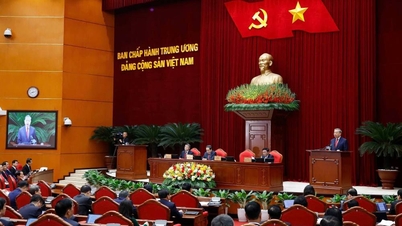
Speaking at the opening of the 42nd session of the National Assembly Standing Committee on the morning of February 5th, National Assembly Chairman Tran Thanh Manh said that the National Assembly Standing Committee plans to hold another meeting on the afternoon of February 10th to give opinions on the investment policy for the Lao Cai - Hanoi - Hai Phong railway project, and possibly the Lao Cai - Hanoi - Lang Son railway line, if preparations are ready in time.
In addition, several other urgent matters to be submitted to the National Assembly at the ninth extraordinary session, if the dossiers are completed in time for review, will also be discussed. Specifically, these include the plan to supplement the charter capital for the period 2024-2026 of the parent company of the Vietnam Expressway Investment and Development Corporation and the supplementary socio-economic development plan for 2025 with the goal of achieving 8% or more.
According to the program, this morning (February 7th), the National Assembly's Economic Committee will hold a plenary session to review the Government's submission on this project.
Source: https://baodautu.vn/lam-gi-de-gdp-nam-2025-dat-8-tro-len-d244628.html
































































































Comment (0)