

Editor's Note: In 2025, marking the 80th anniversary of independence and nearly 40 years of Doi Moi (Renovation), the country enters a new era, demanding a breakthrough and institutional reform. Resolution 68 affirms that the private sector is a crucial driving force that needs to be given favorable conditions to grow stronger, integrate, and venture into strategic areas. In that spirit, Vietnam Weekly – VietNamNet presents a series of articles on exemplary businesses: Giovanni (Nguyen Trong Phi) affirming its ability to master the high-end fashion value chain; MK Group (Nguyen Trong Khang) expanding from identification technology to the defense industry; Le Gia Fish Sauce (Le Ngoc Anh) elevating traditional specialties into a national brand; and 1Metrict (Phan Duc Trung) in the process of developing the digital asset market in Vietnam. Each story reflects the aspirations for entrepreneurship, the spirit of innovation and integration, and demonstrates that when freed from constraints by transparent and fair institutions, private enterprises will become a key driving force for national development. |
I crave the taste of the sea.
One sweltering summer afternoon in 2017, under the casuarina trees along the coast of Hai Tien beach resort (Thanh Hoa province), construction engineer Le Anh sat silently gazing at bottles of fish sauce that no one had yet tried. For three months, he knocked on the doors of restaurants and sat at every tourist's table, offering them samples, but no one responded.
“There were times I wondered, am I wasting social resources? Should I stop?” – Le Anh recalled.
But then, childhood memories of cassava rice with fish sauce, images of his mother busily drying fish, and middle-aged women struggling to make a living in Khuc Phu fish sauce village kept him there. "The only thing I had when I started was a love for fish sauce," he said.
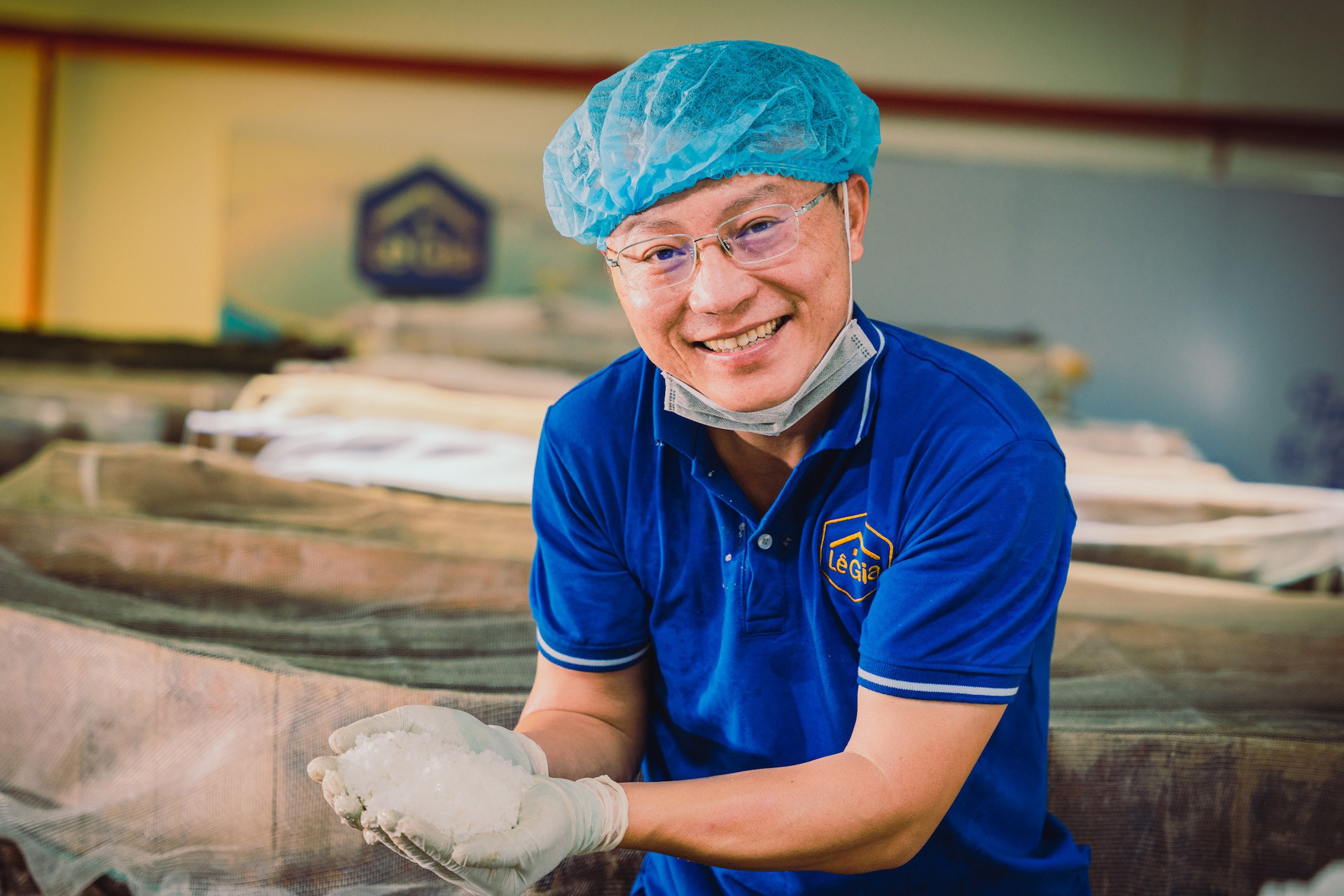
For Le Anh, fish sauce is not just a product, but also a cultural story.
Eight years later, the Le Gia fish sauce brand is now available in most major supermarkets nationwide and exported to the US, Japan, South Korea, Australia, and the EU. The product has achieved the national 5-star OCOP standard – a title that only a few dozen products in the country have earned.
But more importantly, from a seemingly naive decision, Le Anh revived the traditional craft, creating jobs for dozens of fishermen, providing a stable livelihood for fishermen and salt producers, and bringing Khuc Phu fish sauce village back onto the Vietnamese culinary map.
Born in 1985, a university graduate, Le Anh once had a dream job: a salary of thousands of dollars, participating in major projects such as Noi Bai Airport and Nghi Son oil refinery. But gradually, the joy faded. The blueprints and concrete buildings no longer held a sense of belonging for him.
"There were evenings when I sat amidst thousands of tons of steel, longing to hear the sound of salt hitting the fish, to smell the dry, salty air of my hometown. I needed to live my passion," he recounted.
When I decided to quit my job, my parents strongly objected, saying, "Since you've already escaped this hardship, don't go back to this strenuous, futureless profession." Many people were skeptical and judgmental.
When he first opened the workshop, he only had a few old jars of fish sauce from his family, a vacant plot of land inherited from his grandparents, and a mountain of debts. When he tried to sell it, many restaurants flatly refused: "Customers these days only eat dipping sauces; your fish sauce is too strong."
The harshness of the profession is reflected in his face and the graying hair that has gradually appeared over the years since he started his career. "There were times I wanted to quit, not because of pride, but because I didn't want my family to suffer because of me," he shared.
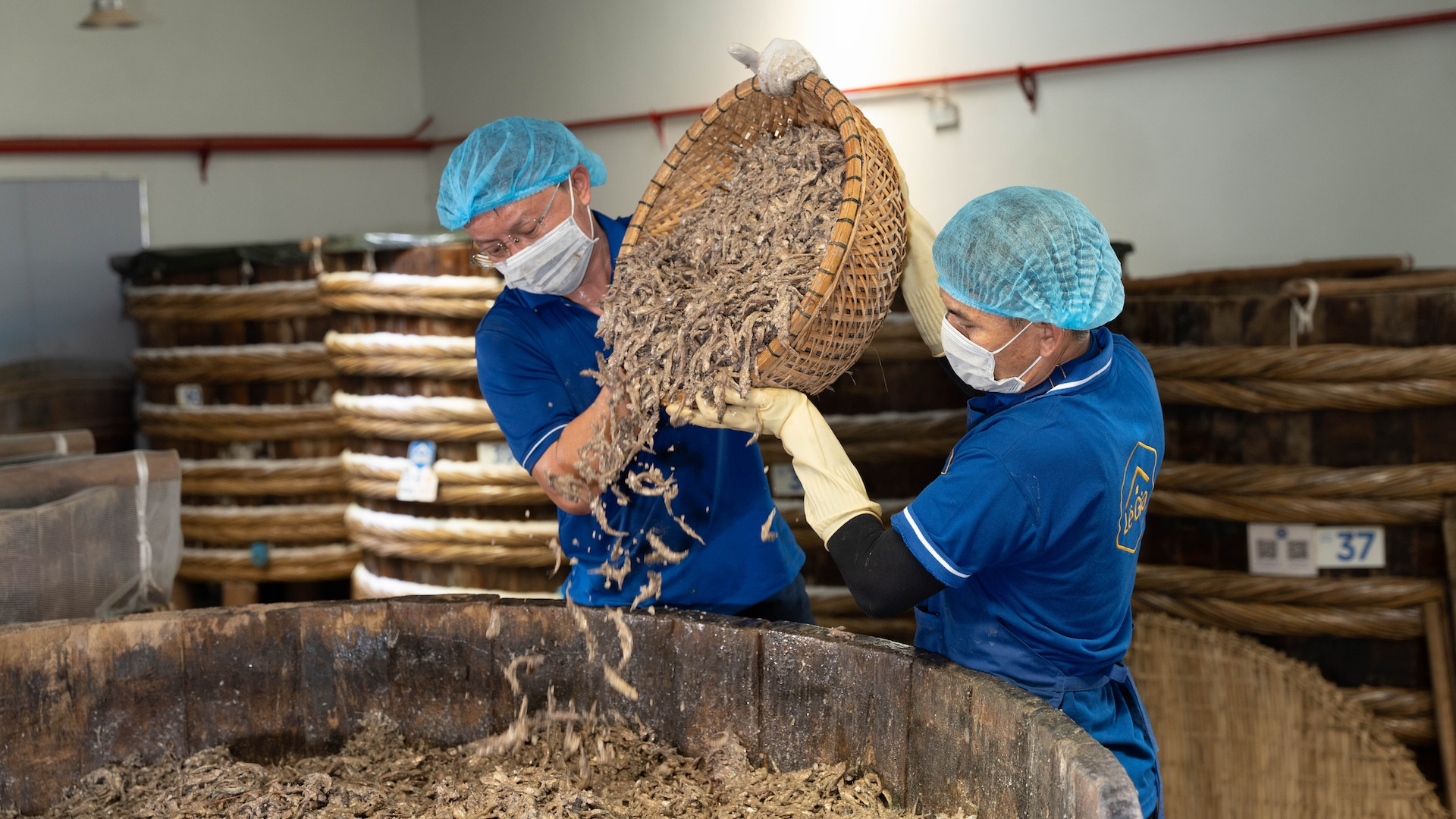
Perseverance is key to survival.
What keeps him going is his unwavering determination. He perseveres in pursuing his dream, steadfastly upholding the core values (natural traditions) of the product. He is passionate about preserving the essence of his ancestors, and wholeheartedly treats his customers' meals as if they were his own family's.
To obtain land and complete the procedures for building the factory, he spent five years, traveling back and forth countless times between various departments and agencies. "I think, besides luck, the state officials sensed my determination, which helped me get the project permit to build the factory and realize my aspirations," he recounted.
Finally, a factory was built in a corner of the village, meeting all the standards for selling products worldwide, largely financed by loans. The pressure of paying interest caused him sleepless nights. But he remained steadfast: “I chose this path not for financial freedom. I want to preserve a part of my ancestors' cultural identity and spread positive values to the livelihoods of the hardworking people in my hometown.”
The word "perseverance" gradually became the company's spirit. He reiterated to his team: "Be persistent and strive to do better every day. Today must be better than yesterday, and not as good as tomorrow."
Khuc Phu village, Hoang Phu commune, was once bustling. Over 70-80% of the population depended on the sea and fish sauce for their livelihood. But then, the market changed, young people abandoned the profession, and the elderly struggled to maintain it. Old, weathered jars of fish sauce lie silently in the yards.
"Traveling through the traditional fish sauce villages, I only see elderly people, the older generation. The younger generation hardly wants to continue the tradition," Le Anh recounted. Even today's children, many prefer soy sauce and other seasonings to traditional fish sauce. "The future of traditional fish sauce – considered the culinary passport of Vietnam – is uncertain," he worried.
He chose the opposite path: rebuilding his career through perseverance and systematic investment.
Preserve the soul, preserve the homeland.
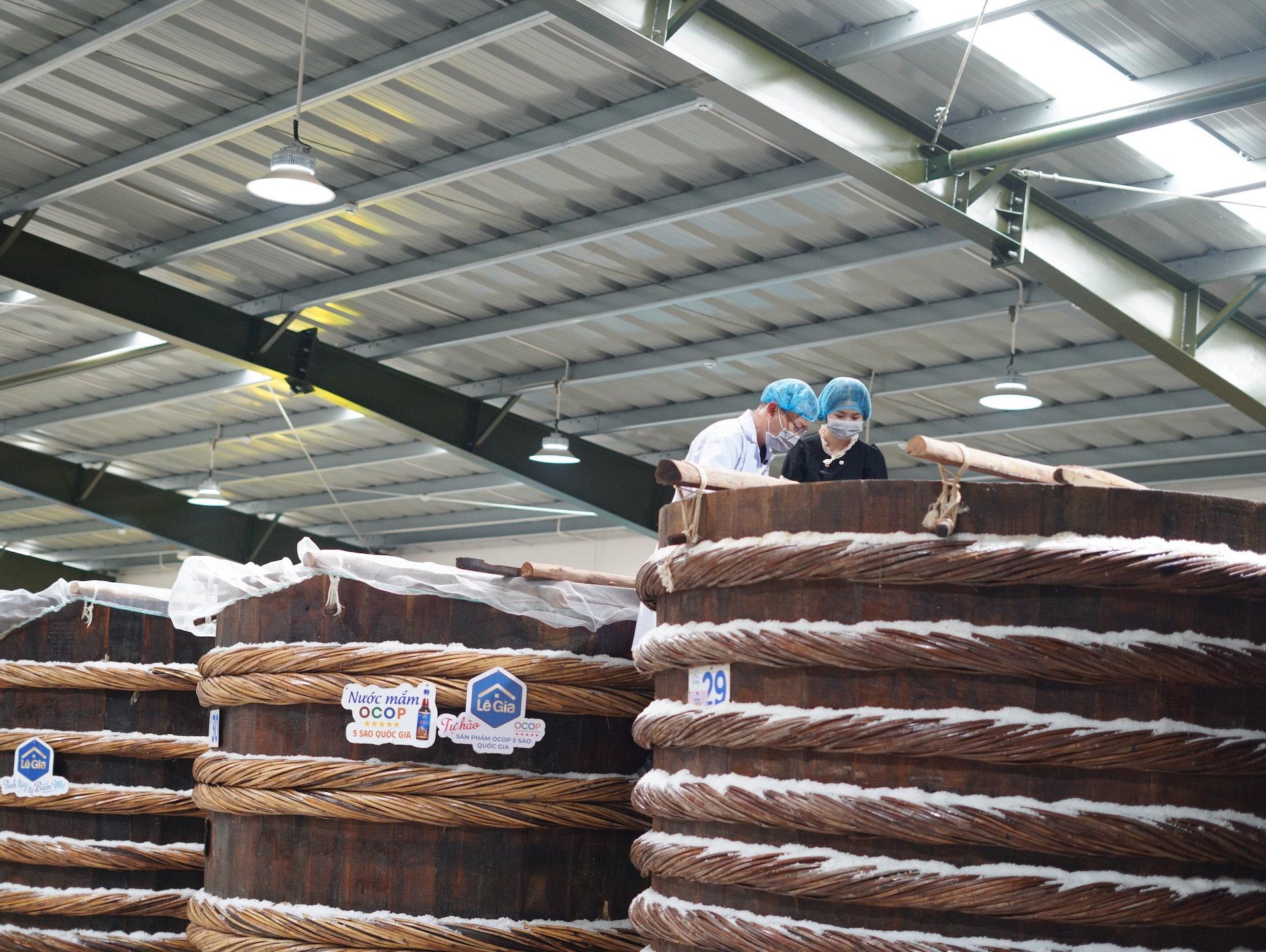
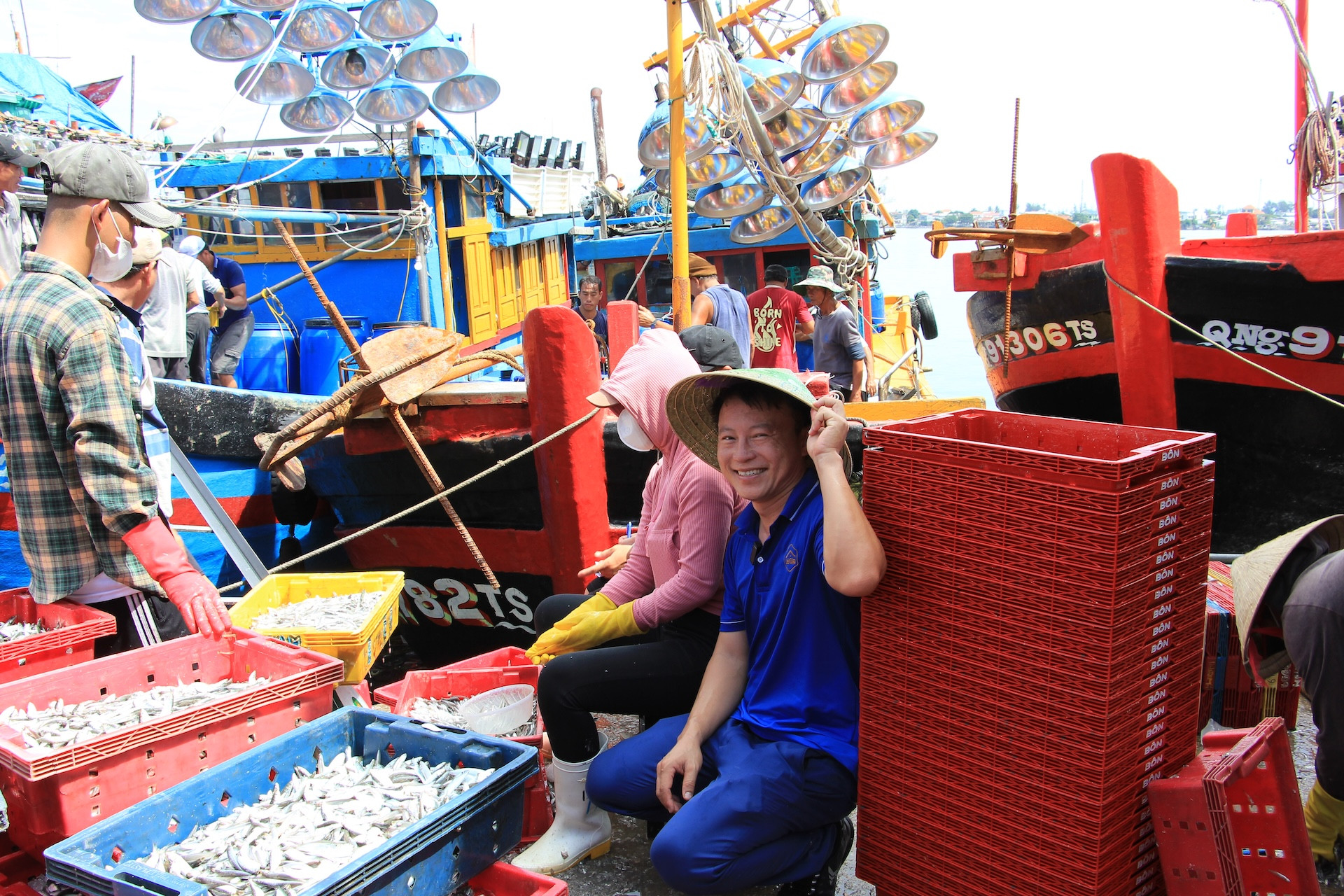
In the 12,000 m² factory area, hundreds of Bời Lời wood barrels, meticulously crafted by skilled artisans, are neatly arranged. Fresh anchovies are salted right on the boat, then compressed and aged in the wooden barrels for 18–24 months. The drops of nectar from the sea – traditional amber-colored, rich and flavorful fish sauce – trickle from the wooden spout, the culmination of fish, salt, time, sun, wind, and the people of the fishing village.
Not only does Le Gia preserve the traditional production methods of its ancestors, but it also applies advanced quality management standards to be able to export to the most demanding markets.
Not stopping at fish sauce, the company has also developed many other types of fermented products: shrimp paste, krill paste, braised pork belly, and ready-to-eat seafood products (krill, shrimp, sea shrimp, meat stewed with shrimp paste, and natural baby food seasonings). In particular, the line of fish sauce for babies – low in salt, rich in natural amino acids, and conveniently bottled – has opened the door for the brand to enter major mother & baby stores and supermarkets nationwide.
Fish sauce is not just a product; it's a cultural story. Driven by the desire to spread the value of this traditional craft and contribute to the beauty of their homeland, Le Gia's experiential tourism activities at the factory were established.
Right in the middle of the factory yard are two giant conical roofs made of reeds – symbols of mothers and grandmothers. Visitors can sit on bamboo benches, drink herbal tea, eat figs, starfruit, and rice cakes dipped in shrimp paste, play traditional games like O An Quan (a board game), and dance the bamboo pole dance. Visitors can listen to stories about traditional crafts, the beauty of the countryside, stories told simply and sincerely by the people of the fishing village.
Each year, around 20,000 visitors come to the site. City children are excited to learn that fish sauce is not just a fragrant ingredient, but also a "culinary passport" of the Vietnamese people. International visitors are amazed: "A simple product that embodies the entire national culture."
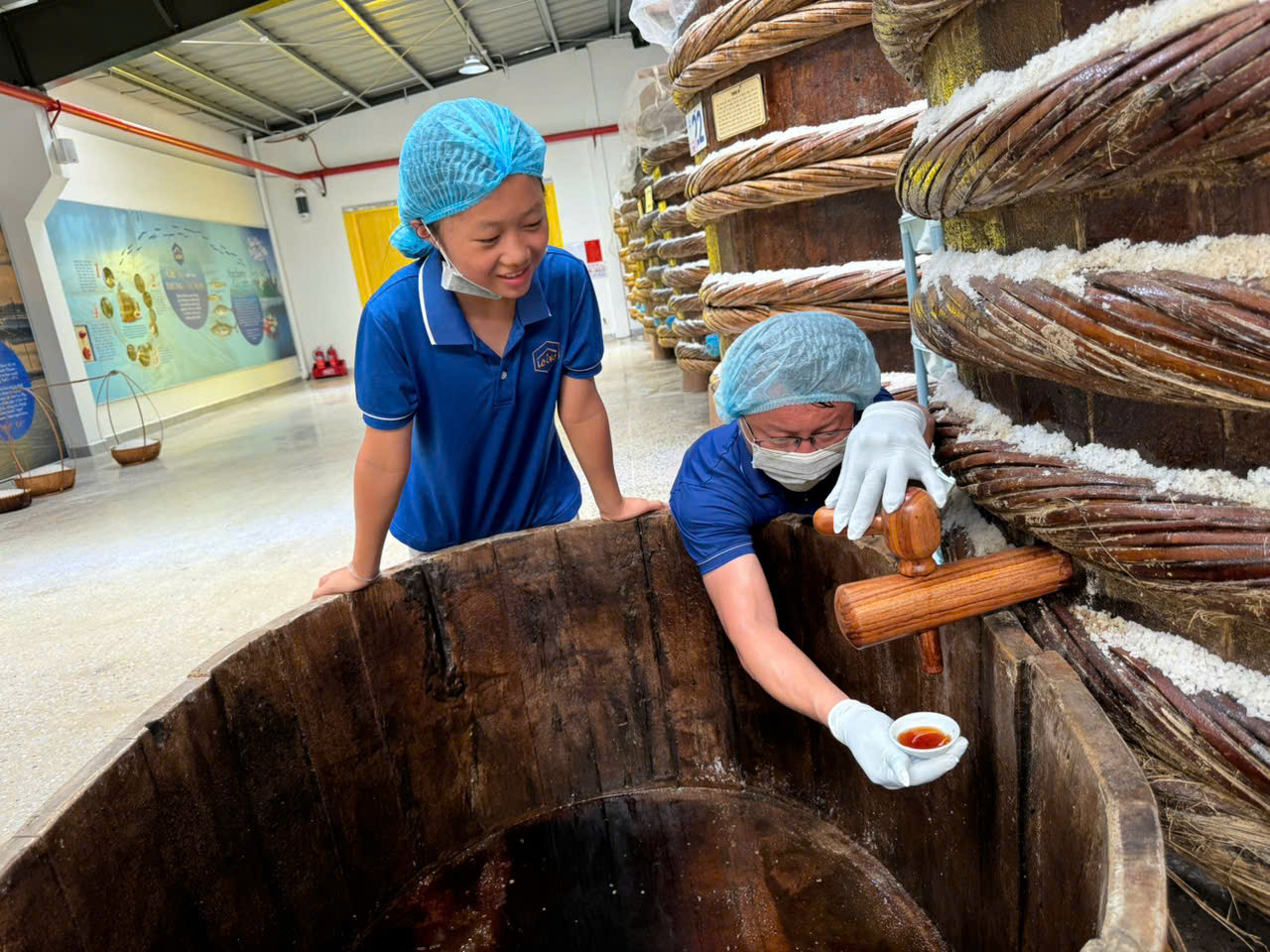
Just like exporting traditional fish sauce products, this is not just a purely economic and commercial activity, but also the export of our ancestors' culinary culture. Developing tourism associated with rural craft villages is not only for economic benefit but also a responsibility and a source of pride for our homeland.
"We don't set revenue as our goal. The KPI for experiential tourism is the joy and satisfaction of our customers," Le Anh emphasized.
Social impact businesses – leaving agriculture but not leaving their hometowns.
In 2023, Le Gia was recognized by the UNDP as a Social Impact Enterprise (SIB). They have established close supply chain relationships with hundreds of fishermen and salt farmers, purchasing their products at prices higher than the market rate, thus creating a stable output. The factory employs over 50 workers, mostly middle-aged women from the surrounding area.
"Working here, we can walk to work in the morning and then go home in the evening to prepare meals for our families. It feels like we're still living fully in our hometown," said one female worker.
Le Anh calls this a model of "leaving agriculture but not leaving one's hometown." People have stable jobs right in their hometown, in internationally standardized factories, in a pleasant environment. "If there are many sparrows picking up grain alongside eagles, there will be more villages worth living in," he expressed.
The pride of Thanh Hoa province.
On January 16, 2025, in Hanoi, the National OCOP Council evaluated 52 products, with only 28 achieving 5-star status. Among them was "Le Gia Fish Sauce - Special 40N Concentrate". This is the second time this brand has been honored, after Le Gia shrimp paste achieved 5-star status in 2020.
Deputy Minister of Agriculture and Rural Development Tran Thanh Nam said: "Not achieving it the first time does not mean failure. Like Le Gia, after four years of perseverance, they reached OCOP 5 stars."
The Chairman of the People's Committee of Thanh Hoa province, Mr. Do Minh Tuan, proudly stated: "Le Gia fish sauce, originating from a small village corner, has reached the world. This is proof of the legitimate aspiration for wealth of the younger generation."
"Success isn't about revenue or profit, but about the smiles and joy of those around you," Lê Anh believes.
This philosophy is present throughout the company. KPIs aren't about numbers, but about the positive feelings of customers. Once, a female worker hung a photo expressing her gratitude to the company right in the middle of her simple, rustic living room – a spiritual gift worth more than any bonus.
For Vietnamese people living abroad, that value is even more profound. A Vietnamese person in Japan wrote: "Using Le Gia fish sauce, I feel warm and my homesickness is eased."
"It was my naivety that gave me the courage to go so far. If I had only considered money, I certainly wouldn't have gotten to where I am today," he laughed.
Return to your homeland to reach out to the world.
More than 10 countries have embraced Le Gia products: the USA, Japan, South Korea, Australia, Singapore, New Zealand, South Africa… The scale is still very small, but each shipment brings a feeling of pride, pride in seeing the Vietnamese culinary passport, step by step, reaching the world.
"I want the word 'nuocmam' to be a literal translation when translated into other languages. So that, along with 'aodai,' 'banhchung,' and 'pho,' when people think of fish sauce, they immediately think of Vietnam, and that it's traditional Vietnamese fish sauce, not just fish sauce," he said.
In Japan, a Vietnamese expatriate wrote: "When I opened the bottle, the gentle aroma of fish sauce spread, and I felt like I was standing in the sun-drenched yard of my hometown." "That's the greatest reward," he shared.
Compared to Korean kimchi or Japanese sushi, Vietnamese fish sauce still has a long way to go. But Le Anh believes that with kindness and perseverance, fish sauce will become Vietnam's "culinary passport" on the world map.
From an engineer who left the construction industry to return to a fishing village, Le Anh has revived the traditional fish sauce making craft in his coastal village in Thanh Hoa province, transforming the salty taste of his impoverished hometown into a national 5-star OCOP product, available in major supermarkets and on international dining tables.
But what he is most proud of is not the certifications or the revenue, but seeing the smiles of fishermen, workers, tourists, or receiving messages from overseas Vietnamese.
"Treat our customers' meals as if they were our own family meals" – this simple philosophy has transformed Le Gia into a prime example: a small business that has restored faith in traditional values, affirmed cultural identity, and proven that it is entirely possible to thrive right in one's homeland.
Vietnamnet.vn
Source: https://vietnamnet.vn/le-gia-giot-mam-xu-thanh-thanh-ho-chieu-am-thuc-viet-2437847.html


















![[Photo] Prime Minister Pham Minh Chinh holds a phone call with the CEO of Russia's Rosatom Corporation.](/_next/image?url=https%3A%2F%2Fvphoto.vietnam.vn%2Fthumb%2F1200x675%2Fvietnam%2Fresource%2FIMAGE%2F2025%2F12%2F11%2F1765464552365_dsc-5295-jpg.webp&w=3840&q=75)













































Comment (0)