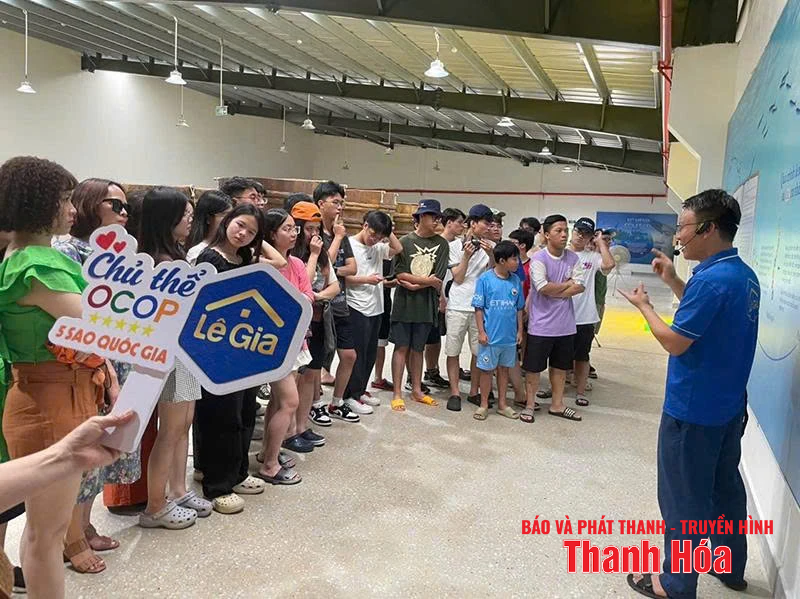
At the tourist destination belonging to Le Gia Food and Trade Service Co., Ltd. (Hoang Thanh commune), visitors can tour and experience the products of the local people in the coastal area.
The beach in Tinh Gia ward still retains its pristine beauty, a precious gift from nature. Adding to this atmosphere are the bustling "seafood markets" that meet on the beach every early morning, filled with buyers and sellers. Ms. Mai Thi Ha, a tourist from Hanoi, was delighted with the beach atmosphere when the boats returned. Here, she was able to buy fresh, delicious seafood at reasonable prices. "Immersing myself in the lives of the fishermen, I learned more about the unique culture and charm of the coastal villages. But besides swimming and buying seafood, I don't know what else to do or see," Ms. Ha said.
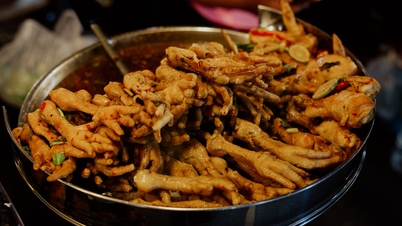
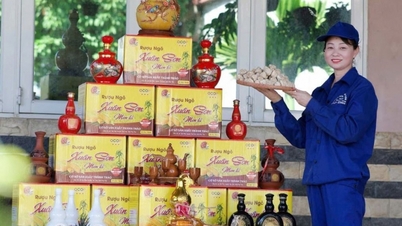
Ms. Ha and many tourists probably don't know that in Tinh Gia ward, there is the long-standing Do Xuyen - Ba Lang craft village famous for its seafood processing. The fish sauce making craft has existed in Tinh Gia for a very long time, and subsequent generations have continued the tradition, keeping the craft closely intertwined with their lives and developing it to this day. According to Mr. Duong Van Tac, Chairman of the Do Xuyen - Ba Lang Fish Sauce Association, the association currently has 22 members, including businesses and households involved in seafood production and processing in the area. Among them, the association has one 4-star OCOP product and dozens of 3-star OCOP products, such as shrimp paste, anchovy paste, and sour fish sauce. Many products are available in supermarkets and food supply chains nationwide.



Everyone understands that if tourists visit and experience the production process firsthand, the products of the craft village will be consumed directly, without intermediaries, and the association will have the opportunity to introduce the local traditional craft to tourists. However, in reality, the traditional fish sauce craft village of Do Xuyen - Ba Lang receives very few visitors. Occasionally, a few groups of tourists from other provinces come to Thanh Hoa for work to visit and learn about the production process. Therefore, the consumption of products through on-site visits and experiences is relatively low. Consequently, businesses and households producing and processing seafood in the area still have to distribute their products through intermediaries, such as supplying restaurants, tourist attractions, and purchasing traders.
This year's tourist season has seen the traditional fish sauce making village of Khuc Phu in Hoang Thanh commune emerge as the first bright spot in the coastal village's tourism development journey. In mid-2024, Le Gia Food and Trade Service Company Limited officially opened its doors to tourists for visits and experiences at the Le Gia fish sauce production facility. Developing from a seafood processing facility in the traditional fish sauce making village of Khuc Phu, Le Gia inherits and promotes traditional expertise, combining it with advanced processing of seafood products that meet national and international standards, while being environmentally friendly.
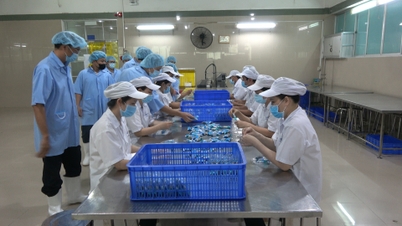
At Le Gia tourist destination, visitors can tour the production area, witness firsthand the large wooden barrels containing fish sauce, and learn about the fermentation and aging process, fostering a deeper appreciation for the land and people of the coastal village. Mr. Le Anh, Director of Le Gia Food and Trade Service Company Limited, stated: "Through the tours and experiences of tourists at the Le Gia fish sauce factory, the company's sales have increased by over 30%. Since June alone, Le Gia has welcomed 15,000 visitors from the Hai Tien tourist area. This is a source of joy for the business and a positive sign for traditional craft villages in the province that are striving to integrate production with the development of traditional craft village tourism."
In reality, tourism and experiences related to traditional crafts and villages in the province in general, and in coastal communes in particular, have not yet reached their full potential. According to Mr. Le Anh's analysis, the fundamental reason is that traditional craft villages operate on a small scale, such as within families, hamlets, and villages, rather than expanding to the wider public. Meanwhile, cooperation and connection between craft villages, destinations, and travel businesses are not truly frequent or effective. Therefore, tourists have few opportunities to access, learn about, and experience craft village tourism products. Furthermore, most households producing in craft villages have not seen the effectiveness of investing in and exploiting the value of production linked to tourism to generate revenue. Most craft villages only focus on the purely consumer market, so creating visually appealing products and building suitable display and exhibition spaces to attract tourists to the craft villages is almost non-existent.
To ensure that coastal craft villages truly realize their potential, provincial support policies are needed in planning, development, and product trademark registration. Simultaneously, craft villages need to innovate and improve designs, creating a rich and diverse range of products. Furthermore, localities should promote trade and encourage travel businesses to invest in building and developing tourism products from traditional craft villages. “Connecting craft villages with tourism development is not just a matter for the craftspeople themselves, but a collaboration between all parties, including state mechanisms and policies, individual craftspeople, craft villages, and travel businesses. Without any of these, craft village tourism will be very difficult to develop,” Mr. Le Anh affirmed.



Text and photos: Tang Thuy
Source: https://baothanhhoa.vn/khi-lang-nghe-hoa-song-du-lich-255987.htm

![[Image] National conference summarizing one year of operation of the overall organizational model of the political system, the three-tiered government model.](https://vphoto.vietnam.vn/thumb/1200x675/vietnam/resource/IMAGE/2026/07/01/1782882811691_ndo_br_1-jpg.webp)