

From the "inner child" to Vietnamese identity
The Swinging Project (initiated by economist Dr. Le Viet Quy, Vietnam Institute for Human Resource Development Research) was launched in the context of a rapidly changing social environment and increasing psychological pressure on various groups, from young people and workers to pregnant mothers.
The project aims to help people reconnect with and comfort their "inner child," reconnect with their Vietnamese identity, and find inner peace.

Instead of adopting purely Western therapeutic approaches, Dong Dua chooses a localized approach to psychological therapy through lullabies, folk music, painting, and traditional cultural symbols.
"Modern therapeutic methods that utilize Western cultural and artistic elements, while scientifically effective, are sometimes not truly suitable for the emotionally rich, communal, and family-oriented lives of Vietnamese people," shared Dr. Vo Thi Ha (Pham Ngoc Thach University of Medicine) - advisor to the project.
Therefore, the harmonization of modern psychology and Vietnamese culture is considered key to creating a therapeutic approach "specifically for Vietnamese people."
From its initial practice sessions, Dong Dua gradually expanded its activities, reaching out to various groups of people facing stress, anxiety, and emotional crises in modern life.
Every community project has its challenges, and for Dong Dua, the first difficulty was conducting in-depth research into Vietnamese culture to integrate it into therapeutic activities in a subtle and natural way.
This project goes beyond lullabies or folk music; it must explore the entire system of spiritual values, how Vietnamese people express emotions, and how they behave within their families and communities. It's a long process, requiring patience and continuous learning.
The next challenge is reaching the community. Psychological therapy activities require participants to be truly open and willing to confront their inner emotions. Meanwhile, many people are still hesitant to discuss mental health issues, viewing it as a "sensitive" area. Building trust and creating a safe environment for people to participate therefore also requires considerable time.
Financial resources are also a significant obstacle. Mental health care activities struggle to attract substantial funding due to the lack of direct economic benefits.
Currently, Dong Dua is primarily sustained by the contributions and support of individuals and small groups who enjoy community activities, along with some assistance from funds and research and innovation awards in the field of psychology.
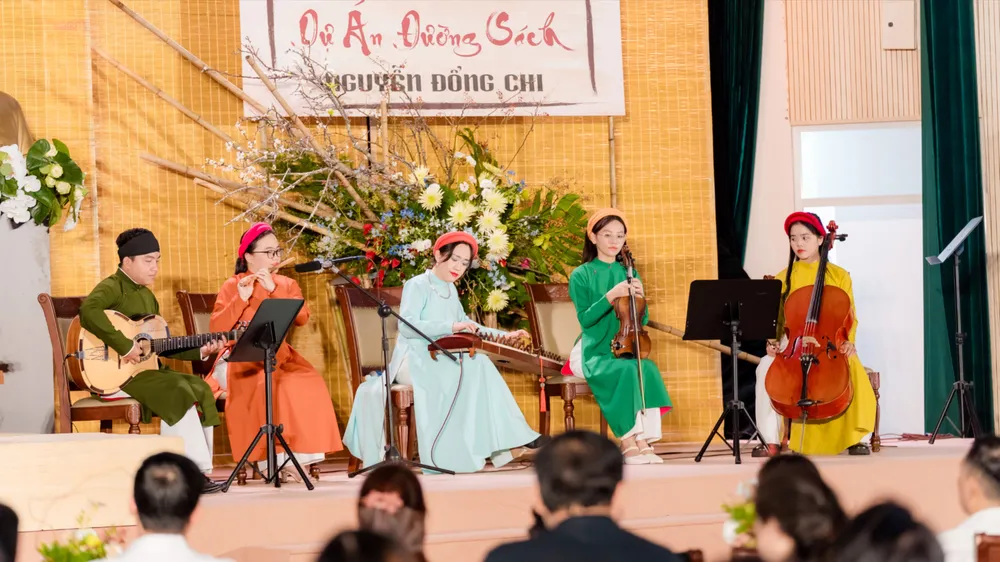
Currently, the Dong Dua project is implementing three main activities: "Heart Song" - combining relaxation therapy with Vietnamese lullabies; "Listening to the Body" - listening to the body and emotions through slow body movements to the sounds of traditional musical instruments; and "Improvisational Drawing" - connecting with the inner self through images, symbols, and Vietnamese art materials.
A spiritual remedy rooted in cultural traditions.
According to Dr. Hoang Kim Oanh (Faculty of Oriental Languages and Cultures, Ho Chi Minh City University of Foreign Languages - Information Technology), the project's professional advisor, from a cultural perspective, the healing process needs to be closely linked to the value system that nurtured that person.
In adults, childhood sounds and familiar cultural symbols can activate cherished memory areas in the subconscious, reducing stress and increasing feelings of well-being.
One meaningful activity of Dong Dua is a lullaby program for pregnant mothers. Vietnamese lullabies, with their gentle melodies and rich humanistic content, not only help mothers relax and reduce anxiety but also create an emotional connection with their unborn babies.
In the context of increasing concerns about postpartum depression, traditional music is seen as an important means of providing emotional support.
In the fast-paced modern life, spaces like Dong Dua where people can "pause to listen" not only contribute to community mental health but also spread a gentle yet enduring message: to go far, people need to know how to return to their cultural roots.
Source: https://www.sggp.org.vn/chua-lanh-bang-am-nhac-va-van-hoa-truyen-thong-post828445.html

































































Comment (0)