

The mountainous region of Huong Khe is gradually shaping a new image with agriculture oriented towards large-scale, commercial production. The orchards of Khe May, laden with oranges, the lush green pomelo gardens of Phuc Trach, and the well-invested agarwood plantations are affirming a clear direction: developing the rural economy based on the advantages of local specialties.
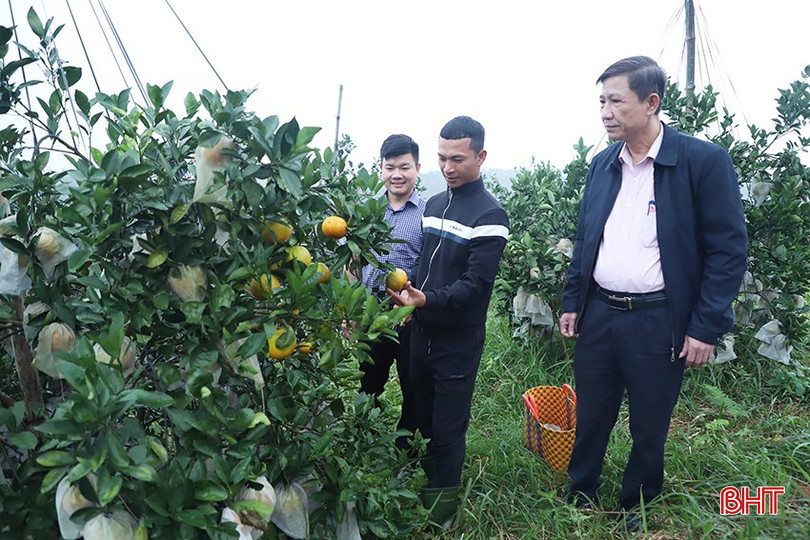
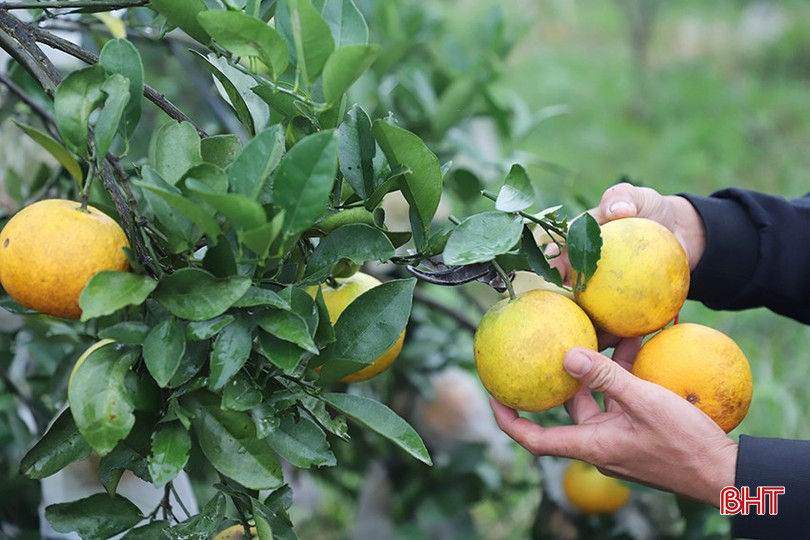
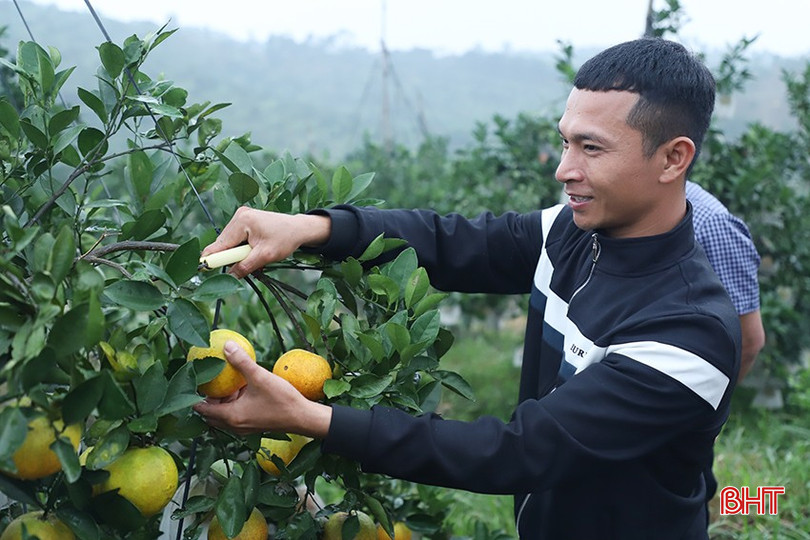
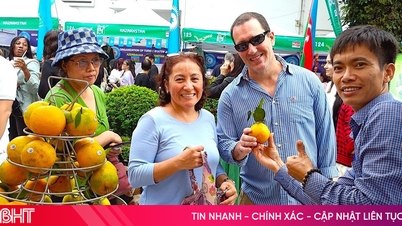
While many young people choose to leave their villages for the city to seek career opportunities, Dinh Cong Viet Minh (Hamlet 1, Huong Do Commune) decided to "go against the tide." Returning to the orange orchard that his family had painstakingly cultivated, Minh not only inherited but also revitalized the Khe May orange brand – one of Huong Do's famous specialties.
With a market-oriented approach, Mr. Minh boldly replanned the entire growing area, replacing old-fashioned orange varieties with high-quality citrus varieties suitable for the Khe May soil. To date, his family has planted 2.5 hectares, bringing the total area of Khe May oranges to 4.5 hectares. The model is cultivated organically, with strict control over the care process to produce clean products that meet market demands. Thanks to this sound strategy, Mr. Minh's Khe May oranges are purchased directly from the orchard by traders at prices ranging from 70,000 to 90,000 VND/kg. This year alone, revenue from oranges and related agricultural products is estimated at 600 million VND.
Mr. Minh shared: “Our family's farm economic model is supported by policy-based credit with long loan terms and low, stable interest rates. When farmers no longer struggle with the 'capital problem,' we have the opportunity to think further ahead and do things more systematically: from planning planting areas, selecting seeds, applying safe farming techniques to building product brands and connecting to consumer markets.”
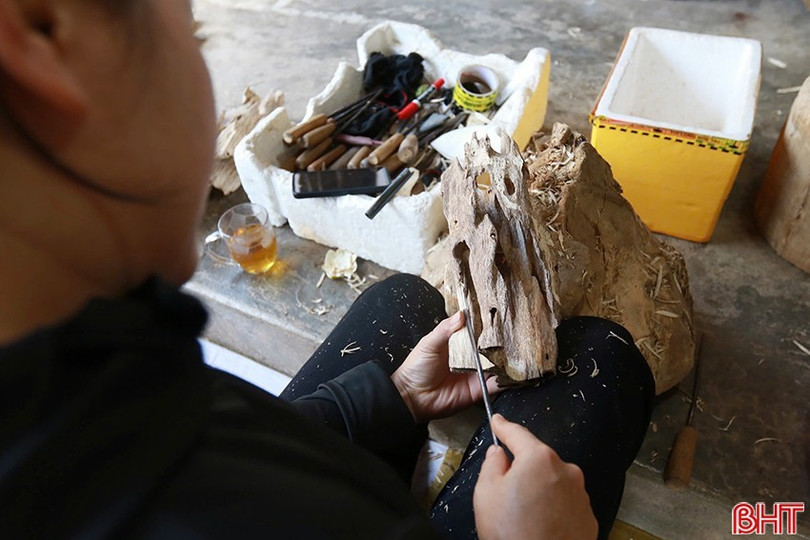
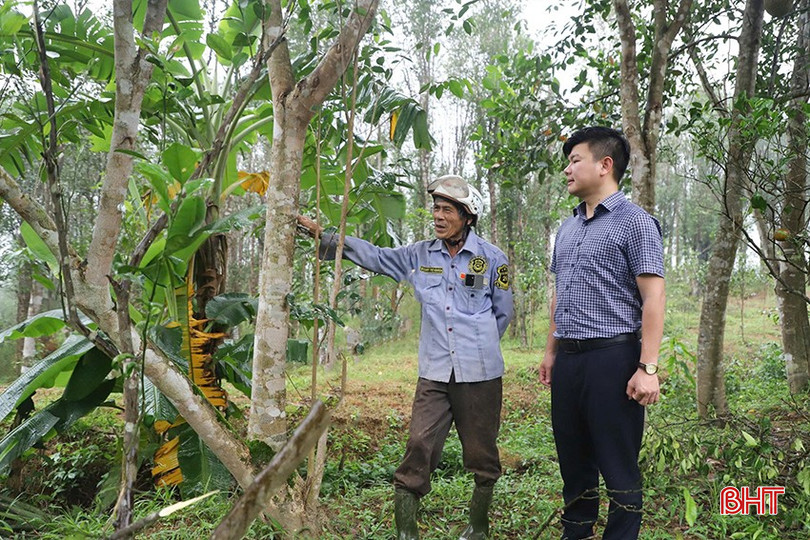
Not only Minh's family, but many households in the mountainous areas of Huong Khe are changing their lives thanks to policy-based credit. The family of Ms. Pham Thi Hieu (Phuc Trach commune) is one of the typical households developing agarwood trees – a type of tree with high economic value but requiring large investment and long-term care. Thanks to the process of improving the hillside garden and applying modern farming methods, the family's agarwood trees are growing well, promising a large income in the future. Ms. Hieu's family's economic success story affirms that policy-based credit not only helps people in mountainous areas overcome immediate difficulties but also creates a financial foundation for forming sustainable, long-term strategic economic models.
“For farmers, the biggest challenge remains investment capital. For over 15 years, my family has been involved with credit programs for poor households, newly-escaped-poverty households, and job creation programs of the Huong Khe Social Policy Bank. The funds are disbursed promptly at the local level, and the interest rates are stable, so we feel secure in making long-term investments without worrying about financial pressure,” Ms. Hieu shared.
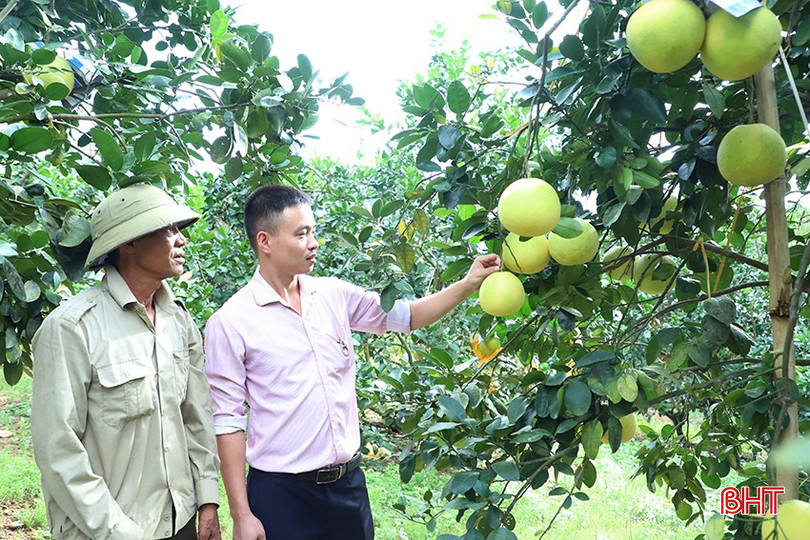
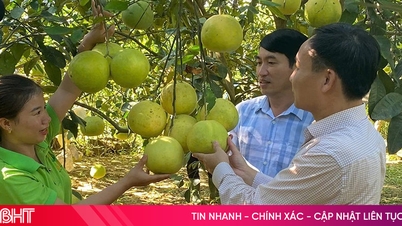
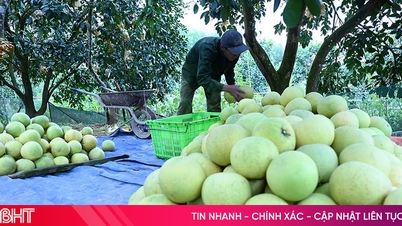
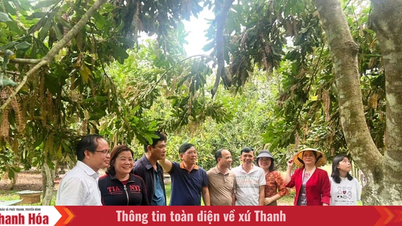
Along with Khe May oranges and agarwood, Phuc Trach pomelo is also a product that farmers in Huong Khe are investing heavily in for commercial production. Large pomelo orchards spanning tens of hectares are gradually emerging, contributing to a greener and more modern agricultural landscape in this mountainous region. Mr. Le Van Ty's family (Huong Pho commune) is one of the pioneering households that borrowed policy loans to expand their production scale. The family is actively caring for over 1,200 Phuc Trach pomelo trees, hoping for a bountiful harvest next year.
“In 2011, recognizing the potential of the specialty pomelo tree, we decided to change our approach. With capital support from the bank, our family boldly divided the land into plots, invested in new varieties and agricultural supplies to create a concentrated pomelo orchard, generating a stable revenue of around 400 million VND per year,” said Mr. Le Van Ty.
Overall, the specialized agricultural economic models in Huong Khe today not only generate income for individual households but also open up avenues for sustainable rural development, contributing to retaining young workers in their hometowns. In the journey of transforming the rural landscape, policy-based credit capital serves as a foundation, empowering people to invest boldly, innovate their thinking, and gradually build local agricultural product brands.
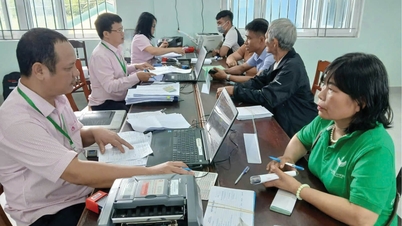
As of November 30, 2025, the total loan disbursement of the Huong Khe Social Policy Bank reached over 216 billion VND, with 3,130 poor households and policy beneficiaries accessing capital.
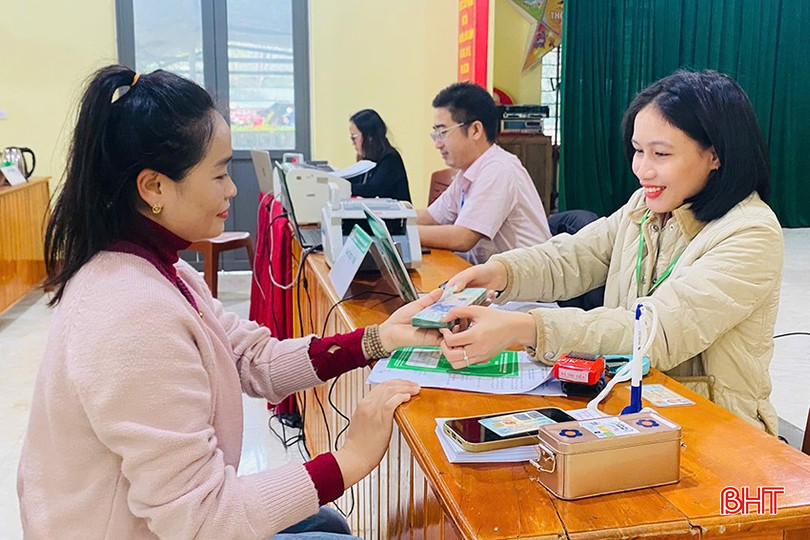
Mr. Le Viet Thong, Director of the Social Policy Bank of Huong Khe, emphasized: "We believe that policy credit is not only a social welfare support but also a tool to promote economic development. In the coming time, the unit will continue to prioritize capital for production and business, production models associated with the goal of developing local specialties, clean production, and value chain linkages, thereby contributing to increasing income, sustainably reducing poverty, and promoting local economic growth."
Source: https://baohatinh.vn/von-chinh-sach-tiep-suc-nang-tam-dac-san-dia-phuong-post301122.html


































































Comment (0)