

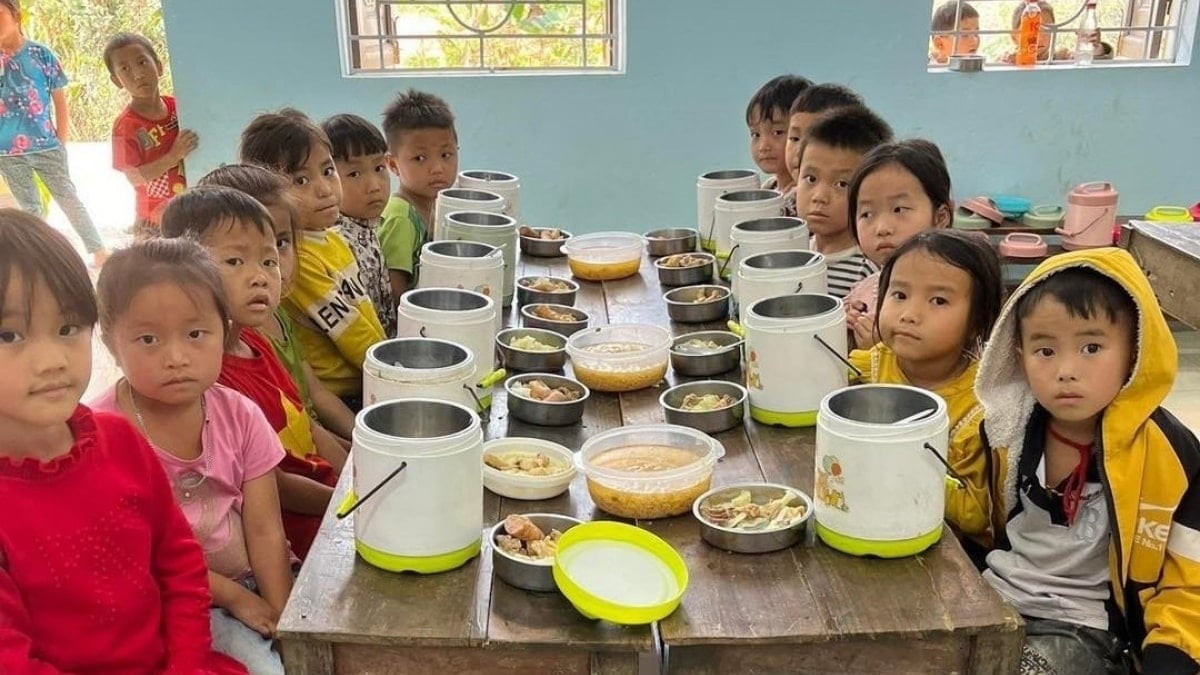
In recent days, the "Sponsor Children" project has become a hot topic on many social media forums and in everyday life. However, while previously the community was interested in this project because they believed in the good intentions and kindness of those implementing it, now there are doubts and concerns arising from reports of the "Sponsor Children" project lacking financial transparency and showing signs of irregularities in the management and use of charitable funds.
This is not the first time the issue of transparency in charitable activities has been raised and received special attention from society. Many charitable programs have received large sums of money from the community, but their operation and organization have revealed numerous shortcomings, and some have even been exploited by individuals.
Lawyer Dang Van Cuong – Head of Chinh Phap Law Office, Hanoi Bar Association, said that the general policy of the Party, State and localities always encourages, honors and creates favorable conditions for organizations and individuals to call for, receive, manage and distribute money or materials to support the poor, the sick, and those in distress… In essence, legal activities are voluntary civil relations with humanitarian and compassionate elements.
Prior to 2021, charitable activities were generally regulated by the conditional donation provisions of the 2015 Civil Code, resulting in many gaps in management and supervision. However, since 2021, the Government has issued Decree No. 93 on the mobilization, receipt, distribution, and use of voluntary contributions to support the overcoming of difficulties caused by natural disasters, epidemics, and incidents; and to support patients with serious illnesses. With this Decree, a legal framework has been established with more specific and stringent requirements to ensure transparency, accountability, and risk control.
"Decree 93 clearly stipulates that those soliciting charitable donations must publicly disclose the purpose, scope, and methods of fundraising, open separate accounts for each program and use them solely for that charitable purpose, be transparent about finances, keep complete records and documents, provide bank statements, and notify the local authorities where the donations are received and where the charity is organized."
"The decree has stipulated this very clearly, but violations still occur, possibly because some people deliberately disregard it to seize assets or because of a lack of understanding and contempt for the law," lawyer Dang Van Cuong emphasized.
Regarding the "Nurturing Children" project, although it was established before 2021, once Decree 93 was issued and came into effect, the project's operations must comply with its regulations – lawyer Dang Van Cuong added. Comparing this with legal regulations, the fact that the project "lacked auditing" and money continued to flow into Mr. Hoang Hoa Trung's personal account instead of an independent legal entity could be considered a violation of the law.
To ensure the sustainable development of charitable activities and the restoration of trust, according to lawyer Dang Van Cuong, in the coming time, it is necessary to strictly implement the regulations of Decree 93 so that the inspection and supervision of individual charitable funds can be carried out more rigorously, avoiding the exploitation of the kindness and compassion of the community for personal gain.
“To implement Decree 93, I believe it is necessary to emphasize the responsibility of local authorities and relevant agencies in controlling charitable activities. If it is discovered that individuals in the locality are soliciting charitable donations, even on a very large scale and with very large sums of money, but do not notify the local authorities or do not open a separate bank account solely for charitable purposes, then the local authorities, specifically the People's Committee of the commune or ward, or even the commune/ward police, can require those soliciting donations to comply with the law to prevent and stop profiteering and the money flowing into personal pockets,” lawyer Dang Van Cuong stated.
From the perspective of philanthropists, when transferring money to an individual or organization for charitable purposes, they should choose trustworthy sources. Charity based solely on kindness and trust is insufficient. Philanthropists should exercise ownership and responsibility over their donated assets, exercise oversight, and if they find that the authorized individual or organization is not transparent about its finances or is untrustworthy, they should request an explanation. If an explanation is not provided, they can request the authorities to intervene.
In addition, the beneficiary organizations and the local authorities where the beneficiary organizations conduct charitable activities also have a responsibility to control and monitor the situation to prevent individuals from exploiting charitable appeals for personal gain.
In today's era of digital transformation, applying information technology to manage and ensure transparency in charitable projects is a solution that needs more attention and promotion, suggested lawyer Dang Van Cuong.
The proactive and enthusiastic participation of individuals and organizations in charitable activities, sharing the difficulties with vulnerable people in the community, is highly commendable. However, along with compassion, those involved in charity work also need responsibility and a professional attitude to use donated funds – which represent the feelings and dedication of benefactors – for the right purposes, transparently and clearly. Furthermore, guidance, inspection, and supervision by state agencies and the law are also fundamental to ensuring that charitable activities promote positive values, effectiveness, and sustainability.
Source: https://baohaiphong.vn/lam-the-nao-de-quan-ly-giam-sat-minh-bach-tai-chinh-trong-hoat-dong-tu-thien-529464.html


![[Photo] Prime Minister Pham Minh Chinh attends the Conference summarizing and implementing tasks of the judicial sector.](/_next/image?url=https%3A%2F%2Fvphoto.vietnam.vn%2Fthumb%2F1200x675%2Fvietnam%2Fresource%2FIMAGE%2F2025%2F12%2F13%2F1765616082148_dsc-5565-jpg.webp&w=3840&q=75)









































































Comment (0)