

.jpg)
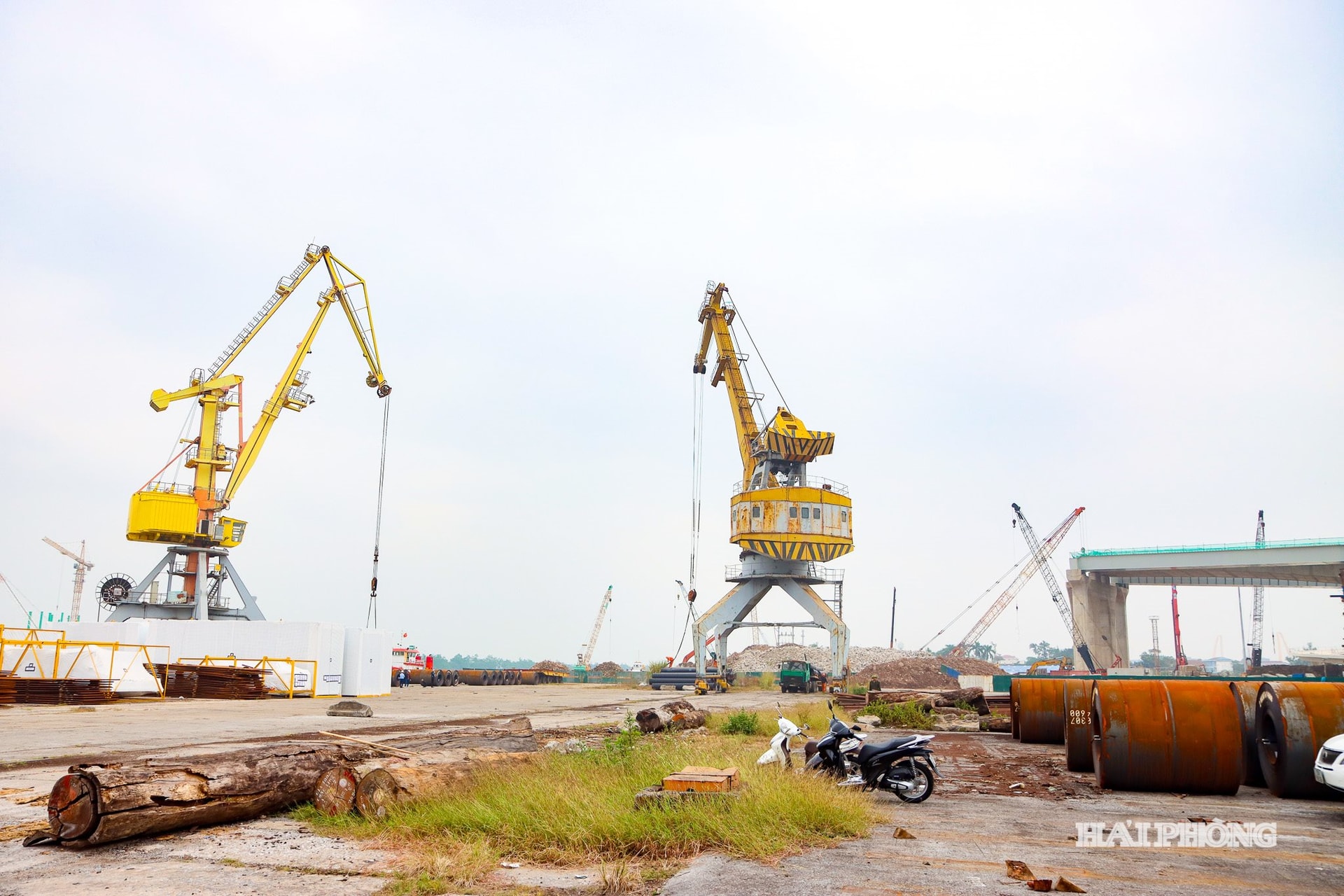
Ben Sau Kho, once a place of the past.
According to Tran Luu Phuong, Director of Hoang Dieu Chua Ve Port Company Limited ( Hai Phong Port Joint Stock Company), on December 5th, the company agreed to relocate its assets and hand over the entire remaining area of Hoang Dieu Port (approximately 212,074 m² ) to the Ngo Quyen Ward People's Committee and the investor to implement the Nguyen Trai Bridge construction project and urban beautification of the surrounding area.
This handover marks the official closing of operations at Hoang Dieu Port - a port that is over 150 years old.
In 1874, the French colonialists built Hai Phong Port (now Hoang Dieu Port), aiming to transform the village of Cam's boat landing into a large military and commercial port. The first port built by the French had a 250-meter-long pier and six large warehouses, so the locals still commonly call it the Six Warehouses Wharf, which is Hoang Dieu Port today.
The folk song: "Hai Phong has the Six Warehouses Wharf/ It has the Cua Cam River, and the cement kilns" remains deeply ingrained in the memories of countless generations of people in this port city.
In 1902, the French expanded the wharf to 750 meters, adding 40,000 m² of warehouse space and 15,000 m² of open-air yard. A railway line extended directly to the port to facilitate cargo handling. Cargo handling capacity increased from 8,000 tons per month at the beginning of the 20th century to 50,000 tons per month in 1939. To this day, Hai Phong port remains the only port in the country with railway access to its wharf.
.jpg)
In the early decades of the 20th century, Hai Phong port became a hub for receiving and transporting revolutionary cadres and documents.
In July 1926, Comrade Tran Phu departed from Hai Phong Port to Guangzhou (China) to attend a training course of the "Revolutionary Youth Comrades' Association". The first Indochinese Communist Party cell was established at Hai Phong Port very early on, on November 28, 1929. Notably, on October 20, 1946, at Ngự Wharf - Hai Phong Port, President Ho Chi Minh was welcomed upon his return from France.
During the war against American imperialism, Hai Phong Port became the country's largest and only maritime hub, receiving aid from the Soviet Union and other friendly countries for Vietnam, handling nearly 40 million tons of goods. Because of this, the port became a target for bombing and blockade by the US Air Force.
From 1965 to 1972, American planes bombed the port 300 times. The port's self-defense forces fought bravely, directly shooting down 3 planes and, together with the army units, shooting down 30 others; they also defused 308 bombs and mines, ensuring the safety of passing ships.
For the development of the city
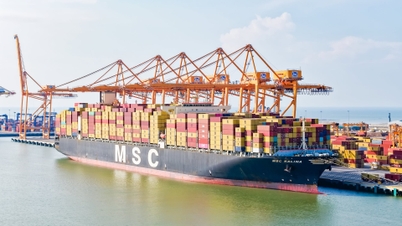
Hai Phong's seaport is strategically expanding its reach to the open sea, while Hoang Dieu Port, located deep within the city center, is lagging behind newer ports. In line with the city's urban renovation plan and the relocation of the political and administrative center to the area north of the Cam River, Hai Phong city began investing in the construction of the Hoang Van Thu Bridge in 2017. Initially, Hoang Dieu Port handed over the land for piers No. 10, 11, and a portion of pier No. 9.
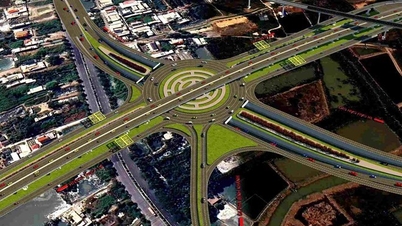
Next, the city implemented the project to build the Nguyen Trai bridge and renovate the surrounding urban area, reclaiming the entire area of Hoang Dieu port.
Before the relocation plan, the leaders, officials, and workers of Hai Phong Port in general, and Hoang Dieu Port in particular, felt much regret, but faced with the requirements of urban renovation and development, they set aside their feelings and focused on the common goal of the city's development.
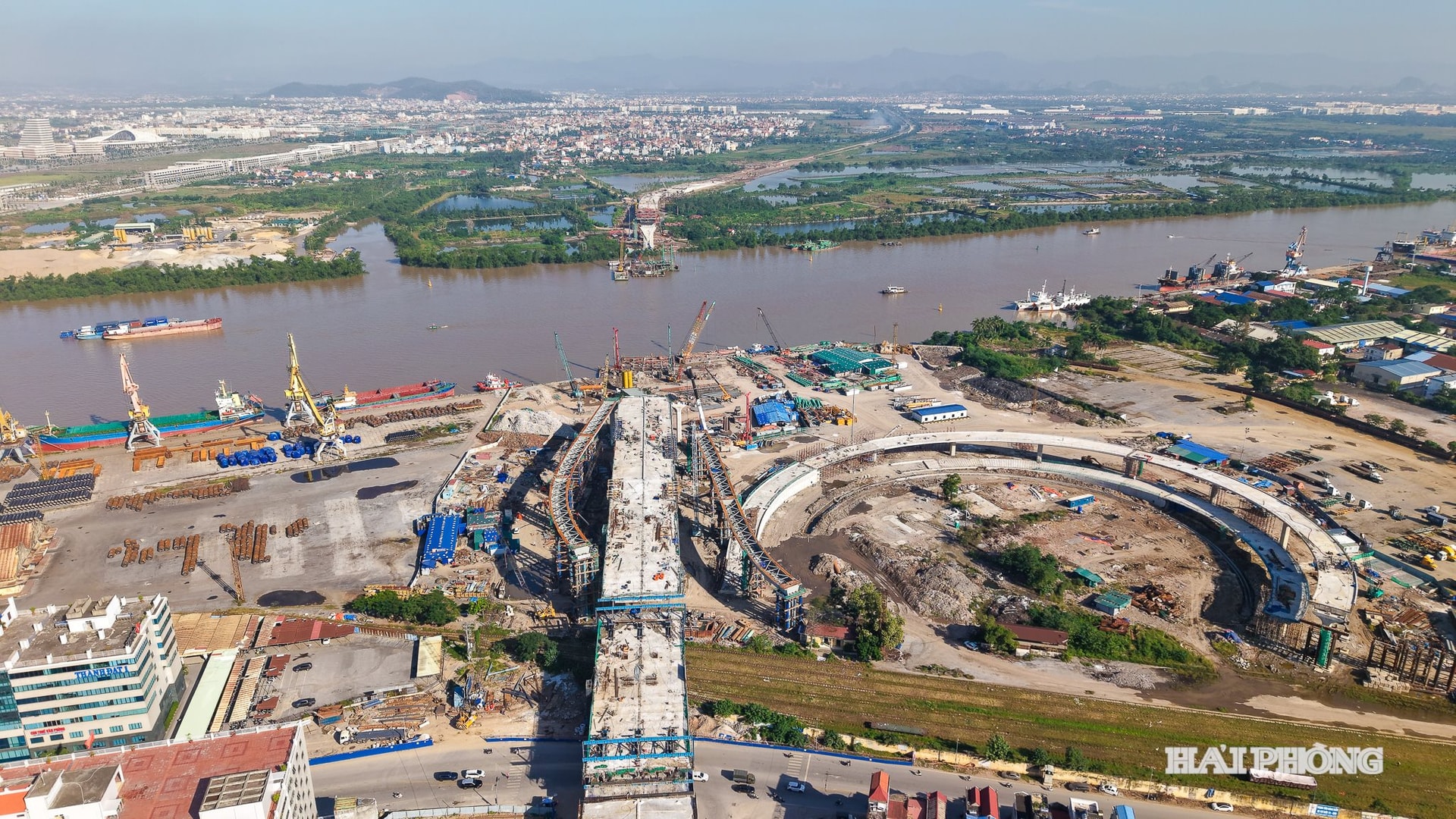
Photo: LE DUNG
Regarding the construction area of the Nguyen Trai Bridge, in Q4 2024 and Q1 2025, Hoang Dieu Port handed over 9.05 hectares of land within the construction boundary of the Nguyen Trai Bridge. The port proactively coordinated and supported Ngo Quyen Ward, the Hai Phong Project Management Board for Transportation and Agriculture Projects, and the contractor in land clearance work, creating the most favorable conditions for the project to ensure construction progress, even though the compensation and support plan at that time had not yet been fully calculated.
According to Ha Vu Hao, Deputy General Director of Hai Phong Port Joint Stock Company, the unit is committed to always complying with and implementing the city's directives regarding the handover of the land area at Hoang Dieu Port. However, due to time pressure, Hoang Dieu Chua Ve Port still had a contract in the first quarter of 2026 with a throughput of approximately 300,000 tons of goods awaiting import procedures.
To avoid disrupting the logistics chain and to facilitate the movement of goods by consignees, there are currently more than 40 consignments at Hoang Dieu port, including various types of goods such as equipment, automobiles, timber, ore, etc., whose owners have not yet come to claim and move them.
Therefore, Hai Phong Port and Hoang Dieu Chua Ve Port propose and hope that the People's Committee of Hai Phong City, during the period before the contract is implemented within the area (from bridge 4 to bridge 9), will create conditions for Hoang Dieu Chua Ve Port to use the above area to complete the contract and definitively handle the backlog of goods as well as relocate equipment.
"Hai Phong Port is committed to immediately handing over the land when the city implements the project on the area that the port has been given the opportunity to utilize and exploit," Mr. Ha Vu Hao affirmed.
To prepare for relocation, Hai Phong Port and Hoang Dieu Chua Ve Port implemented a series of policies to reorganize the workforce, move machinery and equipment, and relocate cargo handling sites. The companies proactively relocated the cranes, lifting equipment, and handling vehicles.
Source: https://baohaiphong.vn/ben-cang-lau-doi-nhat-hai-phong-hoan-thanh-su-menh-lich-su-529474.html












































































Comment (0)