

 |
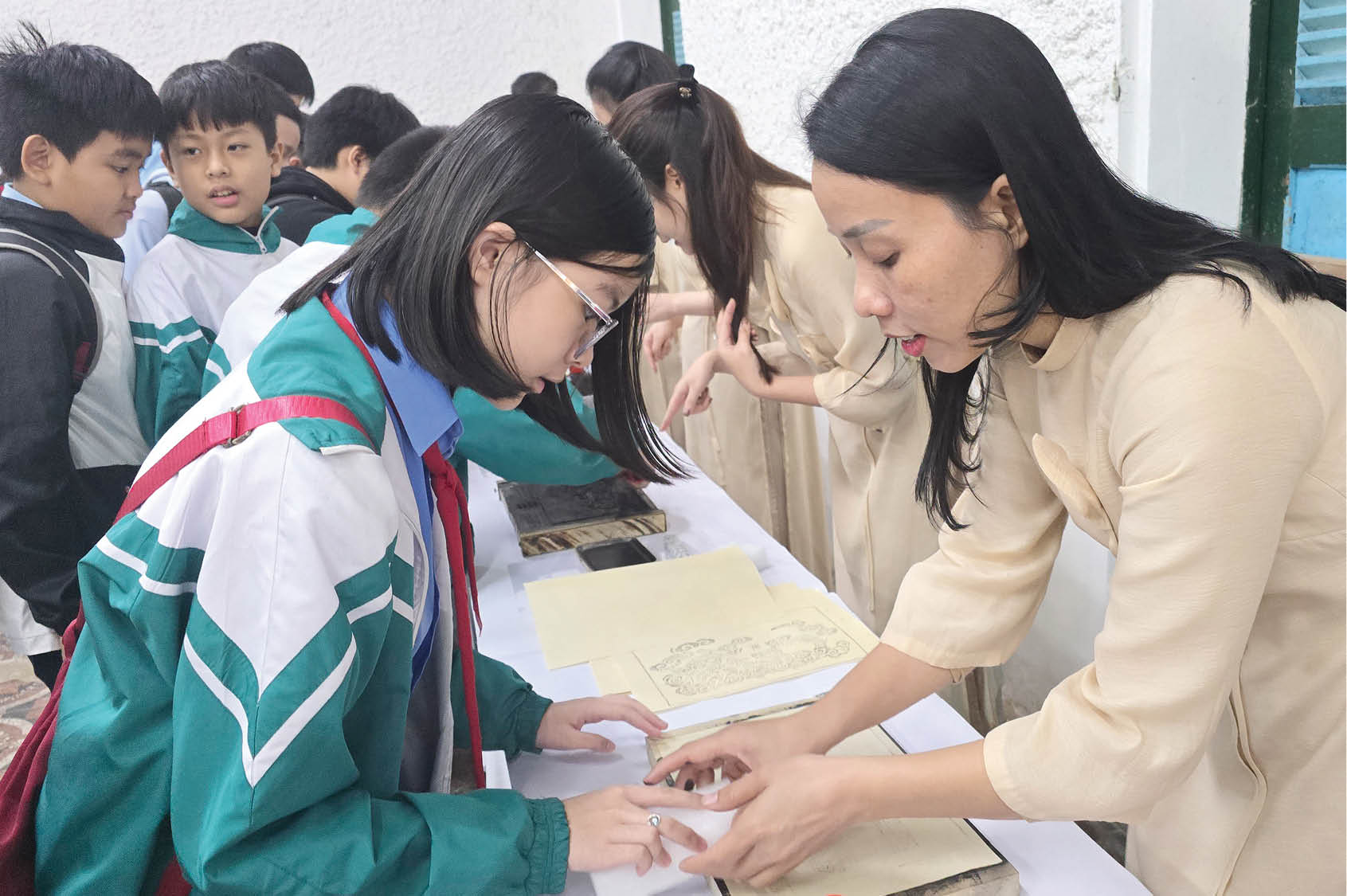
| Instructions for students on printing woodblock patterns from the Nguyen Dynasty. |
The supreme authority under the Nguyen Dynasty
Established in 1834 during the reign of Minh Mạng, the Privy Council is considered a crucial step in perfecting the state apparatus of the Nguyễn dynasty. It was where the king and high-ranking officials (from the third rank upwards) discussed important military and national affairs. Its status even surpassed that of the Cabinet – an agency that performs a similar role to today's government office .
Initially, the Privy Council was responsible for military affairs and national matters. Over time, its scope of activity expanded to many areas of politics , diplomacy, and more. The Council's workplace also underwent many changes: from the Right Guard Room in the Forbidden City, to the West Wing of the Infantry after the fall of the capital in 1885, then the Main Hall (1891). In 1899, the Council was moved out of the Imperial Citadel, built on the site of Giac Hoang Pagoda, and completed in 1903, also known as Tam Toa.
According to Hue cultural researcher Nguyen Xuan Hoa, two major reforms shaped the governing apparatus during the reign of Minh Mang: “Firstly, the unification of provincial-level administrative units – a foundation that remains in place today. Secondly, the establishment of two institutions: the Cabinet and, especially, the Privy Council – an intermediary institution between the king and the six ministries.” This model bears the hallmarks of Eastern monarchies, similar to the Privy Council of the Qing Dynasty (China), ensuring that the king directly governed the court while still having an elite group to support and provide feedback.
The current headquarters of the Privy Council (at 33 Tong Duy Tan Street, Phu Xuan Ward) is a unique architectural complex reflecting a blend of French colonial style and Hue imperial court motifs. It not only preserves the imprint of a bygone era of the imperial court but also witnessed many major historical events of the ancient capital.
Mr. Nguyen Xuan Hoa expressed his hope that, as the site is about to be repurposed into a space for creative heritage experiences, transforming from a crucial royal relic into a cultural institution integrated into social life, the Privy Council will generate new creative capacity and enhance the status of the heritage city.
"Open lecture halls" of the creative city.
Aiming to develop Hue into a regional creative city in line with UNESCO guidelines, the Hue Imperial Citadel Conservation Center (BTDTCĐ) is focusing on exploiting heritage values in a modern way. According to the Center's Director, Mr. Hoang Viet Trung, the Privy Council space will become the focal point of a creative ecosystem, a hub for heritage education, artistic exchange, and cultural experiences, open free of charge to the community.
"Heritage is not just for viewing; it must become a resource for socio-economic development. We strive to transform the value of heritage into creative materials, serving both conservation and stimulating artistic, cultural, and educational activities," Mr. Trung said.
One of the major priorities is heritage education, a program that has been implemented since 2008 and is continuously expanding, currently connecting 163 schools in the area. The collaboration between the Department of Education and Training and the Hue Center for Conservation of Cultural Heritage helps make history and culture lessons more engaging through direct experiences at historical sites.
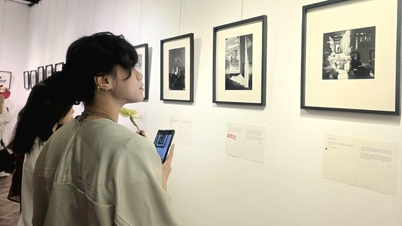
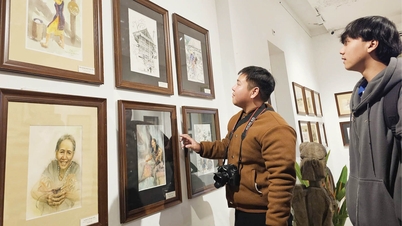
Recently, as part of the week celebrating Vietnam's Cultural Heritage Day on November 23rd, the Privy Council - Tam Toa became the "stage" for the first time for a series of exhibitions, displays, and experiences. A highlight was the documentary photo exhibition "The Privy Council of the Nguyen Dynasty (1834 - 1945) - A Journey Through Space and the Imprint of the Court," which provided viewers with access to information and documents about the architecture, history, and behind-the-scenes stories of the court.
Alongside this was the educational program "Exploring the Imperial Secretariat and Experiencing Hue's Heritage," which attracted the participation of over 800 students. They learned about Hue court music, experienced court games, and saw woodblock printing of Nguyen Dynasty patterns… activities that helped bring textbook knowledge to life.
Ms. Ho Nguyen Bao Nhi, a teacher at Tran Cao Van Secondary School, shared: “The Secret Service space provides students with vivid history lessons. They can touch ancient relics, gain a deeper understanding of Hue culture, and gradually develop an awareness of heritage preservation.”
Mr. Hoang Viet Trung stated that, in the near future, this space will regularly organize art activities, exchanges, and performances for tourists; and at the same time, support students from music and art schools to perform, aiming to create an environment that fosters sustainable creativity. The Hue Center for Conservation of Cultural Heritage will mobilize social resources to secure funding and form a creative ecosystem connecting many organizations and individuals.
In the future, the Privy Council promises to become a vibrant cultural hub, connecting education, experiences, and tourism. From a space that once held royal secrets, it will be a place to share heritage values, inspire creativity, and cultivate identity for the younger generation. This transformation will not only keep the historical site alive but also contribute to shaping a new image for the heritage city of Hue in the future.
Source: https://huengaynay.vn/van-hoa-nghe-thuat/co-mat-vien-tu-di-tich-den-khong-gian-sang-tao-160837.html
































































Comment (0)