

Deputy Minister of Science and Technology Hoang Minh stated: “Vietnam is at a crucial turning point. In line with global trends, all countries recognize the necessity of science and technology (S&T) in development. Vietnam has no other choice but to develop its socio -economic foundation based on technology and innovation to achieve double-digit growth. Therefore, the innovation and startup ecosystem is an extremely important component for the socio-economic development of the country.”

Against the backdrop of global trends, venture capital (VC) flows are showing a clear decline. From approximately $600 billion in 2021, this flow decreased to around $350 billion in 2022, and is projected to be only about $300 billion in 2023 and 2024. Vietnam is no exception to this trend; venture capital flows decreased from approximately $1.5 billion in 2021 to around $500 million last year. However, within this overall picture, investors continue to pour capital into key sectors such as AI, biotechnology, and deep tech.
Currently, Vietnam has over 4,000 startups and more than 200 supporting organizations. Vietnam boasts two tech unicorns and around 20 highly valued companies. “Major innovation hubs like Ho Chi Minh City, and more recently Da Nang, have entered the top list of innovative cities, along with Hanoi’s Hoa Lac High-Tech Park, which has entered the global top 200. Our Global Innovation Index (GII) ranks 44th out of 132 countries, and our ecosystem index is 55th. Vietnam’s ecosystem growth rate ranks third in ASEAN and fifth overall,” Deputy Minister Hoang Minh stated.
However, Vietnam still faces limitations such as the lack of widespread adoption of a spirit of daring to take risks, daring to fail, daring to venture forth, and accepting risks. The number of large-scale startups and individual organizations remains small.
“With a population of nearly 100 million, a large young workforce, and a high level of technological literacy, Vietnam cannot ignore the opportunity for development based on innovation. It is time for Vietnam to have a National Innovation Strategy. This strategy cannot be copied from other countries but must be based on Vietnam's unique characteristics, culture, and development goals,” Deputy Minister Hoang Minh emphasized.
To support these models, the State has not only adopted policy but has decided to directly participate in the ecosystem. The formation of national and local venture capital (VC) funds sends a strong message about the Government's direct involvement. The national fund is allowed to mobilize capital from both the state budget and domestic and foreign organizations and individuals. Importantly, this fund is permitted to invest over long-term periods (10-15 years), not being limited to short-term transactions as is the case with conventional budget regulations. The fund will prioritize investment in strategic technologies such as green technologies.
“Furthermore, the fund is even allowed to invest abroad to access new technologies, new products, and attract Vietnamese talent and intellectuals back to the country. This is a direct action by the State to promote the ecosystem. We are proposing and implementing the establishment of a specialized stock exchange for Vietnamese startups, individuals, and investment funds. This exchange is expected to be issued in the Government's program in the near future, helping to avoid divestment through unfavorable channels,” Deputy Minister Hoang Minh added.
Simultaneously, the National Technology Innovation Fund has officially issued a decree guiding its operation. This fund will support insurance companies in using new products, providing funding in the form of "vouchers" to purchase and use these new products. This addresses the biggest challenge for startups: finding early users and markets. Similarly, local science and technology development funds will support businesses in registering intellectual property rights and improving quality. Furthermore, to strengthen the infrastructure, we will form a professionalized workforce, including startup experts, consultants, and certified and accredited support organizations.
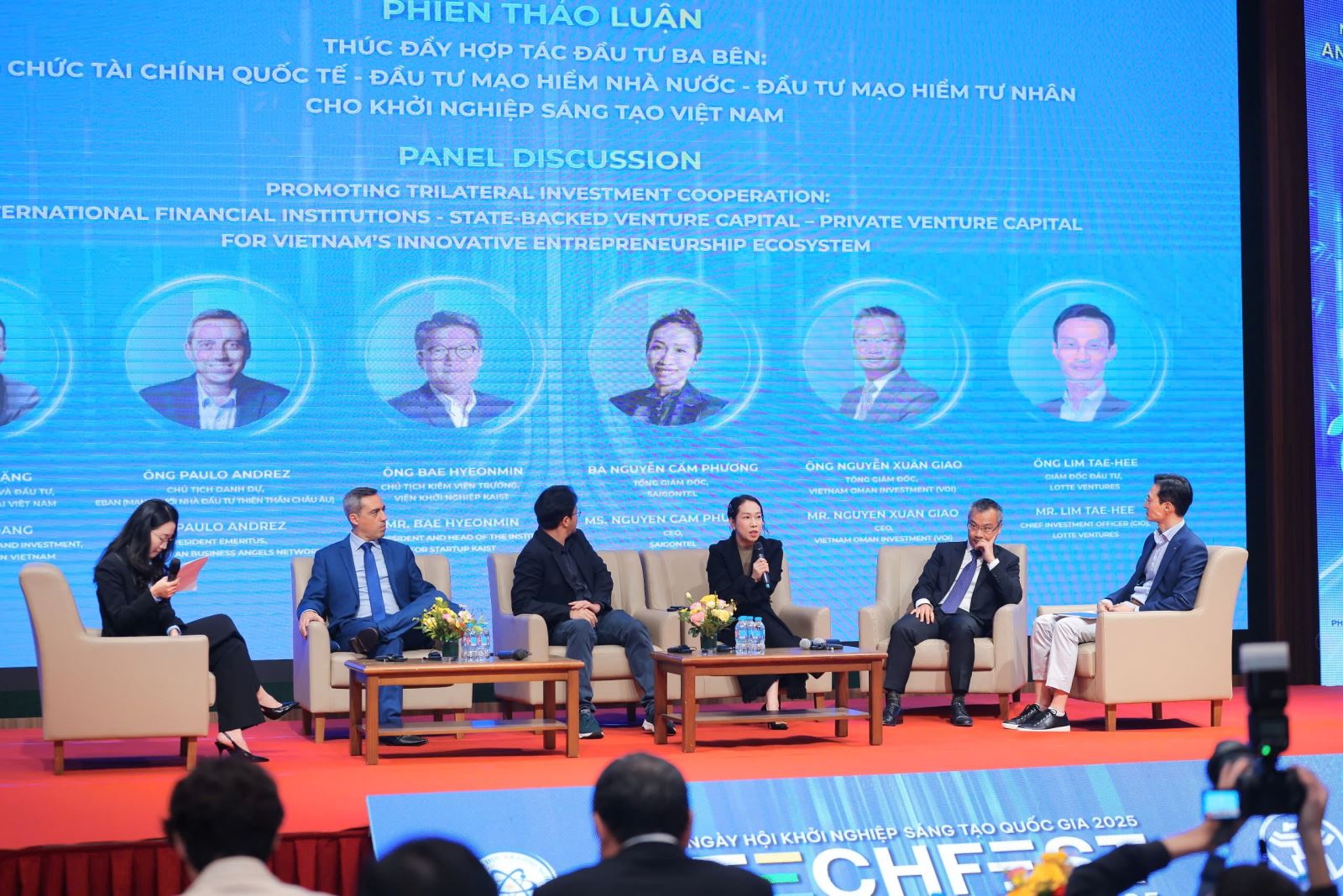
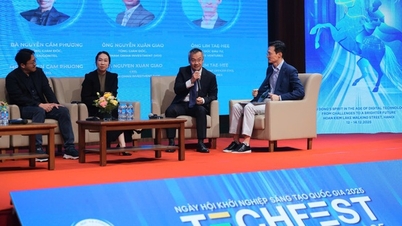
According to Vice Chairman of the Hanoi People's Committee Truong Viet Dung, in addition to strategic vision and major orientations at the central level, innovation only truly becomes effective when it is tested and realized in local practice. This is the space where major policies can be tested, adjusted, and transformed into concrete growth drivers.
In the process of perfecting Vietnam's institutional framework for innovation, Hanoi has been entrusted by the Party and State with the pioneering mission of leading the way in experimenting with and guiding groundbreaking innovation mechanisms. According to the Vice Chairman of the Hanoi People's Committee, this responsibility requires the city not only to be proactive in policy thinking but also to boldly implement new institutional tools that are consistent with market logic and international practices.
Based on the amended Capital City Law, on September 29th, Hanoi simultaneously issued six important resolutions covering all stages of the innovation ecosystem, from research and testing to commercialization. These policies create a legal framework for controlled testing of new technologies; innovate the management of science and technology towards a system of commissioned projects and contracted funding based on the final product; and provide direct support to the startup ecosystem through hiring experts, consultants, and technology testing.
Notably, Hanoi has established the Hanoi Technology Exchange with strong support mechanisms for testing, promotion, valuation, and intellectual property; and simultaneously formed the Hanoi Innovation Center operating under a public-private partnership (PPP) model, playing a coordinating role in connecting research, testing, and commercialization. These institutions are considered important "soft infrastructure" that helps shorten the gap from idea to market.
Hanoi has also established a Venture Capital Fund with a maximum size of 1,200 billion VND, in which the State budget contributes no more than 49%. According to Vice Chairman Truong Viet Dung, this is clear evidence of the State's mindset of creating development, not replacing the market but playing a role in sharing initial risks, considering State capital as "seed capital" to attract social resources.
The Government's issuance of Decree No. 264/ND-CP on the National Venture Capital Fund and local venture capital funds has established a unified institutional framework for the venture capital sector. Within this framework, Hanoi is a pioneering locality in piloting the model, gradually accumulating experience and creating a basis for standardizing and replicating the model nationwide.
From a long-term perspective, Vice Chairman of the Ho Chi Minh City People's Committee Truong Viet Dung emphasized the need to innovate the growth model. Accordingly, no economy can achieve sustainable growth if it relies solely on public investment, capital expansion, or resource exploitation. Total factor productivity (TFP) is the core driver of long-term growth. TFP can only be achieved through technological innovation, business models, and entrepreneurial spirit.
Given that small and medium-sized enterprises (SMEs) constitute a large proportion of the economy, venture capital funds are identified as a particularly suitable financial tool, helping promising ideas overcome the initial risk phase, scale up, and transform innovation into tangible economic value.
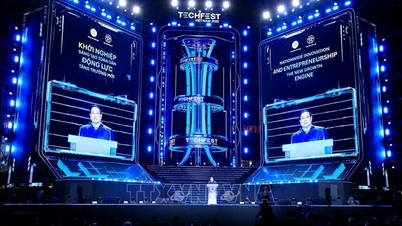
Through the Forum, Hanoi sends a clear message to domestic and international businesses, investment funds, and startups: the capital city is ready to become an open institutional space, a sufficiently large market, and a reliable partner to collaborate long-term, transforming innovative ideas into real value for society and sustainable growth in Vietnam.
Source: https://baotintuc.vn/ha-noi/huong-toi-mo-hinh-tat-ca-nguoi-dan-deu-co-the-khoi-nghiep-sang-tao-20251213150955837.htm










































































Comment (0)