

In the context of humanity facing the threat of the collapse of Earth's ecosystem, the idea of finding a new "home" has always been a hot topic.
However, instead of hopeless journeys to distant exoplanets, a bold hypothesis has emerged: Why not build an artificial planet right here in our Solar System?
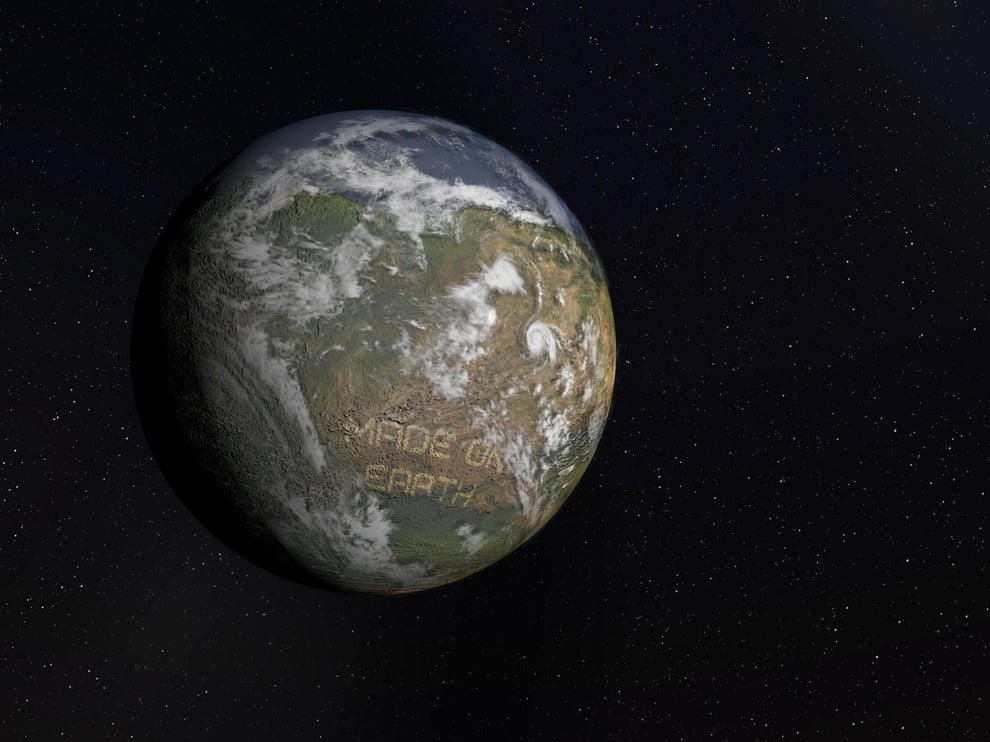
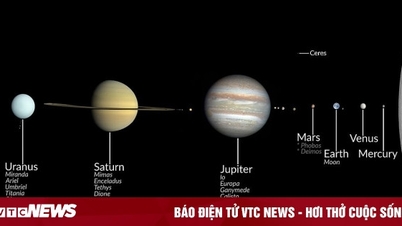
What kind of technology would we need to build a new planet? Where would we find enough raw materials for our future world ? (Image: Whatifshow).
The challenge of the "Creator"
To play the role of a "creator," humanity faces enormous technical demands. An artificial planet needs to possess several essential elements: a breathable atmosphere, a moderate temperature, gravity comparable to Earth's, and a stable orbit around the Sun.
The ideal location for this monumental project would undoubtedly have to be within the Sun's "habitable zone," where temperatures are neither too hot nor too cold for liquid water to exist.
However, the most challenging problem lies not in the location, but in the materials. To create a replica of Earth, we need an enormous amount of matter; even if we gathered all the asteroid belts in the Solar System, we would only have a mass less than 1/2000th of that of our blue planet.
The hunt for materials across space
Space engineers may have to turn their attention to the Oort cloud, a mass of icy debris at the outermost edge of the Solar System. While the reserves are abundant, distance is a critical obstacle.
Even though the Voyager 1 spacecraft has been traveling at 17 km/second for the past 41 years, it would still take another 300 years to reach the edge of this cloud and 30,000 years to penetrate it.
A more viable option would be to "steal" the moons. If we could pull all of Jupiter's moons out of the gas giant's orbit, we would obtain enough material to create a planet 7% the size of Earth.
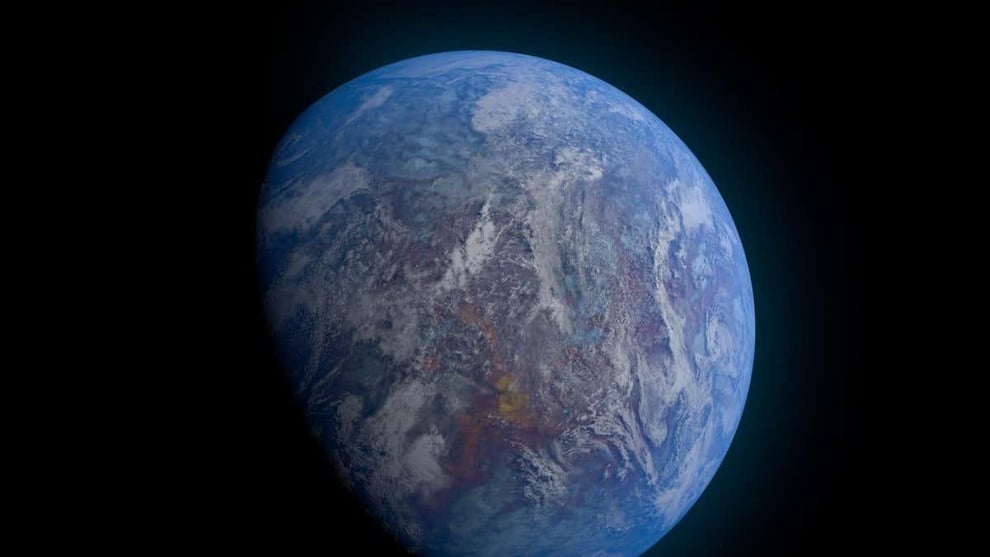
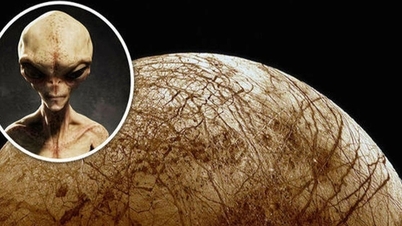
Currently, there is so much we don't know about the universe (Image: Whatifshow).
Gravity compression and life reconstruction techniques.
Small size doesn't necessarily mean weak gravity. Scientists hypothesize that if we could compress one-tenth the Earth's mass into a sphere the size of the Moon, we could recreate the familiar gravitational force we experience today. However, even this basic construction process would take hundreds of years.
Once the planet is in stable orbit, the process of "breathing life" into the dying planet will begin. Water will be poured in to evaporate and create an atmosphere. A paradoxical but useful scenario is that we could relocate polluting industries there to pump in CO2, further thickening the atmosphere.
Next, the plants will be brought up to perform photosynthesis, converting CO2 into oxygen.
The price of artificiality
It took millennia for the first inhabitants to set foot on this new world. While offering a familiar feeling in terms of temperature and gravity, the artificial planet would never achieve the natural stability of Earth. It would require active and continuous maintenance, from its environment to its orbital parameters, to prevent collapse.
Given the limitations of our current knowledge of the universe, building a new planet seems like too big a gamble in terms of time and resources. Perhaps modifying an existing celestial body (terraform) would be a wiser and more feasible option for humanity's future.
Source: https://dantri.com.vn/khoa-hoc/loai-nguoi-co-the-tu-xay-dung-mot-trai-dat-thu-hai-ngay-trong-he-mat-troi-20251217002606676.htm

![[Image] The tenacious fighting spirit of Vietnamese women's football](/_next/image?url=https%3A%2F%2Fvphoto.vietnam.vn%2Fthumb%2F1200x675%2Fvietnam%2Fresource%2FIMAGE%2F2025%2F12%2F17%2F1765990260956_ndo_br_4224760955870434771-copy-jpg.webp&w=3840&q=75)
![[Photo] Prime Minister Pham Minh Chinh receives the Governor of Tochigi Province (Japan)](/_next/image?url=https%3A%2F%2Fvphoto.vietnam.vn%2Fthumb%2F1200x675%2Fvietnam%2Fresource%2FIMAGE%2F2025%2F12%2F16%2F1765892133176_dsc-8082-6425-jpg.webp&w=3840&q=75)
![[Live] 2025 Community Action Awards Gala](/_next/image?url=https%3A%2F%2Fvphoto.vietnam.vn%2Fthumb%2F1200x675%2Fvietnam%2Fresource%2FIMAGE%2F2025%2F12%2F16%2F1765899631650_ndo_tr_z7334013144784-9f9fe10a6d63584c85aff40f2957c250-jpg.webp&w=3840&q=75)
![[Image] Leaked images ahead of the 2025 Community Action Awards gala.](/_next/image?url=https%3A%2F%2Fvphoto.vietnam.vn%2Fthumb%2F1200x675%2Fvietnam%2Fresource%2FIMAGE%2F2025%2F12%2F16%2F1765882828720_ndo_br_thiet-ke-chua-co-ten-45-png.webp&w=3840&q=75)
![[Photo] Prime Minister Pham Minh Chinh receives Lao Minister of Education and Sports Thongsalith Mangnormek](/_next/image?url=https%3A%2F%2Fvphoto.vietnam.vn%2Fthumb%2F1200x675%2Fvietnam%2Fresource%2FIMAGE%2F2025%2F12%2F16%2F1765876834721_dsc-7519-jpg.webp&w=3840&q=75)



















































![[Live] Closing Ceremony and Award Presentation for the "Impressive Vietnam Tourism" Video/Clip Creation Contest 2025](https://vphoto.vietnam.vn/thumb/402x226/vietnam/resource/IMAGE/2025/12/17/1765974650260_z7273498850699-00d2fd6b0972cb39494cfa2559bf85ac-1765959338756946072104-627-0-1338-1138-crop-1765959347256801551121.jpeg)















Comment (0)