

In the context of artificial intelligence revolutionizing the global music industry, the question of "was a song composed by a human or by AI?" is no longer purely academic, but has become a legal, economic , and ethical issue.
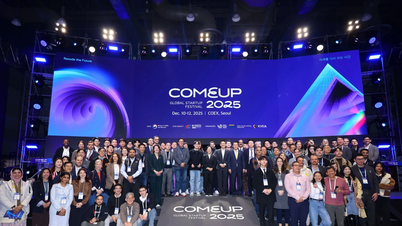
Speaking to international reporters at the recent Global Media Meet-up in Seoul, South Korea, the South Korean tech startup MIPPIA introduced a groundbreaking solution: an AI platform that detects plagiarism and identifies AI-generated music with an accuracy rate of over 98%.
Copyright crisis in the age of AI.
According to MIPPIA, the global music industry is facing a “silent crisis.” Lawsuits related to plagiarism are on the rise, involving international artists like Ed Sheeran and Mariah Carey, as well as K-pop groups.
It is estimated that the industry could lose more than 1 billion euros by 2028 due to copyright disputes, while around 30 million musicians face legal risks related to plagiarism.
The explosion of AI-powered music creation tools like Suno and Udio has further complicated the issue. Many major record labels, such as Sony Music, Universal Music, and Warner Music, have sued AI companies for copyright infringement. Conversely, some copyright authorities have begun requiring artists to prove that their songs were not created by AI.
“The music industry lacks a clear technical standard to distinguish between human creations and AI products. That’s the gap MIPPIA wants to fill,” shared Go Seonghyeon, CTO of MIPPIA.
Analyze music as… music
Unlike many current solutions that analyze sound at the audio signal level, MIPPIA approaches music as a complete artistic construct.
This platform analyzes songs by their components such as verse, pre-chorus, chorus, chord progression, melody, and overall structure—even if the song has been remixed, tempo changed, or key altered.
MIPPIA's core technology is based on a "segment transcription" model, converting raw audio into musical data (notes, chords, structure), then comparing it to a large database through self-monitoring machine learning models. As a result, the system not only concludes "whether or not" a piece of music is similar but also explains why two songs are considered similar, or why a particular piece of music shows signs of being AI-generated.
"We're not just saying one song is similar to another, but we're also pointing out which parts are similar, to what extent, and musically. This is especially important in legal disputes," Go emphasized.
Global growth and agile business models
Just one year after its launch, MIPPIA has attracted approximately 45,000 musicians in 149 countries, with a monthly user growth rate of around 30%. The platform currently serves over 30,000 regular musicians and is approaching 50,000 users.
MIPPIA implements multiple business models simultaneously:
B2C: Free packages for basic testing, along with paid packages for professional musicians.
B2B: Pre-release album risk screening services, record label decision support, and post-release plagiarism monitoring.
API: Allows music platforms and technology companies to directly integrate plagiarism detection and AI-generated music capabilities.
MIPPIA has already partnered with numerous partners in South Korea and Japan, and is working with distributors and music platforms in the United States. Japan is considered a "strategic gateway" due to its music market worth approximately $12 billion and its strong culture of intellectual property protection.
Long-term vision: A new standard for music copyright.
Beyond its detection tool, MIPPIA aims to build a new standard for music copyright registration and management in the AI era. The company seeks to collaborate with international organizations such as CISAC, developing an AI-native music registration system and a transparent mechanism for licensing music IP data.
"AI is not the enemy of creativity. But for AI to develop sustainably, we need tools that ensure fairness for creators," Go asserted.
In the context of emerging markets like Vietnam witnessing a boom in the creative community on digital platforms, solutions like MIPPIA can become crucial infrastructure, helping to protect artists' rights and build a more transparent music ecosystem in the age of artificial intelligence.
Source: https://www.vietnamplus.vn/mippia-khi-tri-tue-nhan-tao-tro-thanh-la-chan-bao-ve-ban-quyen-am-nhac-toan-cau-post1083126.vnp


![[Photo] Prime Minister Pham Minh Chinh receives Lao Minister of Education and Sports Thongsalith Mangnormek](/_next/image?url=https%3A%2F%2Fvphoto.vietnam.vn%2Fthumb%2F1200x675%2Fvietnam%2Fresource%2FIMAGE%2F2025%2F12%2F16%2F1765876834721_dsc-7519-jpg.webp&w=3840&q=75)
![[Image] Leaked images ahead of the 2025 Community Action Awards gala.](/_next/image?url=https%3A%2F%2Fvphoto.vietnam.vn%2Fthumb%2F1200x675%2Fvietnam%2Fresource%2FIMAGE%2F2025%2F12%2F16%2F1765882828720_ndo_br_thiet-ke-chua-co-ten-45-png.webp&w=3840&q=75)
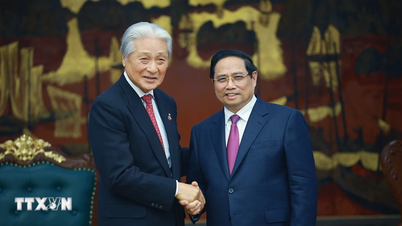
![[Photo] Prime Minister Pham Minh Chinh receives the Governor of Tochigi Province (Japan)](/_next/image?url=https%3A%2F%2Fvphoto.vietnam.vn%2Fthumb%2F1200x675%2Fvietnam%2Fresource%2FIMAGE%2F2025%2F12%2F16%2F1765892133176_dsc-8082-6425-jpg.webp&w=3840&q=75)





















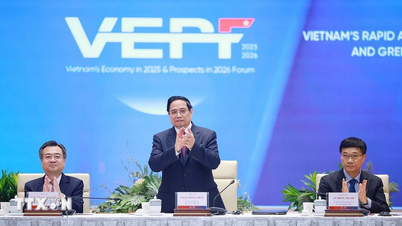




























![[Photo] Prime Minister Pham Minh Chinh attends the Vietnam Economic Forum 2025](https://vphoto.vietnam.vn/thumb/402x226/vietnam/resource/IMAGE/2025/12/16/1765893035503_ndo_br_dsc-8043-jpg.webp)

























Comment (0)