

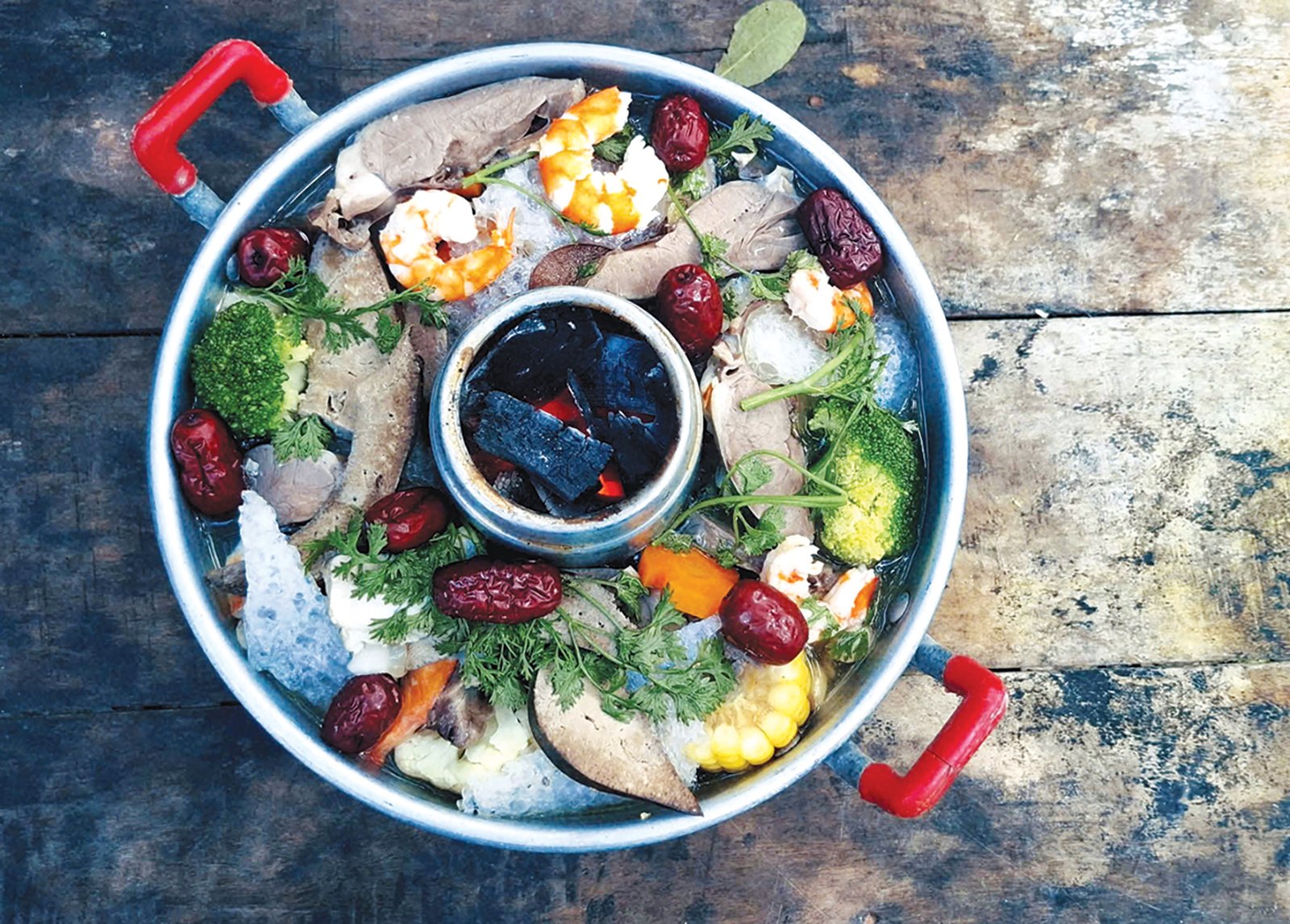
The "Cù Lao" hot pot dish is a quintessential dish of the Mekong Delta region. Photo: MY HANH
Dishes from the island region
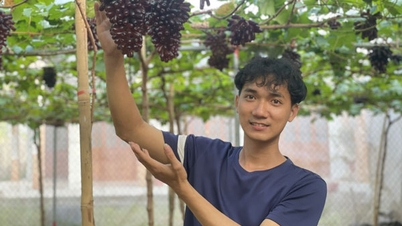
The food in the Mekong Delta is very familiar and rustic, and can be named after the cooking method, the ingredients, or even the cooking utensils. Following trending videos on social media, we found our way to Tuan's cherry orchard in My Hoa Hung commune. Ms. Le Thi Tuyet Nhung, Mr. Tuan's wife, excitedly said: “VTV recently came to film and introduce the dishes here, and everyone seemed interested and curious. I thought that for a business in the countryside, choosing rustic dishes would suit the rural atmosphere, and I didn't expect so many people to praise it. I'm so happy!” Some typical dishes at Mr. Ho Quoc Tuan's restaurant include clay-baked chicken, island hot pot, grilled snakehead fish, crispy rice, grilled rat with fermented bean curd, and deep-fried elephant ear fish… The most impressive dishes are the island hot pot and clay-baked chicken; customers must order in advance because the ingredients must be fresh, the preparation is elaborate, and the cooking time is long.
"Cù lao" is the name of a common utensil from the past, used for displaying food, and still preserved today. This aluminum "cù lao" has a distinctive shape with a central cylindrical tube to hold charcoal for heating the food, and a drain underneath to collect the ashes. Geographically, "cù lao" refers to a small landmass rising from a river, receiving alluvial soil and providing fertile land for crops. In culinary terms, "cù lao" evokes the abundance of ingredients, meticulous preparation, and rich flavors of heartwarming family gatherings in the countryside.
In the past, before the advent of alcohol stoves or mini gas stoves, the "cù lao" (a type of small pot) was widely used to keep food warm in hot pots throughout the meal. This dish was typically prepared for formal occasions such as ancestral worship ceremonies, weddings, and family gatherings. In modern times, the "cù lao" is less commonly used due to the abundance of electric hot pots and stoves. Some restaurants have cleverly incorporated this dish into their menus to create a unique selling point. Many eco-friendly restaurants also use "cù lao" to serve tourists, keeping pace with this growing trend.
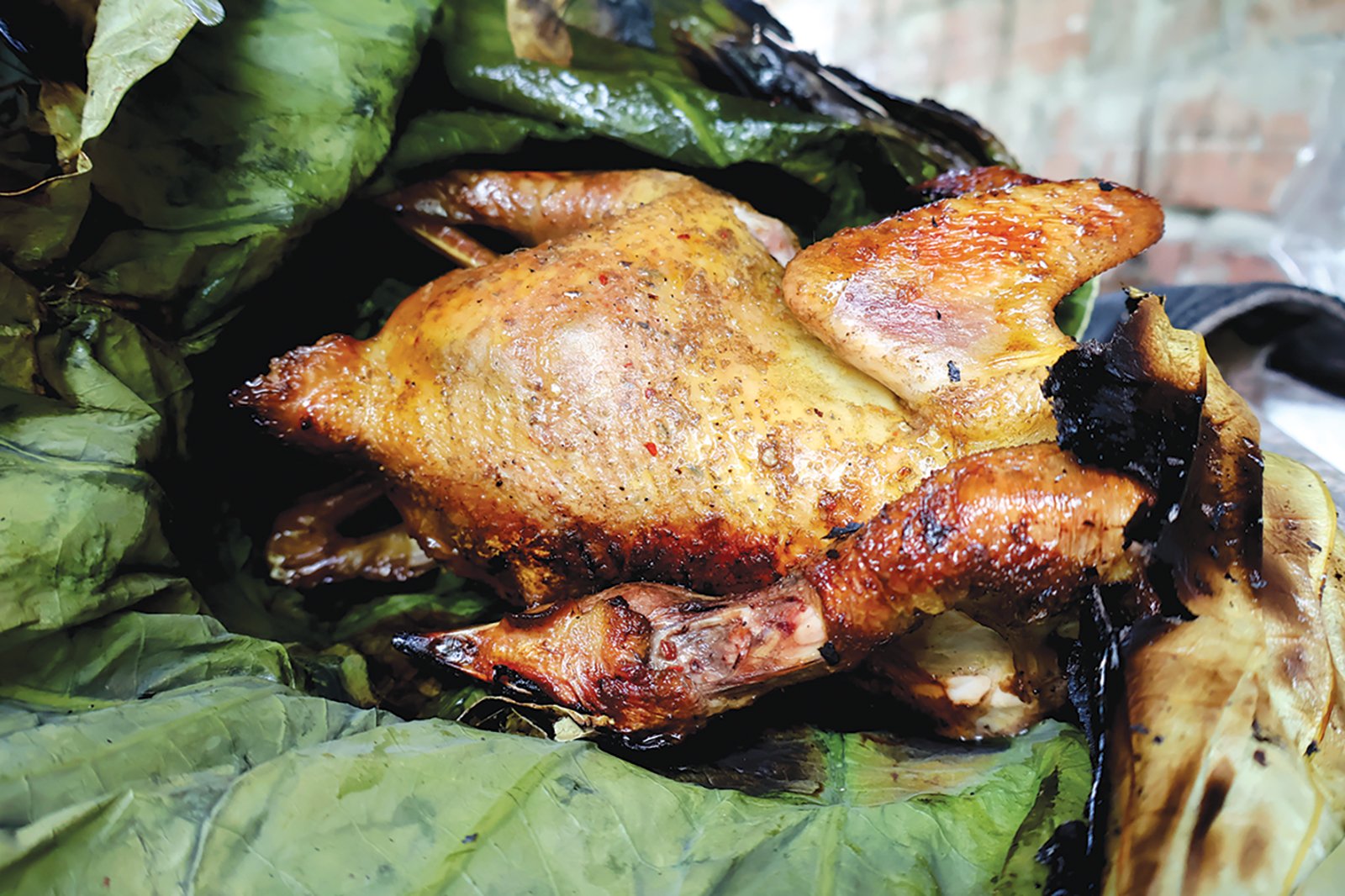
A rustic dish of chicken baked in clay. Photo: MY HANH
Quality ingredients
According to Anh Tuan, My Hoa Hung islet has many century-old houses, most of which are preserved and used as tourist attractions and accommodations. Many of these old houses remain on the islet, but visitors can only see and enjoy islet hotpot during special occasions like festivals and memorial services. At his restaurant, he serves this dish upon request, so it always has a large customer base.
The ingredients for making "cù lao" (a type of hot pot) include chicken offal, pork offal, liver, heart, gizzard, fish cakes, etc. Vegetables are carefully selected according to color to create an eye-catching dish; there must be the vibrant colors of carrots, the brown of jujubes, the pristine white of Chinese cabbage, the green of broccoli, and the dark brown of straw mushrooms… Skilled cooks may even carve vegetables into flowers and leaves for decoration, adding to the dish's visual appeal.
The broth for the "cù lao" hot pot is made from chicken or bone broth simmered with cassava, onions, and white radish for a naturally sweet flavor. It also includes dried shrimp and grilled dried squid to enhance the richness. "Feasts in the Mekong Delta have many delicious dishes, but the meal wouldn't be complete without 'cù lao' hot pot. After eating cold, fried, and steamed dishes, the main course, 'cù lao,' is what diners eagerly await. The charcoal in the bamboo tubes burns brightly, keeping the broth simmering gently, and the food piping hot – perfect for enjoying," shared Ms. Nhung.
The next famous dish is clay-baked chicken, also known as "beggar's chicken," with various variations explaining the quick preparation method when cooking utensils are unavailable. According to Ms. Mai Ngoc Huynh, a resident of Cu Lao Gieng commune, in the old days, after finishing their farm work, people would pile straw and firewood in the fields to conveniently roast chicken as a snack. The whole chicken was covered in a layer of clay; once cooked, they simply removed the clay, leaving only the tender white chicken meat to enjoy immediately. Thanks to her childhood years of hard work in the fields with her grandparents, Ms. Huynh sees this dish as a reflection of the familiar labor of the countryside.
Today, clay-baked chicken has been slightly modified but still retains its characteristic flavor and traditional preparation method. A whole chicken is cleaned, drained, marinated with spices, then wrapped in several layers of lotus leaves, and finally covered with a layer of sticky clay. This dish is quite time-consuming; a small chicken takes 45 minutes to bake, while a larger one requires an hour or more to ensure the meat is evenly cooked and juicy. After the waiting period, the cook carefully removes the outer layer of lotus leaves, revealing the glossy, fragrant chicken skin. The chicken is best dipped in coarse salt mixed with chili peppers and a squeeze of lime juice.
Source: https://baoangiang.com.vn/moi-mon-an-la-mot-cau-chuyen-a427187.html













































































Comment (0)