


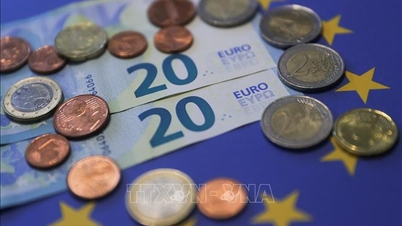
Chinese yuan and ruble. (Source: businesspostbd.com)
Federal debt bonds (OFZ, government debt bonds) denominated in yuan will be issued on the Moscow Stock Exchange.
The Russian Finance Ministry revealed some details of the upcoming issuance: Investors will be offered two tranches of federal debt bonds with a fixed coupon rate, denominated in yuan, with maturities of three to seven years, a coupon term of 182 days, and a face value of 10,000 yuan (approximately 114,000 rubles).
The bond subscription period is scheduled to open on December 2nd. The Ministry of Finance will determine the issuance volume and coupon interest rate depending on demand. The technical issuance is expected to take place on December 8th, the Ministry of Finance said.
The bonds, as well as the payments, will be issued in both Chinese yuan and rubles. Investors will choose their preferred currency. Gazprombank (the order-setting agent), Sberbank, and VTB Capital Trading will act as the order-setting entities.
The possibility of issuing OFZs denominated in yuan, also known as Panda bonds, has been discussed in Russia since 2015. In the fall of 2016, a representative of the Ministry of Finance announced that the first issuance, worth $1 billion, would take place at the end of the year, but the plan did not materialize.
The last time the Russian Ministry of Finance offered traditional Eurobonds to investors, instead of alternatives, was in May 2021. In March 2023, Prime Minister Mikhail Mishustin noted that Russia was considering issuing OFZs and other instruments in the currencies of friendly countries.
According to several sources, the Ministry of Finance plans to issue four tranches of government bonds denominated in yuan, totaling 400 billion rubles, with maturities ranging from three to ten years.
According to estimates from the Ministry of Finance, this year's budget deficit will reach 5.7 trillion rubles, down from the initial target of 1.2 trillion rubles. As of the end of September, oil and gas revenues had decreased by 20%, customs duties by 19%, and non-resource taxes, while showing growth, were still slower than planned. Under budget adjustments, value-added tax revenue will be 1.19 trillion rubles lower than expected, corporate income tax will decrease by 167 billion rubles, and recycling fees will decrease by 440 billion rubles.
Source: https://vtv.vn/nga-lan-dau-tien-phat-hanh-trai-phieu-bang-dong-nhan-dan-te-10025111218132686.htm


![[Photo] General Secretary and President To Lam presides over a meeting on preparations for the review of one year of operation of the three-tiered government system.](https://vphoto.vietnam.vn/thumb/1200x675/vietnam/resource/IMAGE/2026/06/02/1780391821195_a1-bnd-4595-9717-jpg.webp)

















































































Comment (0)