


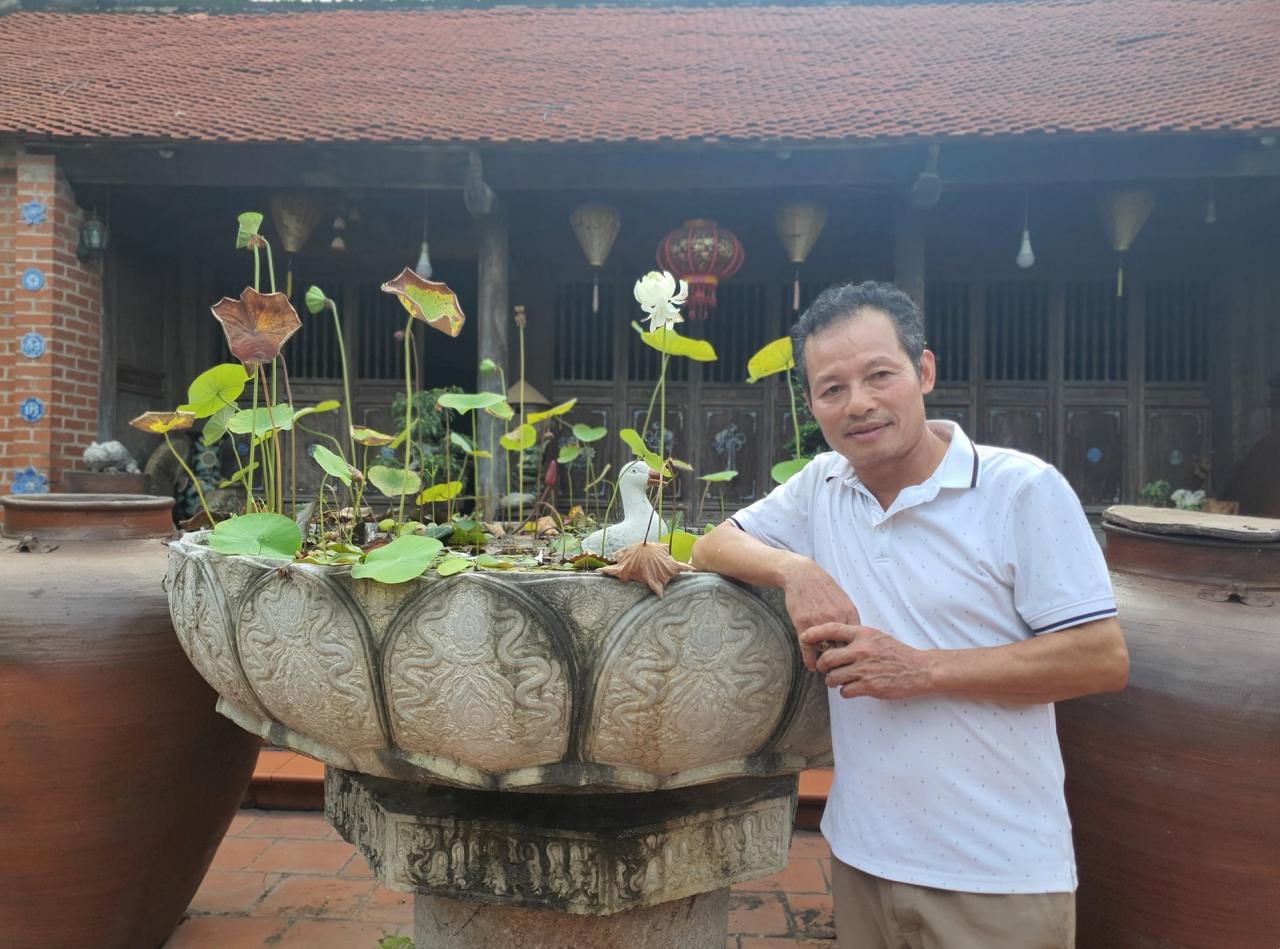
Construct... traditional living spaces
Giang's ancestral home is in Trung village (Ngoc Chau commune, Tan Yen district, Bac Giang province), the birthplace of the national hero Hoang Hoa Tham (1858 - 1913). He returned to his hometown and established Viet Phu Linh Giang, about 500 meters from the Hoang Hoa Tham memorial site.
He turned his home into an eco -tourism area while also showcasing the antiques he had collected over the past few decades for friends and visitors to admire.
Viet Phu Linh Giang is a complex of classic houses typical of the midland region of Northern Vietnam. The space, with its ponds, pavilions, perennial gardens, and restaurants, provides a place for friends and visitors from afar to rest, enjoy the scenery, and view his collection of antiques, especially those visiting the birthplace of De Tham.
Giang built a three-bay, two-wing wooden house with a tiled roof. A horizontal house stood in the center of the Viet Phu estate, following the local tradition of house and garden construction, but on a larger and more imposing scale.
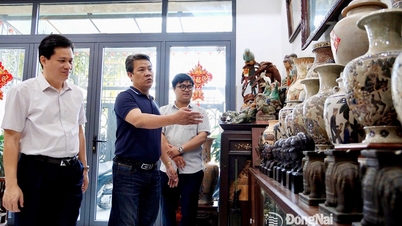
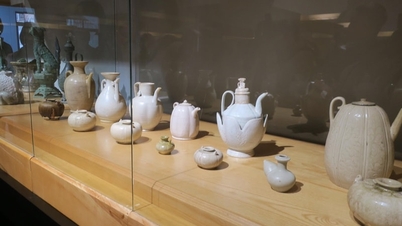
There, he displays antiques made of ceramics, porcelain, wood, stone, bronze, farming tools, decorative parts, ancient temple and pagoda architecture, cars, and more.
The wooden house is also a valuable architectural and artistic artifact, showcasing the traditional living space of the villagers in the midland region of Northern Vietnam. And everyone who visits is delighted.
Ceramic mosaic art
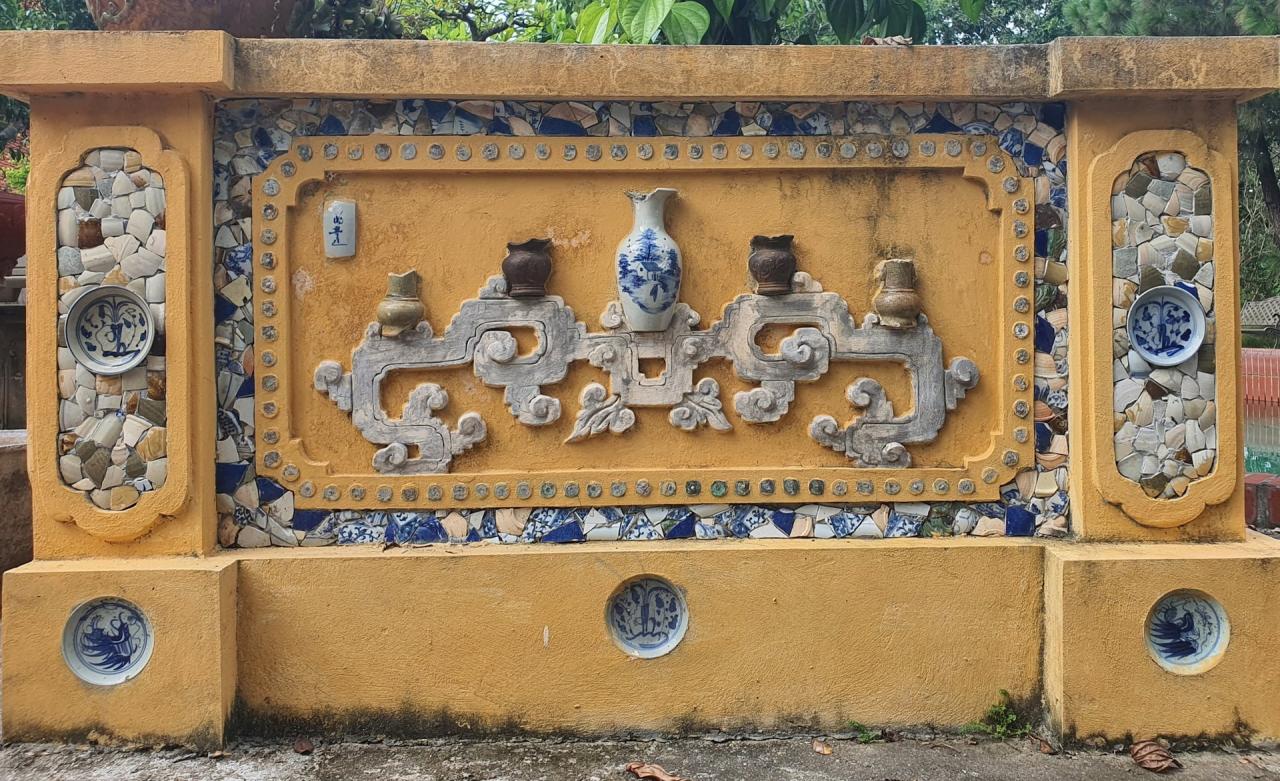
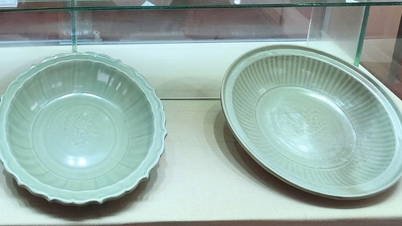
What impressed me most during my two visits to Linh Giang Vietnamese Mansion was his "mosaic ceramics collection." From vases, jars, pots, pedestals, basins, bowls, and plates to tea sets made of Vietnamese Ly, Tran, and Le dynasties ceramics, and Chinese Yuan, Ming, and Qing dynasties porcelain... all brought from various places and displayed in the wooden house.
Nguyen Long Giang also owns pottery and porcelain items that others would discard, but which have become unique artifacts in his collection. These are ceramic and porcelain pieces that Giang has inlaid onto screens, shallow basins, plant pots, horizontal plaques, wooden doors… and even onto centuries-old ceramic and porcelain pieces themselves.
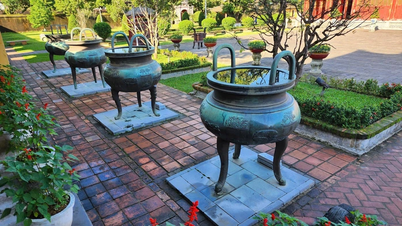
The art of inlaying ceramics onto architecture appeared in Hue around the reign of Minh Mang (1820-1841). We often see it on architectural structures inside the Imperial Citadel such as Thai Hoa Palace, The To Temple, Duyet Thi Hall, and especially on the temple gates of Trieu Mieu, Thai Mieu, Hung Mieu, The Mieu…
During the Nguyen Dynasty, when constructing the foundations of palaces, temples, and other structures within the Hue Imperial Citadel, the masons used ceramic fragments, primarily imported from China, to decorate the outer surface of the foundations. This method both concealed construction defects and kept the structures looking bright and clean, unlike traditional masonry which would require annual whitewashing.
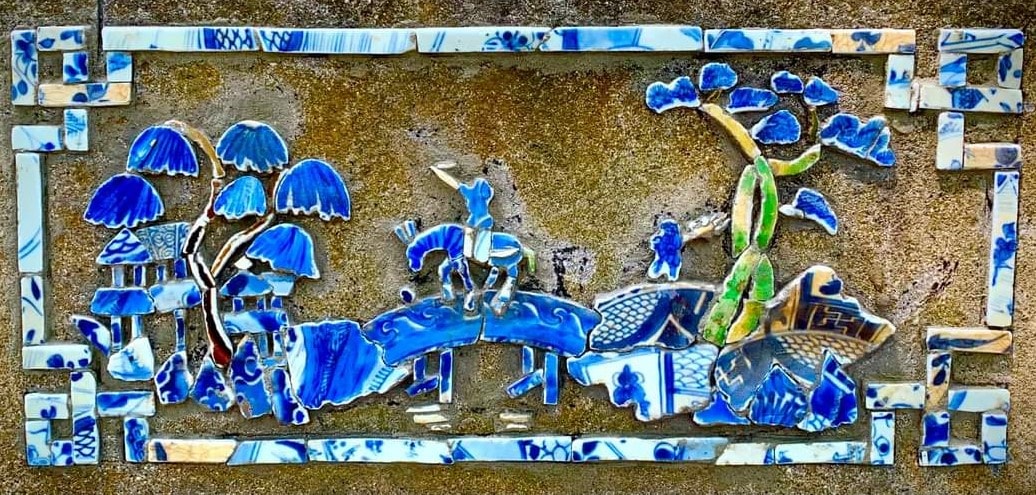
They also used broken pieces of pottery to create landscape designs, figures, flowers, birds, and animals... decorating the panels and eaves of the temple gates leading to the shrines dedicated to the Nguyen dynasty kings.
The pinnacle of ceramic mosaic art on Nguyen Dynasty architecture was during the reign of Khai Dinh (1916-1925), with representative works such as Hien Nhan Mon, Chuong Duc Mon, Duyet Thi Duong (within the Imperial Citadel), Cuu Tu Dai (within An Dinh Palace), and especially Thien Dinh Palace (within Ung Lang - Khai Dinh's tomb), which many art researchers have likened to the "mosaic of Vietnam".
Nguyen Long Giang has visited Hue many times to participate in antique exhibitions during the Hue Festivals. He is fascinated by the ceramic mosaic art, "mosaic of Vietnam," present on many historical sites in the ancient capital.
So, upon returning to Viet Phu Linh Giang, he applied that art to decorate the architectural structures there, increasing the value of the chipped and broken ceramic pieces that people usually disdain and don't bother collecting.
According to Do Tuan Khoa, Director of the Bac Giang Museum: “Mr. Giang is one of the few people with a deep understanding of culture, who has painstakingly collected many artifacts reflecting the development periods of the country. Not only is he passionate about his work, but as a member of the Vietnam Cultural Heritage Association and the Provincial Literature and Arts Association, Mr. Nguyen Long Giang actively preserves and promotes the value of heritage, providing valuable information to researchers and donating artifacts to the Provincial Museum.”
Recently, Linh Giang Vietnamese Mansion opened its doors to students, visitors, and tourists who come to explore, experience, take souvenir photos, and it has become a meeting place for antique enthusiasts nationwide.
A unique "mosaic ceramic collection"
While mosaic art in the ancient capital of Hue only involved inlaying ceramics onto architectural elements made of lime mortar, at Linh Giang Vietnamese Mansion, ceramics were not only inlaid onto lime mortar, but also onto wood and porcelain.
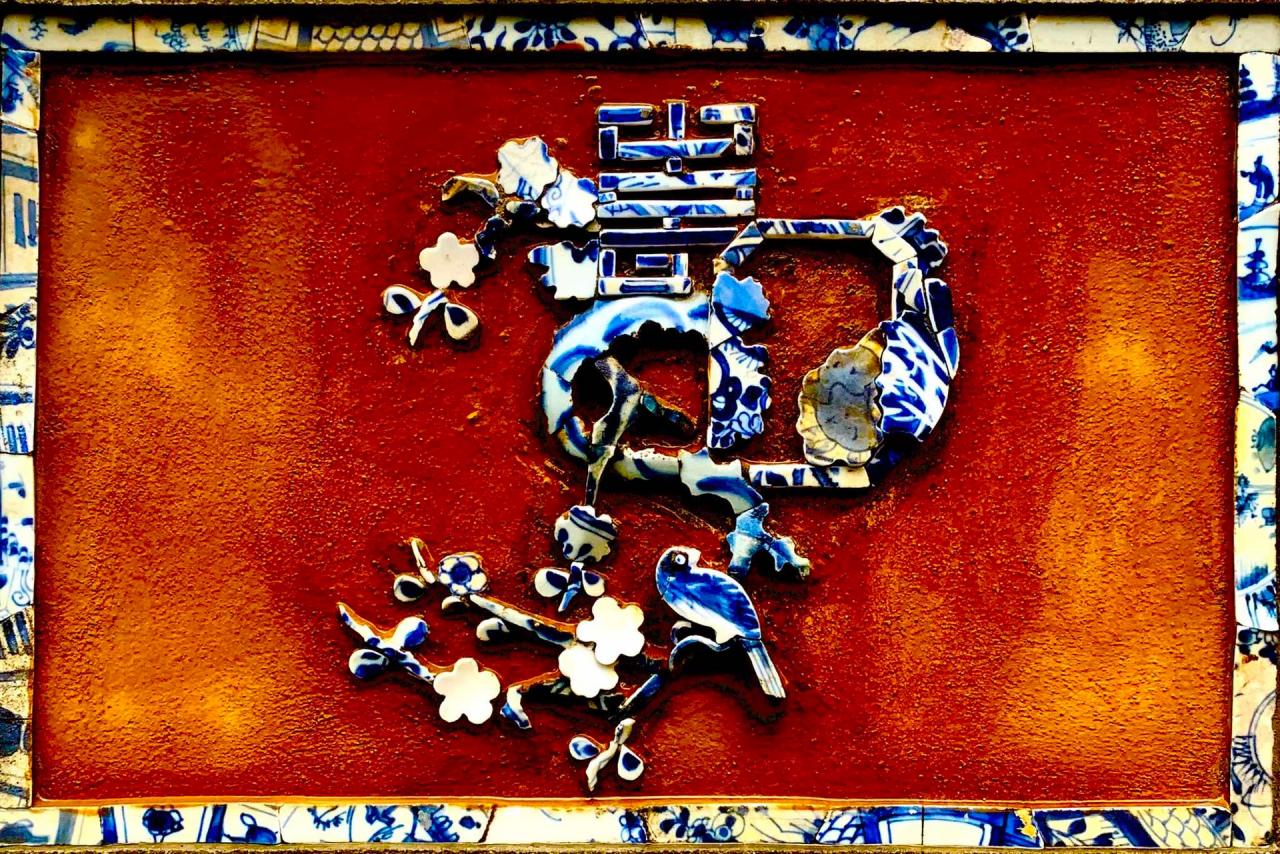
Furthermore, while craftsmen in Hue during the Nguyen dynasty often used broken pieces for mosaic work to make structures look bright and vibrant, Nguyen Long Giang "extracted" decorative details using colored glazes from broken or chipped ceramic pieces. Giang recreated these details on different materials and artifacts, adhering to the original decorative designs—what I would call the rebirth of centuries-old artifacts. This is the unique feature of the "mosaic ceramic collection" at Linh Giang Vietnamese Mansion.
He recreated motifs such as "plum blossom and crane," "horse crossing a bridge," "plum blossoms symbolizing longevity," and "two unicorns paying homage to longevity," which were very common on Nguyen Dynasty porcelain and Chinese porcelain, onto the shallow basin. Giang also inlaid motifs such as "Eastern Wall Painting," "plum blossom and sparrow - two longevity," "dragon and horse," "plum blossom and bird," "dragon and unicorn paying homage to longevity," and "lotus and crab" onto the screens in front of the main building.
The "lotus" and "flower and bird" motifs found on the porcelain of the Le-Trinh period are inlaid onto the main doors of the three-bay, two-wing wooden building. He also created the Chinese characters "Duc Luu Quang" (Virtue Endures Forever) in porcelain and attached them to the horizontal plaques hanging in the antique exhibition house…
In particular, he meticulously separated each detail of the "praying mantis playing in the clouds" design on a broken 18th-century Chinese porcelain plate, in order to inlay it onto the inside of a ceramic plate from the same period, reviving an artifact of artistic value but with an unfortunate fate…
Nguyen Long Giang's remarkable achievements in this "new style" of ceramic mosaic art have helped revive damaged ceramic items – often referred to as "wounded" by those in the trade – transforming them into unique, aesthetically pleasing works of art with cultural value. Thanks to him, these "wounded" items have been given a new identity and value.
“No antique should be thrown away. They just transform from one form to another and retain their value. It all depends on the collector.” That’s what Nguyen Long Giang told me when I visited Linh Giang Vietnamese Mansion and admired his unique “reborn” ceramic works on a late autumn day.
Source: https://baoquangnam.vn/nghe-chuyen-gom-su-tai-sinh-3142286.html
![[Photo] General Secretary To Lam works and extends New Year greetings to the Party Committee, government and people of Dak Lak province.](https://vphoto.vietnam.vn/thumb/1200x675/vietnam/resource/IMAGE/2026/02/11/1770808701306_ndo_tl_img-4099-5201-jpg.webp)








































Comment (0)