

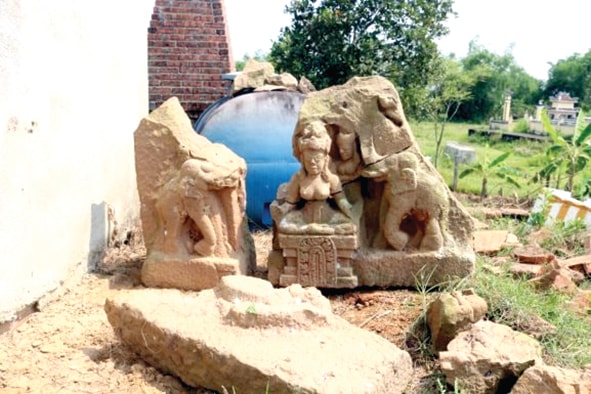
Further traces of Champa discovered.
Alongside the joy of discovery comes the constant worry that heritage is being "bleeded" away day by day due to human encroachment and the passage of time.
And the challenges in developing a comprehensive "archaeological plan" for the locality.
Along with the veil of mystery surrounding the Sa Huynh culture, the investigative and surveying efforts of researchers at the Quang Nam Museum have also yielded new discoveries about Champa culture.
In La Tho 2 village, Dien Ban Bac ward, the survey team discovered an important Cham tower ruin at Mieu Ba temple with many unique sandstone sculptures, most notably a bas-relief depicting three goddesses (Tridevi) and two elephants – the first artifact found in Champa culture – and a nearly intact Yoni pedestal in the Dong Duong style (9th-10th century).
In particular, in Que Phuoc commune (formerly Phuoc Ninh commune, Nong Son district, Quang Nam province), the working group discovered an inscription carved on natural rock in the Ho Nhi area. The inscription consists of 6 lines of ancient Cham script, which experts preliminarily estimate to date back to the 9th-11th centuries.
Along with the rock inscriptions at Samo, Tay Giang commune, dating from the 7th-9th centuries, which describe the buffalo sacrifice ritual, these discoveries are vivid evidence showing the widespread influence of the Champa kingdom in the Truong Son region, revealing the legendary "salt route" connecting trade between the Cham people and indigenous ethnic groups.
Many artifacts in temples, pagodas, archaeological sites, and in people's homes have also been inventoried, described, and collected.
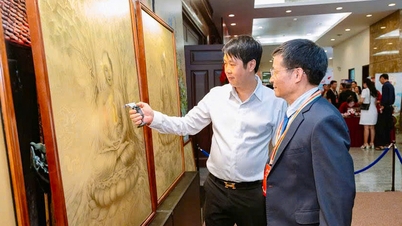
Specifically, the Champa Buddha statue, crafted from sandstone and sculpted in a European-style seated posture at Hoa My Pagoda in Hoa My village, Xuan Phu commune, resembles the large Buddha statue that French archaeologists unearthed in the central hall of the Dong Duong Buddhist monastery.
For example, the discovery of a Shiva statue in Loc Dai village, Que Son Trung commune (formerly part of Que Hiep commune, Que Son district, Quang Nam province) within the historical site of the Heroic Vietnamese Mother Le Thi Suu; the discovery of two stone altars in An My I village, Tay Ho commune (formerly part of Tam An commune, Phu Ninh district, Quang Nam province); and numerous stone, bronze, and pottery artifacts at Thanh Luong pagoda, Duy Nghia commune (formerly part of Duy Hai commune, Duy Xuyen district, Quang Nam province)... These are discoveries of immense value that require further in-depth research in the future.
Ancient Champa well systems, with their unique construction techniques using stone or brick without mortar and lined with wood at the bottom, continue to be recorded in many places such as Tam Ky, Dien Ban, Que Son, and Duy Xuyen. Many wells are still in use by the local people, becoming symbols of the cultural exchange and transformation between Vietnam and Champa in this land.
Heritage in Distress
Along with the new findings, the survey results also raise an alarm about the current state of heritage preservation.
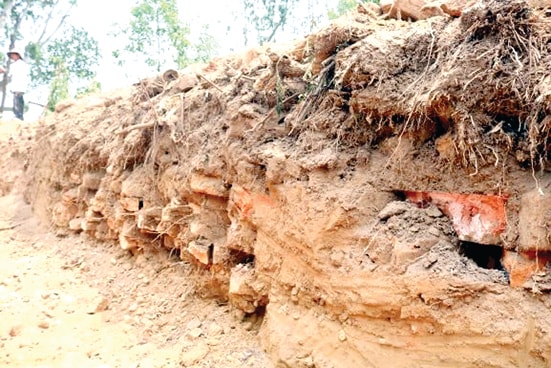
Most historical sites, from the Sa Huynh burial grounds to the Cham ruins, are being severely damaged. The looting of artifacts that has been going on for many years has mercilessly destroyed these sites. The burial sites in Go Dinh (Thuong Duc commune), Pa Xua (Ben Giang commune), Binh Yen (Que Phuoc commune)... have been completely ravaged in search of agate and bronze objects, permanently destroying valuable scientific information.
Socio-economic development is also putting significant pressure on heritage. Land leveling for agricultural cultivation, acacia tree planting, infrastructure construction, and industrial zones has directly erased or altered many archaeological sites.
The Go Ngoai burial site (Dai Loc commune), despite being classified as a provincial-level historical site, was leveled to make way for a transformer station. The Go Ma Voi site (Duy Xuyen district) is also under threat from the Tay An Industrial Zone development plan. At the Ba Temple in Bich Tram village (Dien Ban Bac district), local people digging ponds to raise eels unearthed brick structures that have not yet been protected, excavated, or studied.
Even excavated relics such as Duong Bi Tower, Tra Kieu Citadel, An Phu Tower, etc., have not been properly protected, leading to the continued deterioration of the ruins due to rain and sun.
Urgent action is needed.
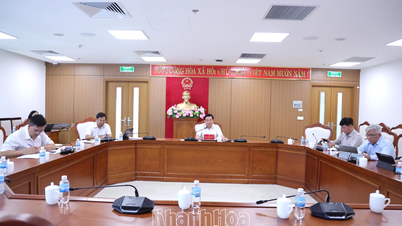
Given this situation, the Quang Nam Museum's report proposed several urgent solutions, the first of which is to expedite the development and promulgation of the archaeological planning.
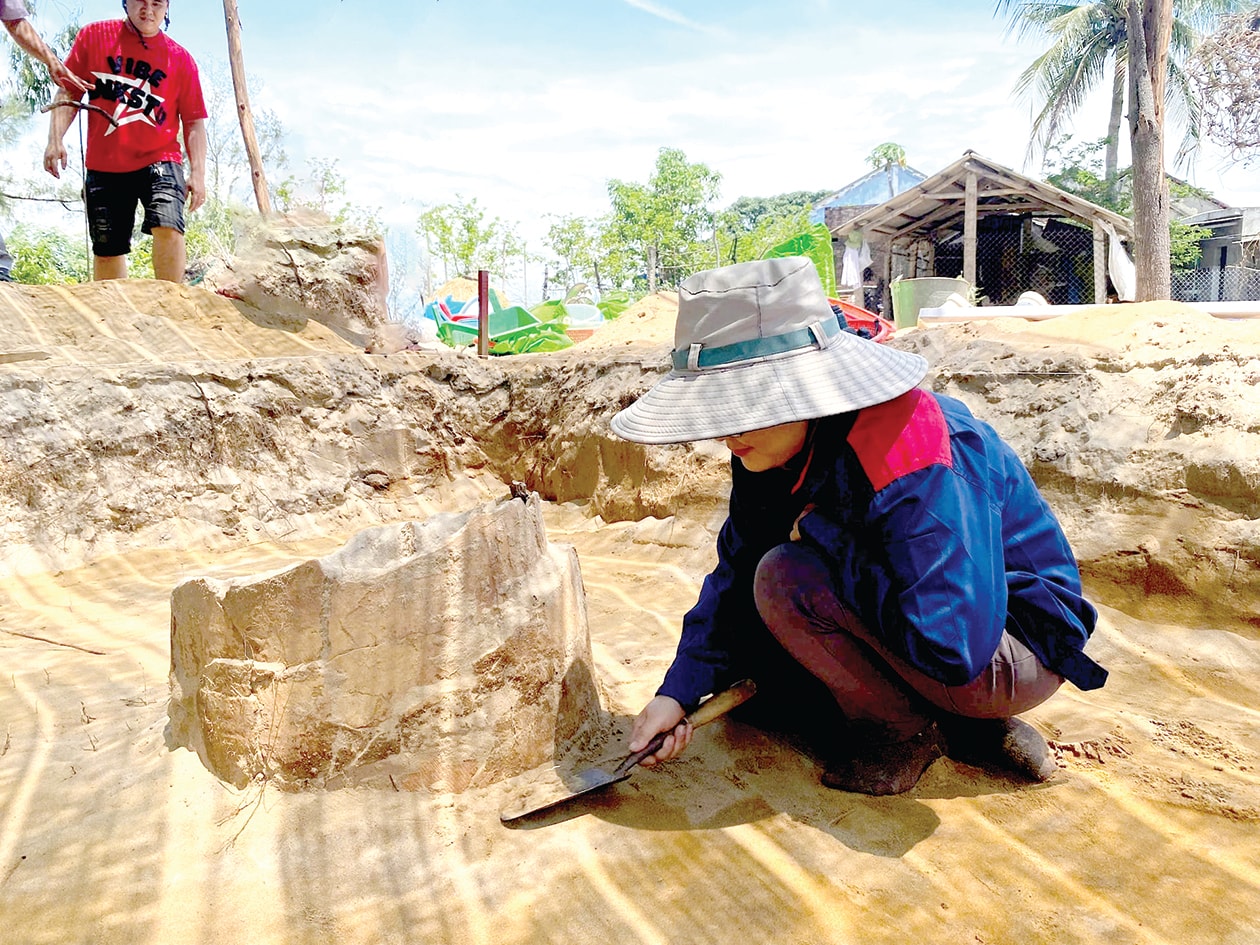
With the new urban landscape of Da Nang, the development of a comprehensive archaeological plan is not only a legal requirement but also a crucial strategy. From an archaeological perspective, this integration represents a return to a unified cultural space within history.
To manage, protect, and promote this vast treasure trove of heritage, a comprehensive, scientific, and far-sighted archaeological master plan is a strategically important tool and key to proactively identifying and protecting this invaluable heritage from the pressures of urban development.
This planning plays a crucial role in harmonizing conservation and development, guiding sustainable construction, avoiding conflicts and wasting resources. More importantly, it transforms heritage into assets, creating unique cultural tourism products, deepening historical and cultural identity, and contributing to building the brand of a modern yet distinctive Da Nang.
In addition, the survey team also recommended that the demarcation of protected areas at the discovered relics should be carried out immediately, especially at locations at high risk of damage.
For unearthed ruins, urgent on-site preservation measures are needed, such as constructing shelters, reinforcing structures, and preventing erosion.
Raising awareness among the community and encouraging people to hand over artifacts to the state is also a key task.
The invaluable underground heritage of Quang Nam province, if not protected in time, will disappear forever, leaving irreplaceable voids in the flow of the nation's history.
Source: https://baodanang.vn/nghi-chuyen-ky-uc-tu-long-dat-3300869.html



















































































Comment (0)