

However, the biggest weakness of Vietnam's current workforce is its limited professional skills and expertise, which do not yet meet the demands of the digital economy .
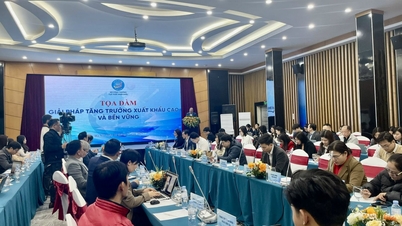
This was the content presented at the workshop "Human Resource Development – A Prerequisite for the Digital Economy and Green Growth" organized by the Vietnam General Confederation of Labor in collaboration with the Vietnam Chamber of Commerce and Industry (VCCI) and the Lao Dong newspaper.

Speaking at the conference, Ms. Phan Thu Thuy, Deputy Editor-in-Chief of Lao Dong newspaper, stated that the global economy is entering a period of profound transformation. Countries are promoting a "dual transformation" – both digital transformation to improve productivity and efficiency, and green growth for sustainable development and adaptation to climate change.
Vietnam is also actively integrating into this trend, considering it an inevitable path to enhance competitiveness and achieve comprehensive socio-economic development.
This process requires a shift from extensive to intensive growth, from resource exploitation to value creation, and from linear consumption to a circular economy.
These orientations have been clearly affirmed in Resolution No. 57-NQ/TW dated December 22, 2024, of the Politburo on breakthroughs in the development of science, technology, innovation, and national digital transformation; and Resolution No. 68-NQ/TW dated May 4, 2025, of the Politburo on the development of the private economy.
"The workshop is an opportunity for policymakers, employers, trade unions, businesses, and experts to discuss, share experiences, and propose feasible solutions to bridge the gap between policy and action," said Ms. Phan Thu Thuy.

At the workshop, Mr. Nguyen Khanh Long, Deputy Director of the Employment Department (Ministry of Interior), stated that the National Green Growth Strategy was approved by the Prime Minister in Decision No. 1658/QD-TTg dated October 1, 2021. In particular, the renewable energy ecosystem, organic agriculture, and low-carbon logistics are opening up new career opportunities.
However, recent reports from the ADB and the International Labour Organization (ILO) indicate that Vietnam is facing a serious shortage of trained workers in green skills, particularly in small and medium-sized enterprises (SMEs). This necessitates urgent investment in retraining and specialized training tailored to the needs of the green transformation, along with inclusive employment policies.
Sharing the same view, Mr. Pham Vu Quoc Binh, Deputy Director of the Department of Vocational Education and Continuing Education (Ministry of Education and Training), stated that the human resources for digital transformation are lacking in both quantity and quality. According to statistics, the percentage of trained workers with degrees or certificates is only 29.1% of the workforce.
Regarding high-tech human resources, Vietnam currently has approximately 500,000 IT workers, but the actual demand is projected to reach 2 million by 2030, with a particular shortage in fields such as artificial intelligence, big data analytics, cybersecurity, and the Internet of Things.
"In terms of occupational distribution, digitally skilled workers are mainly concentrated in large cities and in the service sector, while agriculture and manufacturing – two pillars of the economy – are still not fully digitized. This creates an imbalance in development and limits the ability to fully utilize the potential of digital transformation," Mr. Binh said.
According to Mr. Binh, Vietnam has committed to achieving carbon neutrality by 2050 and is promoting green economic development. However, the human resources needed for green growth are not yet meeting the actual requirements.
In terms of scale, the workforce in green economic sectors currently accounts for only about 3-5% of the total workforce, mainly concentrated in organic agriculture and renewable energy.
Meanwhile, many workers lack sufficient understanding of the importance of green growth and are not equipped with the necessary skills to transition to green jobs.

In light of this reality, experts, managers, and businesses have put forward recommendations and solutions to develop human resources that meet the new demands of the economy.
This affirms the role of workers not only as implementers but also as creators of value and drivers of sustainable development in the future.
From the perspective of protecting workers' rights, Ms. Thai Thu Xuong, Permanent Vice President of the Vietnam General Confederation of Labor, affirmed: "Investing in workers today is the greatest way to save for the future. We cannot talk about green growth or digital transformation without simultaneously transforming our perspective, treatment, and investment in human resources."
From the discussions, the workshop unanimously recommended three urgent courses of action: At the policy level: It is necessary to quickly finalize the "Human Resource Development Strategy to 2030, Vision to 2050" project, which closely links human resource development with digital transformation and green growth; and at the same time, build a national database on digital and green human resources to serve policy planning.
From the business perspective, long-term and systematic investment in internal training should be considered a business strategy; at the same time, more investment should be made in training quality, linking skill upgrades with career paths, optimizing training time to align with technological innovation, and ensuring that employees do not fall behind.
For trade unions, the key is to leverage their role as a bridge, proactively disseminating information on training needs and bringing skills training programs directly to the grassroots level, ensuring that all labor groups have equitable access to learning and skill development opportunities.
Source: https://baovanhoa.vn/nhip-song-so/nguon-nhan-luc-chuyen-doi-so-con-han-che-ve-so-luong-va-chat-luong-160578.html
![[Photo] Prime Minister Pham Minh Chinh receives Lao Minister of Education and Sports Thongsalith Mangnormek](/_next/image?url=https%3A%2F%2Fvphoto.vietnam.vn%2Fthumb%2F1200x675%2Fvietnam%2Fresource%2FIMAGE%2F2025%2F12%2F16%2F1765876834721_dsc-7519-jpg.webp&w=3840&q=75)

![[Image] Leaked images ahead of the 2025 Community Action Awards gala.](/_next/image?url=https%3A%2F%2Fvphoto.vietnam.vn%2Fthumb%2F1200x675%2Fvietnam%2Fresource%2FIMAGE%2F2025%2F12%2F16%2F1765882828720_ndo_br_thiet-ke-chua-co-ten-45-png.webp&w=3840&q=75)








































































Comment (0)