

This is a new provision included in the draft Law on Teachers, which is currently being reviewed by the Ministry of Education and Training. If approved, the law is expected to take effect in 2027.

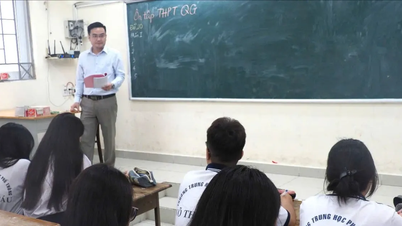
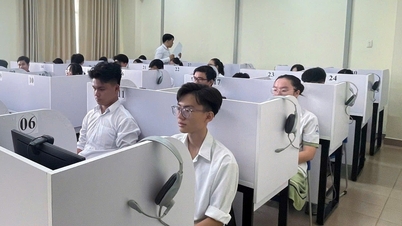
Lecturers from Ho Chi Minh City University of Technology and Education guide students through practical exercises.
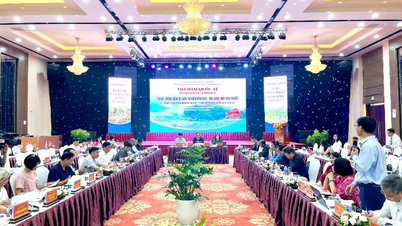
The government has issued Resolution No. 95, unanimously approving the Ministry of Education and Training's proposal on the necessity of enacting a Law on Teachers. This includes five key policies: defining teachers; standards and titles for teachers; recruitment, employment, and working conditions for teachers; training, professional development, remuneration, and recognition of teachers; and state management of teachers. These contents were presented by the Ministry of Education and Training at a professional consultation workshop with representatives from 30 higher education institutions on the drafting of the Law on Teachers on January 19th.
ELIGIBLE INDIVIDUALS FOR TEACHER PROFESSIONAL CERTIFICATES
Accordingly, the definition of a teacher is defined as someone who meets the professional standards for teachers as prescribed, performing teaching and educational duties in educational institutions within the national education system. Specifically, teachers teaching in preschools, primary and secondary schools, vocational schools, and other educational institutions are called teachers. Teachers teaching at the college level and above, and those involved in training and developing cadres and civil servants, are called lecturers. Teachers continue to be referred to as teachers even after retirement.
The professional standards for teachers comprise professional criteria applicable to each teacher position at each educational level and training qualification, to be used uniformly nationwide. The results of the professional standards assessment serve as the basis for recruitment, employment, appointment, dismissal, termination, and evaluation of teachers' qualities and competencies. Notably, this policy is the first to introduce a professional certificate for teachers.
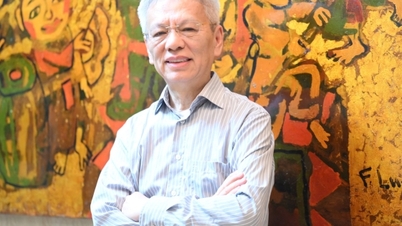
Mr. Vu Minh Duc, Director of the Department of Teachers and Educational Management Staff (Ministry of Education and Training), stated that the teacher professional certificate is a document issued by the competent educational management agency of Vietnam to individuals who meet the professional standards for teachers and fulfill the requirements for practicing the teaching profession; it replaces the decision recognizing the completion of the probationary period and the training certificate according to the current teacher professional title standards.
According to Mr. Duc, those eligible for professional certificates include: those who have completed their apprenticeship and met professional standards; those who are currently teachers; retired teachers; and foreign teachers who meet the requirements. For example, teachers who have been granted a professional certificate when they are recruited to work as teachers at public educational institutions or when they transfer and sign a contract at another educational institution do not need to undergo an apprenticeship. With a professional certificate, teachers can teach across schools or teach as visiting lecturers at other institutions. The transfer of teachers between public and private institutions, and the transfer of teachers between localities, is implemented more conveniently, ensuring uniformity in teaching and educational quality.
In addition, this certificate may also be issued in other cases if needed. For example, retired teachers who continue to teach at educational institutions under employment contracts, and foreign teachers who meet the conditions stipulated by the competent educational management agency.
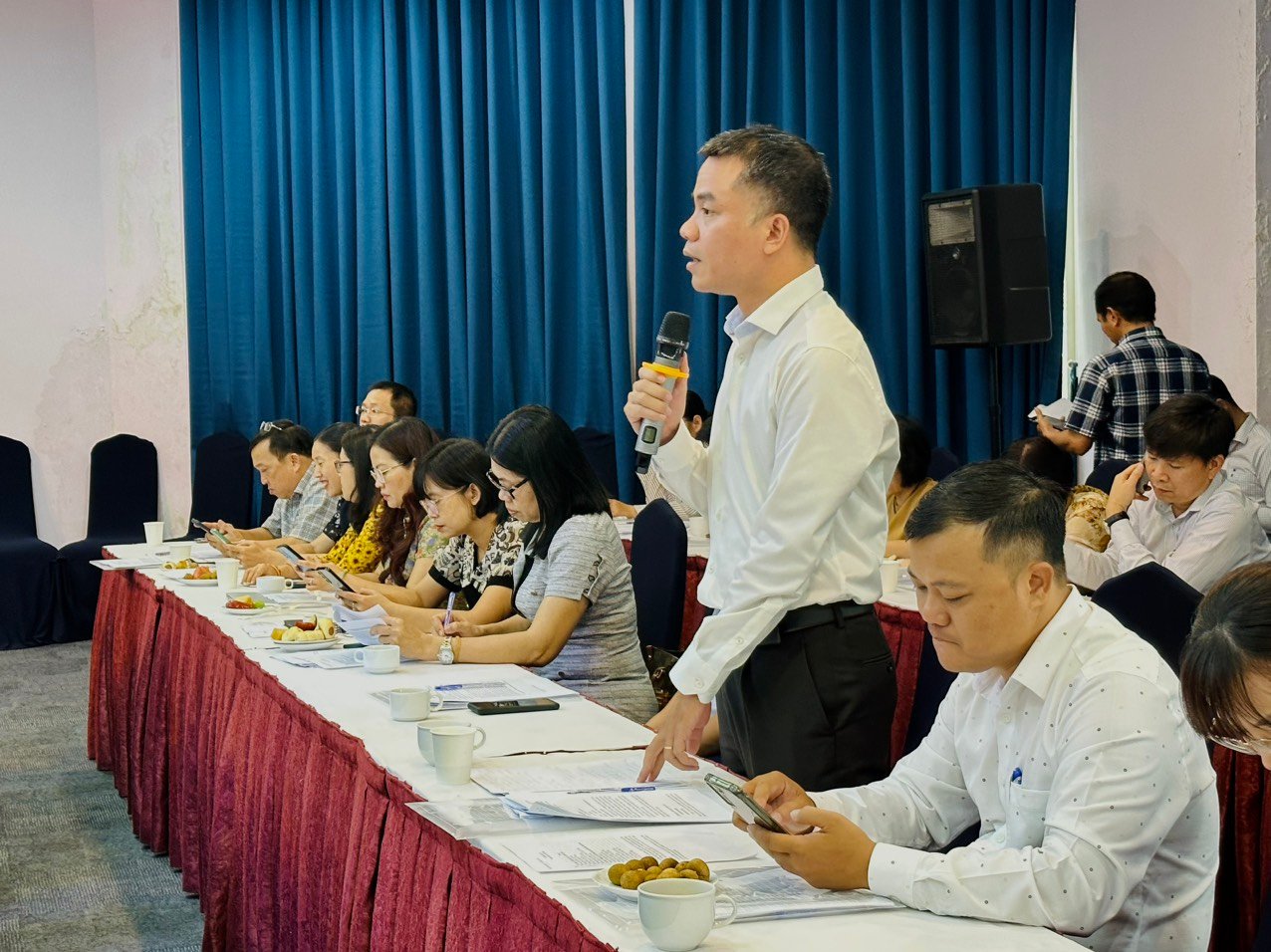
Master Nguyen Hai Ninh, Vice Rector of Hoa Sen University, expressed concerns about defining the role of educators.
Is someone who works at a university but doesn't teach considered an educator?
During a workshop on January 19th, representatives from various higher education institutions expressed their views on the information regarding the first-ever sharing of professional certification for teachers.
Mr. Nguyen Hai Ninh, Vice Rector of Hoa Sen University, expressed concern about the definition of educators. He questioned whether administrative positions in universities that do not teach, such as heads of training departments or heads of human resources departments, should be considered educators. Mr. Ninh suggested that this needs to be clarified in the Law on Educators.
"Regarding teaching titles, we already have standards for lecturers, senior lecturers, and principal lecturers in the public sector. However, we don't have standards for lecturers in the private sector. I propose developing standardized criteria for lecturers in both public and private sectors because there is currently a lot of exchange between lecturers in these two systems. I suggest detailed regulations on titles for lecturers in the private sector," Mr. Ninh raised the issue.
Regarding professional certification, Mr. Ninh believes this is a very good proposal in the Law on Teachers. According to him, the certificate should be structured like a professional license. Mr. Ninh explained: "For university lecturers, we source them from master's and doctoral degree holders, and even private universities don't have a probationary period; they only undergo a trial period to become lecturers. Therefore, there should be an examination so that those with sufficient qualifications, competence, and ethical qualities can pass the examination and receive a certificate that can be used nationwide."
Mr. Ninh further suggested: "There should be a timeframe for professional certifications for teachers. Periodically, their qualifications, abilities, teaching methods, demeanor, and ethics should be reviewed."
Regarding the handling of violations by lecturers, Mr. Ninh also suggested that when the Law on Teachers is enacted, it should include specific regulations allowing schools to suspend or dismiss lecturers if they meet the legal requirements. He also proposed that the licensing authority revoke the teachers' professional certificates.
While agreeing with the development of a Law on Teachers, Associate Professor Bui Anh Thuy, Head of the Law Faculty at Van Lang University, expressed concerns about the professional certification for teachers. Professor Thuy stated: "What procedures do professors, who are highly respected in the academic field, need to follow, and who will issue this professional certification? Previously, the Ministry issued master's and doctoral degrees, but for a long time, universities have been issuing degrees for the highest academic levels in our country… Now, with the addition of professional certification, how should this be implemented, and will it conflict with existing titles, academic ranks, and degrees?"
Associate Professor Bui Anh Thuy also believes that the regulation stipulating that those granted teaching certificates do not need to undergo a probationary period when being hired by another institution or transferred between localities would be difficult to implement. The reason given, according to Professor Thuy, is that the current system of public universities includes some that are completely autonomous, giving them the right to accept or reject candidates, and private universities are no different. This regulation would face obstacles even for these completely autonomous universities. (to be continued)
Free of charge
The professional teaching certificate is issued free of charge, is valid nationwide, and remains valid for the entire duration of the teacher's teaching and educational activities, except in cases of revocation or temporary suspension. The certificate will be revoked if the teacher is assessed by the competent authority as failing to complete their duties for two consecutive years; commits disciplinary violations serious enough to result in dismissal or termination; or the application for the certificate does not comply with regulations. The certificate will be temporarily suspended if the teacher is suspended from teaching and educational activities for a specified period by the competent educational management authority. In case of loss or changes to professional activity information, the certificate may be reissued.
Regulations on professional standards for teachers
To date, the country has over 1.6 million educators, including nearly 80,000 university and college lecturers, with over 48,000 masters, over 24,000 doctors, and nearly 5,000 professors and associate professors. The education sector's permanent staff accounts for approximately 70% of the total permanent staff nationwide. Professional standards for teachers are currently based on the 2019 Education Law and guidelines from the Ministry of Education and Training. At each educational level, teachers and lecturers are ranked from Grade I to Grade III, depending on their years of service, professional title certificates, and meeting the Ministry's criteria. This serves as the basis for salary classification in public schools. Teachers and lecturers from private schools transferring to the public sector must take civil service entrance exams, study for and pass professional title certificate exams, and comply with other regulations.
Source link
![[Image] Shipbuilders exposed to steel and record-breaking heat.](https://vphoto.vietnam.vn/thumb/1200x675/vietnam/resource/IMAGE/2026/06/04/1780545781745_ndo_br_img-5402-4683-jpg.webp)

















































![[Video] Sunset at Lap An Lagoon – Where the sun sets over the fishing nets](https://vphoto.vietnam.vn/thumb/1200x675/vietnam/resource/IMAGE/2026/05/31/1780192137701_beach-landscape-sea-water-nature-grass-745871-pxhere-com.jpeg)






























Comment (0)