

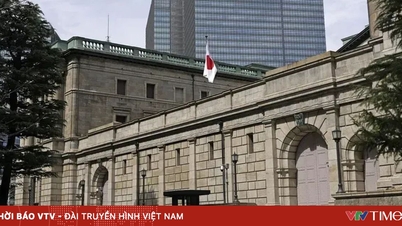
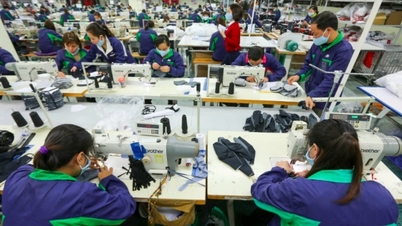
According to the Bank of Japan's (BoJ) December 2025 Short-Term Survey of the Economic Situation of Businesses (Tankan), the labor shortage at businesses has become even more serious.
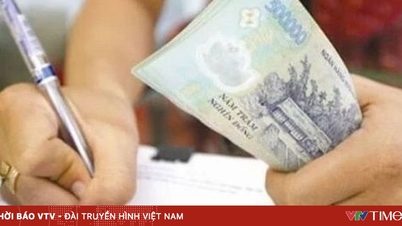
The index reflecting the labor situation across all business sizes and industries reached -38, marking the highest level of "severe labor shortage" in 34 years. Pressure to increase wages is expected to intensify, particularly in the service sector.
The employment situation index (DI) is calculated by subtracting the percentage of businesses reporting a "surplus" of labor from the percentage reporting a "shortage." A larger negative value indicates a more severe labor shortage.
For all sizes and sectors, the DI index for employment decreased by 2 points compared to the September survey (-36). This is the largest negative figure since August 1991, during the economic bubble. Specifically, the non-manufacturing sector of all business sizes decreased by 2 points to -46, while the manufacturing sector decreased by 1 point to -25.
The labor shortage is expected to worsen in the coming period. The Distribution Index (DI) is projected to continue its sharp decline across all business sizes, both in manufacturing and non-manufacturing sectors. In terms of size, small and medium-sized enterprises (SMEs) are expected to face more severe labor shortages than large enterprises. Amidst this prolonged labor shortage, businesses are proactively increasing wages to attract and retain talent.
Typically, equipment investment plans in the December Tankan survey tend to be adjusted downwards compared to the September survey, but this time they were adjusted upwards, from an 8.4% increase in the September survey. This is due to the easing of uncertainty regarding the outlook caused by US tariff policies, encouraging businesses to invest in expanding their production capacity; at the same time, rising material costs have also increased equipment investment costs.
Business profits for fiscal year 2025 across all companies and industries are projected to decline by 2.7% year-on-year. This decline is less severe than the 4.8% decrease forecast at the time of the September survey.
Source: https://vtv.vn/nhat-ban-thieu-lao-dong-nghiem-trong-nhat-trong-34-nam-100251216062545368.htm
![[Live] 2025 Community Action Awards Gala](/_next/image?url=https%3A%2F%2Fvphoto.vietnam.vn%2Fthumb%2F1200x675%2Fvietnam%2Fresource%2FIMAGE%2F2025%2F12%2F16%2F1765899631650_ndo_tr_z7334013144784-9f9fe10a6d63584c85aff40f2957c250-jpg.webp&w=3840&q=75)
![[Photo] Prime Minister Pham Minh Chinh receives the Governor of Tochigi Province (Japan)](/_next/image?url=https%3A%2F%2Fvphoto.vietnam.vn%2Fthumb%2F1200x675%2Fvietnam%2Fresource%2FIMAGE%2F2025%2F12%2F16%2F1765892133176_dsc-8082-6425-jpg.webp&w=3840&q=75)
![[Photo] Prime Minister Pham Minh Chinh receives Lao Minister of Education and Sports Thongsalith Mangnormek](/_next/image?url=https%3A%2F%2Fvphoto.vietnam.vn%2Fthumb%2F1200x675%2Fvietnam%2Fresource%2FIMAGE%2F2025%2F12%2F16%2F1765876834721_dsc-7519-jpg.webp&w=3840&q=75)


![[Image] Leaked images ahead of the 2025 Community Action Awards gala.](/_next/image?url=https%3A%2F%2Fvphoto.vietnam.vn%2Fthumb%2F1200x675%2Fvietnam%2Fresource%2FIMAGE%2F2025%2F12%2F16%2F1765882828720_ndo_br_thiet-ke-chua-co-ten-45-png.webp&w=3840&q=75)

















































![[Photo] Prime Minister Pham Minh Chinh attends the Vietnam Economic Forum 2025](https://vphoto.vietnam.vn/thumb/402x226/vietnam/resource/IMAGE/2025/12/16/1765893035503_ndo_br_dsc-8043-jpg.webp)



























Comment (0)