

Wait 3-4 days
According to a cashew export company, the cashew market is very sluggish, but businesses are facing difficulties and increased costs when transporting raw cashews to warehouses. Previously, when goods arrived at Cat Lai port (Ho Chi Minh City), businesses only needed to submit an application for quarantine inspection to the Plant Protection Department, and someone would come to collect samples, conduct inspections, and then clear customs.
Since the beginning of 2023, the quarantine agency has announced a new procedure: inspecting and sampling goods at the port before customs clearance. According to regulations, goods should be inspected within 24 hours, but this often takes 3-4 days. Furthermore, if it falls on a Friday, public holiday, or Tet (Vietnamese New Year), the goods can remain at the port for 5-6 days, increasing container and storage costs.
Conversely, exported goods must be inspected at the enterprise's warehouse before being transported to the port. According to Mr. Vu Thai Son, Chairman of the Binh Phuoc Cashew Association, this is very time-consuming because Binh Phuoc province has dozens of factories; if inspectors had to visit all of them, it would be extremely costly. Binh Phuoc province is under the responsibility of the Plant Quarantine Sub-Department Region 2 (Ministry of Agriculture and Rural Development), but due to a shortage of personnel, they have delegated the task of sampling exported cashew kernels to the Plant Quarantine office at Hoa Lu border gate. However, the Hoa Lu border gate Plant Quarantine office is also located far from areas with many businesses and lacks sufficient personnel to carry out the task promptly.
Previously, to export, businesses were required by their partners to undergo quality inspections by independent units such as Vinacontrol, Cafecontrol, SGS, BV, etc., to check for pests and insects in their products. According to the procedure, these units randomly sample at least 10% of the shipment and then conduct sample analysis and testing. Importers only paid for the order upon receiving a certificate of successful sample collection from the independent certification body.
"Therefore, only one inspection by the importing unit is sufficient. Having two inspection units for a single shipment is unnecessary and wasteful," said Mr. Vu Thai Son.
Similarly, many businesses importing raw timber are also facing the situation of having to wait for quarantine at the port. Each shipment of timber usually consists of many containers, so the longer it stays at the port, the higher the production costs for businesses.
Consider lifting quarantine requirements for certain items.
Speaking with a reporter from SGGP newspaper, Mr. Nguyen Vu Phi Long, Head of the Plant Quarantine Sub-Department Region 2, said that according to the Law on Plant Protection and Quarantine, the Law on Food Safety, and Circular 33/2014 of the Ministry of Agriculture and Rural Development, imported plant products must be quarantined at the first port of entry. Because the weather conditions were not as unpredictable in the past, harmful organisms in imported goods were not "strong enough" to spread widely and usually remained "inside" the containers, so the sub-department facilitated businesses bringing goods to warehouses for inspection later.
Currently, harmful organisms mixed in with imported goods can spread at any time, making quarantine at the port mandatory. The Plant Quarantine Sub-Department of Region 2 is responsible for 13 provinces, handling 70% of the import and export goods in the southern region. At the port, an average employee inspects and samples over 30 shipments per day. However, if the goods are in a bonded warehouse, an employee can only handle one shipment per day. Furthermore, the sub-department's staff has also been reduced.
According to Mr. Nguyen Vu Phi Long, the management software has not recorded any shipments that have been sampled for more than 24 hours, except for those lacking proper documentation. Furthermore, upon arrival at the port, shipments usually have to wait for the port's loading and unloading team to transport them to the quarantine agency for acceptance. Loading and unloading services are not under the authority of the quarantine agency but are managed by the port.
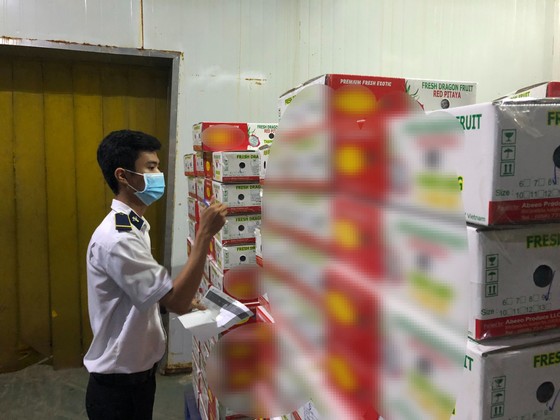 |
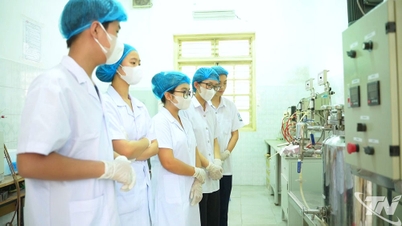
Quarantine officers inspect agricultural products at a warehouse before export. |
Quarantine staff work on weekends, holidays, and Tet (Lunar New Year) to meet the needs of businesses. However, businesses with goods arriving on the days before holidays or weekends need to notify the customs office so that personnel, including leaders, officers, and office staff, can be arranged to ensure that certificates can be issued.
Meanwhile, according to Mr. Le Son Ha, Head of the Plant Quarantine Department (Department of Plant Protection, Ministry of Agriculture and Rural Development), if harmful organisms are detected in products upon arrival at the warehouse, businesses will incur costs for destruction. Some countries require quarantine services from units such as Vinacontrol, Cafecontrol, SGS, BV, etc. Therefore, agricultural export units need to understand the regulations of importing countries to avoid wasting quarantine resources without achieving any results.
Furthermore, certification bodies only record pest infestations, while the Plant Protection Department checks for prohibited organisms according to both national and Vietnamese lists. For processed cashew kernels, the risk of pest infestation is very low, almost non-existent; therefore, the current quarantine process is unnecessary. The Plant Protection Department will consider proposing to the Ministry of Agriculture and Rural Development to remove processed cashew kernels and some other exported agricultural products from the list of mandatory quarantine items if there is no risk, in order to facilitate businesses.
Source


![[Photo] National Assembly Chairman Tran Thanh Man working with the Standing Committee of the Law and Justice Committee](https://vphoto.vietnam.vn/thumb/1200x675/vietnam/resource/IMAGE/2026/05/21/1779378929214_ndo_br_1-4610-jpg.webp)


![[Photo] General Secretary and President To Lam presides over a working session with the Central Policy and Strategy Committee on the development of the materials industry.](https://vphoto.vietnam.vn/thumb/1200x675/vietnam/resource/IMAGE/2026/05/21/1779359935432_a3-bnd-3129-1412-jpg.webp)


































































Comment (0)