


Medical examination and treatment in Hanoi: Breakthroughs in public healthcare facilities.
The Hanoi People's Committee has issued Decision 5369/QD-UBND approving the Project to improve the quality of medical examination and treatment at public health facilities under the Hanoi People's Committee until 2030. The decision takes effect from January 1, 2025.
The project aims to build and develop an advanced and modern healthcare system in the capital city, commensurate with the population size and comprehensively meeting the needs of protecting, caring for, and improving the health of the people, towards the goals of quality, efficiency, progress, social equity, and international integration.
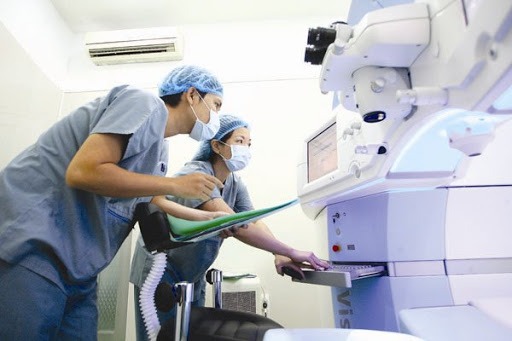 |
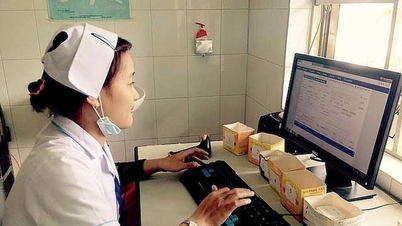
| Illustrative image |
Focus on developing and improving the quality of services in several areas to reach the level of advanced countries in the region and around the world . Improve the quality of medical examination and treatment and the capacity of the grassroots healthcare system, the network of family medicine clinics and hospitals. Develop the public pre-hospital emergency medical service system.
The city will focus on developing a system of medical examination and treatment facilities with sufficient capacity to provide quality medical services to meet healthcare needs according to region and assigned levels of examination and treatment (initial, basic, and specialized); prioritizing investment in infrastructure and equipment.
Specifically, four hospitals were established to serve regional functions (Hanoi Heart Hospital, Hanoi Oncology Hospital, Hanoi Obstetrics and Gynecology Hospital, and Saint Paul General Hospital).
Develop general hospitals of class I and specialized hospitals to meet the needs of advanced medical examination and treatment; general hospitals of class II to meet the needs of basic medical examination and treatment; and polyclinics and health stations to meet the needs of primary medical examination and treatment as prescribed by the Ministry of Health.
In addition, strengthen and develop the pre-hospital emergency medical system to meet the emergency needs of the people in the city.
Next, we need to develop a sufficient number of qualified healthcare professionals with the necessary expertise and ethical standards, along with a rational structure and distribution. We must also pursue comprehensive digital transformation towards smart healthcare.
The plan also outlines specific tasks and solutions to be implemented from now until 2030. These include reviewing and reorganizing the city's healthcare system into three levels of medical examination and treatment, with hospitals assuming regional functions. It also involves developing a sufficient number of qualified healthcare personnel with adequate professional competence and ethics, and a rational structure and distribution.
Improve the quality of specialized techniques in medical examination and treatment. Develop an out-of-hospital emergency medical system in conjunction with the development of smart cities.
Comprehensive digital transformation towards smart healthcare involves developing centralized information systems and data platforms; applying information technology and digital transformation in medical facilities to build smart hospitals.
Strengthening international cooperation to meet the professional, diplomatic, and international integration requirements in the new situation. Enhancing the effectiveness of coordination in preventive treatment; communication and health education.
The People's Committee of Ho Chi Minh City also assigned specific tasks to departments and agencies, with the Department of Health being the lead unit, primarily responsible for advising the City People's Committee on the implementation of the Project.
The Ministry of Health shall preside over and coordinate with relevant agencies and units to ensure the development of regional hospitals and regional centers for testing drugs, cosmetics, and food in accordance with the planned network of healthcare facilities.
The Chairman shall preside over and periodically compile reports to the city on the progress of implementation, and advise on resolving difficulties and problems encountered during the implementation of the Project.
According to statistics, the city has 19 central-level hospitals with approximately 10,420 beds; 10 hospitals and medical examination and treatment centers under ministries/sectors; and 15 hospitals/institutes under the Ministry of Public Security and the Ministry of National Defense with approximately 5,680 beds.
The city has 42 hospitals under the Hanoi Department of Health. At the district and town level, there are 30 health centers with 55 polyclinics and 4 maternity homes. At the commune, ward, and township level, there are 579 health stations. The total workforce is approximately 26,000 people, including over 5,000 doctors.
As of June 2024, there were 15,399 licensed non-public medical and pharmaceutical establishments operating in the city, including 4,648 medical examination and treatment facilities (23 general hospitals, 21 specialized hospitals with 2,203 beds and over 16,000 staff) and 10,691 pharmaceutical establishments.
The private healthcare system has met the growing demand for medical examination and treatment from the public, while also helping to reduce the burden on public hospitals.
Pharmaceutical businesses play a crucial role in providing quality and timely medicines to public and private healthcare facilities and the general public in the city.
Source: https://baodautu.vn/kham-chua-benh-o-ha-noi-nhung-buoc-dot-pha-trong-co-so-y-te-cong-d227719.html








































































































Comment (0)