

Hue, renowned as the land of heritage, is the best place to preserve and conserve Vietnamese traditional culture and rituals, making it an unmissable destination for anyone wishing to explore the roots of the nation.
Historically, Hue was the cultural and political center of the Southern region of Vietnam during the Nguyen Dynasty (1558-1777) and the Tay Son Dynasty (1778-1802). In the subsequent period, Hue served as the capital of a unified Vietnam (1802-1945), holding not only the political center but also the cultural and religious center of Vietnam under the Nguyen Dynasty.
The inheritance of unique values of indigenous culture, combined with the cultural essence of the monarchical dynasties in history and new values formed during the Nguyen dynasty, has crystallized in the heart of the ancient capital of Hue a vast and extremely diverse complex of cultural and historical heritage, including both tangible and intangible heritage, as well as documentary heritage, which has been honored by the United Nations Educational , Scientific and Cultural Organization (UNESCO).
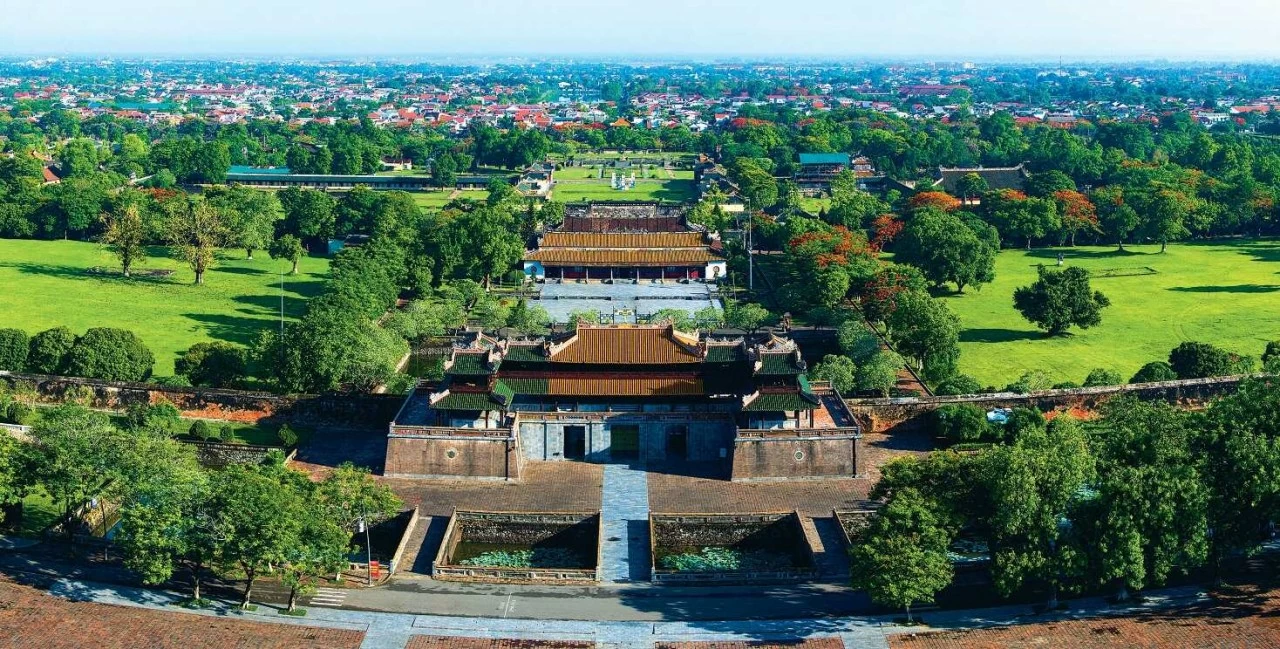 |
| Hue Imperial Palace architecture. (Source: Tourism Newspaper) |
Land of Heritage
To date, Hue possesses numerous UNESCO-recognized heritage sites of various types: the Complex of Monuments of the Hue Imperial City (December 11, 1993 – World Cultural Heritage); Nha Nhac, Vietnamese Court Music (November 7, 2023 – Intangible Cultural Heritage of Humanity; November 4, 2008 – Representative Intangible Cultural Heritage of Humanity); and World Documentary Heritage sites: Nguyen Dynasty Woodblocks (July 31, 2009), Nguyen Dynasty Imperial Archives (October 30, 2017); previously May 14, 2014 – Asia-Pacific Regional Documentary Heritage; and Poetry and Literature on Hue Imperial Architecture (May 19, 2016 – Asia-Pacific Regional Documentary Heritage); and the Relief Castings on the Nine Bronze Tripods in the Hue Imperial Palace (May 8, 2024) – Asia-Pacific Regional Documentary Heritage. It is noteworthy that these legacies all belong to the Nguyen Dynasty, the last monarchical dynasty of Vietnam.
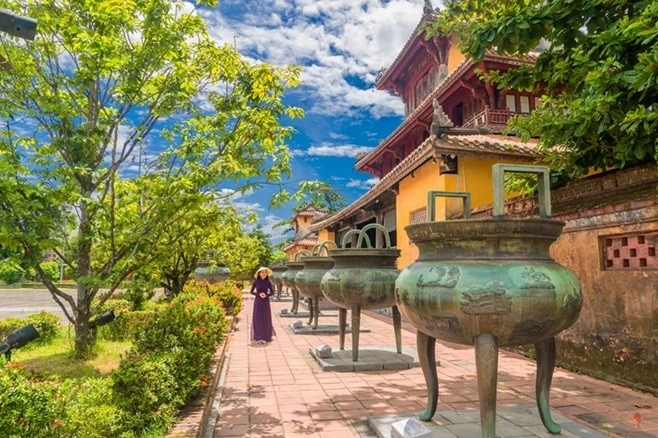 |
| To date, Hue possesses numerous UNESCO-recognized heritage sites of various types. (Photo: Minh Chau) |
Within that complex, the Hue Imperial Citadel Complex is a prime example of planning and construction, a diverse system of imperial architecture encompassing ramparts, palaces, tombs, temples, pagodas, streets, gardens, etc., comprehensively reflecting an Eastern capital during its most glorious period of development.
Despite enduring the ravages of war, natural disasters, and the erosion of time, this architectural complex remains relatively intact and is being very well preserved thanks to the efforts of the entire Vietnamese community, along with the joint efforts of friends from all over the world.
Nha Nhac – Vietnamese court music – is also a unique heritage that Hue still preserves. However, by the late 1990s, this heritage was truly in danger due to the dwindling number of veteran artists and the lack of performance venues.
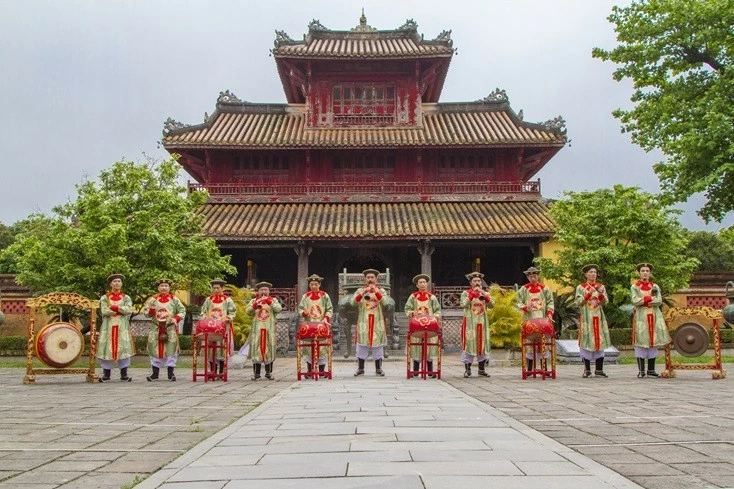 |
| Nha Nhac – Hue Royal Court Music. (Photo: Minh Chau) |
The tireless efforts of conservationists in Hue, the dedication and enthusiasm of the artisans, and the active support of UNESCO have revived Nha Nhac (court music). This sophisticated and noble performing art has not only been restored and performed in its birthplace but has also been widely promoted in many countries around the world, and is one of the province's main art forms in the Hue Festivals.
As the capital of a dynasty that highly valued learning and knowledge, Hue is also a hub of vast archives. Under the Nguyen dynasty, the number of compiled and printed works exceeded that of all previous dynasties combined.
Nguyen Dynasty woodblocks (wooden printing blocks for the works of the dynasty), Nguyen Dynasty Imperial Archives (1802-1945) – The court documents that the king reviewed and annotated with red ink, or the poems and literary works carved, inlaid, and glazed on the palace architecture in Hue, are all large collections of documents with special value.
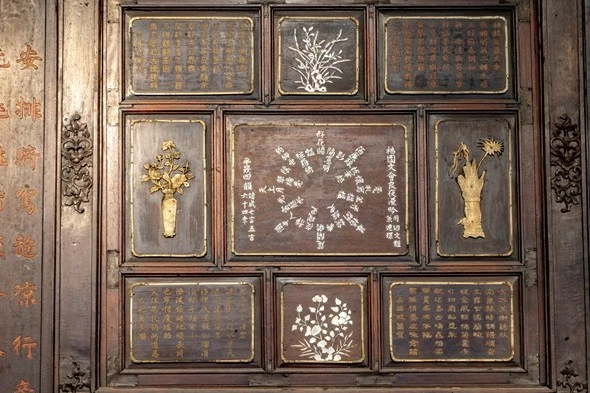 |
Poetry and literature inscribed on palace architecture. (Photo: Minh Chau) |
Through the ups and downs of history, the Nguyen Dynasty woodblocks, numbering over 34,600, are currently preserved at the Archives Center IV (Da Lat); the Imperial Archives, numbering hundreds of thousands, are preserved at the National Archives Center I (Hanoi). The poetry and literature inscribed on the architecture of the Hue Imperial Palace (1802-1945) and the relief carvings on the Nine Bronze Tripods in the Hue Imperial Palace are the remaining artifacts in Hue, considered "heritage within heritage."
All of these heritage sites receive special attention for preservation and value promotion. Recently, the Nguyen Dynasty's imperial archives and woodblocks have been making an impressive "return" to Hue through large-scale exhibitions at the Imperial Palace with various themes, creating opportunities for numerous tourists and the local community to learn more about the rich and unique heritage values of the ancient capital of Hue.
In addition to the aforementioned heritage sites, the historically rich land of Thua Thien Hue, along with other localities, is also preserving two intangible heritage sites recognized by UNESCO: the Tam Phu Mother Goddess worship belief (December 1, 2016) and the Bai Choi art form in Central Vietnam (December 7, 2007).
Thua Thien - Hue province consistently affirms the value of the ancient capital's heritage and Hue's cultural identity as the foundation for development, contributing to socio-economic growth, enabling the ancient capital of Hue to develop rapidly and sustainably based on its unique strengths and characteristics.
To date, the conservation and promotion of Hue's cultural heritage has entered a stable and sustainable development phase. Hue is recognized by individuals and organizations both domestically and internationally, especially UNESCO, as a leading locality in heritage conservation, with the potential to become a model center for conservation technology transfer in the Asia-Pacific region.
Developing the brand of Hue Festival in all four seasons.
Over 24 years of organization, the Hue Festival has achieved outstanding accomplishments, gradually affirming its position and consolidating its brand as a national and international-level festival, contributing to stimulating tourism, preserving culture, and developing the socio-economic development of Thua Thien Hue province.
In its efforts to become Vietnam's quintessential festival city, the Hue Festival 2024 continues to be a unique and attractive cultural event, characterized by its tradition, impressiveness, and humanistic values, empowering locals and tourists alike as both creators and beneficiaries of the experience.
Here, visitors can not only participate in typical art programs representing the hallmarks of many domestic and international cultures, but also enjoy meticulously recreated and preserved royal and folk festivals, as well as new festivals that suit current trends and meet the public's entertainment needs.
The Hue Festival contributes to promoting socio-economic development, enabling Thua Thien Hue to become one of the major and distinctive centers of culture and tourism in the country and Southeast Asia. It also contributes to the successful implementation of Resolution 54-NQ/TW of the Politburo on building and developing Thua Thien Hue province until 2030, with a vision to 2045, aiming for Thua Thien Hue to become a centrally-governed city by 2050, based on preserving and promoting the heritage values of the ancient capital and the cultural identity of Hue, with its distinctive culture, heritage, ecology, landscape, environmental friendliness, and smart features.
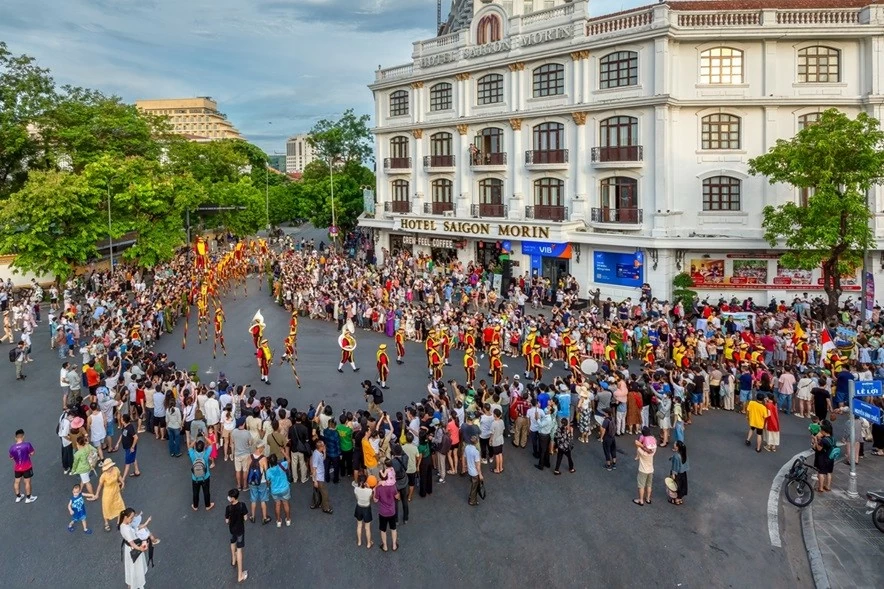 |
| A street festival as part of the Hue Festival. (Photo: Minh Chau) |
Following the success of previous festivals, Hue Festival 2024 will continue to explore a series of festivals throughout the year, gradually building a new system of festival programs. The goal of the four-season Hue Festival brand is to stimulate demand and increase the potential for tourism economic development; therefore, the festival will have fresh features to meet the changing needs and trends of the public and tourists.
The Spring Festival – Spring in the Ancient Capital (January – March) is highlighted by activities such as the traditional Tet (Lunar New Year) celebrations, the cultural space of Tet, and a wealth of unique and rich folk festivals, attracting the participation of tourists.
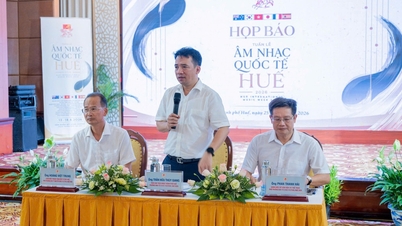
The Summer Festival – The Shining Imperial City (April – June), with the highlight being the Hue International Arts Festival Week 2024, contributes to introducing and promoting Hue, aiming to build it into a truly distinctive festival city of Vietnam.
The Autumn Festival in Hue (July-September) focuses on the Mid-Autumn Festival program with the Hue Lantern Festival 2024, combining street lion and dragon dances, exhibitions, lantern processions, and experiences of traditional Mid-Autumn Festival, showcasing the beauty of Vietnamese Mid-Autumn Festival culture.
The Winter Festival – Hue Winter (October – December) is highlighted by the Hue Music Week 2024 and concludes with a Countdown program to bid farewell to the Hue Festival 2024 and welcome the new year 2025.
Recently, the Hue International Arts Festival Week 2024 (June 7-12), themed "Cultural Heritage with Integration and Development," brought together nearly 30 art troupes from France, Belgium, Spain, Canada, Japan, China, South Korea, and Vietnam, presenting audiences with dozens of artistic programs showcasing the unique cultural identities of various countries around the world.
Over 565 artists, musicians, singers, and actors from Vietnam and abroad, along with a large number of amateur artists, performers, students, and more, all participated to showcase the uniqueness, sophistication, and diversity of various art forms, giving their all on stage to offer the audience an artistic feast brimming with cultural identity, expressing aspirations for a world of peace, friendship, cooperation, and shared development among nations.
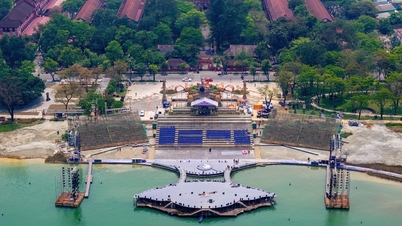
The art programs blended seamlessly into the ancient atmosphere of a culturally rich imperial city with 8 UNESCO-recognized heritage sites. With 12 main programs, 24 art performances on various stages, and nearly 10 accompanying activities, exhibitions, and displays taking place continuously throughout the province, the Hue International Art Festival Week attracted a large audience. Hue – Vietnam's Festival City – continues to shine with the vibrant spirit of a green, environmentally friendly, and sustainably developing urban area.
Source: https://baoquocte.vn/phat-huy-gia-tri-di-san-de-co-do-hue-thanh-diem-den-hap-dan-280665.html
![[Photo] Ba Lang An Lighthouse - the "eye of the sea" amidst the "rock museum" of Quang Ngai province.](https://vphoto.vietnam.vn/thumb/1200x675/vietnam/resource/IMAGE/2026/05/29/1780038698840_anh-man-hinh-2026-05-29-luc-14-10-42.png)
![[Image] Pleasant weather helps students enter the 10th grade entrance exam with confidence.](https://vphoto.vietnam.vn/thumb/1200x675/vietnam/resource/IMAGE/2026/05/29/1780034401612_ngay-1-thi-lop-10-minh-duy-8-5009-jpg.webp)








































































Comment (0)