

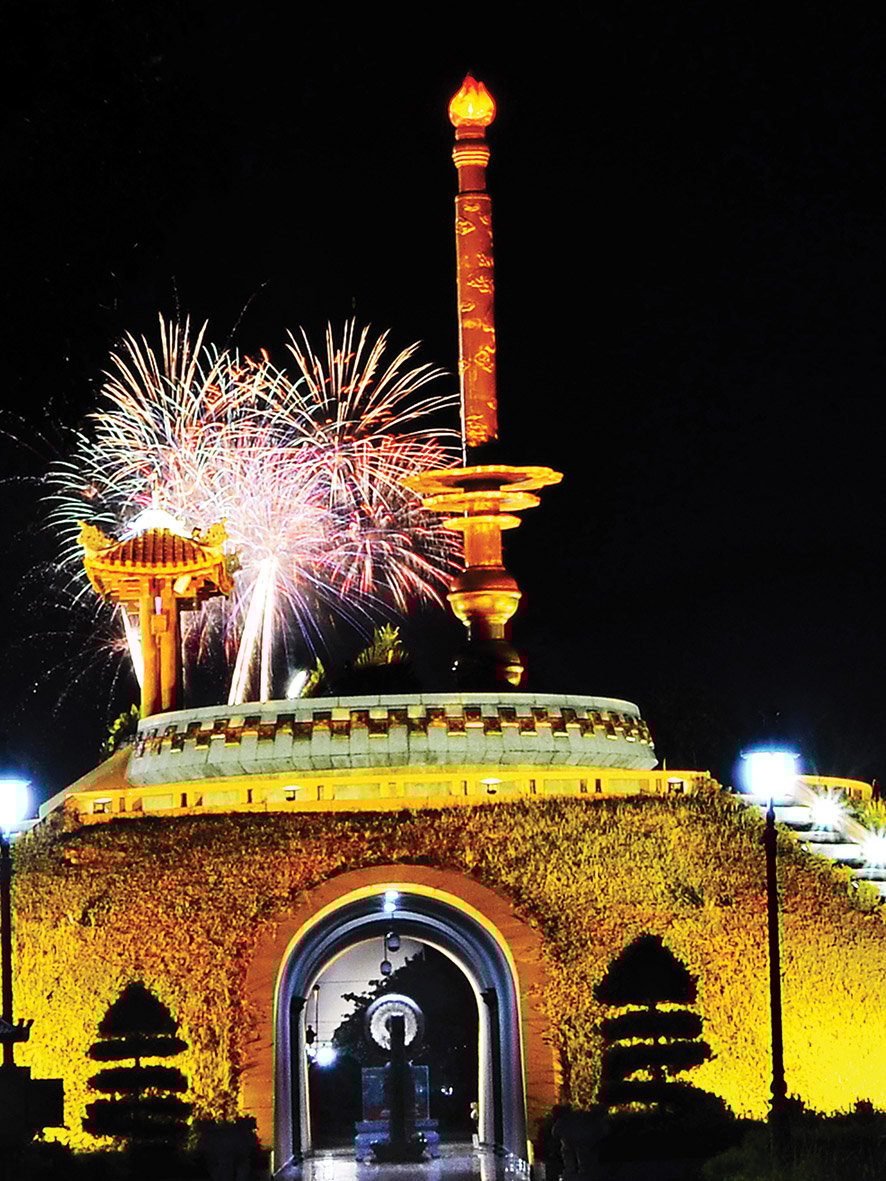
Ancient Citadel Monument - Photo: TRA THIET
"Far Away at Sea" is like a message of peace , sung half a century ago. The "North by day, South by night" is now just a memory of the nation, but mentioning it still evokes a sense of melancholy in many. A profound sadness and boundless yearning. "Far Away at Sea" is not just a love song, but a prayer for peace with enduring vitality.
It all started in Quang Tri . Why do I say that, even though composer Nguyen Tai Tue wrote "Far from Shore" in the North? Because the idea of writing a song that captures the vastness of the sea, yet deeply reflects love for his homeland and life, stemmed from his field trip to Vinh Linh, Quang Tri in 1958.
And here too, I remember, my mother brought the bridge at the 17th parallel to me through the melancholic lyrics and melody. Like a lullaby, a folk song woven across the sun and wind of Central Vietnam. I heard Hoang Hiep's song "A Folk Song by the Hien Luong River" before I even started first grade. Oh... even though the river separates us, nothing can stop the love between you and her.
Parting the clouds to reveal the golden moon, opening the river to connect the shore so she can return to him. At that time, I didn't understand the meaning of the song, nor did I fully grasp the pain of separation by the river, but I seemed to be affected by my mother's song from the creaking hammock swaying in the thatched house by the Gianh Gate ( Quang Binh ).
Like "Far Away at Sea," "The Song on the Banks of Hien Luong River" has added beautiful melodies to my life's journey. The more I listen, the more I understand, and I can't deny it, that the yearning for peace and reunion belongs to no one in particular, not to any of the warring sides. It is the melody of peace of the nation, rising from here, from this beloved and sorrowful land of Quang Tri.
It's not just now, but for a long time, since I was very young. Through the experiences and reflections of decades living in Quang Tri, I have come to understand and love this land and its people even more, and that is the raw material for my new literary and journalistic works. But I feel it is more necessary, more important, to connect with contemporary life to have more authentic and moving reflections of Quang Tri in the new era. |
I am still astonished to learn that Quang Tri, a small province with a modest population, a moderately developed economy, a harsh climate, and frequent natural disasters, has more war cemeteries than any other province in the country. Seventy-two war cemeteries, including two nationally ranked sites: Truong Son Cemetery and Highway 9 Cemetery. No one wishes for, and no one is proud of, that fact.
But history is history. Quang Tri once bore the brunt of a fierce and painful twenty-one-year war because of its "frontline" position. Both sides recognized the importance of this narrow, scorching piece of land, ravaged by the vicious monsoon winds and the persistent dampness of the rainy season, as it was the border between two regimes.
The conflict ended fifty years ago, and the country is now peaceful and unified, but Quang Tri has also become a war museum containing all sorts of contrasting nuances, levels, tangible and intangible aspects.
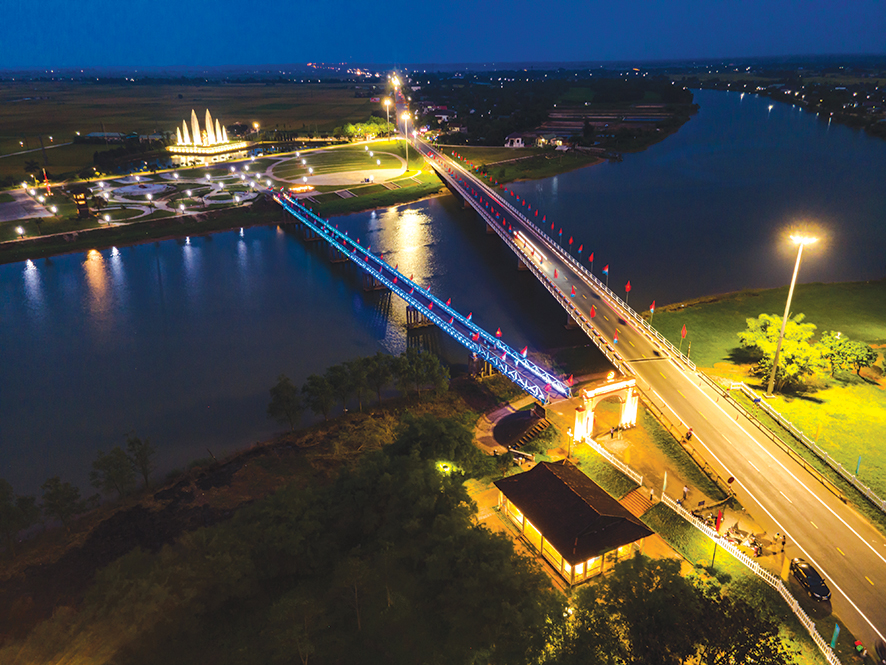
The banks of Hien Luong - Ben Hai - Photo: HOANG TAO
Peace, I hear that call from thousands of war-torn graves, right where I live and write. In the moving intermingling of two worlds, one half spiritual, the other half real, we clearly hear the common thread shimmering with the light of peace. From Truong Son, Highway 9, the Ancient Citadel, the banks of Hien Luong River, the Vinh Moc Tunnels, Tan So Citadel, Lao Bao Prison, Lang Vay Village...
Everywhere you look, the word "peace" resonates deeply. Peace is the most fitting symbol of Quang Tri province. This land, steeped in suffering, deserves to speak about peace on behalf of the Vietnamese nation in the most honest and heartfelt way.
In the autumn of 2024, General Secretary To Lam visited Quang Tri. Quang Tri Ancient Citadel, Truong Son National Martyrs' Cemetery, Highway 9, the memorial site of the late General Secretary Le Duan, the heroic Con Co Island... are some of the significant locations marked by the footsteps of the current leader of our Party.
In the guestbook at the Le Duẩn Memorial Area, Comrade Tô Lâm wrote: “We pledge to continue striving to follow the cause and aspirations, and the leadership guidance of Comrade Le Duẩn, to build a unified, independent, free, and prosperous Vietnam.”
New hopes and faith are being kindled in this land, which bears the scars of fierce warfare. The East-West Economic Corridor will expand its development space westward; National Highway 15D will soon be completed, connecting My Thuy seaport to the La Lay international border gate; and plans for the construction of the Cam Lo-Lao Bao expressway are underway.
Furthermore, onshore and offshore wind power projects, solar power, and LNG power projects will be studied and added to the planning and development in Quang Tri. As a tribute to the sacred and tragic past, a national museum titled "Memories of War and the Aspiration for Peace" will soon be researched and built in this land.
The project to develop Con Co Island, a steel island and pearl island, into a strong economic hub with robust national defense and security, as well as the early implementation of a pilot model for a joint Lao Bao (Vietnam)-Densavan (Laos) cross-border economic and trade zone, has been discussed.
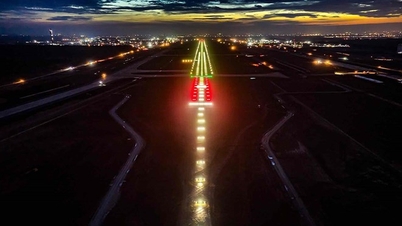
Previously, as everyone knows, construction of Quang Tri airport had already begun. Now, saying our homeland is taking off might be premature, but what has been mentioned is enough to outline a bright future for this narrow strip of land in Central Vietnam, which endured the most brutal war of the nation in the 20th century.
Perhaps it is the feelings about war and peace that resonate with life today as Quang Tri, along with the rest of the country, enters a new era that constantly inspire my creativity in this sacred land. A Quang Tri that rises from suffering and from there reaches into the future with love, resilience, and new innovations. So that this land is not only sacred but also a place worth living in our country.
The past is not lost in the present; in other words, the tradition of preserving the nation continues to transmit energy to the building and protection of the Fatherland today. However, writing about the good and beautiful aspects of life does not mean ignoring the bad, especially manifestations of corruption, waste, localism, factionalism, and group interests. In the journey of digital transformation, journalists must surpass themselves, approach and practice a modern journalistic style that is quick, cautious, direct, honest, multifaceted, and innovative.
Emerging from a brutal war with immense devastation and unimaginable suffering, Quang Tri is transforming day by day. The admirable qualities and character of the people of Quang Tri have largely remained intact.
When writing about Quang Tri, one should highlight the "essence of Quang Tri" in their literary and journalistic works. The urge to write about Quang Tri, for Quang Tri, and because of Quang Tri remains intact within me. I am sure that many writers and journalists share this sentiment. For a very simple reason: We love Quang Tri.
Nguyen Huu Quy
Source: https://baoquangtri.vn/quang-tri-tung-trang-viet-yeu-thuong-194398.htm


![[Photo] Closing Ceremony of the 10th Session of the 15th National Assembly](/_next/image?url=https%3A%2F%2Fvphoto.vietnam.vn%2Fthumb%2F1200x675%2Fvietnam%2Fresource%2FIMAGE%2F2025%2F12%2F11%2F1765448959967_image-1437-jpg.webp&w=3840&q=75)

![[Photo] Prime Minister Pham Minh Chinh holds a phone call with the CEO of Russia's Rosatom Corporation.](/_next/image?url=https%3A%2F%2Fvphoto.vietnam.vn%2Fthumb%2F1200x675%2Fvietnam%2Fresource%2FIMAGE%2F2025%2F12%2F11%2F1765464552365_dsc-5295-jpg.webp&w=3840&q=75)







































![[OFFICIAL] MISA GROUP ANNOUNCES ITS PIONEERING BRAND POSITIONING IN BUILDING AGENTIC AI FOR BUSINESSES, HOUSEHOLDS, AND THE GOVERNMENT](https://vphoto.vietnam.vn/thumb/402x226/vietnam/resource/IMAGE/2025/12/11/1765444754256_agentic-ai_postfb-scaled.png)

































Comment (0)