

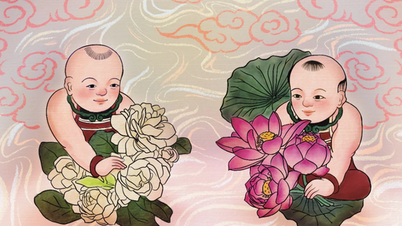
Giving New Year's greetings and wishes is a beautiful cultural tradition of the Vietnamese people.
In Vietnam, the custom of giving New Year's greetings has existed for a long time. According to the work "Vietnamese Customs" by the famous journalist and writer Phan Kế Bính (1875 - 1921), "After offering sacrifices to the ancestors, children and grandchildren give New Year's greetings to their grandparents and parents, bowing twice. Grandparents and parents give their children and grandchildren a few coins or a few dimes each, called New Year's money."
The custom of giving money as a New Year's gift in Vietnam has become a beautiful cultural tradition. When Tet (Vietnamese New Year) arrives, people often put money in red envelopes as gifts (mainly for children and the elderly), with the meaning of wishing for good fortune, blessings, and warding off evil spirits. For children, it's a wish for them to eat well, grow quickly, be intelligent, and excel in their studies; for the elderly, it's a wish for good health, peace, and longevity.
The money received as New Year's gifts is also known as "opening business" money. In the past, there was a custom that the money in the envelope should be small denominations, symbolizing that this money would grow and multiply. The amount of money in the red envelope may not be much, but for both the giver and receiver, it brings joy and wishes for good fortune in the new year.
For thousands of years, the custom of giving New Year's greetings has been a beautiful tradition of the Vietnamese people, cherished and preserved because it carries both deep emotional and spiritual significance.
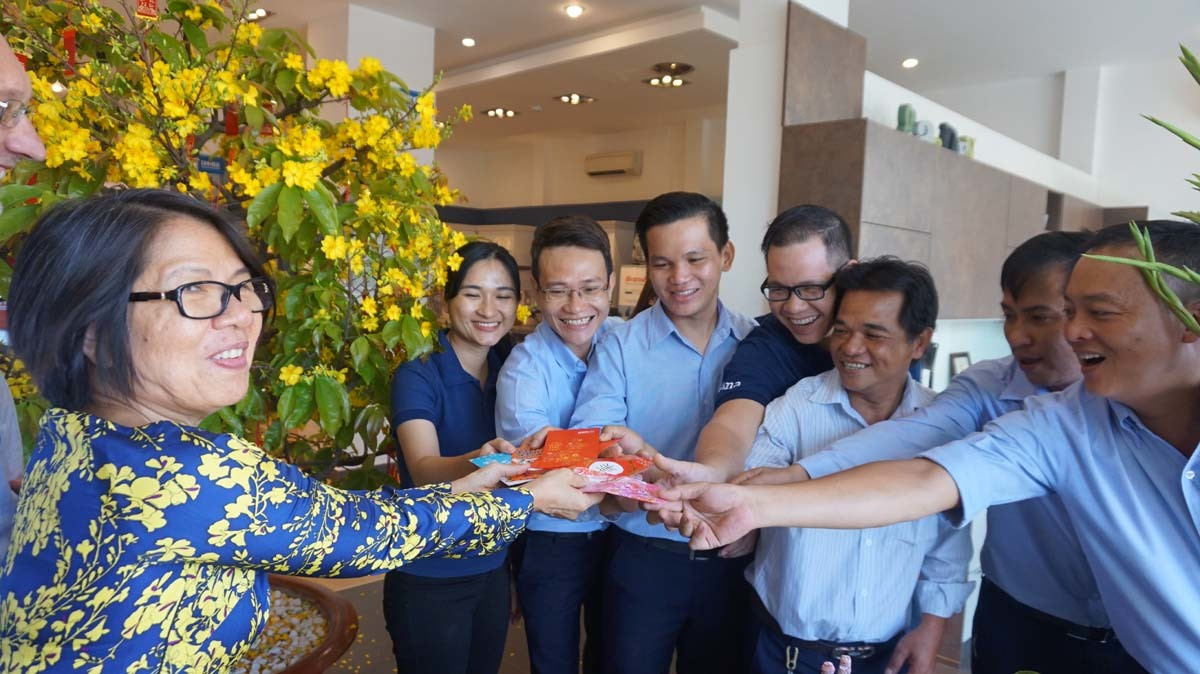
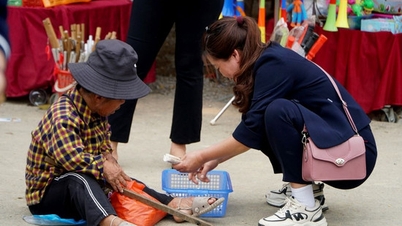
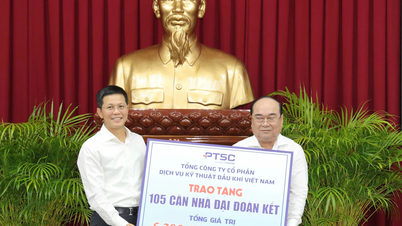
The custom of giving New Year's greetings has evolved into many different forms. While previously the giving and receiving of money and gifts only began on the first day of Tet (Lunar New Year), nowadays, the timing of these exchanges has changed, now taking place both before and after Tet . In many cases, the recipients of these greetings include the entire community. For example, political and social organizations and people from all walks of life send New Year's greetings and gifts to soldiers serving on the border and islands of the Fatherland; celebrate the longevity of the elderly; and give gifts to those who have rendered meritorious service, the poor, and the disadvantaged.
The distorted form of New Year greetings and gift-giving.
First and foremost, it must be affirmed that the custom of giving New Year's greetings is still inherited, maintained, and promoted by the majority of the people and socio-political organizations, preserving its positive values in a pure and selfless manner.
However, many people have abused and distorted the custom of New Year's greetings into harmful "variants" in society, in order to achieve their goal of building relationships.
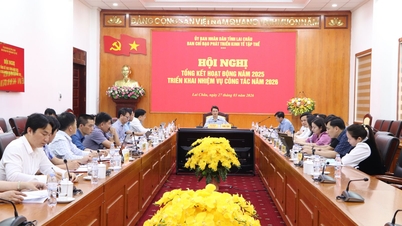
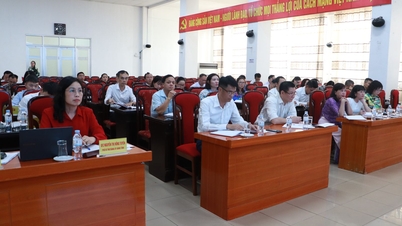
For many years, the practice of using Tet greetings as a pretext for "networking" has become a serious problem with many negative consequences. Every year, the Party Central Committee and the Prime Minister issue directives stating, "Do not organize visits or Tet greetings to superiors and leaders at all levels; do not organize delegations from the Central Government to visit and offer Tet greetings to Party committees and governments of provinces and cities; strictly prohibit giving or receiving Tet gifts to leaders at all levels in any form..."
A civil servant shared in a newspaper interview, "...most people still can't give up or don't dare to give up the tradition of wishing Happy New Year. I'm a young civil servant, and in previous years I always went to wish my superiors a Happy New Year. This year I didn't go to wish them a Happy New Year, but I feel uneasy."
One journalist wrote, "Gift-giving is a burden for subordinates, business people, those seeking promotion, those wanting to escape responsibility, and those relying on those in positions of power for this or that..."
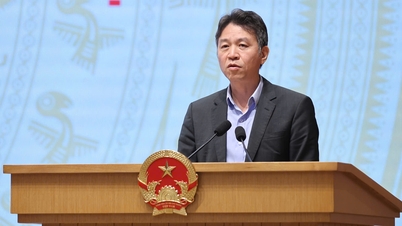
Mr. Le Nhu Tien, a member of the National Assembly in the 12th and 13th terms, and former Vice Chairman of the National Assembly's Committee on Culture and Education, shared: "I think we shouldn't be too extreme about whether or not to give Tet gifts to superiors and exchange gifts with each other. First of all, Tet gifts are just like normal gifts on important occasions; it's a beautiful tradition and cultural aspect of Vietnamese people."
However, the worrying issue is the distortion. It is disguised bribery, transforming the beauty of the Vietnamese people into self-serving schemes. We need to criticize this, and failure to prevent it will cause immeasurable consequences, especially creating opportunities and fertile ground for corruption and bribery.
Mr. Le Nhu Tien's assessment is very accurate. The major corruption cases involving the Viet A testing kit scandal and the "rescue flight" campaign are undeniable proof of this.
In most civilized countries, it is very common for officials, even heads of state, to receive gifts. However, in those countries, the law is strict, rigorous, and clear, and law enforcement agencies closely monitor the acceptance of gifts. The accounts of the head of state, all officials, and citizens are very strictly supervised.
Therefore, in order to remain in their current positions, from heads of state to all civil servants, everyone must voluntarily and truthfully declare all gifts received. According to the law, there are regulations specifying the value of gifts that heads of state or civil servants are allowed to receive, and those that must be voluntarily and voluntarily donated to the public treasury.
To eliminate the practice of using New Year greetings and gift-giving as a pretext for "relationship investment" for personal gain, it's not enough to simply issue directives from competent authorities prohibiting New Year greetings and gift-giving to superiors and leaders. Instead, legal regulations governing gift-giving and receiving must be established, along with mechanisms for close monitoring by law enforcement agencies, political and social organizations, and the public.
Simultaneously, we must implement strong reforms in personnel planning, selection, and appointment; and eliminate the "request-and-grant" system in resource allocation. We must be sincere, substantive, and decisive in ensuring transparency in these two areas.
Implementing the above solutions effectively will not only preserve the beautiful and pure traditions of Tet greetings but also eliminate the problem of distorted Tet greetings and gift-giving for the purpose of building relationships for personal gain; contribute to effective and fundamental anti-corruption efforts; and build a clean state apparatus and political system that the Party is determined to build.
Nguyen Huy Vien

Source


































































Comment (0)