

Standards and regulations for highways should be codified into law.
Many National Assembly deputies suggested that the draft Law should include specific regulations on technical standards and the application of science and technology for expressways. Deputy Nguyen Ngoc Son ( Hai Duong ) stated that the Ministry of Transport is currently developing new technical standards for expressways, which have not yet been implemented, so it is unknown whether their operation will be more effective. Therefore, according to the deputy, a more thorough and specific assessment is needed, along with reference to international experience, to incorporate these standards into the Road Law project in order to ensure effectiveness during implementation and alignment with global transportation development trends.
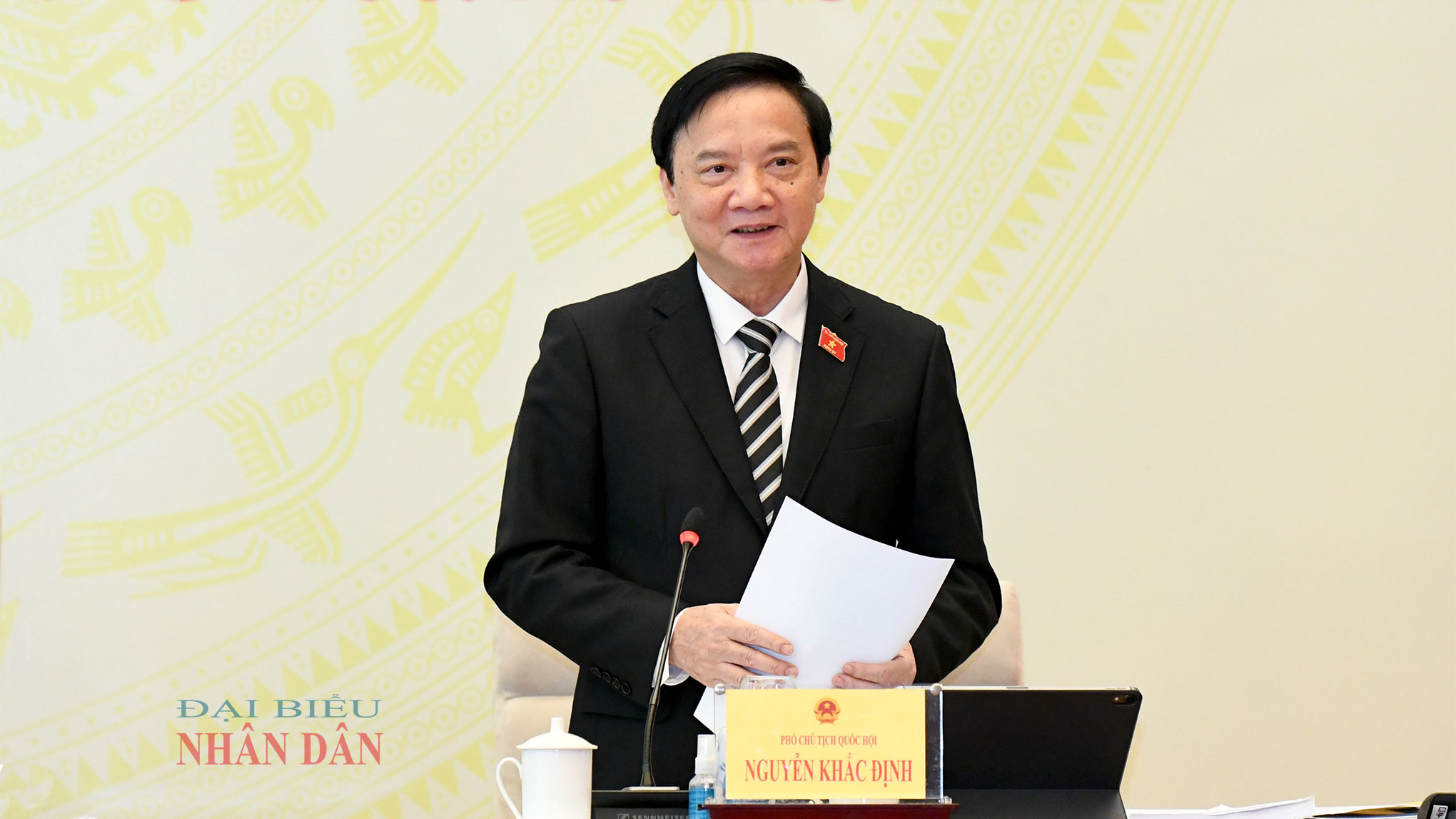
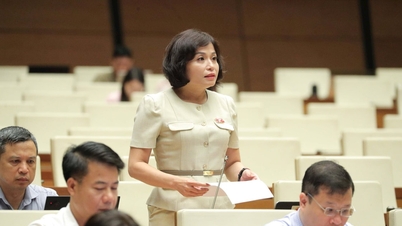
Suggesting that mandatory standards and regulations for highways should be codified into law, National Assembly Deputy Le Hoang Anh (Gia Lai) argued that highways must have a rigid median, emergency lane, and rest stops; and that a minimum highway width of 3.75m should be stipulated to avoid the risk of narrowing the width to save costs during phased investment. Furthermore, according to the deputy, the speed of vehicles on highways must be the highest in the technical classification system. The maximum speed for vehicles in each phase will be determined by the Ministry of Transport .
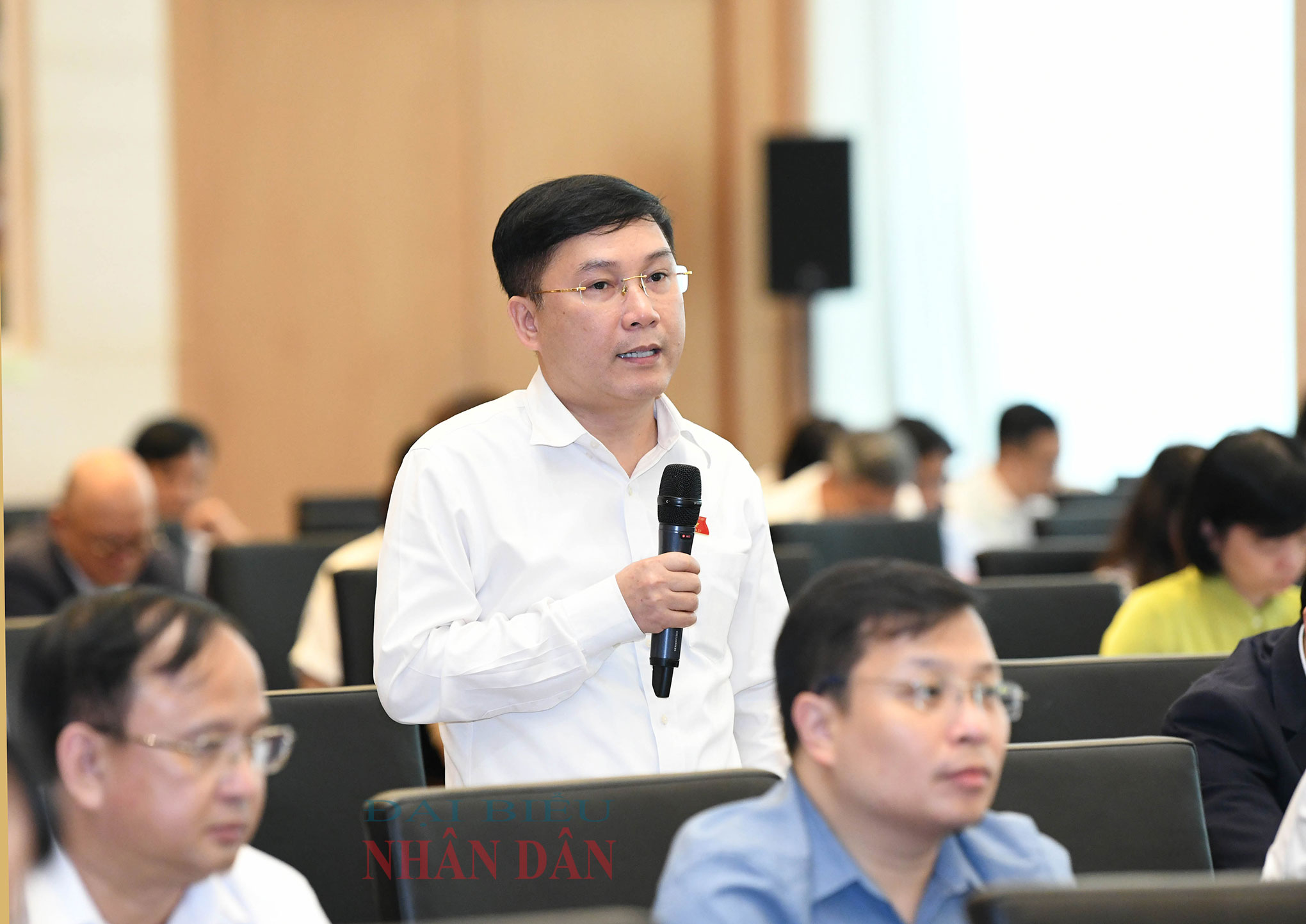
Will land clearance for the expressway be done in phases, once or multiple times?
Regarding compensation, support, and resettlement for highway projects (land clearance), Representative Nguyen Ngoc Son agreed with the draft Law submitted by the Government. Accordingly, compensation, support, and resettlement should be carried out according to the planned scale instead of in phases, as the budget allocated for this work is only about less than 20% of the total investment. However, it is necessary to clarify the use of land that has been cleared but not yet invested in, because if the land is cleared but not managed effectively, it will be costly to deal with later.
National Assembly Deputy Pham Van Hoa (Dong Thap) argued that, given the current economic conditions, the construction and development of expressways must be planned for the long term. If land clearance is not carried out according to the plan, further expansion will face many difficulties, while the implementation costs, according to the government's analysis, account for approximately 15-20% of the total investment.
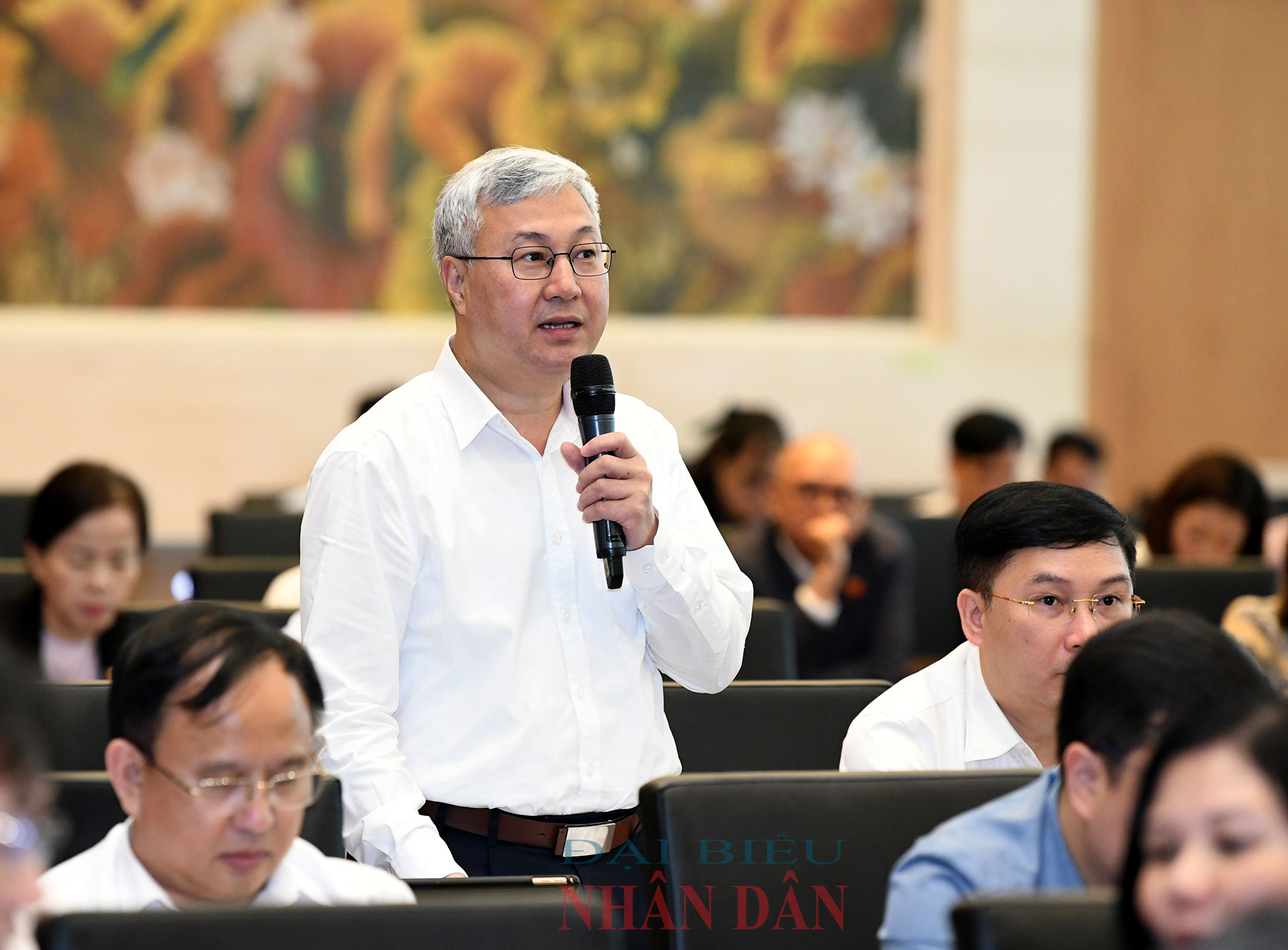
According to National Assembly Deputy Tran Van Lam (Bac Giang), investment in expressways must be based on economic efficiency; simply clearing the land and leaving it undeveloped will lead to waste. “The fear of people living in adjacent areas encroaching on planned areas for construction is a concern, and the responsibility for managing these plans lies with the local authorities. Poor management means that even after land clearance, people will still encroach,” Deputy Tran Van Lam stated.
Delegation of authority to provincial People's Committees to implement investment in national highway construction.
Regarding the regulations assigning provincial People's Committees the responsibility for investing in and constructing national highways in Article 32, expressways within the national highway system in Article 47, and managing, operating, exploiting, and maintaining national highways in Article 39, based on the directives of the National Assembly Standing Committee, the Standing Committee of the National Defense and Security Committee has revised Clause 2 of Article 28 of the draft Law to the following extent: in cases where provincial People's Committees are delegated the responsibility for investing in and constructing national highways, it must comply with the provisions of the State Budget Law, the Public Investment Law, and other relevant laws.
Regarding the management, operation, exploitation, and maintenance of national highways, the Standing Committee of the National Defense and Security Committee adds point c to Clause 2, Article 37, in the direction of: transferring sections of national highways to provincial People's Committees for management in accordance with the Law on Management and Use of Public Assets.
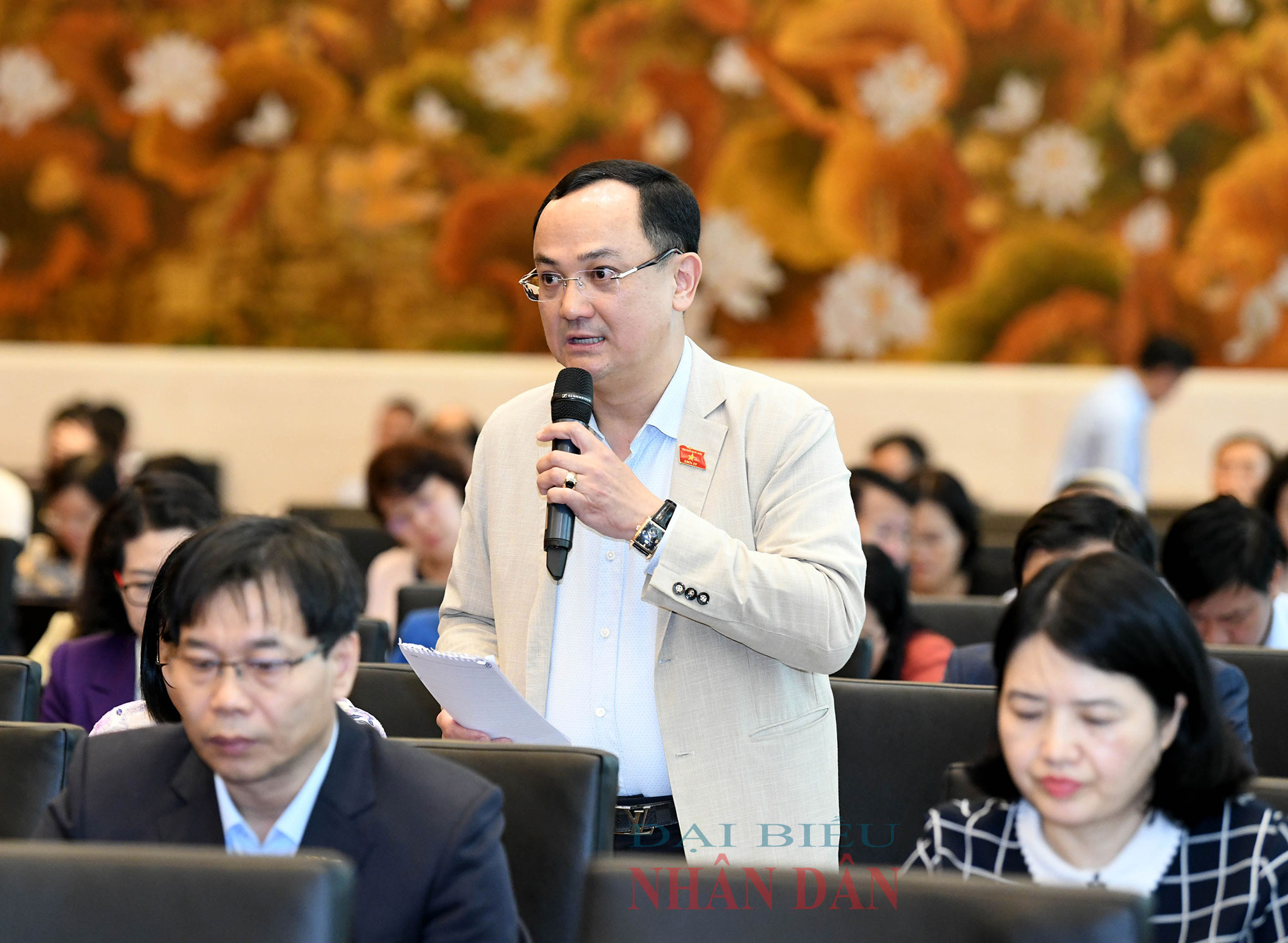
Agreeing with this content, delegate Nguyen Ngoc Son argued that decentralizing the investment and construction of national highways to provincial People's Committees under Clause 2, Article 28 would help utilize investment resources to develop a synchronized system, meeting the current transportation needs of many localities. However, since the current State Budget Law and Public Investment Law do not yet decentralize this investment and construction to provincial People's Committees, the delegate suggested that this matter should be regulated in a way that decentralizes authority to provincial People's Committees upon their request and in accordance with relevant legal provisions.
Source
![[Photo] Prime Minister Pham Minh Chinh receives the Governor of Tochigi Province (Japan)](/_next/image?url=https%3A%2F%2Fvphoto.vietnam.vn%2Fthumb%2F1200x675%2Fvietnam%2Fresource%2FIMAGE%2F2025%2F12%2F16%2F1765892133176_dsc-8082-6425-jpg.webp&w=3840&q=75)


![[Photo] Prime Minister Pham Minh Chinh receives Lao Minister of Education and Sports Thongsalith Mangnormek](/_next/image?url=https%3A%2F%2Fvphoto.vietnam.vn%2Fthumb%2F1200x675%2Fvietnam%2Fresource%2FIMAGE%2F2025%2F12%2F16%2F1765876834721_dsc-7519-jpg.webp&w=3840&q=75)
![[Image] Leaked images ahead of the 2025 Community Action Awards gala.](/_next/image?url=https%3A%2F%2Fvphoto.vietnam.vn%2Fthumb%2F1200x675%2Fvietnam%2Fresource%2FIMAGE%2F2025%2F12%2F16%2F1765882828720_ndo_br_thiet-ke-chua-co-ten-45-png.webp&w=3840&q=75)
![[Live] 2025 Community Action Awards Gala](/_next/image?url=https%3A%2F%2Fvphoto.vietnam.vn%2Fthumb%2F1200x675%2Fvietnam%2Fresource%2FIMAGE%2F2025%2F12%2F16%2F1765899631650_ndo_tr_z7334013144784-9f9fe10a6d63584c85aff40f2957c250-jpg.webp&w=3840&q=75)






































![[Video] Independence and self-reliance linked with international integration through 40 years of reform](https://vphoto.vietnam.vn/thumb/402x226/vietnam/resource/IMAGE/2025/12/16/1765899635777_1-1-8054-png.webp)























Comment (0)