

The taste of spring from the kitchen.
Perhaps the scent of spring in Muong Lo begins in the kitchen under the stilt house, where the Thai people prepare the offering meal for the year-end ceremony, offering it to their ancestors with all sincerity. In the warm glow of the fire, the smoke from the kitchen blends with the aroma of freshly cooked sticky rice and the fragrant smell of meat marinated with mắc khén spice.
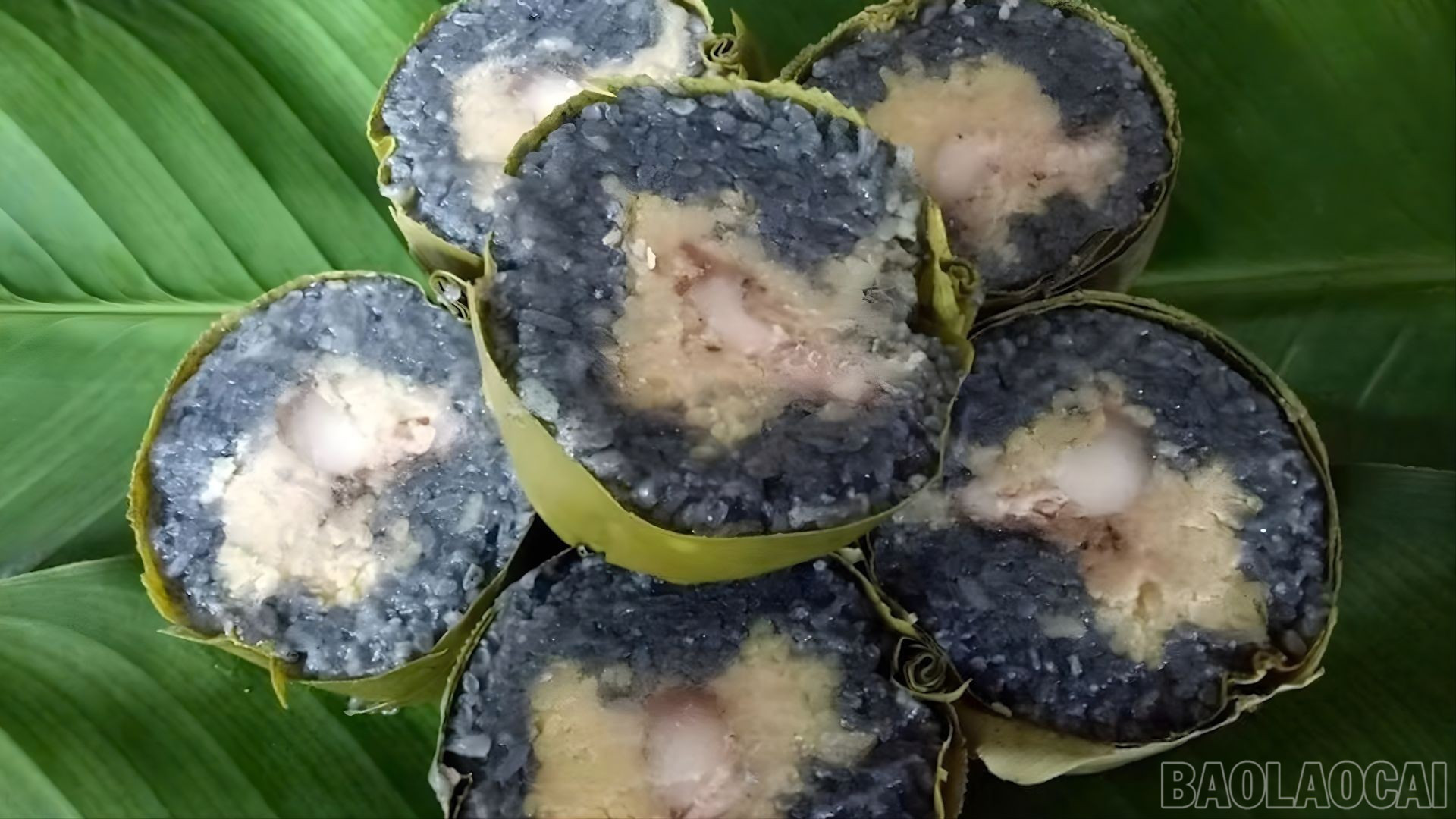
On the Tet (Lunar New Year) feast table of the Thai people of Muong Lo, black sticky rice cake is an indispensable dish. The cake is a long, cylindrical shape, wrapped in fragrant Tan Tu Le sticky rice mixed with ash from forest trees, creating an unusual black color; the filling consists of savory mung beans and fatty pork belly. More than just a food item, the black sticky rice cake is also an offering to ancestors, symbolizing the harmonious blend of heaven and earth.
Along with black sticky rice cakes, five-colored sticky rice is also an indispensable dish during Tet (Lunar New Year) for the Thai people of Muong Lo. While black sticky rice cakes encapsulate the flavors of nature, five-colored sticky rice is like a spring painting on the feast table.
Five-colored sticky rice, with its five colors: green, red, purple, yellow, and white, symbolizes the theory of the five elements and the simple yet profound aspirations of the people here.
Red symbolizes aspiration. Purple symbolizes fertile land. Yellow symbolizes abundance and prosperity. Green symbolizes the verdant mountains and forests of Northwest Vietnam. White symbolizes pure and faithful love and filial piety towards ancestors and parents. With five-colored sticky rice, the Thai people wish for completeness, abundance, warmth, and happiness . All these colors blend together like five petals blooming on the Tet (Lunar New Year) feast table, both visually appealing and deeply meaningful. These colors are all created from forest leaves and roots. In the spring feast, five-colored sticky rice not only adds beauty to the Tet celebrations but also serves as a wish for a peaceful, prosperous, and fulfilling year, hoping for good fortune and blessings for the village and homeland.
Lively spring games
After the thirtieth day of the lunar year, the entire Muong Lo area is bustling with the rhythmic sound of festival drums. Wide open spaces, stadiums, and flat areas along the streams become venues for traditional folk games.
Throwing the ball is the most typical game of the Thai people here. Against the blue sky, a tall bamboo pole is erected, signaling the start of the joyful season. The ball is sewn from colorful fabric, symbolizing the beauty of the universe; inside are filled with rice, sesame, and bean seeds – symbols of existence and fertility. At the top of the tall bamboo pole is a small circle covered with thin paper. Players throw the ball so that it pierces the center of the circle. Whoever hits it is considered to have good luck for the whole year.
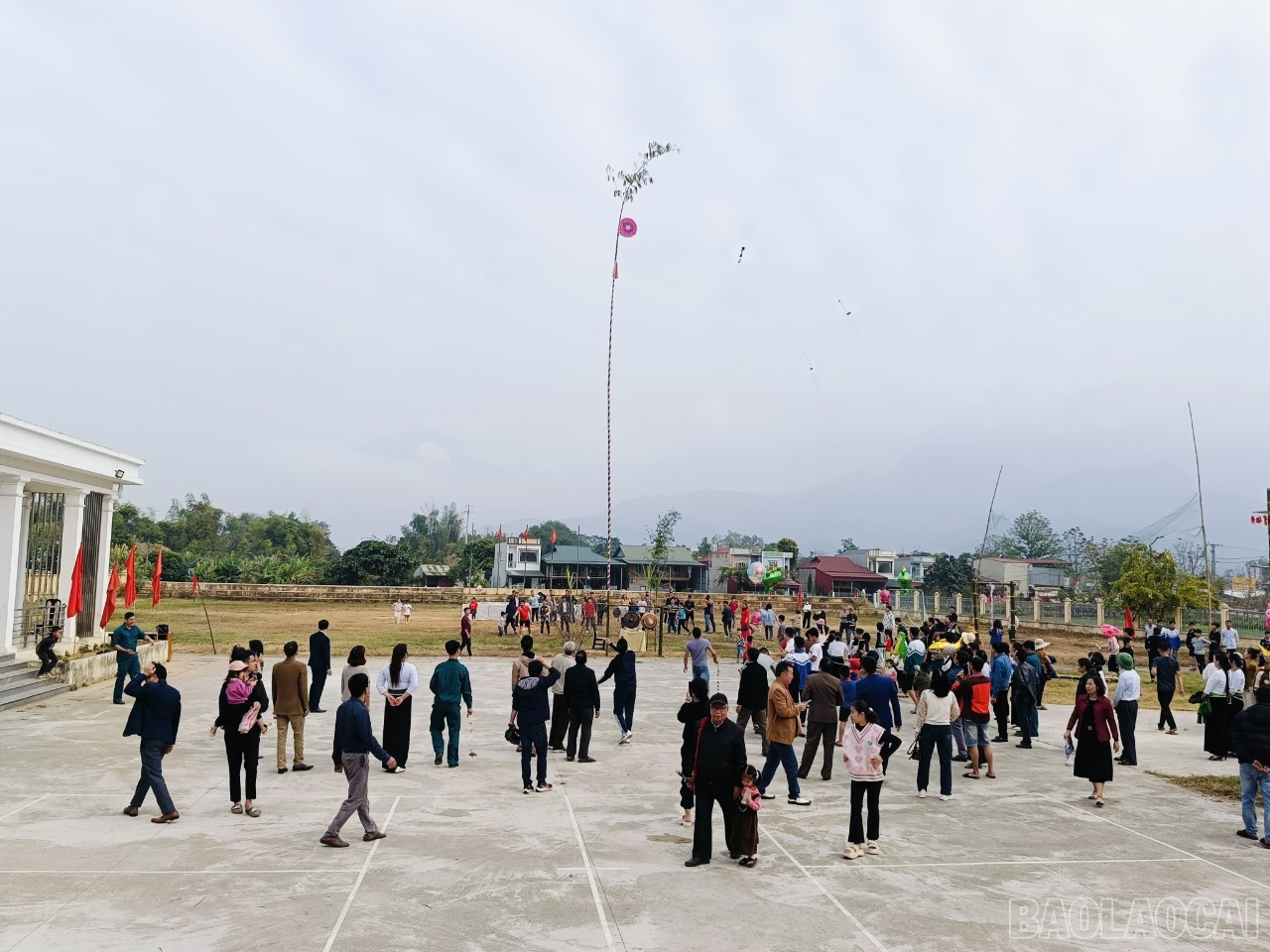
Sometimes it's a game of "throwing the ball around," a contest to see who can throw it through the center of a tall bamboo pole. Other times it's a game of "throwing the ball back and forth," with men and women standing on opposite sides, exchanging glances and singing songs as they toss the ball. The ball flies in a gentle arc under the spring sun, carrying with it the sound of innocent laughter. The game is not only a test of skill but also an opportunity for courtship. Many couples have found their spouses through such seasons of throwing the ball.
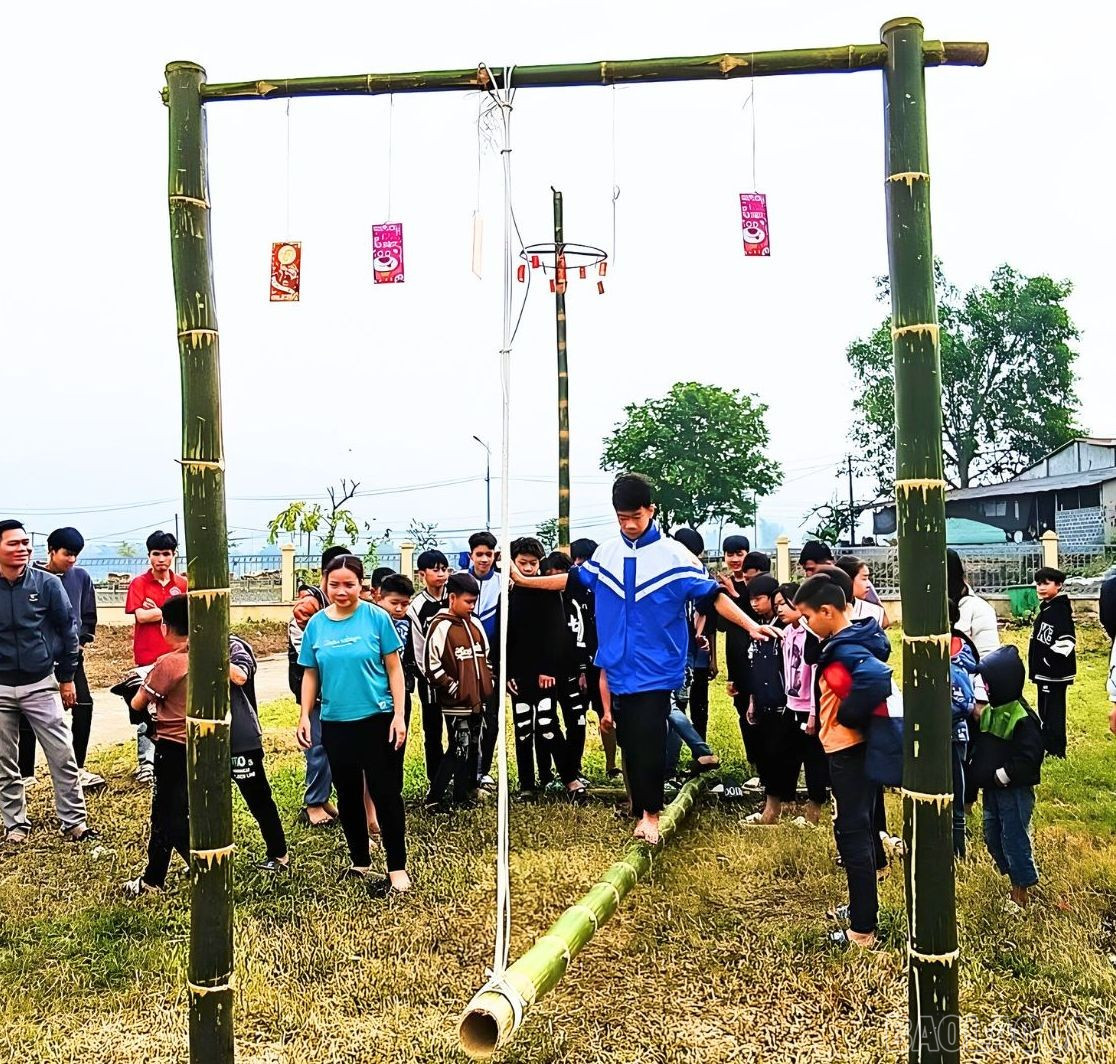
Along with throwing the ball, there are other games requiring quick hands and precision; then there's tug-of-war, stick pushing, climbing a greasy pole, blindfolded duck catching, blindfolded drum beating… Each game is a piece of community life. The elders cheer, the children run around, and boys and girls compete. The spring atmosphere thus spreads throughout the village.
Say in the verses, dance the xòe dance.
While the spring in Muong Lo is bustling and lively outside the festival grounds, once you step into the space of the folk songs, it becomes tranquil and romantic, as if spring itself slows down to listen to the rhythm of people's hearts.
Khap Thai is an ancient form of folk music, passed down from generation to generation. The lyrics can be declarations of love, blessings, or prayers… The khap voice blends with the sounds of the flute and mouth organ, creating a gentle melody during the spring. In the space of the stilt house, with the fire flickering, the singing resonates, and spring seems to slow down. The khap songs tell stories of the village, stories of the harvest, stories of dreams for a prosperous life, stories of hopes…
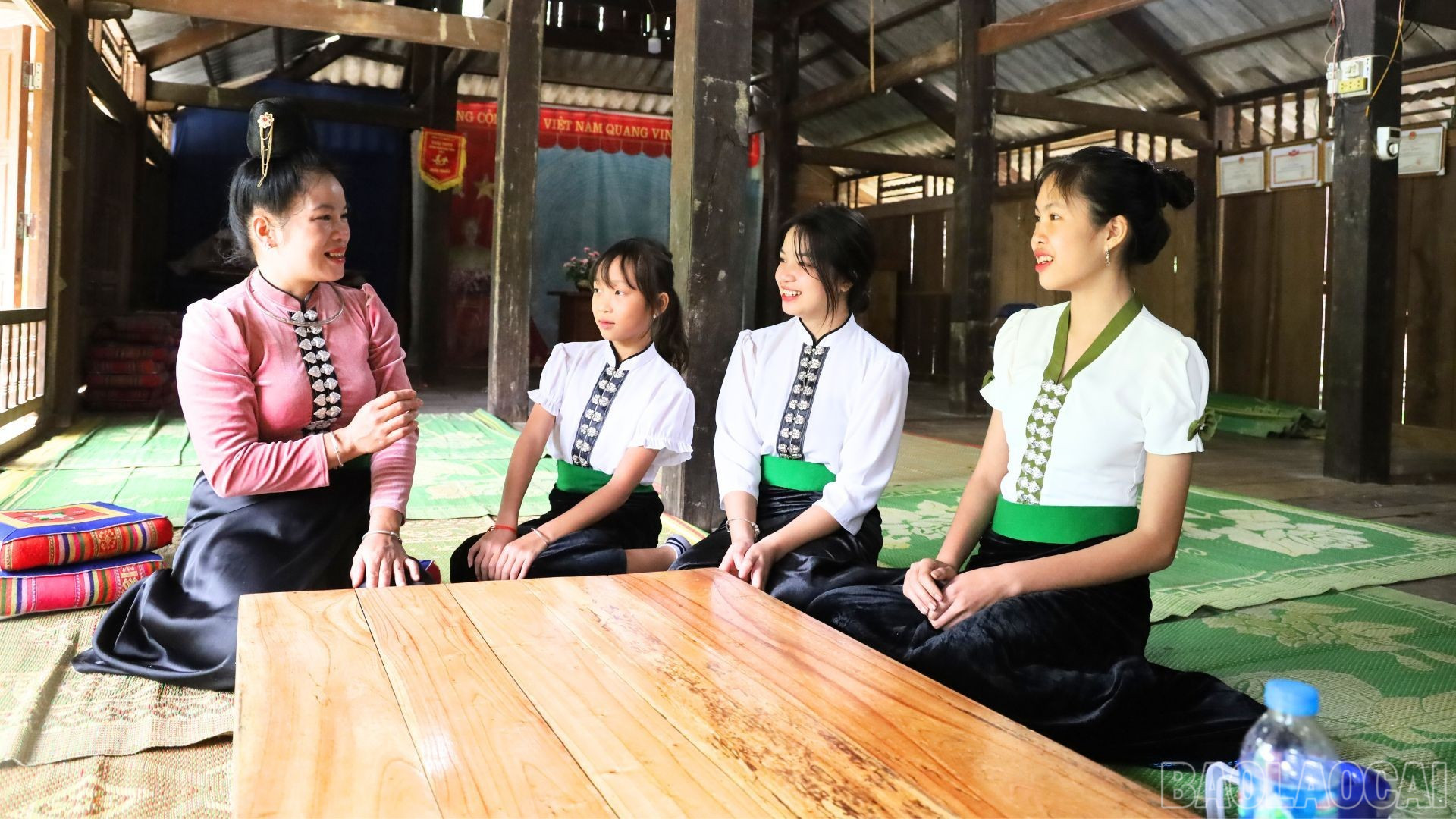
Khap and xoe are often a perfect pair in festive gatherings. After heartfelt khap songs over drinks, the Thai people join hands and step into the intoxicating xoe dance. If khap is the voice of the heart, then xoe is the heartbeat of the community. Every spring, when the drums sound, no one can stand outside the xoe dance circle.
The Thai Xoe dance has long been a symbol of the Northwest region, and now it has been inscribed by UNESCO as a representative intangible cultural heritage of humanity, allowing the Thai people of Muong Lo to perform the Xoe dance in the spring festival with great pride in their ethnic culture.
There are over thirty different types of xòe dances in Vietnamese life, but the most popular is the circle xòe. People hold hands to form a large circle and dance together. Warm hands connect, regardless of age or ethnicity; as long as they hold hands, they can dance xòe.
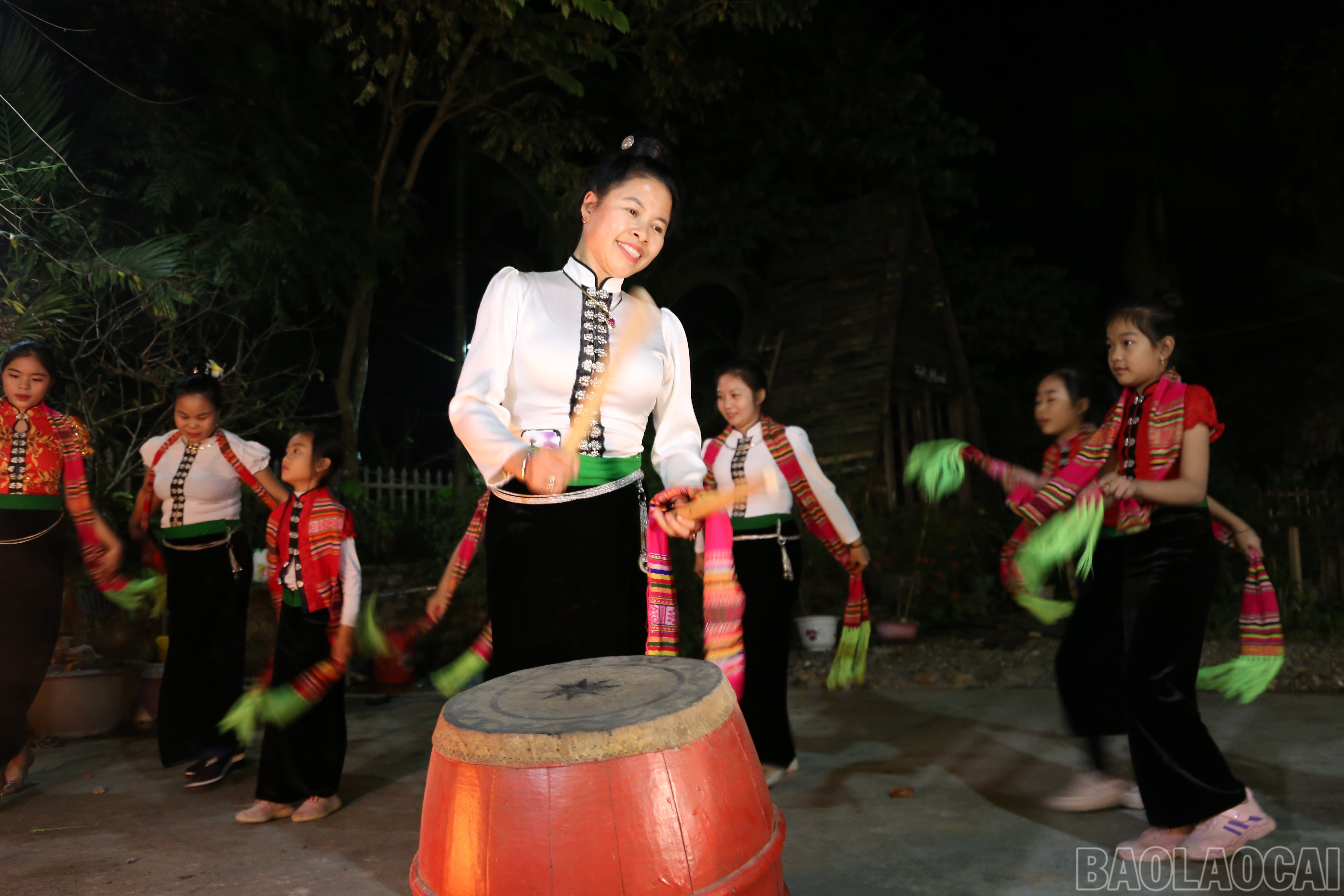
In springtime, the rhythmic steps of the Xoe dance resound throughout the villages of the Thai people of Muong Lo, most vibrantly the dance performed amidst the flickering firelight on a spring night. On Muong Lo nights, a fire is lit in the center of the circle. The drums and gongs beat rapidly. The dancers spin tirelessly. The elders recount that in the past, young men and women danced the Xoe dance all night until dawn.
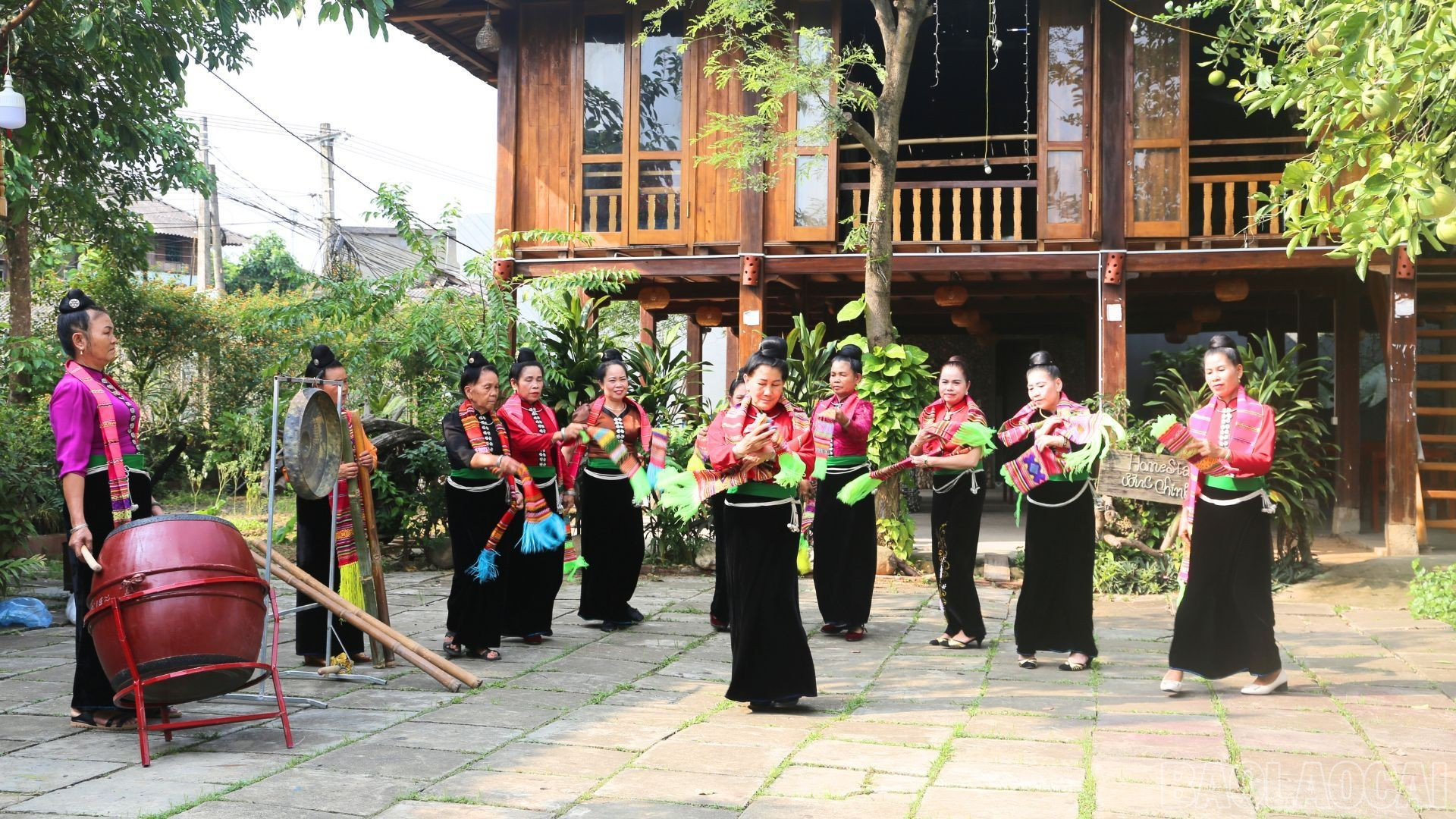
Today, the circle dance in Muong Lo is not only a celebration for the locals but also a cultural meeting point for tourists from all over. Amidst the firelight and the lively drumming, anyone can join the circle dance, holding hands with the person next to them and immersing themselves in the rhythm. There is no longer a distance between host and guest, between locals and visitors from afar, only hands joined together in a warm circle.
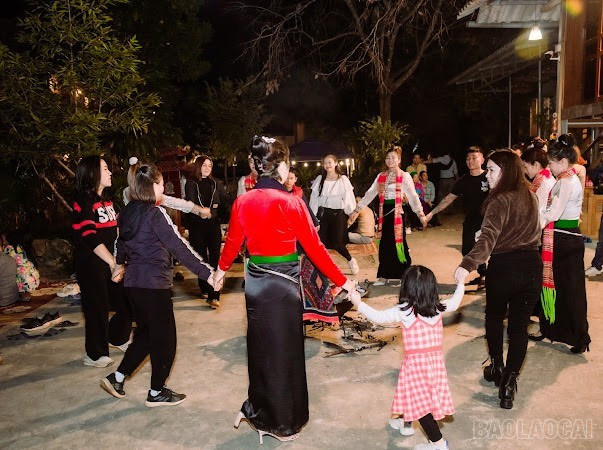
For many visitors, it's their first time touching a living heritage, truly becoming a part of the festivities in Muong Lo. Some are initially hesitant to follow the rhythm, then gradually join in, smiles blossoming in the flickering firelight. The circle thus expands, from a few dozen people to hundreds. With each hand joining another, the circle grows larger and more joyful. And in that moment, spring in Muong Lo is not only a season of blooming flowers and joyful festivals, but also a place where visitors can feel and immerse themselves in a cultural space rich in identity.
Amidst the hustle and bustle of modern life, Muong Lo still retains its springtime charm, attracting not only the Thai people who eagerly welcome the spring and revel in its festivities, but also many tourists from all over who want to come and be captivated by the springtime beauty of Muong Lo!
Source: https://baolaocai.vn/sac-xuan-muong-lo-post893875.html
![[Photo] National Assembly Chairman Tran Thanh Man concludes official visit to Italy, departs for IPU-152](https://vphoto.vietnam.vn/thumb/1200x675/vietnam/resource/IMAGE/2026/04/15/1776253436109_vna-potal-chu-tich-quoc-hoi-ket-thuc-tham-chinh-thuc-italy-len-duong-du-ipu-152-tai-tho-nhi-ky-8702876-7969-jpg.webp)
![[Photo] Capturing each moment at the "People We Meet" photography exhibition.](https://vphoto.vietnam.vn/thumb/1200x675/vietnam/resource/IMAGE/2026/04/15/1776245695648_1-8944-jpg.webp)
![[Photo] General Secretary and President To Lam and his wife, along with General Secretary and President Xi Jinping and his wife, attending a tea party.](https://vphoto.vietnam.vn/thumb/1200x675/vietnam/resource/IMAGE/2026/04/15/1776245678527_vna-potal-tong-bi-thu-chu-tich-nuoc-to-lam-va-phu-nhan-cung-tong-bi-thu-chu-tich-nuoc-tap-can-binh-va-phu-nhan-du-tiec-tra-8702812-9829-jpg.webp)
![[Photo] General Secretary and President To Lam and General Secretary and President Xi Jinping meet with youth from both countries.](https://vphoto.vietnam.vn/thumb/1200x675/vietnam/resource/IMAGE/2026/04/15/1776245687540_vna-potal-tong-bi-thu-chu-tich-nuoc-to-lam-va-tong-bi-thu-chu-tich-nuoc-tap-can-binh-gap-go-thanh-nien-hai-nuoc-8702371-jpg.webp)
![[Image] Current status of the land area of over 5.5 hectares that Ho Chi Minh City is considering reclaiming.](https://vphoto.vietnam.vn/thumb/1200x675/vietnam/resource/IMAGE/2026/04/15/1776245690095_1-3102-8409-jpg.webp)
![[Image] Overview of the Tam Trinh-Giai Phong connecting road section after land clearance is completed.](https://vphoto.vietnam.vn/thumb/1200x675/vietnam/resource/IMAGE/2026/04/15/1776245679644_ndo_br_dji-0195-jpg.webp)




































Comment (0)