

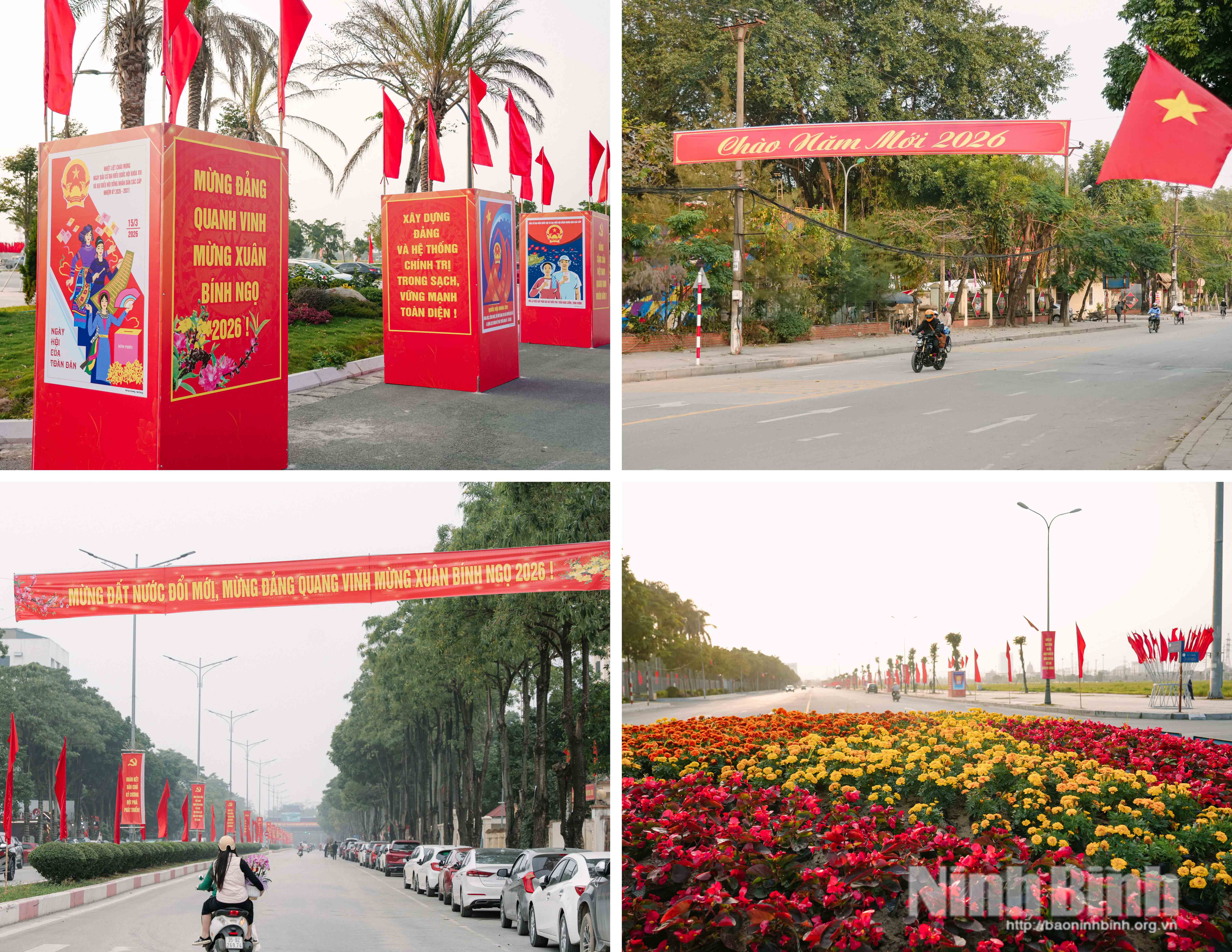
Throughout the main roads of Ninh Binh province, flags, banners, and billboards celebrating the Party and the Lunar New Year are uniformly displayed, creating a fresh and vibrant atmosphere. The crowds are larger than usual, everyone busy but radiating joy and excitement as they await the transition to the new year. Spring is not only present in the red of couplets and the yellow of apricot blossoms, but also permeates every home, every small street corner, and the innocent smiles of children, carrying with them hopes for a peaceful, prosperous, and happy new year.

The Spring Flower Market is an indispensable destination every Tet (Lunar New Year), becoming the most vibrant embodiment of spring in Ninh Binh. The markets are ablaze with colorful blossoms of peach blossoms, kumquat trees, chrysanthemums, lilies, and poinsettias, creating a lively spring scene. People leisurely stroll through the market, admiring the flowers and choosing a beautiful peach blossom branch or a kumquat tree laden with fruit to bring home as a symbol of spring. Amidst this space overflowing with fragrance and color, hearts find peace and tranquility after a year of worries and hardships.
The atmosphere at the flower markets is bustling yet retains its traditional, friendly charm. Stories about the weather, the harvest, and the passing year mingle with laughter and lively conversations, creating a unique Vietnamese Tet atmosphere. Sellers hope for a prosperous spring season, while buyers entrust their wishes for good fortune and abundance in the new year with each branch of peach blossoms and kumquat tree.

Amidst the vibrant spring colors, the sight of Ninh Binh women in their flowing ao dai dresses adds to the charm of the Tet (Lunar New Year) atmosphere. On the streets, in tourist areas, and at the spring flower markets, traditional ao dai dresses in bright colors and delicate spring patterns flutter in the early morning sun, highlighting the graceful and gentle beauty of the women of this ancient capital region. The ao dai is not only a Tet outfit but also a way for Ninh Binh people to preserve and spread traditional cultural values in contemporary life.
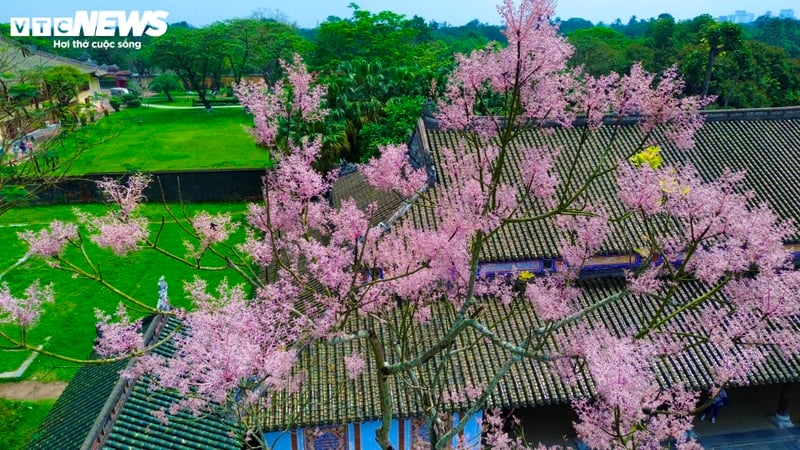
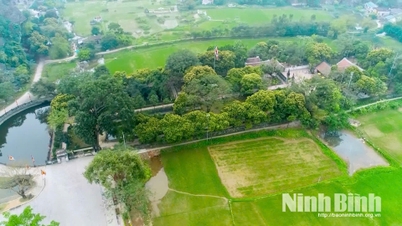
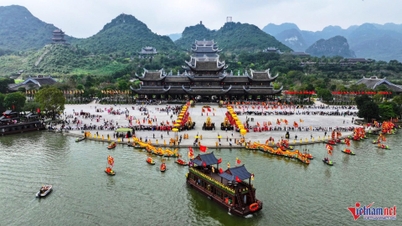
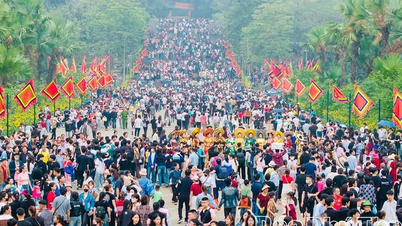
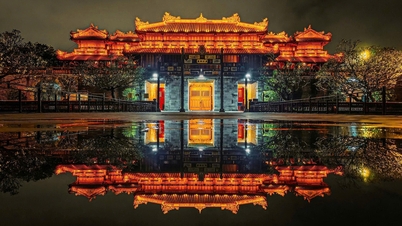
At key tourist areas in Ninh Binh such as Trang An, Tam Coc - Bich Dong, Tam Chuc, and Hoa Lu Ancient Capital, the Tet (Lunar New Year) celebrations are not only refreshed in terms of landscape but also infused with layers of traditional cultural heritage. Springtime scenes, vibrant entrance gates, pink peach blossoms, yellow apricot blossoms, and red couplets are harmoniously arranged amidst the majestic natural surroundings and spiritual atmosphere, creating a springtime picture that blends heritage and contemporary life. This investment is not simply for beautifying the landscape but also contributes to enhancing the tourism experience, evoking in visitors a deeper appreciation for traditional Tet in this land rich in cultural identity.

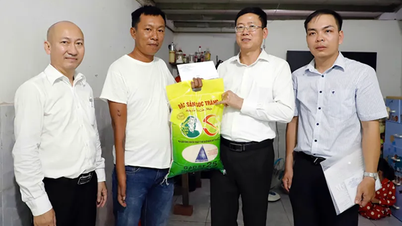
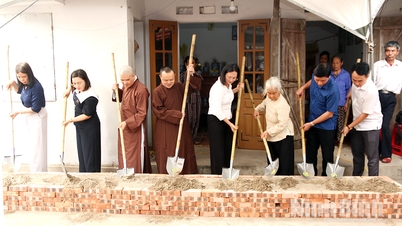
Besides beautifying the area, many meaningful cultural and charitable activities are also organized, enriching the spiritual value of the destination. A prime example is the "Thousands of Green Sticky Rice Cakes" program at Tam Chuc and Tam Coc - Bich Dong tourist areas, an annual activity with a strong humanitarian spirit. Thousands of sticky rice cakes are wrapped and donated, not only as material gifts but also as symbols of sharing and the spirit of "helping those in need," aimed at the poor, families receiving government assistance, patients, and those in vulnerable circumstances.
Thus, tourist destinations are not only places to visit and enjoy the scenery at the beginning of spring, but also become spaces to spread love, connect communities, and preserve the core values of Vietnamese Tet.

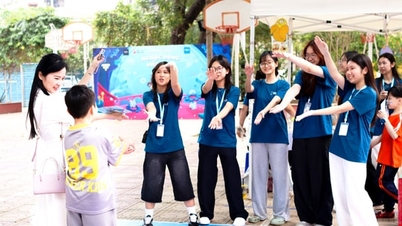
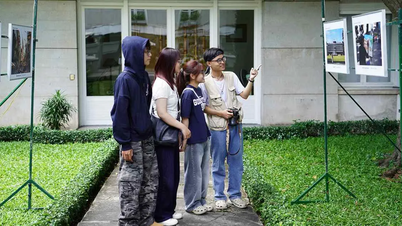
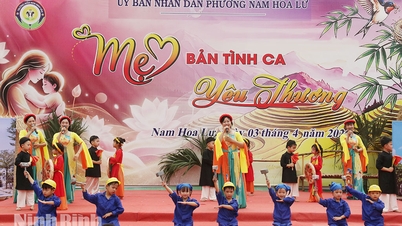
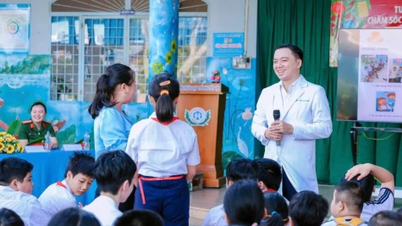
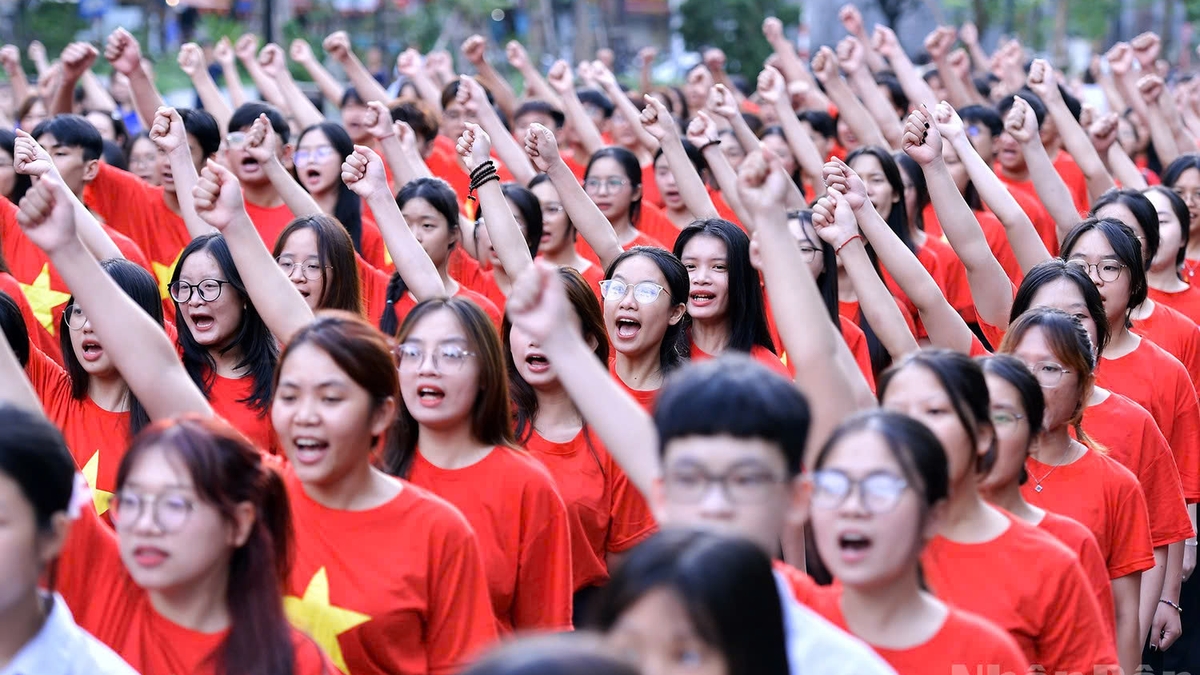
The spring atmosphere is not only present in the streets and in every home, but also deeply permeates the school environment, where the Lunar New Year is recreated through educational and humanistic experiences. In the schoolyard, filled with laughter, students enthusiastically participate in a series of activities recreating traditional Tet customs such as making banh chung (traditional rice cakes), practicing calligraphy, setting up traditional village market stalls, showcasing ao dai (traditional Vietnamese dress), or learning about Tet customs from the three regions of Vietnam. This space becomes an "open classroom," where knowledge is not confined to textbooks but is perceived through all senses and emotions.
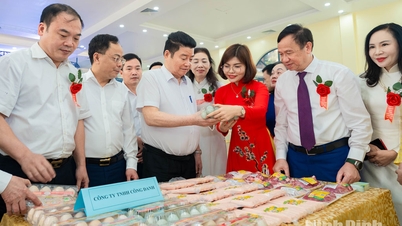
Recreating the atmosphere of a traditional Tet (Lunar New Year) market with stalls selling jams, candies, red couplets, and folk paintings helps the younger generation vividly visualize traditional customs – where Tet is not only a time of transition but also a time for reunion, sharing, and community bonding. Through these activities, cultural values are no longer abstract but become close, concrete, and easily felt. From there, Tet in the minds of students is not simply a long holiday or the excitement of receiving lucky money at the beginning of the year, but becomes a visual lesson about history, identity, and the responsibility of preserving tradition.

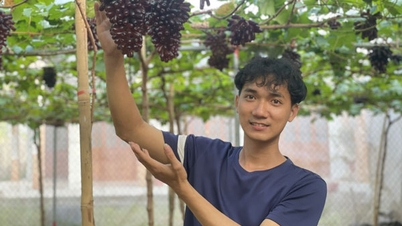
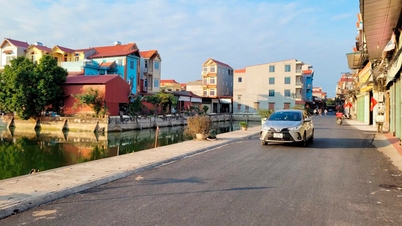
In the suburbs and villages of Ninh Binh, spring seems to begin earlier with the vibrant colors of flowers in the gardens and the bustling footsteps of farmers. As the weather changes, peach orchards, kumquat gardens, chrysanthemum and lily fields... burst into bloom simultaneously, showcasing their full brilliance after months of care, creating a lively spring scene against a backdrop of clear skies and fields still glistening with morning mist. Each bud, each cluster of fruit is not only the fruit of fertile land but also the culmination of the experience, patience, and hope of the growers.
As Tet (Lunar New Year) approaches, the atmosphere in the orchards becomes even more bustling. Farmers meticulously prune each peach branch, wipe each kumquat leaf, and tie the trees into balanced shapes, preparing for the journey of bringing the colors of spring to every home. This is not just a simple production activity, but a whole series of seasonal labors, closely linked to the traditional rhythm of the agricultural calendar. The Tet flower season thus becomes a special "harvest season" - where economic value goes hand in hand with cultural value.

The Spring of the Year of the Horse 2026 arrives in the ancient capital of Ninh Binh not with fanfare or ostentation, but with a serene, enduring, and pervasive atmosphere. Spring permeates from the peaceful fields and villages to the vibrant city streets. Within this springtime is faith and aspiration for a new year of peace and prosperity, where people and nature harmonize, continuing the story of spring in this ancient capital rich in tradition and full of life.
Source: https://baoninhbinh.org.vn/sac-xuan-ve-tren-dat-co-do-ninh-binh-260211224702688.html

























































Comment (0)