

Samsung Electronics has just released a fourth-quarter profit forecast that exceeded market expectations, marking a strong recovery for the South Korean technology giant amid rising demand for AI chips. This positive outlook shows that Samsung is effectively capitalizing on the global chip supply shortage, especially in the memory segment for AI data centers.
Specifically, the world's largest memory chip manufacturer estimates its operating profit for the fourth quarter of 2025 will triple compared to the same period last year, reaching approximately 20 trillion won (equivalent to $13.8 billion ). This figure significantly exceeds analysts' forecast of 17 trillion won ( $11.7 billion ). Revenue for the quarter is expected to increase by 23%, to 93 trillion won ( $64 billion ).
According to experts, this result reflects the sustained boom in the AI industry, as global technology companies ramp up investment in computing infrastructure. In this context, Samsung is one of the biggest beneficiaries due to its crucial role in the chip supply chain, particularly in high-bandwidth memory (HBM) chips used in AI hardware.
The South Korean giant's growth is also clearly reflected in the stock market. The group's share price rose 125% in 2025, reaching 119,900 won ( US$82.50 ). This is the strongest year-on-year increase in the past 26 years.
Daniel Kim, Director of Korea Research at Macquarie Capital, believes the semiconductor industry is entering an "unprecedented hypergrowth cycle." He argues that the DRAM shortage means HBM performance is no longer the sole determining factor, making traditional memory chips more profitable. However, he suggests the DRAM shortage is unlikely to be resolved before 2027.
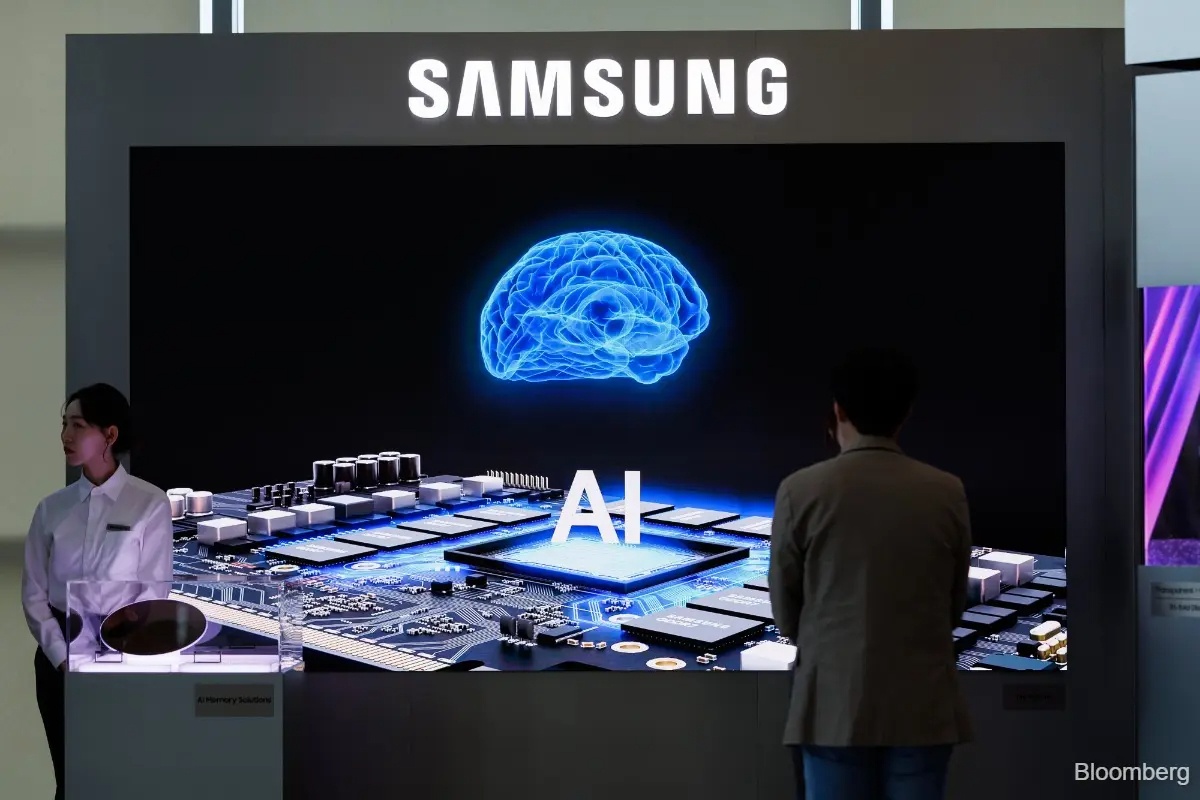 |
Samsung continues to push forward in AI chip development. Photo: Bloomberg . |
Recently, Chairman Lee Jae-yong has been holding a series of high-level meetings to strengthen Samsung's position in the global AI ecosystem, including meetings with Nvidia CEO Jensen Huang and billionaire Mukesh Ambani.
Analysts believe Samsung is moving closer to becoming a key supplier for Nvidia, as the company's next-generation HBM4 chips are likely to be used in the Vera Rubin platform. The Nvidia CEO also confirmed that the American company's next-generation chips have entered mass production.
However, experts warn that rising chip prices are putting pressure on other Samsung businesses such as smartphones and home appliances. The company is expected to release detailed financial reports by segment at the end of January, which will further clarify the impact of the chip growth cycle on the entire group.
Source: https://znews.vn/samsung-lai-dam-post1618183.html
![[Photo] Voting for the 14th Central Committee of the Communist Party](/_next/image?url=https%3A%2F%2Fvphoto.vietnam.vn%2Fthumb%2F1200x675%2Fvietnam%2Fresource%2FIMAGE%2F2026%2F01%2F22%2F1769082445591_chi-9961-jpg.webp&w=3840&q=75)
![[Image] The 14th Party Congress implements the content on personnel work.](/_next/image?url=https%3A%2F%2Fvphoto.vietnam.vn%2Fthumb%2F1200x675%2Fvietnam%2Fresource%2FIMAGE%2F2026%2F01%2F22%2F1769088146286_ndo_br_1-6165-jpg.webp&w=3840&q=75)






Comment (0)