

A variety of products derived from the palm tree.
Along the communes and wards of the Bay Nui area, the sight of tall palm trees rising amidst rice fields creates a tranquil rural scene, leaving a special impression on tourists. Palm trees are drought-tolerant, flood-resistant, and sun-loving, with a lifespan of up to 100 years, tall trunks, and wide canopies. Typically, trees only begin to flower and bear fruit after 10 years or more, averaging 50-60 fruits per bunch. Mature fruits have a glossy, reddish-brown peel, thick flesh, and sweet, fragrant juice. Trees 30-40 years old can flower, bear fruit, and produce juice year-round. For a long time, products made from palm trees have helped many households, especially the Khmer people, improve their livelihoods.
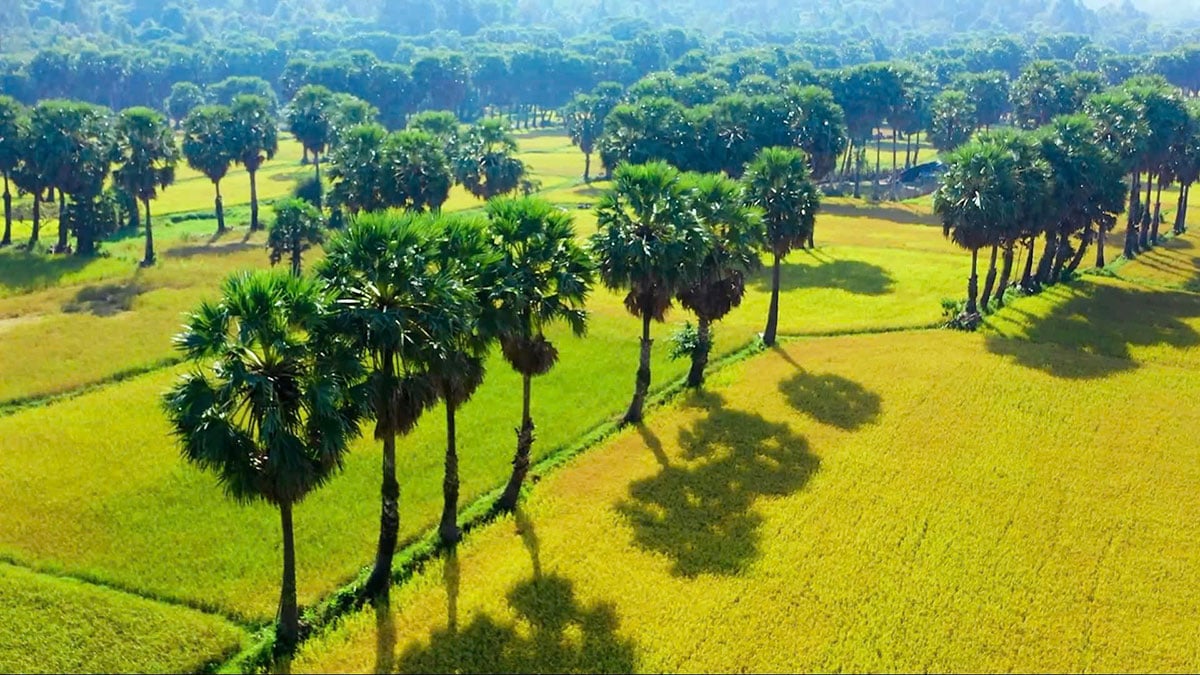
The palm tree is closely associated with the lives of the Khmer people.
The palmyra palm has many uses: its leaves are used for painting, and its trunk is used for building houses or household items. The palmyra palm sap and fruit are famous specialties, popular with tourists. Along Provincial Road 948, from Tri Ton commune to Tinh Bien ward, it's easy to find beverage stalls selling palmyra palm sap as the main item, along with many other specialties such as candied palmyra palm and palmyra palm sugar to serve tourists. Ms. Nguyen Thi My Ngoc, a resident of Tinh Bien ward who has been involved in the palmyra palm product business for many years, said: “There are many stalls along this road, but there are still many customers, especially during pilgrimages to Mount Cam. They often stop to rest, drink cold palmyra palm sap, or buy palmyra palm sugar as gifts for relatives and friends.”
Palm sugar specialty
Palm sugar is a specialty of An Giang province , made from the sap of the palm tree and famous throughout the region. Locals cut the flower stalks at the top of the tree to collect the sap, which they then boil to make sugar. This process, seemingly simple, is actually very elaborate. Those collecting the sap must use bamboo poles tied to make ladders to climb the tree, cut the flower stalks, and then place bamboo poles to guide the sap into bottles. Afterward, the sap is meticulously boiled to produce a batch of golden, fragrant, and sweet sugar.
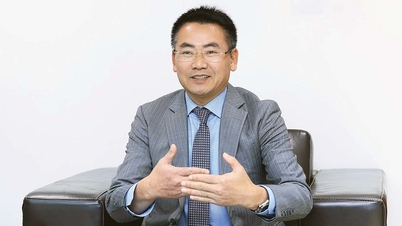
Among the products derived from the palm tree, the palm sugar syrup produced by Palmania Joint Stock Company, located in Tri Ton commune, stands out. The products are manufactured using traditional handcrafted methods of the Khmer people in the Bay Nui region, meeting standards of purity, cleanliness, and preserving the distinctive flavor of the palm tree. Currently, Palmania's products are available in many provinces and cities nationwide. Ms. Chau Ngoc Diu, General Director of Palmania Joint Stock Company, shared: “Born and raised in the mountains, I witnessed the hard work of the people in making palm sugar syrup at the end of the year. I want to maintain this traditional craft by producing clean, pure products that can elevate the brand of this local specialty.”
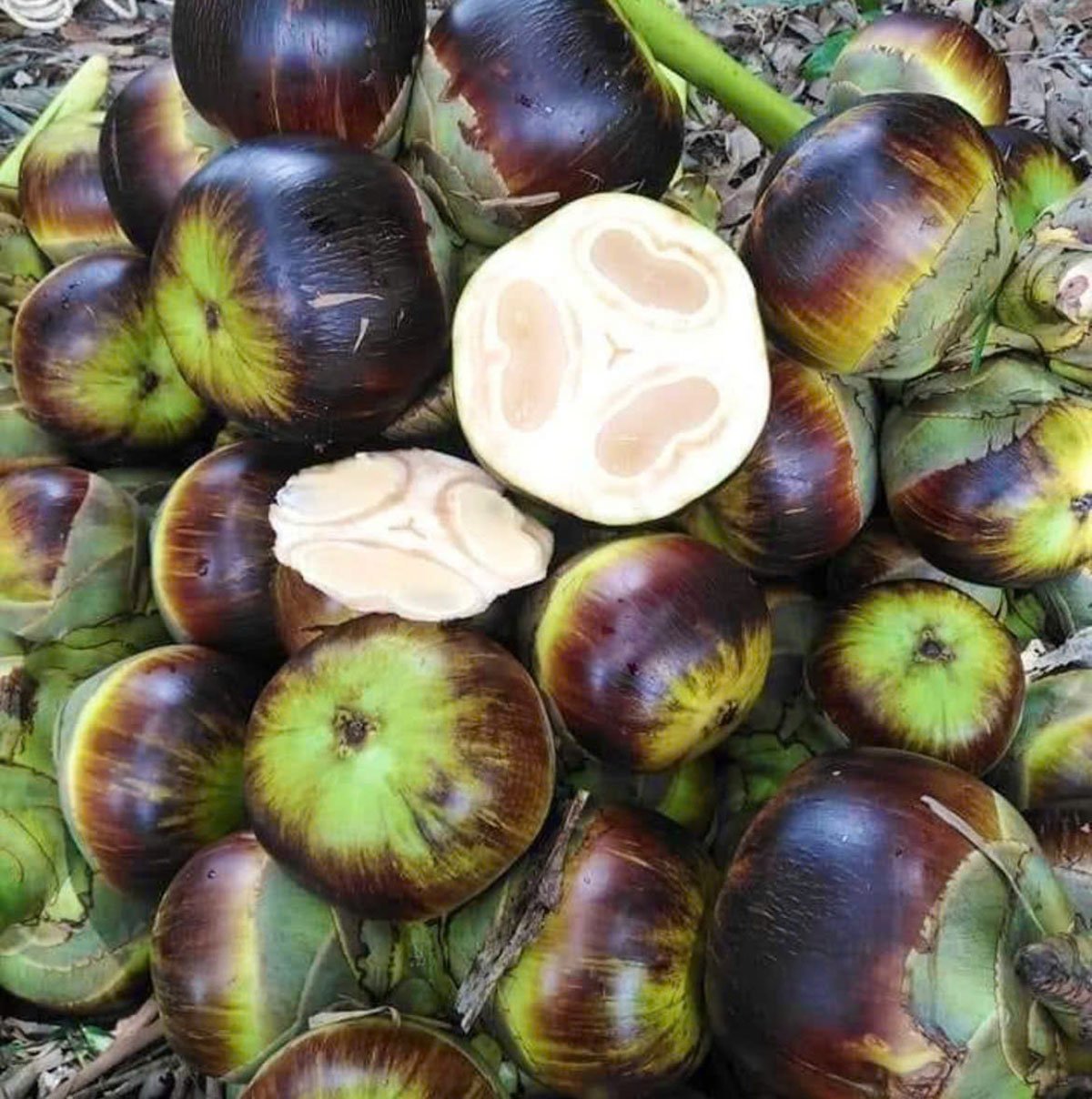
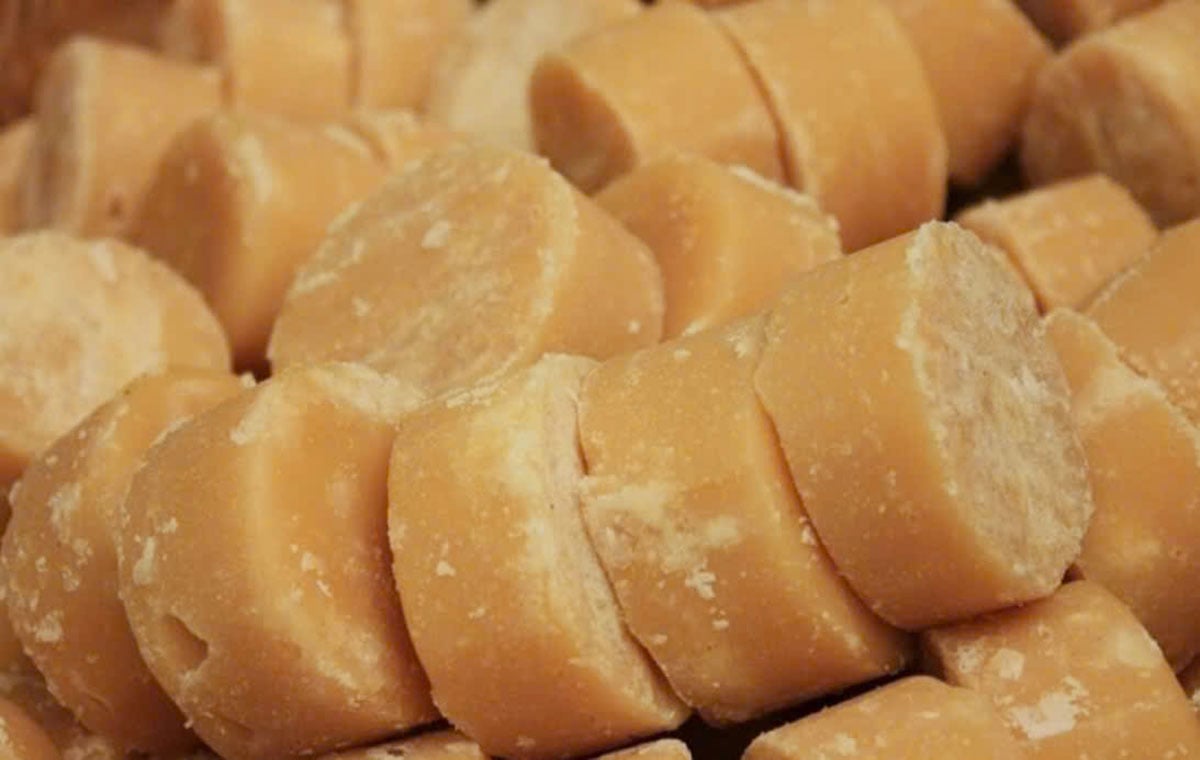
Products derived from the palm tree bring economic value.
The most difficult aspect of honey production is maintaining its natural quality. According to traditional methods, people place pieces of rosewood in jars to collect the honey and prevent it from fermenting and turning sour – a manual process that requires the honey to be cooked for eight hours after harvesting, making it very laborious.
After years of research, Palmania has successfully developed liquid palm sugar syrup, powdered palm sugar syrup, and granulated palm sugar syrup. Despite the changes in form, the products retain their original flavor, color, and natural mineral content. All three products were recognized as national OCOP products in 2024.
Source: https://baoangiang.com.vn/san-vat-tu-cay-thot-not-a424661.html
![[Photo] National Assembly Chairman Tran Thanh Man concludes official visit to Italy, departs for IPU-152](https://vphoto.vietnam.vn/thumb/1200x675/vietnam/resource/IMAGE/2026/04/15/1776253436109_vna-potal-chu-tich-quoc-hoi-ket-thuc-tham-chinh-thuc-italy-len-duong-du-ipu-152-tai-tho-nhi-ky-8702876-7969-jpg.webp)
![[Image] Current status of the land area of over 5.5 hectares that Ho Chi Minh City is considering reclaiming.](https://vphoto.vietnam.vn/thumb/1200x675/vietnam/resource/IMAGE/2026/04/15/1776245690095_1-3102-8409-jpg.webp)
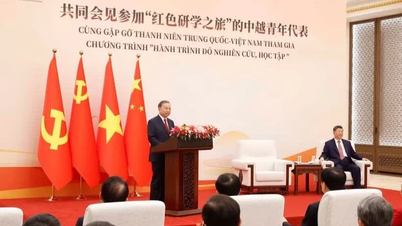
![[Photo] General Secretary and President To Lam and General Secretary and President Xi Jinping meet with youth from both countries.](https://vphoto.vietnam.vn/thumb/1200x675/vietnam/resource/IMAGE/2026/04/15/1776245687540_vna-potal-tong-bi-thu-chu-tich-nuoc-to-lam-va-tong-bi-thu-chu-tich-nuoc-tap-can-binh-gap-go-thanh-nien-hai-nuoc-8702371-jpg.webp)
![[Image] Overview of the Tam Trinh-Giai Phong connecting road section after land clearance is completed.](https://vphoto.vietnam.vn/thumb/1200x675/vietnam/resource/IMAGE/2026/04/15/1776245679644_ndo_br_dji-0195-jpg.webp)
![[Photo] Capturing each moment at the "People We Meet" photography exhibition.](https://vphoto.vietnam.vn/thumb/1200x675/vietnam/resource/IMAGE/2026/04/15/1776245695648_1-8944-jpg.webp)
![[Photo] General Secretary and President To Lam and his wife, along with General Secretary and President Xi Jinping and his wife, attending a tea party.](https://vphoto.vietnam.vn/thumb/1200x675/vietnam/resource/IMAGE/2026/04/15/1776245678527_vna-potal-tong-bi-thu-chu-tich-nuoc-to-lam-va-phu-nhan-cung-tong-bi-thu-chu-tich-nuoc-tap-can-binh-va-phu-nhan-du-tiec-tra-8702812-9829-jpg.webp)


















































Comment (0)