

Merging provinces, abolishing the district level, and expanding the commune level will create conditions to elevate the strategic thinking for socio-economic development in localities.
This was emphasized by Dr. Nguyen Van Dang, a researcher in Public Administration and Policy at the Ho Chi Minh National Academy of Politics , in an interview with a reporter from the Industry and Trade Newspaper regarding the merger of provinces, the abolition of district levels, and the expansion of commune levels.
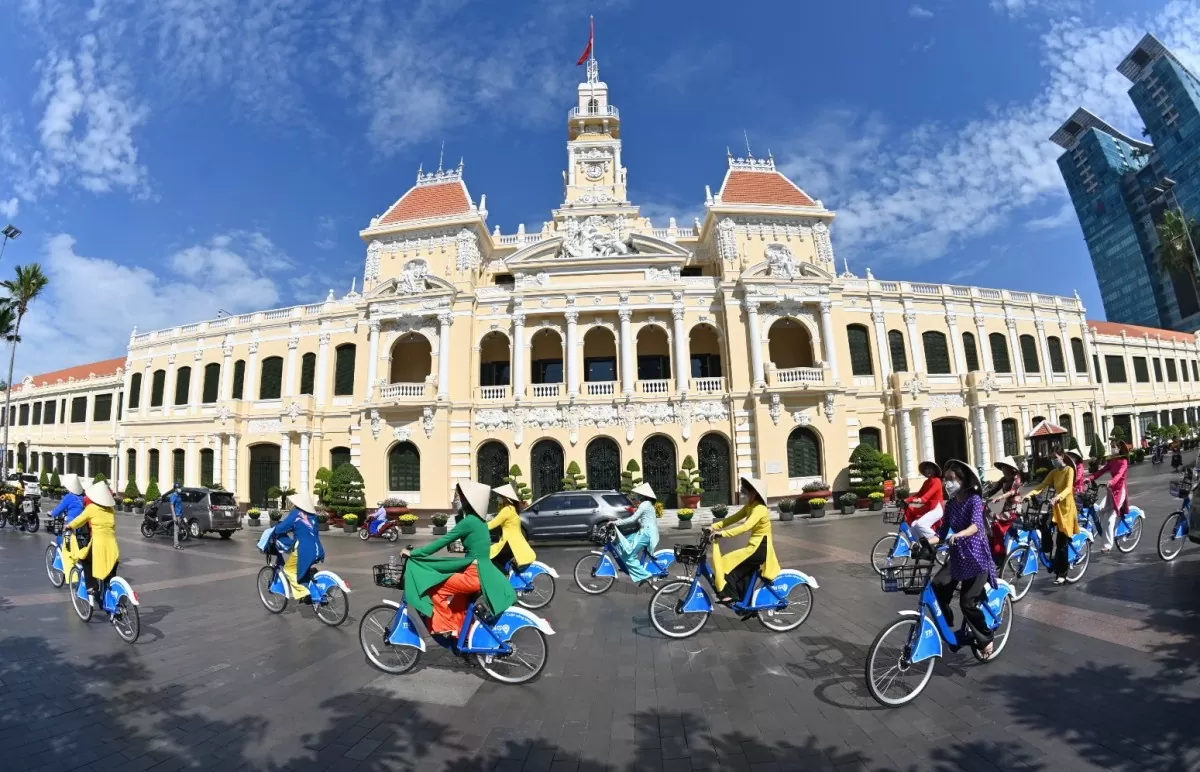 |
| Merging provinces will facilitate the planning of larger-scale development strategies. Photo: VNA |
Reducing bureaucratic layers and intermediaries creates expectations for the future.
- Could you share your views on the motivations and impacts of the streamlining of the administrative apparatus through the merger of provinces, the abolition of district levels, and the expansion of commune levels, as outlined in Conclusion No. 127-KL/TW dated February 28, 2025, of the Politburo ?
Dr. Nguyen Van Dang : The most obvious driving force is the inadequacy of the arrangement of geographical areas, territories, and administrative units at the local level in the face of current development needs. Since 2017, Resolution No. 18-NQ/TW on continuing to innovate and reorganize the organizational structure of the political system has stated: “Local administrative units are generally small in scale, many units do not meet the prescribed standards, especially at the district and commune levels. The specific characteristics of urban, rural, and island governments have not been clearly defined.”
In the current context, limitations such as the fragmentation and small-scale nature of some localities, geographical division, and the cumbersome organizational structure and personnel of the political system are becoming more apparent, making the need for administrative restructuring even more necessary. Therefore, it can be seen that, along with the merger of ministries and agencies, the policy of merging some provinces, abolishing the district level, and increasing the scale of the commune level will shape the overall framework for the structure of local and national governance in our country in the future.
Furthermore, abolishing the district level is a new development that could have multifaceted impacts. In theory, a two-tiered (provincial/commune) local government model would reduce intermediate organizational layers and levels, gradually decreasing the number of personnel and operating costs of the local political system. Improved operational efficiency and the ability to meet the needs of citizens and businesses are expected future improvements.
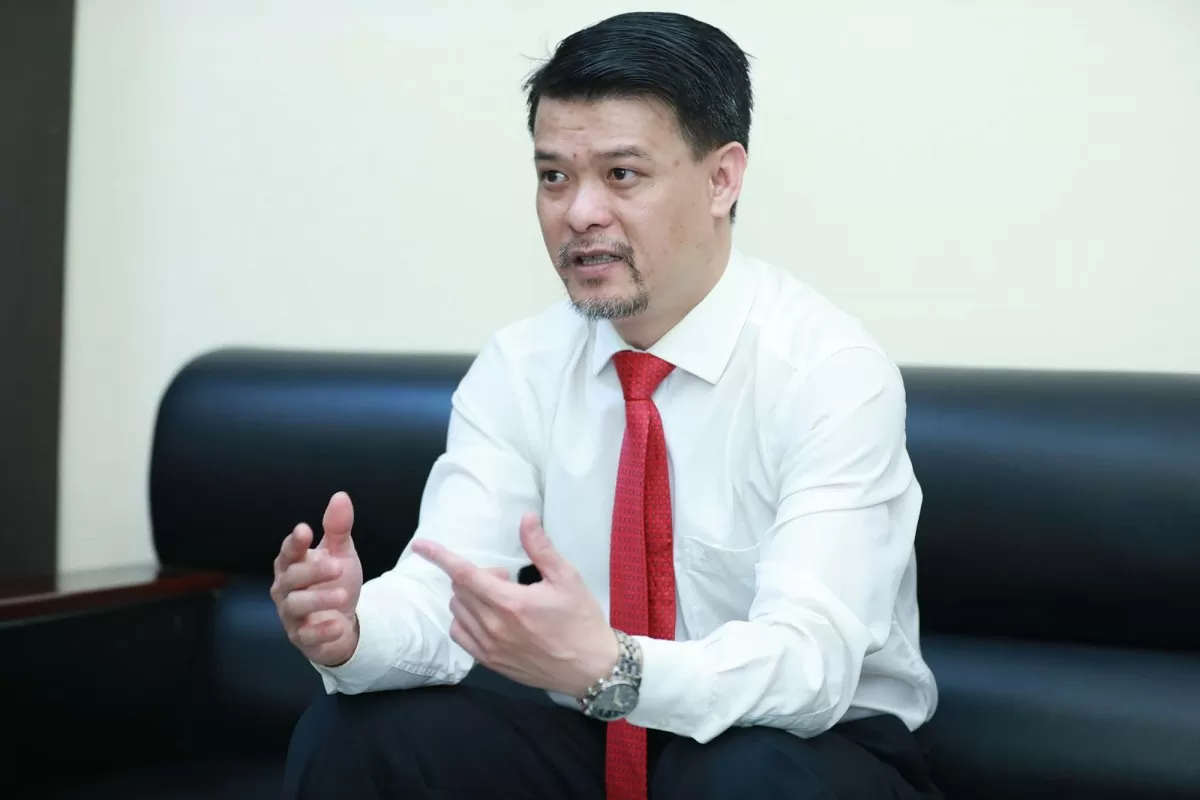 |
| Dr. Nguyen Van Dang - Researcher in Public Administration and Policy, Ho Chi Minh National Academy of Politics |
Determine the mindset for receiving the best distribution.
Regarding the adjustment of administrative boundaries of localities, what lessons can we learn from other countries , in your opinion ?
Dr. Nguyen Van Dang: Looking at the world, in countries that developed sequentially, such as in Europe, the process of forming localities occurred naturally with little change. Similarly, countries with a federal system like the United States also experienced very little change, except for a few instances of mergers or separations resulting from land sales or wars. Territorial changes between localities occur more frequently in countries operating under a centralized and unified power model, which developed later and experienced many historical ups and downs, like our country.
In general, I believe that the distribution of localities is entirely an internal matter, depending on the viewpoints, political will, level of socio-economic development, as well as the historical, traditional, and cultural characteristics of each country. Therefore, I think it is very difficult to learn from international experience regarding the division of local structures and models of local government organization from one country and apply it to another. This also means that we need to adhere closely to current conditions, history, traditions, and current practical needs to decide on the distribution of localities and the model of local government that is appropriate for our country.
Therefore, instead of expecting a perfect local structure, we should aim to embrace the best possible distribution, with the fewest restrictions possible.
Facilitating the planning of development strategies .
- So, could you elaborate on the opportunities for socio-economic development arising from the merger of several provincial-level administrative units?
Dr. Nguyen Van Dang : On a general level, I want to emphasize that the merger of provincial-level administrative units first and foremost creates conditions to elevate the strategic thinking for socio-economic development in localities, which was very difficult to achieve before, when provinces were small and fragmented. This time, we are not only reshaping the local structure and the model of local government organization, but more importantly, arranging localities more rationally, with a longer-term mindset and vision, creating favorable conditions for planning larger-scale development strategies.
Furthermore, establishing a two-tiered local government system will initially help streamline the organizational structure nationwide, gradually reducing staffing levels and consequently lowering the operating costs of the political system at the local level. This also forms the basis for gradually modernizing the government system towards a "lean, efficient, and effective" model, promoting decentralization and delegation of power, emphasizing the initiative, accountability, and flexible operation of local governments, thereby increasing their ability to adapt to the changes in socio-economic life and meet the increasingly diverse needs of citizens and businesses.
Avoid creating complex problems in policy implementation.
- Besides the advantages mentioned above, expanding the scale of provinces and communes, and building a two-tiered local government system will also present us with quite a few issues to address. What are your views on this matter, sir?
Dr. Nguyen Van Dang : We also need to recognize that raising the scale of provinces and communes, and building a two-tiered local government system, will present us with many problems to solve, even intractable challenges.
Firstly , it is necessary to identify the dimensions and criteria on which to base decisions regarding provincial mergers, rather than solely relying on area and population. This issue requires an approach that considers the overall social structure, long-term strategic thinking, and modern governance. Therefore, Conclusion No. 127 requires implementing agencies to carefully study regional planning and national development strategies, as well as local specificities.
Secondly , the selection of priority criteria when merging provinces should be linked to the specific situation. More specifically, these criteria include geographical area and natural size, population size, level of economic development, socio-cultural characteristics, and the need to ensure national security and defense. In reality, the interests of the above criteria may conflict with each other, so we need a certain degree of flexibility in prioritizing them.
Thirdly , there is the redesign of the organizational structure of the two-tiered local government system, the distribution of authority, functions, and responsibilities associated with units at each level, the relationship between the two levels, and the vertical relationship between sectors. These are quite complex issues, requiring careful consideration and calculation from those tasked with redesigning the model of the local government system.
Fourth , there is the need to reorganize the staff of officials and civil servants to ensure quality and meet the job requirements of the political system, especially in public agencies at the commune level. With the elimination of the district level, many tasks will be transferred to the commune level, requiring the general capacity of officials and civil servants to meet these requirements.
Therefore, the restructuring of the workforce needs to place special emphasis on the practical capabilities of each individual to assign them to suitable positions, ensuring that tasks are handled smoothly and preventing complex issues from arising in policy implementation and serving the people and businesses.
Thank you, sir!
| Dr. Nguyen Van Dang: The most crucial principle of merging territories is that it must serve the interests of the nation and its people. These interests are not simply socio-economic, but also include political, security, and defense interests. |
Source: https://congthuong.vn/sap-nhap-tinh-nang-tam-tu-duy-chien-luoc-phat-trien-378708.html
![[Photo] Prime Minister Pham Minh Chinh receives Lao Minister of Education and Sports Thongsalith Mangnormek](/_next/image?url=https%3A%2F%2Fvphoto.vietnam.vn%2Fthumb%2F1200x675%2Fvietnam%2Fresource%2FIMAGE%2F2025%2F12%2F16%2F1765876834721_dsc-7519-jpg.webp&w=3840&q=75)
![[Image] Leaked images ahead of the 2025 Community Action Awards gala.](/_next/image?url=https%3A%2F%2Fvphoto.vietnam.vn%2Fthumb%2F1200x675%2Fvietnam%2Fresource%2FIMAGE%2F2025%2F12%2F16%2F1765882828720_ndo_br_thiet-ke-chua-co-ten-45-png.webp&w=3840&q=75)
![[Image] The tenacious fighting spirit of Vietnamese women's football](/_next/image?url=https%3A%2F%2Fvphoto.vietnam.vn%2Fthumb%2F1200x675%2Fvietnam%2Fresource%2FIMAGE%2F2025%2F12%2F17%2F1765990260956_ndo_br_4224760955870434771-copy-jpg.webp&w=3840&q=75)
![[Photo] Prime Minister Pham Minh Chinh receives the Governor of Tochigi Province (Japan)](/_next/image?url=https%3A%2F%2Fvphoto.vietnam.vn%2Fthumb%2F1200x675%2Fvietnam%2Fresource%2FIMAGE%2F2025%2F12%2F16%2F1765892133176_dsc-8082-6425-jpg.webp&w=3840&q=75)

![[Live] 2025 Community Action Awards Gala](/_next/image?url=https%3A%2F%2Fvphoto.vietnam.vn%2Fthumb%2F1200x675%2Fvietnam%2Fresource%2FIMAGE%2F2025%2F12%2F16%2F1765899631650_ndo_tr_z7334013144784-9f9fe10a6d63584c85aff40f2957c250-jpg.webp&w=3840&q=75)


















































![[Live] Closing Ceremony and Award Presentation for the "Impressive Vietnam Tourism" Video/Clip Creation Contest 2025](https://vphoto.vietnam.vn/thumb/402x226/vietnam/resource/IMAGE/2025/12/17/1765974650260_z7273498850699-00d2fd6b0972cb39494cfa2559bf85ac-1765959338756946072104-627-0-1338-1138-crop-1765959347256801551121.jpeg)



















Comment (0)