

Non-performing loans increased by 34 trillion VND.
According to the latest statistics from the Vietnam Banking Association, total non-performing loans amount to approximately 1.7 million billion VND, of which 677,000 billion VND are off-balance sheet loans. This is the amount of debt that credit institutions are still actively trying to recover.
Non-performing loans arise because borrowers have limited awareness of their repayment obligations, intentionally delaying repayment, refusing to hand over assets, creating fictitious disputes to initiate lawsuits, and consequently, making it difficult for banks to seize collateral.
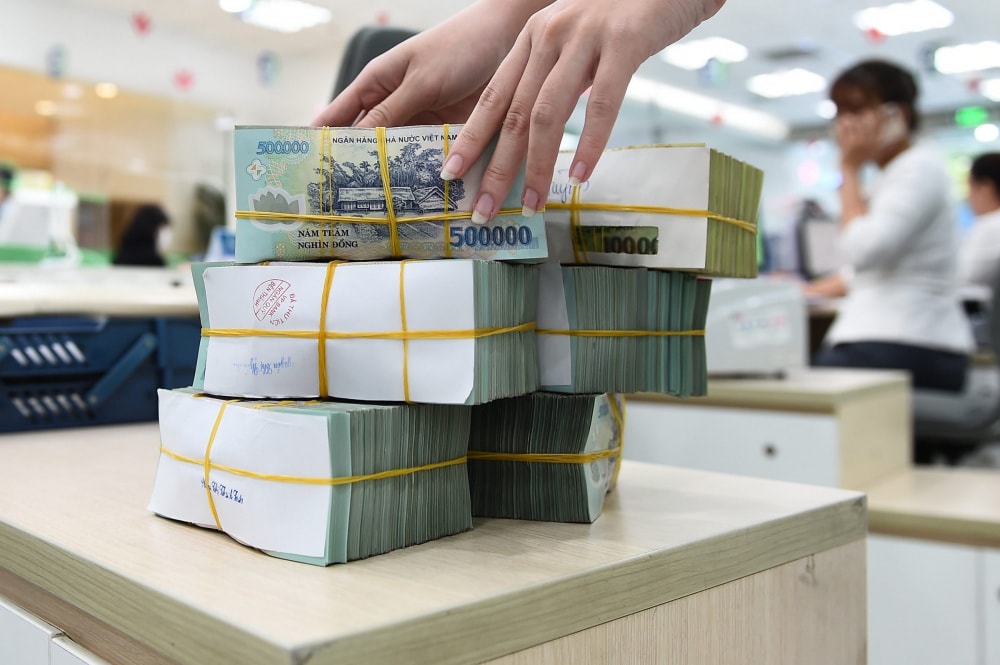
According to Mr. Nguyen Quoc Hung, Vice Chairman and General Secretary of the Vietnam Banking Association, in 2024, the debt recovery rate, mainly from collateral assets, reached approximately 46.6%, while the rate of customers proactively repaying bad debts to banks only reached 36%.
The remaining debt was sold to the Vietnam Asset Management Company for Credit Institutions (VAMC) or enforced through the sale of collateral assets, totaling approximately VND 7,000 billion.
From the beginning of 2025 to the present, bad debt has increased by approximately 34,000 billion VND, while only about 15,000 billion VND of bad debt has been resolved.
Representatives from several banks argue that Resolution 42/2017/QH14 of the National Assembly on piloting the handling of bad debts of credit institutions has expired, while many regulations have not yet been codified in the amended Law on Credit Institutions of 2024. These legal "gaps" hinder the handling of bad debts, disrupt credit flows, and affect the ability of individuals and businesses to access capital.
On the regulatory side, in order to address legal shortcomings in handling bad debts, the State Bank of Vietnam has drafted a Law amending and supplementing several articles of the Law on Credit Institutions to codify some contents of Resolution 42.
The continued codification of the regulations in Resolution 42 aims to create a comprehensive legal framework to support credit institutions and debt trading and resolution organizations in exercising their legitimate rights when handling non-performing loans and collateral assets of non-performing loans.
Additional sanctions are needed to address bad debts.
To thoroughly address bad debts, Nguyen Thi Phuong, Director of the Legal Department of the Vietnam Investment and Development Bank ( BIDV ), suggested that several cases should be considered for the authorization to seize collateral assets. For example, a credit institution that has been compulsorily transferred could authorize the credit institution receiving the compulsory transfer to seize collateral assets in cases where the parties have already completed a debt purchase and sale agreement.
Organizations with the function of buying, selling, and handling debt as prescribed by law (excluding organizations wholly owned by the State with the function of buying, selling, and handling debt) are authorized to seize collateral assets for credit institutions selling debt...
Many other opinions also suggest that the right to seize collateral needs to be protected and clearly codified by law to safeguard the legitimate interests of banks, shareholders, and depositors – those who are essentially contributing capital to the economy through the credit system.
Procedures such as asset seizure and confiscation, and streamlined processing procedures, need to be specifically regulated and have sufficient legal validity to avoid merely formal agreements. The ultimate goal of bad debt resolution is not to benefit the bank but to ensure the rights and interests of all parties, including third parties such as depositors.
According to Nguyen Quoc Hung, Secretary General of the Vietnam Banking Association, the main source of bad debt resolution comes from credit institutions setting aside risk provisions. This has significantly impacted the profits and business results of credit institutions, meaning a reduction in resources available to support businesses. The lack of circulating cash flow affects liquidity if not addressed promptly.
The analysis team from the BIDV Banking Training and Research Institute proposed a mechanism for credit institutions to proactively seize and dispose of collateral. Adding this regulation would also legalize the "creditor's rights" in accordance with common practice. The method of seizing collateral would be effective in certain situations, such as: when the guarantor leaves the locality; when the collateral is unmanaged; or when the collateral is vacant land…
According to BIDV's analysis team, allowing credit institutions to proactively seize collateral to recover debts instead of filing lawsuits and organizing enforcement proceedings will save significant time and costs for all parties involved, as well as reduce waste of social resources.
Ultimately, banks hope to quickly close the legal "gap" in handling bad debts, so that the risk of bad debts does not affect the safety of credit institutions.
Source: https://hanoimoi.vn/som-lap-khoang-trong-xu-ly-no-xau-699971.html

![[Photo] Prime Minister Pham Minh Chinh receives Lao Minister of Education and Sports Thongsalith Mangnormek](/_next/image?url=https%3A%2F%2Fvphoto.vietnam.vn%2Fthumb%2F1200x675%2Fvietnam%2Fresource%2FIMAGE%2F2025%2F12%2F16%2F1765876834721_dsc-7519-jpg.webp&w=3840&q=75)
![[Photo] Prime Minister Pham Minh Chinh receives the Governor of Tochigi Province (Japan)](/_next/image?url=https%3A%2F%2Fvphoto.vietnam.vn%2Fthumb%2F1200x675%2Fvietnam%2Fresource%2FIMAGE%2F2025%2F12%2F16%2F1765892133176_dsc-8082-6425-jpg.webp&w=3840&q=75)
![[Live] 2025 Community Action Awards Gala](/_next/image?url=https%3A%2F%2Fvphoto.vietnam.vn%2Fthumb%2F1200x675%2Fvietnam%2Fresource%2FIMAGE%2F2025%2F12%2F16%2F1765899631650_ndo_tr_z7334013144784-9f9fe10a6d63584c85aff40f2957c250-jpg.webp&w=3840&q=75)

![[Image] Leaked images ahead of the 2025 Community Action Awards gala.](/_next/image?url=https%3A%2F%2Fvphoto.vietnam.vn%2Fthumb%2F1200x675%2Fvietnam%2Fresource%2FIMAGE%2F2025%2F12%2F16%2F1765882828720_ndo_br_thiet-ke-chua-co-ten-45-png.webp&w=3840&q=75)

















































![[Photo] Prime Minister Pham Minh Chinh attends the Vietnam Economic Forum 2025](https://vphoto.vietnam.vn/thumb/402x226/vietnam/resource/IMAGE/2025/12/16/1765893035503_ndo_br_dsc-8043-jpg.webp)





























Comment (0)