

2 types of international schools in Vietnam
Ho Chi Minh City currently has more than 20 international schools, including both monolingual and bilingual international schools. To identify a reputable international school, important factors to consider include an accredited international education program, the amount of time taught and learned in English, the quality of the international teaching staff, and internationally recognized qualifications and certificates upon graduation.
Monolingual international schools teach 100% in English, with two popular programs being the International Baccalaureate (IB) or the Cambridge International General Certificate of Education (IGCSE). Meanwhile, bilingual international schools typically offer 2-3 educational systems, most commonly bilingual and fully integrated international programs, with academic English accounting for 40% to over 80% of the curriculum, and the most popular program being Cambridge.
Accordingly, the output of a monolingual school is a degree or certificate from an international general education program; a bilingual system provides "dual degrees," including both Vietnamese and international degrees or certificates; while a fully integrated international system provides one type of international degree or certificate, or "dual degrees" at some schools, depending on student needs. A typical example is the Cambridge Fully Integrated International Program (CAPI) at Vietnam Australia International School (VAS).

VAS's CAPI program has up to 82% academic English content and boasts a "dual degree" advantage, including internationally recognized Cambridge certificates (Checkpoints, IGCSE, A Level) and a Vietnamese qualification.
Should you choose a monolingual or bilingual international school?
When choosing an international school and its educational program, parents need to consider family goals, financial situation, and the child's development at each stage. Factors to compare between schools include the level of qualifications achieved, tuition fees, and quality of education.
In terms of outcomes, if the family's goal is for their child to study abroad or settle overseas, a monolingual program is the top choice, followed by a fully integrated international program and a bilingual program.
In this context, a fully integrated international system at a bilingual school, offering equivalent outcomes but with tuition fees only 50% - 70% of a monolingual school, is the most cost-effective option.
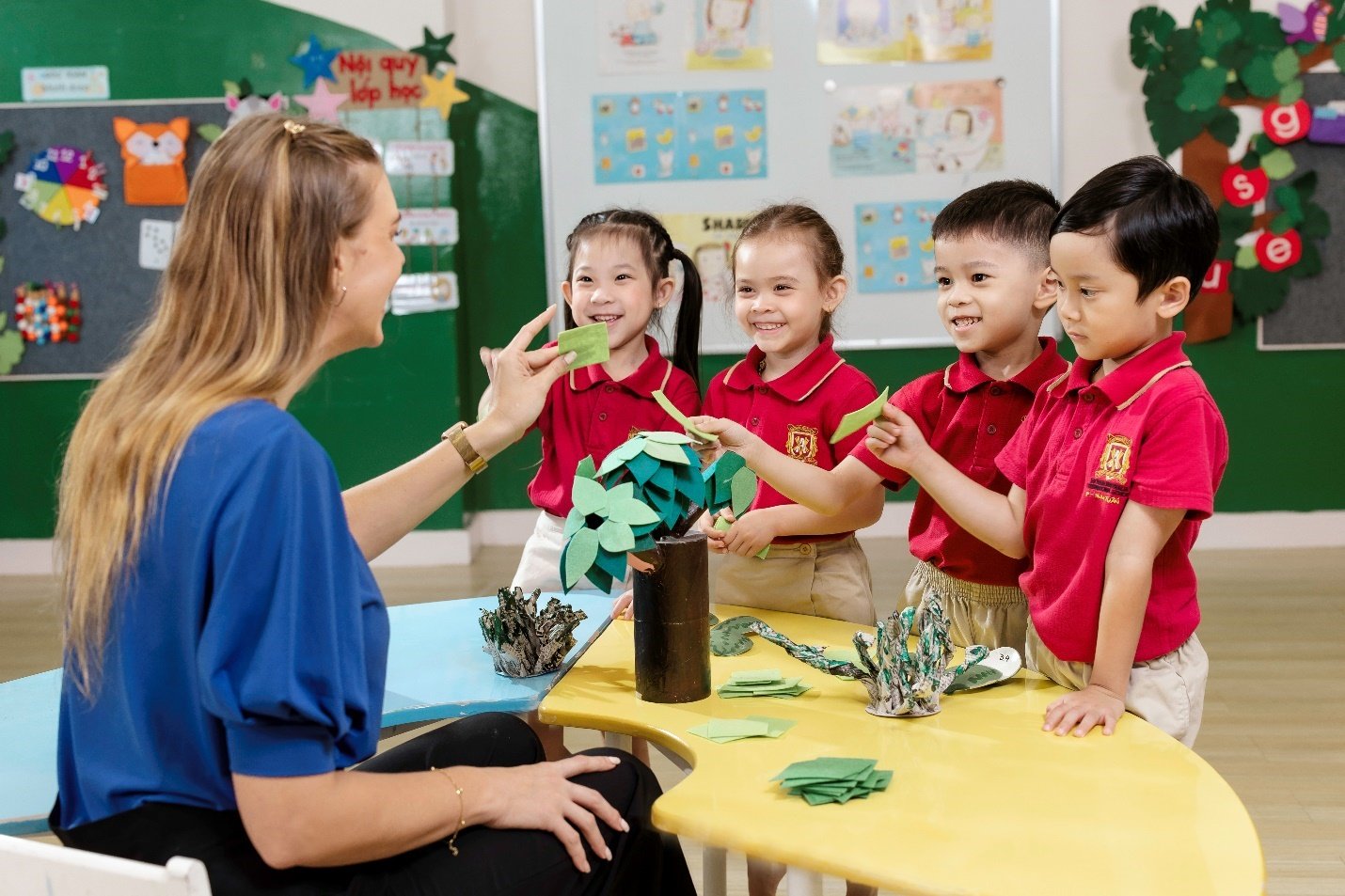
The fully integrated international system at bilingual schools offers equivalent outcomes but with tuition fees only 50% - 70% of those at monolingual schools.
Meanwhile, if you want your child to have the flexibility to choose to study both domestically and abroad in the future, a bilingual program with a "dual degree" outcome is a suitable option. Bilingual programs also allow children more flexibility in switching programs according to their needs and development at each stage compared to monolingual programs.
However, parents should also note that in some schools, the output of the bilingual program is only the MOET certificate and an international English certificate instead of a "dual degree".
Regarding tuition fees, considering the same outcome of an international certificate or degree, monolingual schools have tuition fees 1.5 to 2 times higher than fully integrated international programs at bilingual schools. Furthermore, when compared to bilingual programs (with a "dual degree" outcome), the highest tuition fee at a monolingual school is 2.6 times higher than the highest tuition fee at a bilingual school.
Regarding educational quality, the priorities of each family may vary depending on their goals and family culture, based on fundamental criteria such as: educational philosophy, teaching methods, curriculum (British, American, Australian, etc.), overall student achievement compared to world and Vietnamese averages, teacher quality, time spent on academic English, facilities, and school services.
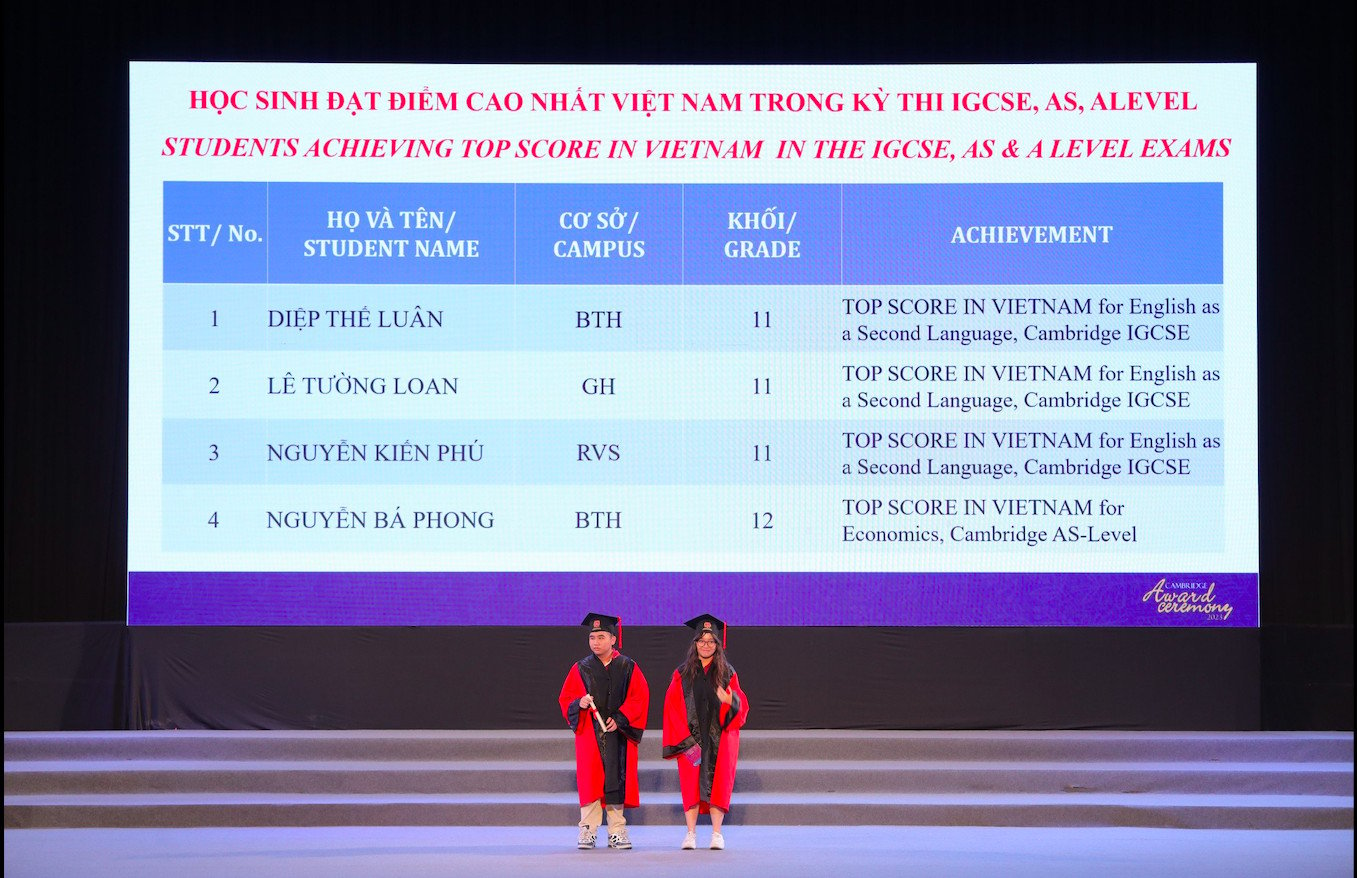
Student achievement is an accurate measure of the quality of education at international schools. [Image caption: Awarding prizes to VAS students who achieved the "Highest Scores in Vietnam" in the Cambridge IGCSE, AS, and A Level exams in 2023.]
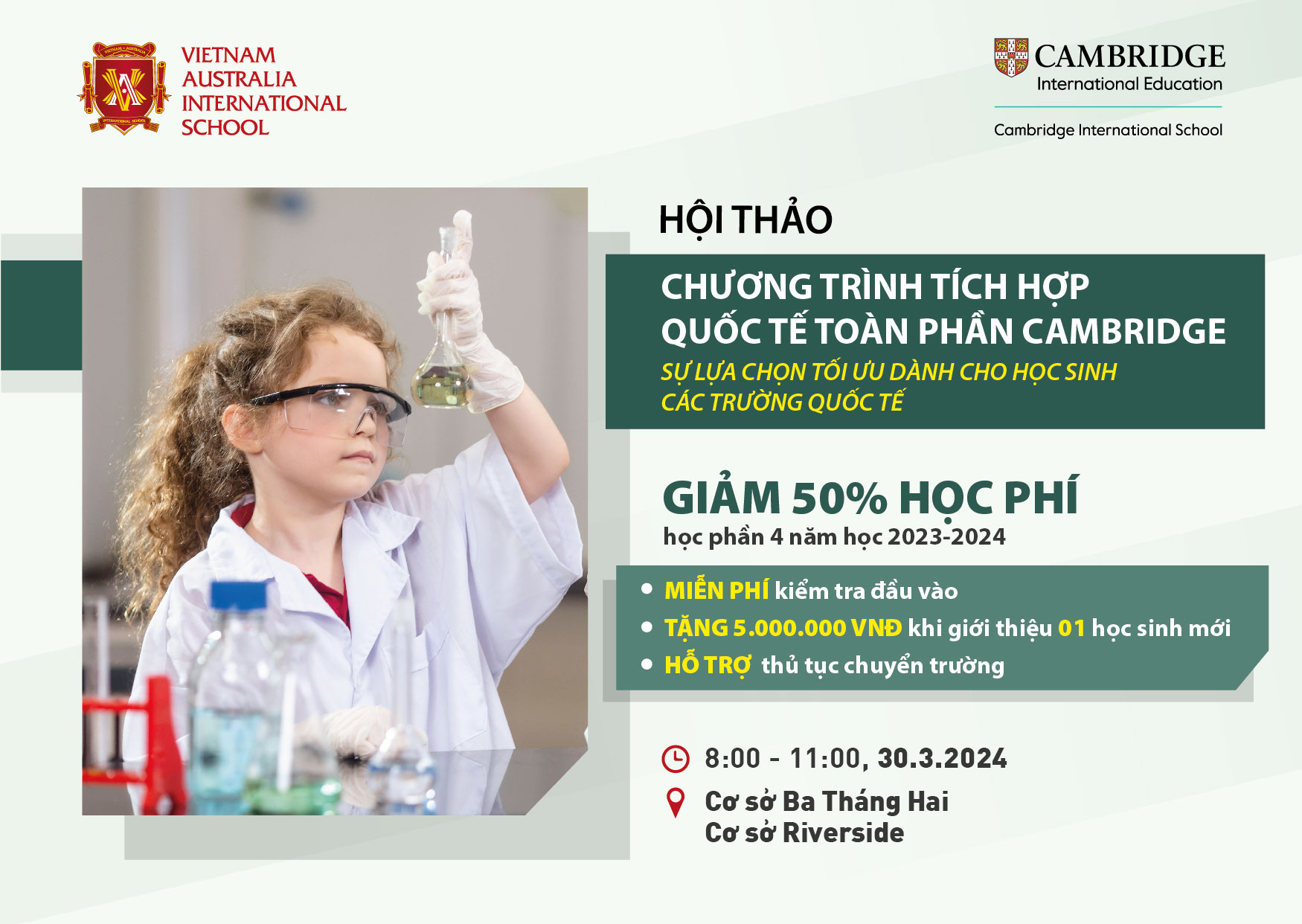
VAS offers a comprehensive international integrated curriculum (CAPI) solution with optimal tuition fees.
VAS is offering a 50% tuition fee discount for Semester 4, academic year 2023-2024, free entrance exams, and many other benefits for students registering for the Cambridge International Integrated Programme (CAPI) from March 18, 2024, along with many support programs for students transferring schools such as: an effective transition pathway from the current curriculum to the Cambridge program, supplementary Vietnamese language courses for monolingual students…
For detailed advice, parents please contact the hotline: 0911 26 77 55 or visit the website vas.edu.vn
Source link
![[Photo] Closing Ceremony of the 15th Conference of the Central Committee of the 13th Party Congress](/_next/image?url=https%3A%2F%2Fvphoto.vietnam.vn%2Fthumb%2F1200x675%2Fvietnam%2Fresource%2FIMAGE%2F2025%2F12%2F23%2F1766462841764_a1-bnd-3731-1647-jpg.webp&w=3840&q=75)























































Comment (0)