


The challenge of securing capital for high growth and the limitations of the banking model.
According to Mr. Nguyen Duc Hien, Deputy Head of the Central Policy and Strategy Committee, the committee is continuing to finalize the Project on strategic solutions to promote double-digit economic growth in the period 2026-2030, aiming for rapid and sustainable growth by 2045. The project is expected to be submitted to the 2nd Plenum of the 14th Central Committee of the Communist Party of Vietnam around February-March 2026, along with action programs for all ministries, sectors, and fields.
In the overall economic picture, the most prominent issue today is the capital structure. Financial resources for businesses still rely primarily on the banking system. As of November 30, 2025, the size of the stock market reached approximately 81.9% of GDP, lower than the target of 100% of GDP; while the bond market – an important tool for raising medium and long-term capital – only reached about 23.1% of GDP, still far from the target of 47% of GDP.
Conversely, outstanding bank credit has reached approximately 134% of GDP, reflecting the fact that a large portion of the economy's financial resources are concentrated in the banking sector. However, according to Mr. Nguyen Duc Hien, bank capital is essentially short-term capital, while it is increasingly being used for the medium and long-term needs of businesses. This mismatch poses significant risks to both the financial system and macroeconomic stability.
In the context of aiming for double-digit growth, the key question is not just how to increase the supply of capital, but how to sustainably provide sufficient capital to businesses. The banking system cannot expand indefinitely; excessive credit supply will increase the risk of inflation and economic instability. In reality, high credit growth rates, such as around 18% this year, cannot be sustained continuously for many years.
According to Mr. Nguyen Duc Hien, if high growth is accompanied by high inflation, then that growth figure will lose much of its meaning. Therefore, to maintain rapid but sustainable growth, it is necessary to rebalance the capital structure, gradually reduce dependence on bank credit, and enhance the role of the capital market, including stocks and bonds. In this context, the capital market is not only important but also vital to the long-term development goals of the economy.
Drawing on international experience, particularly from Japan, Mr. Nguyen Duc Hien believes that the capital market can only develop sustainably when structural issues are addressed. First and foremost, the market must have "goods" (capital). For businesses that do not yet meet the listing requirements, bonds are a very important tool, but their issuance needs to be linked to collateral or credit ratings, and there must be appropriate monitoring mechanisms. Otherwise, businesses will find it very difficult to raise capital sustainably.
For the stock market, the issue of foreign ownership is a major bottleneck. It's not just about increasing the foreign ownership limit, but about redesigning ownership regulations, especially for large enterprises and the Big4 banks, in order to effectively attract long-term capital in the context of deep integration.
Furthermore, regulations on IPOs and listings need to be continuously reviewed and improved. As Vietnam aims to upgrade from a frontier market to an emerging market, the demands for institutional reform, information transparency, and governance standards are increasingly high. Without sufficiently strong reforms, the market will struggle to absorb large and long-term capital flows.
Capital development must go hand in hand with technology and management.
Dr. Can Van Luc, Chief Economist of BIDV and member of the Prime Minister's Policy Advisory Council, believes that Vietnam's development model in the coming period should not only aim for high growth rates but also harmonize with political stability, environmental protection, and improved governance quality.
According to Mr. Luc, the new development model needs to encompass four elements: rapid and sustainable growth; a shift in focus towards productivity and science and technology; a combination of investment, technology adoption, and innovation; and efficient mobilization and allocation of resources.

International practice shows that high-growth economies rely heavily on capital, with a proportion reaching 40-50%. Meanwhile, Vietnam's total social investment currently stands at only about 33% of GDP. The demand for capital in sectors such as the green economy, climate change adaptation, and technological innovation will continue to increase. Therefore, Vietnam needs to maintain an investment growth rate of around 10% per year and explore more flexible management tools.
The period 2026-2030 and the vision to 2045 is identified as a time of significant changes in capital structure, with state capital gradually decreasing, private capital increasing to approximately 57%, and FDI accounting for 16-17%. To achieve this goal, Vietnam needs to accelerate the rate of capital growth, aiming for 13-15% per year, similar to East Asian economies in their take-off phase.
However, Vietnam's capital market is still small and has not yet played a leading role. Equity capital accounts for only about 10% of GDP, while the banking system still supplies up to 40% of capital to the economy. Although the savings rate of the people is quite high, around 37% of GDP, the investment environment is not yet open enough to strongly encourage capital flows into production and innovation.
Furthermore, the rapid growth in the scale of finance also brings with it risks of inter-market linkages. The banking system still accounts for a large proportion, while the capital market and non-bank institutions have not developed proportionally. Limitations in financial infrastructure, international reporting standards, financial education, and consumer protection continue to be bottlenecks that need to be addressed.
Notably, there are currently over 2,700 stalled projects, "freezing" a huge amount of capital. Along with this is the speculation in gold and real estate, and losses due to waste and corruption, preventing resources from being allocated effectively to value-added sectors.
In light of this situation, Dr. Can Van Luc believes that it is necessary to continue improving institutions, developing the capital market in a more balanced direction and reducing dependence on bank credit; promptly operating the carbon market, promoting the digital asset market, enhancing transparency and maintaining macroeconomic stability so that capital flows shift from speculation to production.
Enhancing the role of investment funds and expanding the long-term capital space.
From the perspective of institutional investors, Ms. Luong Thi My Hanh, Asset Management Director, Domestic Division, Dragon Capital Vietnam, believes that Vietnam is at a pivotal moment in a new era of development, but "the biggest disadvantage is the time factor." From around 2039, Vietnam will begin to enter a period of an aging population, while the goal of becoming a high-income country is set for 2045.
According to Ms. Hanh, to effectively capitalize on opportunities, it is necessary to strongly promote the role of investment funds in developing the capital market. Investment funds act as a channel for channeling capital from short-term savings in the population into productive capital; they provide long-term capital to help businesses innovate technology and enhance competitiveness; and they promote corporate governance standards through requirements for transparency and accountability.
However, the investment fund market in Vietnam remains modest. The total size of new funds is only about $30 billion, equivalent to less than 1% of GDP, with about 1 million investors participating, much lower than other countries in the region. Meanwhile, the population size and savings rate of Vietnamese people are not inferior. According to Ms. Hanh, the goal of increasing the size of investment funds to about 5% of GDP by 2030 is ambitious but necessary to strive for.
To achieve this goal, it is necessary to remove legal barriers to distribution channels, especially regulations that do not yet allow commercial banks to directly distribute fund certificates; at the same time, encourage long-term investment through preferential tax policies, improve the legal framework for pension funds and promote national financial education.
From a research perspective, Professor Dr. Le Bo Linh, Director of the Institute for Strategic Economic Research and former Deputy Head of the National Assembly Office, believes that capital will remain the main contributing factor to growth in the coming period, but it needs to be understood in a broad sense, encompassing financial capital, human capital, and social capital. Vietnam's development process cannot be separated from integration, and financial integration needs to be given the proper attention.
According to Professor and Doctor Le Bo Linh, building an international financial center requires the simultaneous development of new financial channels, innovative products linked to science and technology, and an institutional framework that approaches international standards. If resources, especially private investment, are strongly unlocked through institutional reforms, Vietnam has grounds to expect a period of high growth in the coming years.
To achieve sustainable double-digit growth, the capital market must truly become a pillar of medium- and long-term capital supply for the economy, based on transparent institutions, modern technology, and effective governance.
Source: https://nhandan.vn/tai-cau-truc-thi-truong-von-yeu-cau-tat-yeu-cua-giai-doan-phat-trien-moi-post930474.html

![[Image] Leaked images ahead of the 2025 Community Action Awards gala.](/_next/image?url=https%3A%2F%2Fvphoto.vietnam.vn%2Fthumb%2F1200x675%2Fvietnam%2Fresource%2FIMAGE%2F2025%2F12%2F16%2F1765882828720_ndo_br_thiet-ke-chua-co-ten-45-png.webp&w=3840&q=75)
![[Photo] Prime Minister Pham Minh Chinh receives Lao Minister of Education and Sports Thongsalith Mangnormek](/_next/image?url=https%3A%2F%2Fvphoto.vietnam.vn%2Fthumb%2F1200x675%2Fvietnam%2Fresource%2FIMAGE%2F2025%2F12%2F16%2F1765876834721_dsc-7519-jpg.webp&w=3840&q=75)
![[Live] 2025 Community Action Awards Gala](/_next/image?url=https%3A%2F%2Fvphoto.vietnam.vn%2Fthumb%2F1200x675%2Fvietnam%2Fresource%2FIMAGE%2F2025%2F12%2F16%2F1765899631650_ndo_tr_z7334013144784-9f9fe10a6d63584c85aff40f2957c250-jpg.webp&w=3840&q=75)
![[Photo] Prime Minister Pham Minh Chinh receives the Governor of Tochigi Province (Japan)](/_next/image?url=https%3A%2F%2Fvphoto.vietnam.vn%2Fthumb%2F1200x675%2Fvietnam%2Fresource%2FIMAGE%2F2025%2F12%2F16%2F1765892133176_dsc-8082-6425-jpg.webp&w=3840&q=75)


















































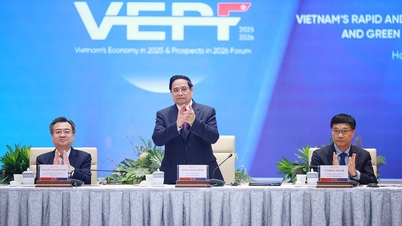
![[Photo] Prime Minister Pham Minh Chinh attends the Vietnam Economic Forum 2025](https://vphoto.vietnam.vn/thumb/402x226/vietnam/resource/IMAGE/2025/12/16/1765893035503_ndo_br_dsc-8043-jpg.webp)





































Comment (0)