

The personal income tax policy has too many shortcomings and has existed for a long time. Not only citizens but also National Assembly representatives and experts have pointed out that it needs to be amended as soon as possible.
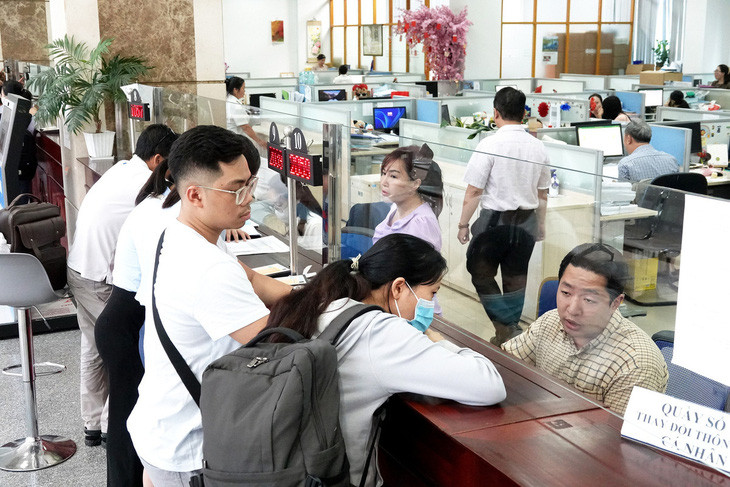
Like Tuoi Tre Online Information, draft submission to the Government proposing the development of a draft Law. Personal income tax The (replacement) law has just been sent by the Ministry of Finance to ministries, departments, and local People's Committees for comments on a comprehensive revision of the shortcomings of personal income tax policies, and will be submitted to the Government to propose to the National Assembly the promulgation of a replacement Personal Income Tax Law.
The following article by reader Trung Hieu adds further insights on this issue.
It should be submitted to the National Assembly in 2025 for early implementation.
Information Ministry of Finance Gathering feedback and proposing comprehensive amendments to the Personal Income Tax Law has somewhat alleviated public expectations.
However, the fact that it was passed in mid-2026 (and therefore will certainly not take effect any earlier than the end of 2026) is even more disappointing for taxpayers.
A tax policy with too many shortcomings, which has existed for a long time, needs to be rectified as soon as possible, not only by the people but also by members of Parliament and experts.
But we still have to wait and hope.
Everyone knows the tax threshold, the level personal allowance And the current tax system has too many shortcomings and is not suitable for the socio-economic conditions of our country.
In particular, it is quite far removed from the needs of people's lives.
It is impossible to make ends meet with the current income levels used for tax deductions for taxpayers and dependents.
It is also unacceptable to allow outdated views to persist, especially given the significant changes in the structure of personal income tax, and the rigid, inflexible, and untimely adjustment mechanisms.
I believe that the people, the taxpayers, cannot be made to wait any longer.
Over the past few years, shortcomings have been evident, yet the agencies responsible for drafting and proposing policies continue to "hesitate" and have not yet proposed amendments.
Why wait until mid-2026 to submit the amendments to the law to the National Assembly for approval? And then, when they come into effect, it will be about two more years.
Now more than ever, there is no turning back; a comprehensive revision of the Personal Income Tax Law is needed this year, to be submitted to the National Assembly as quickly as possible in early 2025 so that the law can be implemented promptly.
Adjusted according to wage levels and GDP growth.
Revising this law requires a comprehensive, inclusive approach and flexible thinking during implementation.
The first, The law must include provisions for using a simple and quick mechanism for adjusting tax rates. This is because it is one of the laws that most accurately reflects the economic and social life and the lives of the people, which fluctuate annually.
Monday, If people's income is considered the source of tax payment, then the same adjustment method should be applied as for... corporate income tax (Regarding tax rates, which items can be deducted from income, in addition to personal allowances...).
Tuesday, The personal allowance must be significantly increased to at least 20 million VND for taxpayers and 10 million VND for dependents.
Simultaneously, the mechanism for adjusting these levels should be based on the increase in the minimum wage (which could be the base wage or the regional minimum wage) and the average GDP per capita growth rate, not on the average GDP per capita. consumer price index (CPI) as it is now.
Wednesday, It is necessary to regulate the mobilization rate in personal income tax at a lower level, with a maximum equal to the corporate income tax rate.
Reducing the number of income brackets in the tax schedule, calculating taxes so that higher income brackets are taxed at higher rates and lower rates for lower income brackets, will maximize the income regulation effect of this tax policy.
At the same time, different tax rates should be applied to urban and rural areas, ensuring they are appropriate to the living standards and incomes of the population in each region.
Mobilizing a portion of taxpayers' income into the state budget and regulating people's income is necessary.
However, it is necessary to ensure a minimum standard of living for the people, guarantee their ability to accumulate savings from income, and meet their greater needs.
Especially in the current context, the prices of goods and services are constantly fluctuating, with those closely related to people's livelihoods such as housing, healthcare, treatment, prevention, and even investing in their children's education...
Source
![[Photo] National Assembly Chairman Tran Thanh Man concludes official visit to Italy, departs for IPU-152](https://vphoto.vietnam.vn/thumb/1200x675/vietnam/resource/IMAGE/2026/04/15/1776253436109_vna-potal-chu-tich-quoc-hoi-ket-thuc-tham-chinh-thuc-italy-len-duong-du-ipu-152-tai-tho-nhi-ky-8702876-7969-jpg.webp)
![[Photo] General Secretary and President To Lam and his wife, along with General Secretary and President Xi Jinping and his wife, attending a tea party.](https://vphoto.vietnam.vn/thumb/1200x675/vietnam/resource/IMAGE/2026/04/15/1776245678527_vna-potal-tong-bi-thu-chu-tich-nuoc-to-lam-va-phu-nhan-cung-tong-bi-thu-chu-tich-nuoc-tap-can-binh-va-phu-nhan-du-tiec-tra-8702812-9829-jpg.webp)
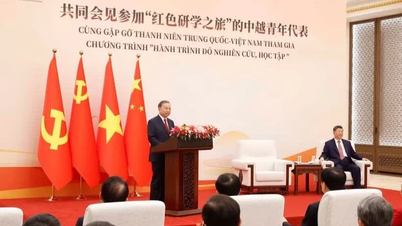
![[Photo] General Secretary and President To Lam and General Secretary and President Xi Jinping meet with youth from both countries.](https://vphoto.vietnam.vn/thumb/1200x675/vietnam/resource/IMAGE/2026/04/15/1776245687540_vna-potal-tong-bi-thu-chu-tich-nuoc-to-lam-va-tong-bi-thu-chu-tich-nuoc-tap-can-binh-gap-go-thanh-nien-hai-nuoc-8702371-jpg.webp)
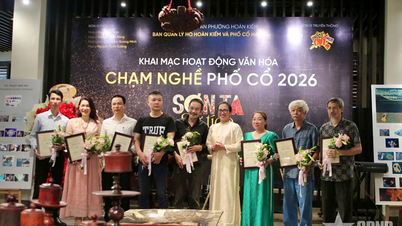
![[Photo] Capturing each moment at the "People We Meet" photography exhibition.](https://vphoto.vietnam.vn/thumb/1200x675/vietnam/resource/IMAGE/2026/04/15/1776245695648_1-8944-jpg.webp)
![[Image] Current status of the land area of over 5.5 hectares that Ho Chi Minh City is considering reclaiming.](https://vphoto.vietnam.vn/thumb/1200x675/vietnam/resource/IMAGE/2026/04/15/1776245690095_1-3102-8409-jpg.webp)
![[Image] Overview of the Tam Trinh-Giai Phong connecting road section after land clearance is completed.](https://vphoto.vietnam.vn/thumb/1200x675/vietnam/resource/IMAGE/2026/04/15/1776245679644_ndo_br_dji-0195-jpg.webp)














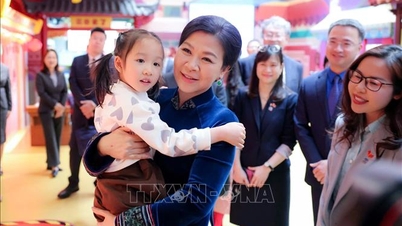
![[Photo] Mrs. Ngo Phuong Ly meets and exchanges views with Mrs. Peng Li Yuan](https://vphoto.vietnam.vn/thumb/1200x675/vietnam/resource/IMAGE/2026/04/16/1776277858080_phu-nhan-1-jpg.webp)
![[Photo] My Son at night: A thousand-year-old heritage site amidst the Milky Way](https://vphoto.vietnam.vn/thumb/1200x675/vietnam/resource/IMAGE/2026/04/15/1776261039184_ndo_br_chon6-jpg.webp)
![[Photo] The General Secretary, President and his wife meet with Vietnamese-Chinese friendship leaders.](https://vphoto.vietnam.vn/thumb/1200x675/vietnam/resource/IMAGE/2026/04/15/1776264829725_vna-potal-tong-bi-thu-chu-tich-nuoc-to-lam-gap-mat-nhan-sy-huu-nghi-viet-nam-trung-quoc-8703641-3130-jpg.webp)
![[Photo] National Assembly Chairman Tran Thanh Man attends the opening session of IPU-152](https://vphoto.vietnam.vn/thumb/1200x675/vietnam/resource/IMAGE/2026/04/16/1776277863731_ctqh5-jpg.webp)
![[Photo] National Assembly Chairman Tran Thanh Man arrives in Türkiye to attend IPU-152](https://vphoto.vietnam.vn/thumb/1200x675/vietnam/resource/IMAGE/2026/04/15/1776261003665_tnk10-jpg.webp)










































Comment (0)