

 |
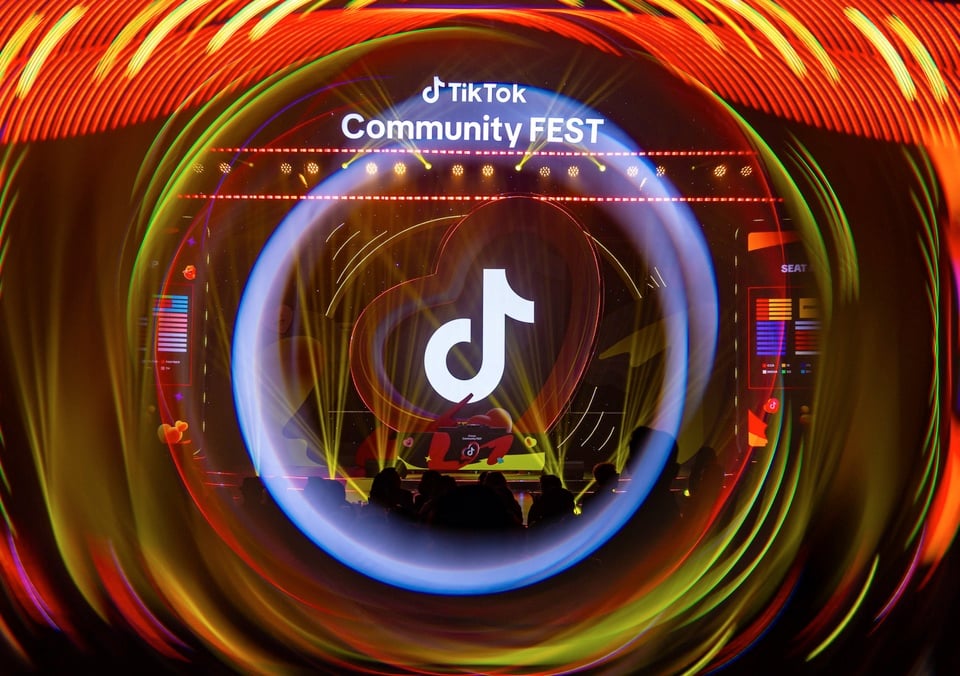
TikTok 's event honoring livestream creators. Photo: TikTok . |
The livestreaming market has been targeted by many large businesses and startups in recent years. However, with its large user base and pre-existing video- watching habits, YouTube still dominates this segment. The landscape changed when TikTok emerged as a rival to Google's "darling."
Building on their domestic success, Chinese companies sought to replicate the live streaming app model internationally. They invested in subsidiaries in Southeast Asia and South America, such as NimoTV, Bigo Live, and Nono Live, to expand their market reach. However, these efforts proved ineffective, failing to capture market share and incurring significant costs in acquiring users.
Furthermore, customers lacked platform loyalty, choosing to follow their favorite broadcasters. This created instability within the service itself. Besides the Chinese company, Facebook (now Meta) also invested heavily in livestreaming and gaming to compete with YouTube. However, this was a failed product and was shut down.
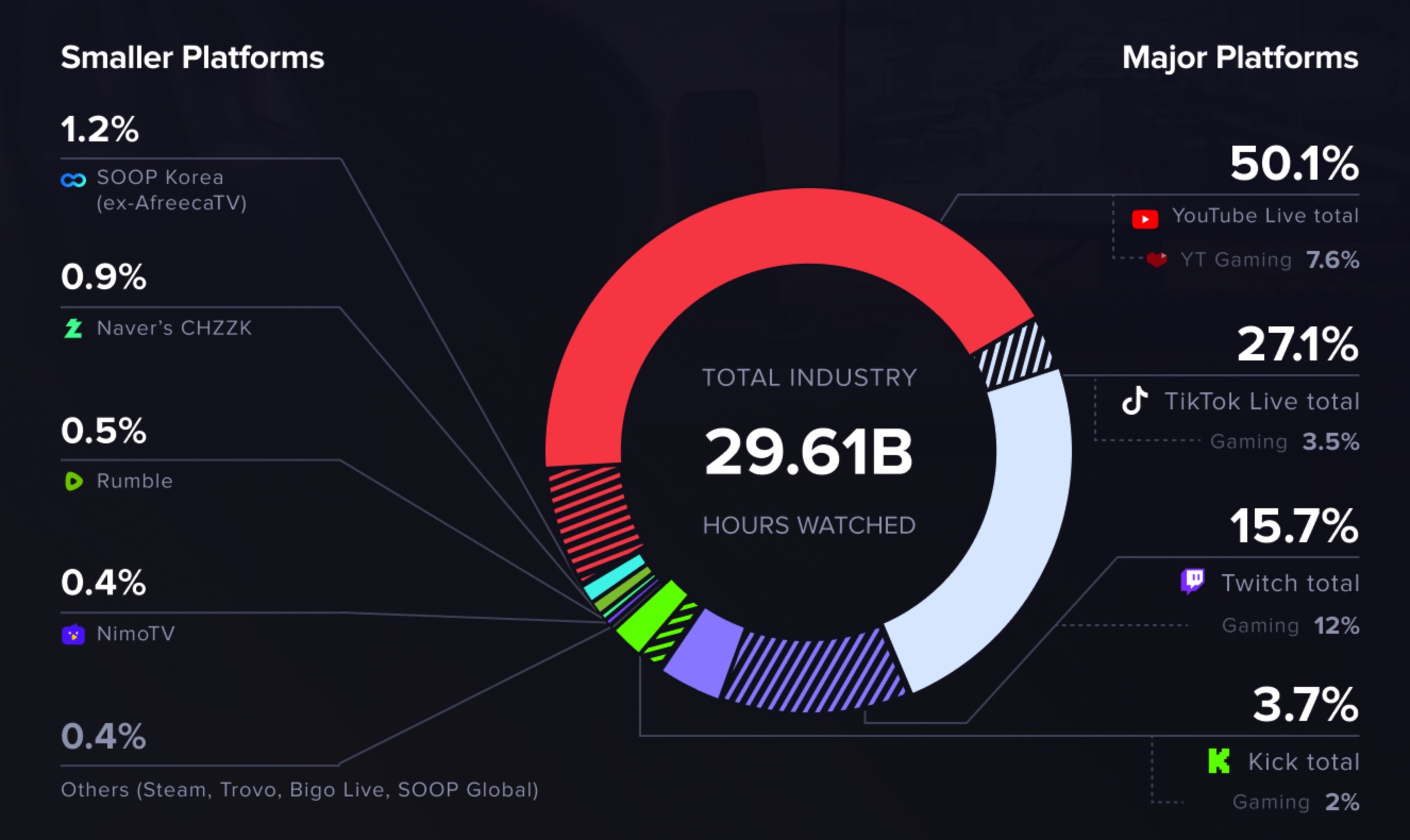 |
Global streaming market share. Image: StreamsCharts. |
Recently, TikTok has emerged as YouTube's biggest rival in the livestreaming market. Beyond short videos and e-commerce apps, the platform's broadcasting category has surprisingly captured 27% of global viewing time, according to StreamsCharts.
With billions of existing users and established video-watching habits, the app faced no initial challenges compared to its Chinese competitors. TikTok LIVE accumulated approximately 8 billion hours of online viewing in the second quarter, compared to around 15 billion for YouTube. The platform also significantly outperformed competitors like Twitch and Kicks, which specialize in gaming content.
According to StreamsCharts, live streams about fashion , beauty, or conversation are typical on TikTok. The app also leverages features like chat-based live streams, competitive matches (PK), and various gift formats to boost revenue. This is where the app is more flexible than YouTube, which has fewer features to support broadcasters.
Recently, TikTok held an event honoring global livestream creators, which took place in Vietnam. The list of winning countries was dominated by representatives from Southeast Asia and Central Asia. This reflects the platform's concentrated dominance in certain regions. These are also the markets where many Chinese players have previously failed.
However, the development of this new segment may be affected as the TikTok app becomes increasingly crowded. Besides short videos, the app now also handles e-commerce and live sales broadcasts. Managing livestream content is also a major challenge, as it's more difficult to moderate than traditional posts, photos, or videos.
Source: https://znews.vn/tiktok-live-ken-cua-youtube-post1573817.html


![[Photo] Prime Minister Pham Minh Chinh receives the Chinese Ambassador to Vietnam](https://vphoto.vietnam.vn/thumb/1200x675/vietnam/resource/IMAGE/2026/04/05/1775397481797_ndo_br_dsc-5512-jpg.webp)






























































Comment (0)