

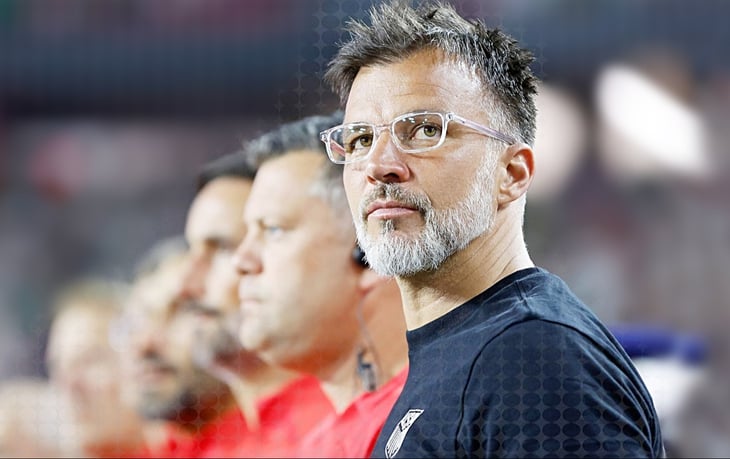
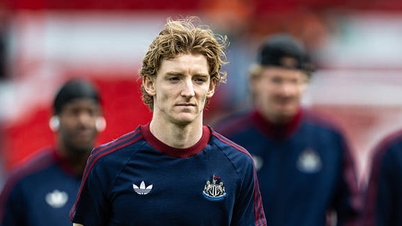
Anthony Hudson, who was appointed by FAT to replace Ishii - Photo: GI
From Thailand, Indonesia, and Malaysia to Vietnam, everyone dreams of having strategists who can elevate regional football.
But the experience of the past decades shows that it will forever remain just a dream.
Lessons from Thailand
The recent decision by the Football Association of Thailand (FAT) to dismiss coach Masatada Ishii was not entirely unexpected, but it still carries a harsh undertone. It's harsh because this decision could shatter the long-standing friendly relations between Thailand and Japan. For a long time, Thai sports have demonstrated their ambition to rise by following in the footsteps of Japan – from volleyball, table tennis, badminton to football.
Of all sports, football is the most complex. This team sport has caused even a country with a billion people like China to struggle and lose its way. If success were simply a matter of copying and applying the formula of another footballing nation, China would surely not have declined in football.
That's it.
And the story of Thais learning from the Japanese in the game of 11-a-side football is similar. Over the years, famous Thai players like Chanathip, Bunmathan, and Supachok have gone to Japan to play football and have more or less established a reputation.
Conversely, the Japanese have consistently introduced talented coaches to Thailand. Over the past six years, the FAT has twice appointed Japanese head coaches, Akira Nishino and Masatada Ishii. But neither has been successful.
Both Nishino and Ishii have been compared to Mano Polking – a relatively unknown Brazilian coach – or Kiatisak – a former local star. And when compared, Thailand under these two Japanese coaches lags far behind in terms of both achievements and playing style.
Don't expect too much from the head coach.
Prior to the two Japanese coaches, the FAT (Football Association of Thailand) made a big move in 2017 by appointing Milovan Rajevac, who was dubbed a "magician" for leading Ghana to a significant run in the 2010 World Cup. The result, as everyone knows, was that Thailand learned their lesson about famous European coaches.
The same mistakes made by Thailand have ultimately been repeated in both Indonesia and Vietnam. Indonesia sacked Shin Tae Yong to appoint Patrick Kluivert, only to have to dismiss Kluivert again after their failure in the 2026 World Cup qualifiers. Similarly, Vietnamese football, after the era of Park Hang Seo, once dreamed of reaching world-class status with coach Philippe Troussier – a figure even more famous than Rajevac. The outcome speaks for itself.
The greater the expectations, the greater the disappointment. It's a strange, inexplicable experience that football fans worldwide, from different football cultures, understand perfectly.
Take the most recent example from the 2026 World Cup qualifiers in the Asian region. Two teams made a huge impression: Uzbekistan and Jordan – both footballing nations that aren't much better than Thailand or Vietnam in terms of depth and investment… yet both qualified for the World Cup for the first time with relatively unknown coaches.
In Uzbekistan, they built their foundation over four years under Russian coach Srecko Katanec, before he resigned in January of this year due to health issues. Assistant Timur Kapadze took over as interim coach for the next nine months and successfully handled everything, officially leading Uzbekistan to the World Cup.
As for Jordan, their success is thanks to coach Jamal Sellami from Morocco, who had no prior experience managing a major team. Jordan also understands the lesson learned from appointing big-name Western coaches. In the past, they brought in two big names from English football, Ray Wilkins and Harry Redknapp, but the results were disappointing.
"Captain," "architect," "strategist" are exaggerated titles often used in the football world to refer to coaches, especially national team head coaches. This sometimes leads to excessive expectations of a national team head coach – who in reality only works with the players for about 50-60 days each year.
Japan was the first Asian football nation to abandon its strategy of hunting for big-name coaches in order to aspire to success. After decades of building a foundation and experiencing considerable turmoil with Western names like Troussier, Zico, Zaccheroni, Aguirre, and Halilhodzic, the Japanese switched to using local coaches from 2018 to the present day and have continued to reap rewards.
success.
Of course, that's thanks to the near-perfect system of Japanese football. In that system, the national team coach is just one role.
On the evening of October 22nd, Thai media reported that the Football Association of Thailand (FAT) had chosen Anthony Hudson (a British national), currently serving as technical director, as the head coach of the Thai national team. Hudson, 44 years old, has over 15 years of experience, but his career hasn't been particularly outstanding. He has held the position of technical director for the FAT since the middle of this year.
Source: https://tuoitre.vn/tim-hlv-truong-bong-da-dong-nam-a-lac-loi-20251022221049851.htm

![[Image] Nearly 125,000 Hanoi students completed the Literature exam for the 10th grade entrance exam.](https://vphoto.vietnam.vn/thumb/1200x675/vietnam/resource/IMAGE/2026/05/30/1780117233041_ndo_br_thiet-ke-chua-co-ten-2-png.webp)


















![[Photo] Admire the coral "masterpiece" amidst the million-year-old heritage of Dak Lak province.](https://vphoto.vietnam.vn/thumb/1200x675/vietnam/resource/IMAGE/2026/05/30/1780107638639_y25-jpg.webp)
































































Comment (0)