

Over the years, the people of the highland communes of Bac Yen district have been utilizing land under the forest canopy to cultivate cardamom, contributing to increased income, improved living standards, and forest protection.

Hang Chu is one of the communes with the largest area of cardamom cultivation in Bac Yen district. With its cool climate, fertile soil, large forest area, numerous streams, and high humidity, the conditions are suitable for growing cardamom, and this crop has become a means of poverty alleviation for the commune.
As the first person to introduce cardamom cultivation under the forest canopy in Hang Chu commune, Mr. Giang A Chu, from Pa Cu Sang village, shared: "In 2006, I brought cardamom seedlings from Van Ban district, Lao Cai province, to plant experimentally on 1 hectare under the forest canopy. Seeing that it grew well, I continued to bring more seedlings to cultivate and expand to over 3 hectares. Currently, I harvest more than 10 tons of fresh fruit each year, earning over 200 million VND. Along with that, I propagate the seedlings and encourage people in the village to plant cardamom under the forest canopy, linking it with forest management and protection. In the cardamom growing areas, I educate people not to encroach on or cut down the forest, and at the same time, I plant trees to increase forest cover and create shade for the cardamom to thrive."
To date, the people of Hang Chu commune have planted over 300 hectares of cardamom, yielding over 470 tons of fruit per year. This has contributed to creating livelihoods for highland people who rely on forestry, providing many households with stable incomes and helping them escape poverty. At the same time, it has helped raise people's awareness of protecting and caring for forest areas.
The cardamom cultivation movement has also spread to the communes of Hang Dong, Ta Xua, Xim Vang, Lang Cheu, etc. Mr. Ho A Mang, Chairman of the People's Committee of Hang Dong commune, said: The commune has 508 households and 3,142 people, of which more than 90% cultivate cardamom. Households with small plantations earn 30-40 million VND/year; those with larger plantations earn 150-200 million VND/year. Currently, the commune has more than 120 hectares of cardamom. To ensure sustainable development, in addition to encouraging the expansion of cardamom cultivation area, the commune cooperates with specialized agencies to open training courses and guide the technical process of planting, caring for, harvesting, preserving, and improving the quality of local cardamom products.
Focusing on developing medicinal plants in the district, including cardamom, Bac Yen district has, in recent years, integrated various funding sources and policies to implement programs and projects supporting seedlings; assigned officials to guide people on intercropping medicinal plants under the forest canopy; and provided care and pest control for medicinal plants. Training courses on harvesting and post-harvest preservation techniques to ensure quality have been organized; and efforts have been made to promote and market cardamom products.
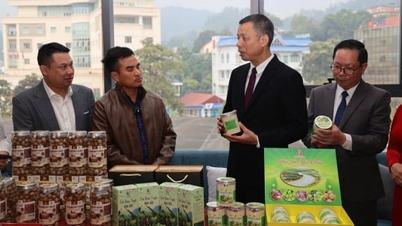
Ms. Duong Thi Lan Huong, Head of the Agriculture and Rural Development Department of Bac Yen district, said: From 2017 to the present, the district has implemented 6 projects supporting 523 households to plant 341 hectares of medicinal plants, with a total budget of over 4.4 billion VND. At the same time, it has developed dried cardamom products that have achieved OCOP 3-star provincial certification. It is expected that by 2030, the district will continue to support people in planting 400 hectares of new cardamom plants, contributing to increased income, improved living standards, and increased awareness of forest protection and development among the people. Along with that, it encourages people to establish cooperatives and link sustainable cardamom product consumption.
To date, Bac Yen district has nearly 563 hectares of cardamom plants, with an annual production of nearly 550 tons; the average value of cardamom grown under the canopy of natural forests yields an income of approximately 40 million VND/ha. Thanks to a large consumer market, with many traders coming to purchase the product and stable output, cardamom has been chosen as a key crop, creating a driving force for economic development in the highland communes of Bac Yen.
It is evident that cultivating cardamom is a suitable approach to increasing income and alleviating poverty for people in the highland communes of Bac Yen district. For sustainable development, cardamom growers hope that the district will continue to support the application of scientific and technical advancements, connect them with businesses that guarantee product purchase, and especially invest in post-harvest preservation and processing technologies, helping farmers feel secure and committed to cardamom cultivation.
Text and photos: Huy Thanh
Source











































































Comment (0)