

In China, many parents buy smartwatches for their children as young as five to help them stay in touch and track their location. But for kids, especially the Little Genius (Xiaotiancai) brand, the devices become a gateway into a fiercely competitive world where the main goal is to accumulate as many “likes” as possible.
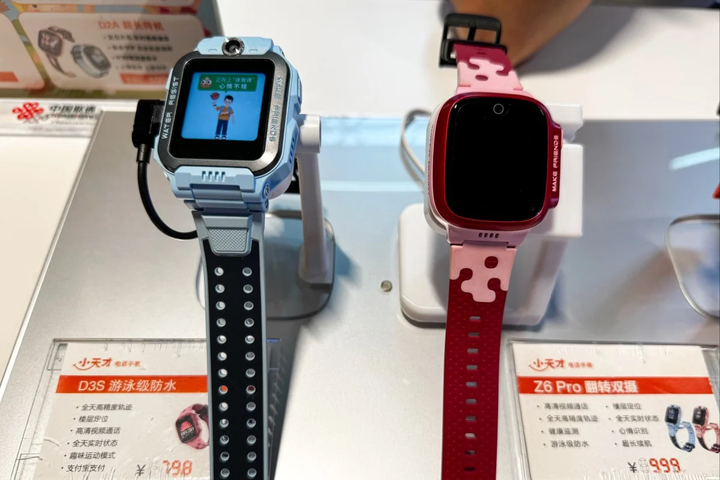
Little Genius smartwatches are displayed at a store in Shanghai. (Source: Wency Chen)
The underground economy of children
Little Genius has turned every activity into a game of points: from playing ping pong to posting status updates. The more points a child has, the higher their level and the more “likes” they can send to their friends. This creates a system of social trading: You give me a “like”, I will return the favor. Children even find new friends on the social network Xiaohongshu to increase their “likes” and maintain their status in the community.
The competitive pressure has led many children to find ways around the rules: buying bots to boost “likes,” selling high-level accounts, or hiring services to keep accounts active while they are in class. A micro-economy has formed around Little Genius. On trading platforms, accounts with hundreds of friends and hundreds of thousands of likes are sold for hundreds of yuan. But this has also led to conflicts, bullying, and the risk of fraud.
Services for increasing likes, managing accounts or special effects also appear. Many children spend 4-6 hours a day to accumulate likes, treating it as a game. This affects their learning and forms the habit of commercializing social status at a very early age. Equipment that was originally intended to support raising children has inadvertently become a tool to promote the spirit of teenage entrepreneurship.
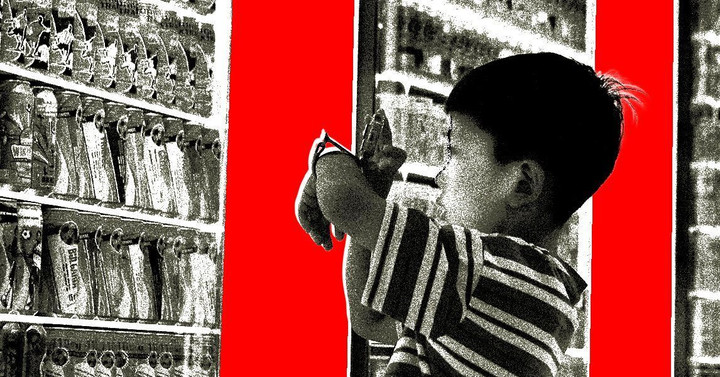
Curiosity, choice and consumer pressure are creeping into childhood through technological devices. (Source: Getty Images)
Concerns from parents and authorities
As the Little Genius smartwatch has grown in popularity, so have legal and regulatory challenges. Incidents involving privacy breaches, inappropriate content, and unauthorized access have sparked outrage among parents and regulators.
Historical data shows that Little Genius smartwatches have been plagued with security flaws. In 2024, a parent reported that a 10-year-old child received pornographic images via the watch, which was linked to unregistered phone numbers. Similarly, a 2025 incident in Chongqing involved a stranger posing as a guardian without consent, revealing the child’s location. Each time, Little Genius blamed third-party apps or technical glitches, promising to improve its monitoring.
Many parents worry about their children becoming addicted to the small screen, while Chinese authorities warn of the risk of children being scammed or falling into dangerous relationships. The government has begun drafting national safety standards for children's watches, aiming to limit the risks of internet addiction, inappropriate content and excessive spending.
Under Chinese law, products intended for minors must prevent addiction and negative influences. However, the Little Genius smartwatch’s like and level system, which encourages comparisons and excessive use, likely violates these standards. If found to be in non-compliance, the company could face rectification orders or business restrictions.
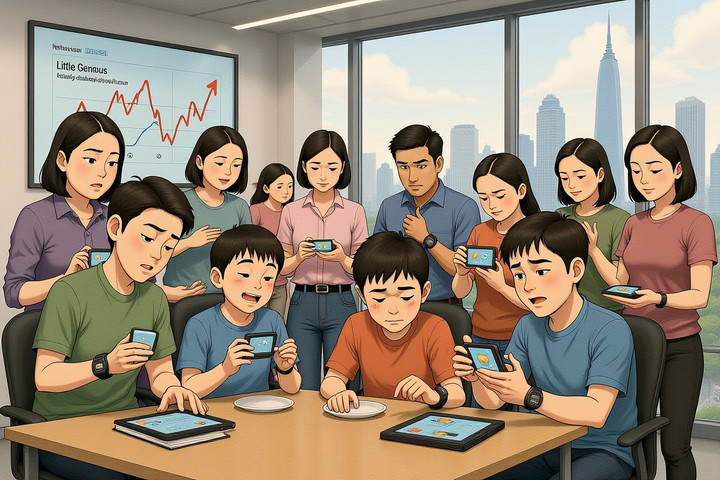
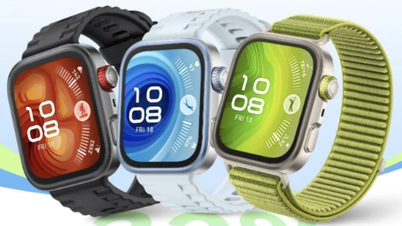
Chinese children use Little Genius smartwatches – controversial devices that turn a safe communication tool into a socially pressured 'like' race. (Source: Yuantrends)
The Little Genius smartwatch is at a crossroads between commercial success and ethical responsibility. It has gone from being a safe tool to a complex social platform that creates stress and risks for children. To regain trust, the product needs to focus on its core purpose: to protect and facilitate communication, while also enhancing parental controls, reducing addiction and adhering to child protection standards.
Only by putting children's safety and happiness first can Little Genius maintain its sustainable position in the future. The cooperation between parents, manufacturers and regulators will determine whether Little Genius becomes a tool to protect children or continues to foster social pressure.
Source: https://vtcnews.vn/trung-quoc-dong-ho-thong-minh-va-cuoc-dua-like-de-doa-tuoi-tho-ar990317.html
![[Photo] Prime Minister Pham Minh Chinh receives President of Cuba's Latin American News Agency](/_next/image?url=https%3A%2F%2Fvphoto.vietnam.vn%2Fthumb%2F1200x675%2Fvietnam%2Fresource%2FIMAGE%2F2025%2F12%2F01%2F1764569497815_dsc-2890-jpg.webp&w=3840&q=75)
![[Photo] President Luong Cuong holds talks with Sultan of Brunei Darussalam Haji Hassanal Bolkiah](/_next/image?url=https%3A%2F%2Fvphoto.vietnam.vn%2Fthumb%2F1200x675%2Fvietnam%2Fresource%2FIMAGE%2F2025%2F12%2F01%2F1764567099556_ndo_br_1-jpg.webp&w=3840&q=75)








































































Comment (0)