


When superficial emotions replace deep values
The military parade commemorating the 50th anniversary of national reunification in Ho Chi Minh City created an unprecedented cultural phenomenon: the idolization of soldiers on a scale comparable to that of entertainment stars. A 3-second clip showing Lieutenant Le Hoang Hiep stepping out of a vehicle in his military uniform turned him into a "heartthrob" in the hearts of thousands of young people, mostly women. Despite being just a soldier, information related to him garnered millions of interactions across multiple platforms.
Media expert Nguyen Ngoc Long shared with VietNamNet: "It's not surprising in the age of social media for a soldier to suddenly become an idol. Everyday, authentic moments that are symbolic, such as images of soldiers, doctors, teachers, etc., sometimes spread powerfully and touch the emotions of the community. The appeal of Lieutenant Le Hoang Hiep comes from his dignified and stylish image, combined with the ceremonial context, uniform, and the element of surprise. That's the formula for creating a viral effect."
It is important to consider the social role and position of the person being targeted. Lieutenant Le Hoang Hiep is a soldier belonging to a force with exceptional discipline, principles, and responsibility. Being hounded, surrounded, constantly mentioned online, and even stalked in real life... not only affects his personal privacy but can also negatively impact the organization's image and hinder him from performing his duties.
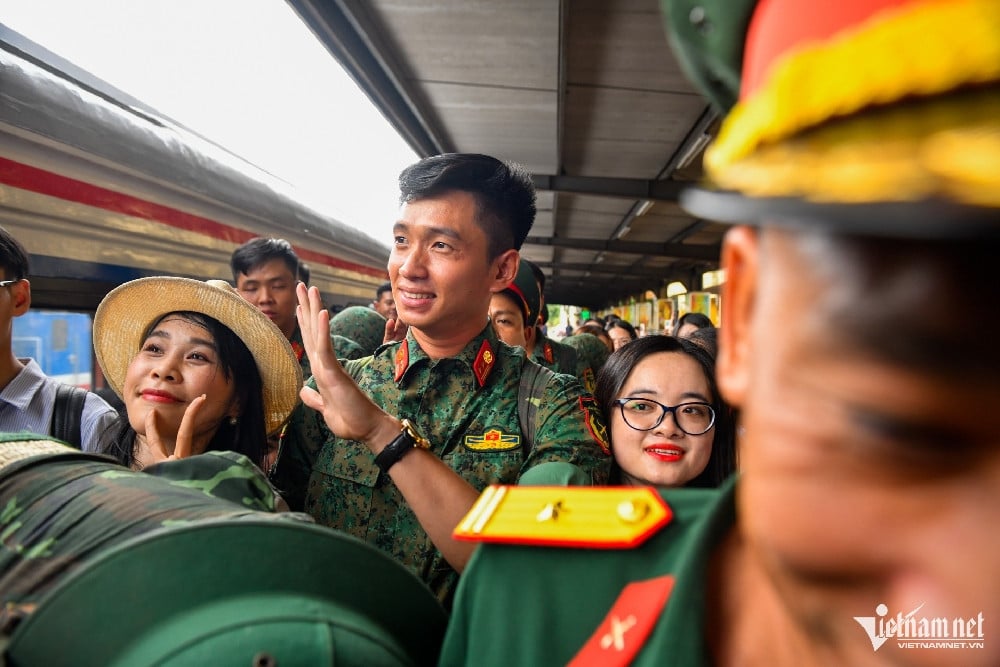
Hundreds of fans jostled to meet Lieutenant Le Hoang Hiep. Photo: VietNamNet
Admiration that goes beyond acceptable limits, invading personal space and hindering their lives and work—especially in a military environment—is no longer an act of affection. It is a manifestation of the consumption of images with soft violence, a form of 'obsessive fandom' disguised as admiration.
This phenomenon shows that social media's ability to shape public image has extended beyond the entertainment industry. More worrying is the lack of standards in how some young people perceive and interact with this image. In reality, admiration often stems from very superficial reasons (appearance, viral clips, beautiful moments), lacks depth (background, journey, true values of the idol), and lacks boundaries (admiration accompanied by stalking, attacking private lives, and attacking those not on the same 'side').
When someone who gains attention for their good looks in military uniform becomes more famous than someone who is quietly and diligently doing community work, it's time for society to re-examine how it defines the 'ideal role model'.
This phenomenon also poses a challenge for the media and social media platforms: reporting responsibly, avoiding fueling the bandwagon effect, and educating users, especially young people, on how to admire someone in a kind way.
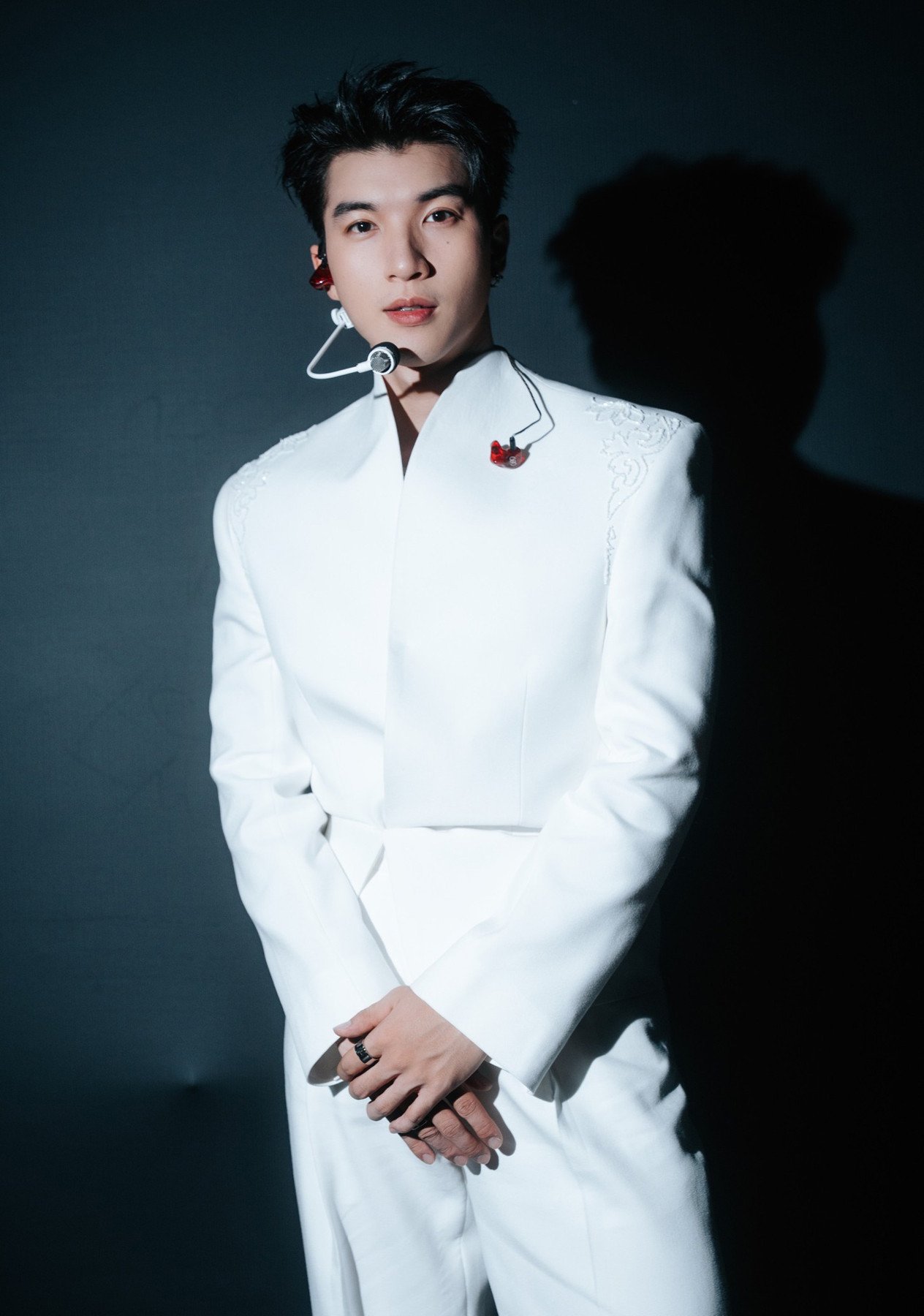
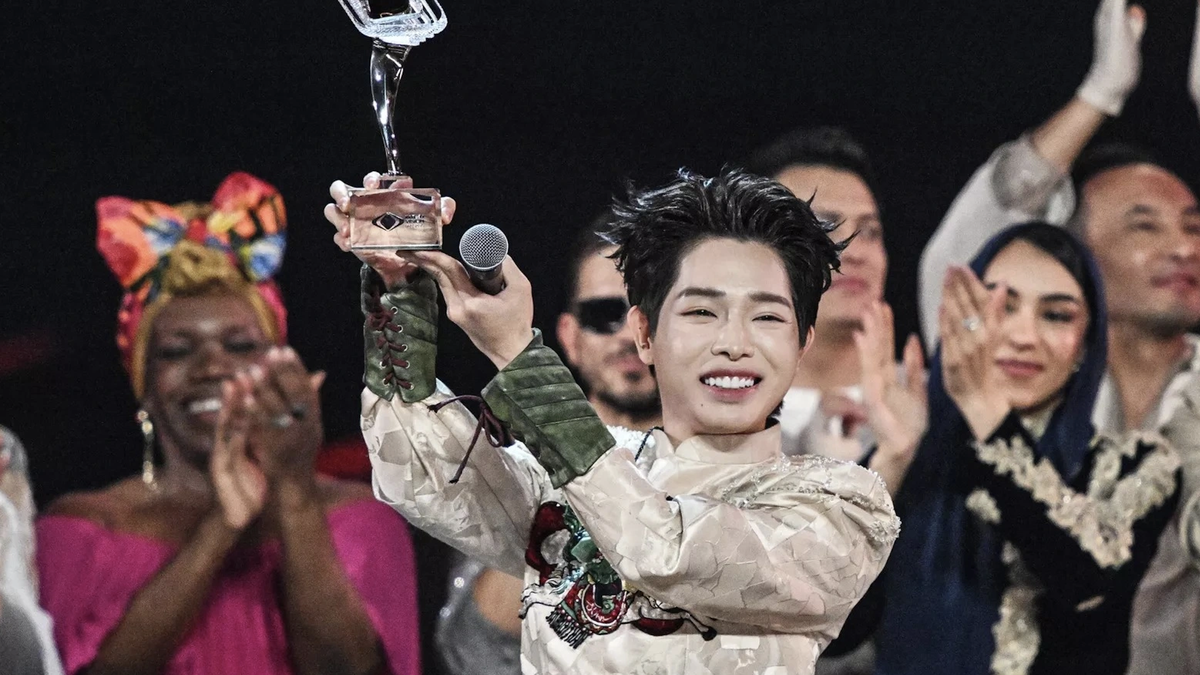
HIEUTHUHAI is currently one of the young faces with a large female fan base. Photo: FBNV
The risk of imbalance in the entertainment industry.
Besides the "phenomenon" of Lieutenant Le Hoang Hiep, in recent years, the idol culture in Vietnam has witnessed a clear "masculinization." The most noticeable difference lies in its commercial appeal. The " Brother Says Hi" concert series achieved impressive results with 6 nights of performances and over 100,000 attendees in total. The producers of "Brother Overcomes Thousands of Obstacles" confirmed that the program's revenue exceeded 340 billion VND. When tickets for the second concert in Hanoi went on sale at the end of 2024, the system crashed due to the overwhelming number of people accessing it.
Conversely, the " Beautiful Ladies Riding the Wind " concert in Ho Chi Minh City in April 2024 is considered less vibrant. Ticket sales for the "beautiful ladies" are slower, with many ticket categories remaining unsold after 3 days of going on sale. The producer of " Brother Overcoming a Thousand Thorns" reported a net profit after tax 10.7 times higher than in Q3 2023 – the time when "Beautiful Ladies Riding the Wind" was produced .
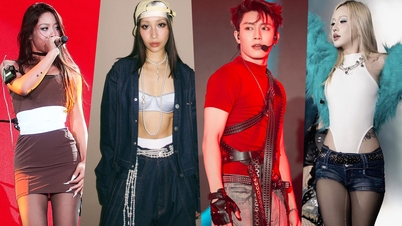
According to Socialite, the Top 10 Most Influential Social Media Figures in April 2025 included 6 male artists (HIEUTHUHAI, Son Tung M-TP, Quang Hung MasterD, Soobin, Rhyder, Quoc Huy), with no female artists. According to Vietnam Chart's ranking, 9 out of 10 top domestic artists in 2024 were male (Son Tung M-TP, HIEUTHUHAI, Vu., Low G, Wren Evans, Den, Rhyder, itsnk, RPT MCK).
Hundreds of fans waited outside My Dinh Stadium from late the night before the event, braving the pouring rain to watch the "Brother Says Hi" concert in Hanoi. The fandoms of these "brothers" invest in food trucks, LED screens at events, and organize celebrations and birthday parties. Most recently, 19-year-old Ánh Sáng AZA faced continuous criticism for a joke related to the song " Trình " by senior artist HIEUTHUHAI.
Mr. Nguyen Ngoc Long commented: "The noticeable 'masculinization' in Vietnamese idol culture can be explained from a media perspective. Firstly, the way public image is built is changing. Management companies and media teams are now heavily investing in 'image building' for male idols: appearance, character stories, approachable personalities, inspiring ideals (even if sometimes meticulously staged). This makes fans, especially women, more likely to stay loyal and protective."
Meanwhile, female artists are sometimes constrained by gender stereotypes such as having to be beautiful but not "too sexy," strong but not "overpowering men," making it difficult for them to develop a complete image and easily subject to scrutiny.
Digital media is facilitating the "emotionalization" of relationships with idols. Social media platforms encourage artists to interact directly, giving fans a sense of "familiarity" and "exclusiveness" with their idols. With male idols, this often creates a deeper emotional impact, such as: "He's gentle, vulnerable, I want to protect him." Conversely, female idols are rarely placed in a position of "needing protection," yet this very element is central to modern fan culture.
For male artists' fandoms, this is a form of 'self-identification through community.' For many young people, belonging to a fandom and participating in activities to protect and support their idols becomes part of their personal identity. This makes the relationship between fans and idols a form of social bonding, where loyalty is sometimes expressed through confrontation with 'other factions.'
Mr. Long also argued that media strategies, entertainment products, show scripts, etc., are all being adjusted to serve the fandom of male idols. "This may help increase revenue and create many short-term breakthroughs. In the long term, it also carries the risk of skewing the balance of artists, putting pressure on female artists, and limiting diversity in the market. When the enthusiasm is focused only on one gender or a certain image group, the entertainment industry risks becoming monotonous, one-sided, and easily 'dominated by algorithms, rather than art'."
In the long run, the entertainment industry needs a balanced strategy, not to "elevate" female idols, but to re-establish evaluation standards – based on talent, artistic depth, and human values, rather than fan base size or beauty. The media also plays a significant role in reshaping the public's criteria for what constitutes "worthy of being idolized."
Source: https://baoquangninh.vn/con-sot-anh-trai-va-thuong-uy-le-hoang-hiep-van-hoa-fan-viet-dang-thay-doi-3362512.html














































Comment (0)