



With its important guidelines on mechanisms and policies, Conclusion No. 219-KL/TW is expected to be a "lever" creating new opportunities for agriculture, farmers, and rural areas in the coming period.
After more than three years of implementing Resolution 19-NQ/TW, the practical experience of agricultural development shows positive changes but also clearly reveals limitations in science and technology, supply chain linkages, and production organization that need to be fundamentally and comprehensively addressed.
A superior mechanism for high-tech agriculture.
Conclusion No. 219-KL/TW clearly states that the key driving force for rapid and sustainable development of agriculture, rural areas, resource management, and environmental protection is prioritizing investment, testing, and piloting superior mechanisms and policies for agricultural production models based on high-tech science and technology, innovation, digital transformation, green development, and climate change adaptation in all stages of production, preservation, processing, logistics, and trade. According to Nguyen Van Long, Director of the Science and Technology Department ( Ministry of Agriculture and Environment ), the current system of documents related to science and technology activities is quite diverse. However, investment resources for science and technology in agriculture are still low, the science and technology market is underdeveloped, and it has not created competitive incentives or attracted talent... Therefore, removing the "bottleneck" in science and technology is one of the key solutions to create new momentum for the entire sector.
After more than three years of implementing Resolution 19-NQ/TW, the practical experience of agricultural development shows positive changes but also clearly reveals limitations in science and technology, supply chain linkages, and production organization that need to be fundamentally and comprehensively addressed.
From a business perspective, Tran Manh Bao, Chairman of the Board of Directors of ThaiBinh Seed Joint Stock Company (ThaiBinh Seed), believes that having superior mechanisms and policies for high-tech agriculture is extremely important. This includes establishing an effective "public-private" coordination mechanism between research institutes, businesses, and farmers to promote scientific and technological breakthroughs and innovation. Over the past period, ThaiBinh Seed has consistently pursued a growth strategy using science and technology as a driving force, investing heavily in research to produce high-yield, high-quality crop varieties that are well-adapted to climate change. The company is currently one of the pioneering science and technology enterprises in the field of plant breeding, making its mark with nearly 8,000 hectares of raw material areas and nearly 30,000 tons of seeds annually, bringing practical value to partners and tens of thousands of farmers nationwide.
Aiming to lead the region and the world.
To promote the export of agricultural, forestry, and aquatic products, enhance competitiveness, and access diverse markets, one of the core solutions is to form a strong team of enterprises leading key sectors in building national brands and participating deeply in global value chains. Therefore, Conclusion No. 219-KL/TW sets out the task of supporting the development of agricultural enterprises, aiming for a number of agricultural enterprises to become regional and global leaders by 2030. Currently, high-export-value sectors all have the presence of enterprises with closed-loop production-processing-consumption chains, possessing sufficient financial, technological, and human resources to expand into international markets. As a key export sector, the seafood industry has many enterprises with high global competitiveness. By 2025, the seafood industry is expected to make a significant mark with export value exceeding US$11 billion. According to Nguyen Hoai Nam, Secretary General of the Vietnam Association of Seafood Processing and Export (VASEP), Vietnam is considered a country with modern seafood processing technology, especially in the shrimp industry, with many leading enterprises such as Soc Trang Seafood Joint Stock Company (Stapimex), Minh Phu Seafood Corporation, Sao Ta Food Joint Stock Company (Fimex VN)... These are also the "locomotives" driving the growth of the seafood sector in recent years.
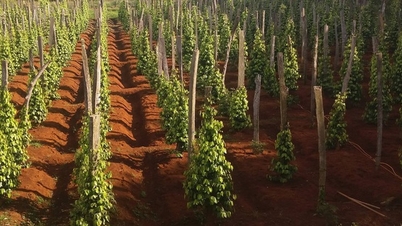
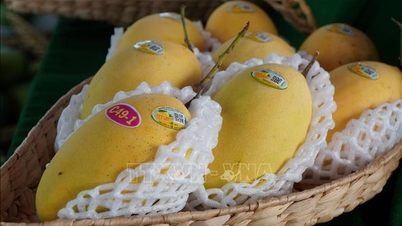
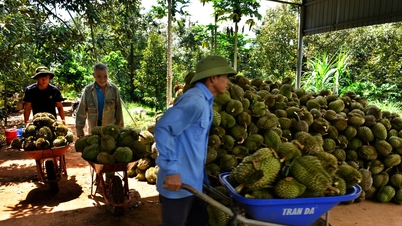
For fruits and vegetables, a rapidly growing sector with export value exceeding US$8.5 billion by 2025, many pioneering businesses are investing in raw material areas, deep processing, and increasing added value. According to Nguyen Thanh Binh, Chairman of the Vietnam Fruit and Vegetable Association, for the fruit and vegetable sector to continue its rapid and sustainable growth, businesses play a leading role. When businesses are strong in production organization, processing investment, and market development, agricultural products can enter global value chains, especially given that importing countries are strengthening plant quarantine measures and demanding increasingly higher quality standards. Therefore, mechanisms are needed to encourage businesses to boldly invest long-term, closely linking with farmers and cooperatives, thereby forming stable supply chains.
Thanks to its advantages in land, climate, and diversified agricultural sector structure, Vietnamese agriculture still has much room for improvement in growth quality. To effectively utilize these advantages, it is necessary to implement the key tasks outlined in Conclusion No. 219-KL/TW on science and technology, agricultural credit, brand development, enterprise support, and technology transfer to farmers. This is not only a continuation of the major orientations regarding agriculture, rural areas, and farmers, but also serves as a strategic framework, creating momentum for restructuring production and increasing the competitiveness of Vietnamese agriculture in the new context.
Source: https://baosonla.vn/kinh-te/van-hoi-moi-cho-tam-nong-IEpFxN4Dg.html


![[Photo] The Vietnamese community in France joyfully celebrates the Lunar New Year of the Horse 2026.](https://vphoto.vietnam.vn/thumb/1200x675/vietnam/resource/IMAGE/2026/02/15/1771132773753_tet-baltard-2026-minh-duy-1-jpg.webp)



























































![[Photo] Coc Ly market bustling on the eve of Tet](https://vphoto.vietnam.vn/thumb/402x226/vietnam/resource/IMAGE/2026/02/14/1771062261424_baolaocai-br_img-6457-jpg.webp)





Comment (0)