

Dr. Joshua Dwight, Associate Dean of the Department of Information Technology and Software Engineering at RMIT University Vietnam, recently shared information that is causing concern for online sellers in Vietnam.
Specifically, he stated that during the recent Singles' Day (November 11th) shopping event in China, some people used AI to fake product defects, turning fresh fruit into spoiled items, pristine dresses into torn ones, or intact ceramic cups into cracked ones, in order to claim refunds without returning the goods.

Many buyers have used AI-generated images and exploited the return and refund policy for personal gain.
Malicious actors are also using AI generative technology and deepfakes to create fake reviews, images, product information, or advertisements in just minutes or seconds.
These tactics affect both buyers and sellers. Cybercriminals can also create fake stores on e-commerce platforms or social media, post advertisements with seemingly authentic product images and videos , and then delete the accounts after defrauding several victims.
According to Dr. Joshua Dwight, some e-commerce platforms in China are requiring video proof for refund requests and assessing buyer trustworthiness based on past behavior.
Others are deploying AI-powered image detection tools, although accuracy remains a challenge.
This information immediately caused concern among businesses in Vietnam. This is because some e-commerce platforms in Vietnam are implementing relatively simple return and refund policies. Malicious actors could exploit this to use AI to edit and create images of defective products in order to request refunds without requiring the return of the goods.
"Currently, no similar cases have been recorded in Vietnam, but if AI is exploited to profit from the refund policy, sellers will certainly suffer significant losses," a Vietnamese seller shared.
Therefore, Dr. Joshua Dwight suggests that platforms need to reconsider the design of their return and refund policies to protect sellers from potential fraud. Specifically, they should limit the "refund only" option (full or partial) without requiring the return of the product if the customer is dissatisfied with the purchased item. They should also provide warnings and reminders about fraudulent return practices.
Additionally, store credit should be used as a refund method instead of cash in suspicious cases. Staff should be trained to recognize signs of fraudulent AI and handle disputes promptly.
Source: https://nld.com.vn/xuat-appear-thu-doan-lua-dao-moi-khien-nha-ban-online-dung-ngoi-khong-yen-19625121509561844.htm

![[Photo] Prime Minister Pham Minh Chinh receives the Governor of Tochigi Province (Japan)](/_next/image?url=https%3A%2F%2Fvphoto.vietnam.vn%2Fthumb%2F1200x675%2Fvietnam%2Fresource%2FIMAGE%2F2025%2F12%2F16%2F1765892133176_dsc-8082-6425-jpg.webp&w=3840&q=75)

![[Photo] Prime Minister Pham Minh Chinh receives Lao Minister of Education and Sports Thongsalith Mangnormek](/_next/image?url=https%3A%2F%2Fvphoto.vietnam.vn%2Fthumb%2F1200x675%2Fvietnam%2Fresource%2FIMAGE%2F2025%2F12%2F16%2F1765876834721_dsc-7519-jpg.webp&w=3840&q=75)
![[Live] 2025 Community Action Awards Gala](/_next/image?url=https%3A%2F%2Fvphoto.vietnam.vn%2Fthumb%2F1200x675%2Fvietnam%2Fresource%2FIMAGE%2F2025%2F12%2F16%2F1765899631650_ndo_tr_z7334013144784-9f9fe10a6d63584c85aff40f2957c250-jpg.webp&w=3840&q=75)
![[Image] Leaked images ahead of the 2025 Community Action Awards gala.](/_next/image?url=https%3A%2F%2Fvphoto.vietnam.vn%2Fthumb%2F1200x675%2Fvietnam%2Fresource%2FIMAGE%2F2025%2F12%2F16%2F1765882828720_ndo_br_thiet-ke-chua-co-ten-45-png.webp&w=3840&q=75)




















































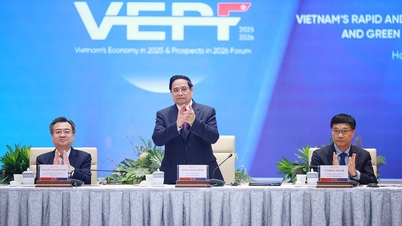
![[Photo] Prime Minister Pham Minh Chinh attends the Vietnam Economic Forum 2025](https://vphoto.vietnam.vn/thumb/402x226/vietnam/resource/IMAGE/2025/12/16/1765893035503_ndo_br_dsc-8043-jpg.webp)
























Comment (0)