

Alternating between diaphragmatic and nasal breathing helps clear nasal passages, reduce stress, and improve lung capacity.
Chemicals, air pollution, and germs can harm the lungs. Besides maintaining a healthy diet, exercise contributes to improved lung function and better disease prevention.
Diaphragmatic breathing
Diaphragmatic breathing is deep breathing involving the diaphragm. The diaphragm is a dome-shaped muscular barrier located between the chest cavity and the abdominal cavity, separating the heart and lungs from the abdominal organs (stomach, intestines, spleen, liver). This method helps strengthen the function of the diaphragm, improves lung efficiency, and promotes a feeling of calmness and relaxation in the practitioner.
To perform this exercise, find a quiet, comfortable space to sit or lie down. Place one hand on your chest and the other on your abdomen, then inhale slowly through your nose. Your abdomen will expand as your diaphragm contracts. Exhale slowly through your mouth, repeating this process for several minutes.
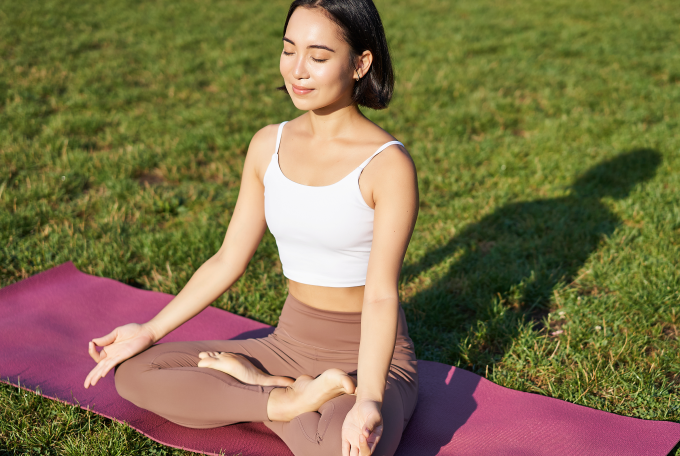
Everyone should practice breathing exercises daily to protect their lung health. Photo: Freepik
Pursed-lip breathing
Pursed-lip breathing is a simple exercise that helps improve lung function and reduce shortness of breath.
To perform pursed-lip breathing, relax your neck and shoulder muscles, slowly inhale through your nose for two counts, keeping your mouth closed and your lips pursed as if you were about to whistle. Then, exhale slowly and gently through your pursed lips. This exercise is beneficial for people with chronic obstructive pulmonary disease (COPD) or asthma, helping to clear the airways.
Breathe through your nostrils alternately.
Alternate nasal breathing promotes balance, relaxes muscles, helps clear nasal passages, reduces stress, and improves lung capacity.
To perform this breathing exercise, sit comfortably with your spine straight; use your right finger to close your right nostril, inhale through your left nostril, then use your hand to close your left nostril. Open your right nostril and exhale. Do this for about 6 minutes.
Box breathing
Box breathing involves inhaling for 4 seconds, holding your breath for 4 seconds, exhaling for 4 seconds, and holding your breath for 4 seconds. Each step in box breathing takes the same amount of time. The practitioner can increase or decrease the length of each step, but should start by dedicating 4 seconds to each step.
Box breathing can help improve mental alertness and enhance lung function. When practicing this breathing exercise, maintain a relaxed state, neither too fast nor too slow. Remember to exhale slowly, releasing all the air from your lungs. Inhale through your nose while slowly counting to 4, hold your breath while counting to 4, exhale while counting to 4 again, hold your breath once more while counting to 4, and repeat for 3-4 sets.
4-7-8 breathing technique
The practitioner inhales for 4 counts, holds their breath for 7 counts, and exhales for 8 counts. Practicing 4-7-8 breathing helps activate the parasympathetic nervous system, which is responsible for rest and digestion, putting the body into a relaxed state and promoting restful sleep.
Le Nguyen (According to Times of India )
Source link




![[Photo] The courage of new recruits of Brigade 144 on the training ground.](https://vphoto.vietnam.vn/thumb/1200x675/vietnam/resource/IMAGE/2026/05/27/1779881651341_anh-man-hinh-2026-05-27-luc-18-32-52.png)
![[Photo] The heat at the fireworks display site on the opening night of the Da Nang International Fireworks Festival 2026](https://vphoto.vietnam.vn/thumb/1200x675/vietnam/resource/IMAGE/2026/05/27/1779889741485_ndo_br_z7872039145157-fecaba5112f39e8352544099d7ef4738-5140-jpg.webp)

































































![[Photo] The courage of new recruits of Brigade 144 on the training ground.](https://vphoto.vietnam.vn/thumb/402x226/vietnam/resource/IMAGE/2026/05/27/1779881651341_anh-man-hinh-2026-05-27-luc-18-32-52.png)































Comment (0)