


Resolution No. 57 was established to create key drivers for Vietnam to make a rapid and fundamental qualitative shift, moving from a development model based on cheap resources to a development model based on knowledge, innovation, and data. The resolution, once implemented, has generated new momentum, spreading a strong spirit of action throughout the entire political system, from the central to local levels, across both the state and private sectors, and among individual families and citizens, gradually shaping a modern and prosperous digital nation.
The "Shape" of the Digital Nation
One year of implementing Resolution No. 57 has demonstrated the strategic vision and profound guiding values of this important document. The journey to realize the national digital goal is facing numerous fundamental challenges. The implementation has shown initial progress, while also identifying obstacles that need to be overcome and driving forces that must be further stimulated. The issues raised demand that we continuously enhance our sense of responsibility, pioneering spirit, and political determination to realize the aspiration of becoming a developed, high-income nation by 2045. After one year of implementation, the groundbreaking spirit of Resolution No. 57 has fundamentally changed the method of national governance and promoted digital transformation nationwide. Vietnam is clearly shaping the "form" of a digital nation.
In reality, Resolution No. 57 has accelerated and strengthened the construction of digital government and administrative reform. According to preliminary statistics, ministries and agencies have reduced and simplified 3,241 business regulations (reaching 20.56%), exceeding the minimum target of 20% set by the Government . The National Public Service Portal has provided online access to 56 out of 76 essential public services. For the first time, administrative procedures of the Party have been integrated into the National Public Service Portal. The Party Central Committee issued the Party's Digital Transformation Architecture 3.0 and regulations on the operation of the Electronic Operational Management System, creating a foundation for the "Digital Party" model. 100% of provinces and cities have Intelligent Operations Centers (IOCs) or Digital Transformation Centers to monitor data in real time. Digital government is gradually shifting from "paper-based administration" to "smart administration," becoming more transparent and closer to the people…
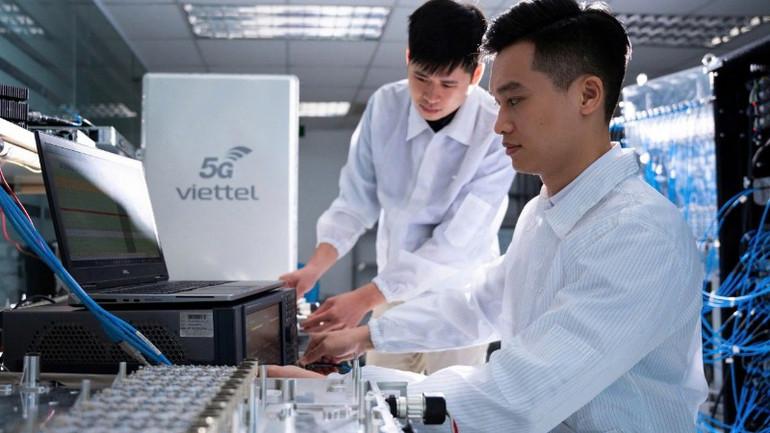
Despite challenges in infrastructure and human resources at the grassroots level, the indicators regarding the rate of online application processing demonstrate a shift in governance thinking.
In Hanoi, all 2,146 administrative procedures are provided online. The rate of online applications increased sharply from 23.45% to 99% in just four months (from July 1st to November 12th, 2025). Quang Ninh province has connected to 15 national databases, 100% of provincial-level administrative procedures are provided online, and the rate of implementation across administrative boundaries is also approximately 100%. Although Cao Bang is a mountainous province facing many difficulties, its administrative procedure information system is basically operating stably, providing 639 fully online public services and 1,136 partially online public services.
Regarding the development of the digital economy, Resolution No. 57 has promoted the creation of clear market demand and incentives for businesses to invest in research and development (R&D) of strategic technology products. Vietnam currently ranks 41st in the world in terms of the digital economy's share of GDP, with a growth rate of over 20% per year, the fastest in Southeast Asia. By 2025, the size of Vietnam's digital economy is expected to reach approximately US$39 billion. The Law on Digital Technology Industry (effective from January 1, 2026) clearly stipulates investment incentives, tax breaks, land use incentives, and tax deduction incentives for R&D; establishes a pilot mechanism (sandbox) and a liability exemption mechanism for businesses testing new technologies. The law also institutionalizes the spirit of encouraging public procurement for products created by domestic businesses.
The list of 11 strategic technology groups, issued by the Ministry of Science and Technology in consultation with the Prime Minister, serves as an important basis for businesses to orient their development in line with the national development strategy. Viettel Group (Vietnam Military Telecommunications Group) is proactively participating in the development of 9 out of 11 strategic technology groups, fully mastering the 5G product ecosystem and initially exporting to India and the UAE. Vietnam Post and Telecommunications Group (VNPT) is researching strategic technologies such as the GenAI Make in Vietnam model, collaborating on research and design of semiconductor chips, with production and market supply expected in 2028. FPT Group is investing in building and operating the first AI Factory in Vietnam. CMC Technology Group focuses on the AI-X and Go Global strategy, developing C-OpenAI – an open technology ecosystem with 25 core technologies “Made by CMC”…
In the category of strategic technologies, blockchain is also identified as a key area. The development of blockchain platforms, especially in the field of digital assets, has been laid the groundwork by the Law on Digital Technology Industry through initial legal frameworks. Subsequently, the Government issued Resolution 05 with the goal of shifting operations from a "free-floating" system to a more licensed, transparent, and secure playing field. This creates opportunities for the formation of a new capital market for the economy.

Dr. Can Van Luc, Chief Economist of BIDV Bank, stated: "What we are currently trading in physical form can later be digitized, broken down, and moved onto blockchain platforms for trading. This is the digital asset market. A very large market."
Recognizing the strategic role of data, Resolution No. 57 outlines the guiding principle of "enriching and maximizing the potential of data, making data a primary means of production." The government has issued Decree No. 165/2025/ND-CP detailing the Law on Data, data management, and data protection. As of November, Vietnam has 39 small and medium-sized data centers. A super-large data center project with a capacity of up to 140 MW is being implemented by Viettel. Locating data centers domestically is a strategic factor in ensuring cybersecurity and compliance with regulations on storing citizen data.
What we currently trade in physical form can later be digitized, broken down, and brought onto blockchain platforms for trading. This is the digital asset market. A very large market.
Businesses and technology workforce have not met expectations.
Despite acknowledging groundbreaking progress and creating new momentum in national governance, business development, and technology market creation, the implementation of Resolution No. 57 has also revealed numerous challenges and difficulties. Notably, the contribution of Vietnamese businesses has not yet met expectations. Furthermore, the shortage of highly skilled technology personnel remains a major bottleneck.
In the innovation ecosystem, businesses play a central role. However, Vietnamese businesses have not yet become the driving force of innovation as expected. The private sector, considered the most dynamic, is mainly comprised of small and medium-sized enterprises with limited resources, making them hesitant to invest in long-term innovation projects. Despite accounting for nearly 98% of the more than 940,000 businesses nationwide, the percentage of private businesses engaged in innovation is lower than in developed countries.
Private businesses also reported that some agencies and units still tend to prioritize cooperation with state-owned enterprises due to a sense of "security." Many state-owned enterprises take advantage of their positions to sign strategic cooperation agreements with numerous entities, creating an environment of unfair competition and limiting the role of the private sector in the innovation ecosystem.
The limitations lie not only in the capabilities of businesses but also in the weak links between businesses and research institutions. Many small and medium-sized enterprises (SMEs) want to innovate but don't know where to find technology and experts, while research institutions with existing inventions struggle to connect with them for commercialization. The lack of intermediary organizations and a network connecting technology supply and demand prevents the innovation ecosystem from operating effectively.
Regarding technology human resources, despite many efforts, Vietnam still faces a significant shortage of high-quality personnel in many strategic sectors such as artificial intelligence, big data, cybersecurity, and semiconductors. Currently, the country has approximately 500,000 IT workers, but the actual demand is projected to reach 2 million by 2030. The integrated circuit and semiconductor design sector alone requires around 50,000 engineers, while current training capacity only meets a fraction of this need; cybersecurity is also projected to lack more than 700,000 specialized personnel in the next three years.
Not only is there a shortage in quantity, but the quality of high-tech human resources is also limited, with many training programs being heavily theoretical, lacking practical experience, and lacking qualified lecturers and laboratory infrastructure. According to Professor, Dr. Tran Tuan Anh, Vice President of the Vietnam Academy of Science and Technology, human resources in science, technology, innovation, and digital transformation in some fields do not meet practical requirements; interdisciplinary skills and practical capabilities are limited. Meanwhile, the coordination mechanism between ministries, sectors, localities with businesses, research institutes, and universities is not truly smooth and synchronized. Many research institutes face the risk of gradually losing highly qualified experts, and key sectors are losing experts to the private sector and large technology corporations.

In particular, we are lacking "chief engineers" to implement urgent local tasks as well as key national projects. In fields requiring very high expertise such as microchips, AI, molecular biology, or space technology, there is a shortage of Vietnamese experts of international caliber to lead the way.
The shortage of high-quality human resources is closely linked to a long-standing "brain drain." Many talented students and graduates go abroad and choose to stay and work there, while the domestic public sector struggles to retain experts due to uncompetitive compensation packages and research environments. This highlights the urgent need to develop a comprehensive technology human resource development strategy with robust mechanisms to attract, utilize, and retain talent.
Limitations in business capacity and a shortage of skilled technology personnel are just a few of the bottlenecks that need to be addressed. The breakthroughs outlined in Resolution No. 57 are also hampered by delays in the management system, infrastructure that hasn't kept pace with development requirements, a lack of data interconnection, and unresolved financial constraints. Furthermore, improving digital skills among the population remains a major challenge that needs to be prioritized.
(To be continued)
Source: https://nhandan.vn/bai-1-nen-tang-chien-luoc-dinh-hinh-quoc-gia-so-post930566.html
![[Photo] Prime Minister Pham Minh Chinh receives the Governor of Tochigi Province (Japan)](/_next/image?url=https%3A%2F%2Fvphoto.vietnam.vn%2Fthumb%2F1200x675%2Fvietnam%2Fresource%2FIMAGE%2F2025%2F12%2F16%2F1765892133176_dsc-8082-6425-jpg.webp&w=3840&q=75)
![[Image] Leaked images ahead of the 2025 Community Action Awards gala.](/_next/image?url=https%3A%2F%2Fvphoto.vietnam.vn%2Fthumb%2F1200x675%2Fvietnam%2Fresource%2FIMAGE%2F2025%2F12%2F16%2F1765882828720_ndo_br_thiet-ke-chua-co-ten-45-png.webp&w=3840&q=75)
![[Live] 2025 Community Action Awards Gala](/_next/image?url=https%3A%2F%2Fvphoto.vietnam.vn%2Fthumb%2F1200x675%2Fvietnam%2Fresource%2FIMAGE%2F2025%2F12%2F16%2F1765899631650_ndo_tr_z7334013144784-9f9fe10a6d63584c85aff40f2957c250-jpg.webp&w=3840&q=75)


![[Photo] Prime Minister Pham Minh Chinh receives Lao Minister of Education and Sports Thongsalith Mangnormek](/_next/image?url=https%3A%2F%2Fvphoto.vietnam.vn%2Fthumb%2F1200x675%2Fvietnam%2Fresource%2FIMAGE%2F2025%2F12%2F16%2F1765876834721_dsc-7519-jpg.webp&w=3840&q=75)





















































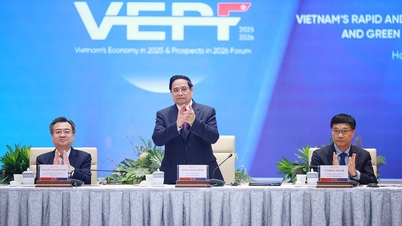
![[Photo] Prime Minister Pham Minh Chinh attends the Vietnam Economic Forum 2025](https://vphoto.vietnam.vn/thumb/402x226/vietnam/resource/IMAGE/2025/12/16/1765893035503_ndo_br_dsc-8043-jpg.webp)


































Comment (0)