


55.7% of retailers experiencing revenue growth are adopting a multi-channel model, with the majority generating revenue in the range of 200 million to 1 billion VND per month. This demonstrates that a multi-channel strategy is crucial for retail businesses to achieve high growth, reach a wider customer base, and optimize revenue.
Sapo Technology Joint Stock Company recently announced the results of a survey of 15,000 retailers nationwide, reflecting the retail business landscape in 2024 with many bright spots and challenges. The report points to the strong transformation of the retail industry with the trend towards multi-channel, cashless payment and mobile apps.
33% of retailers reported revenue growth.
The group with revenue growth is concentrated in Hanoi and Ho Chi Minh City (67%), with mostly under 5 employees, and commonly achieving revenue exceeding VND 500 million/month, thanks to effective multi-channel sales and online advertising.
This is a professional multi-channel sales team with a clear business development strategy, focusing on investing in solutions to optimize advertising effectiveness, employee productivity, and maximize revenue by encouraging customers to make additional purchases or upgrade products. The fashion , household goods, and food sectors contribute the highest growth rates thanks to stable purchasing power and flexible promotional programs.
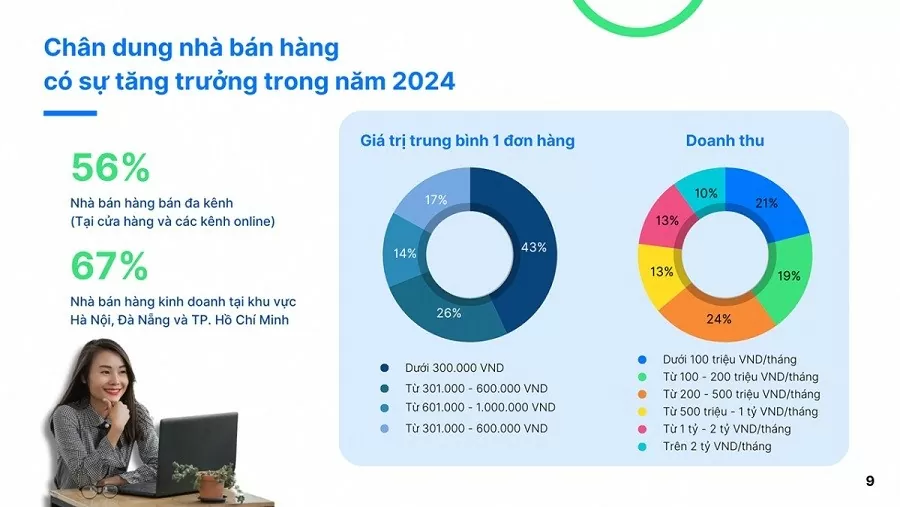 |
| The group with revenue growth is concentrated in Hanoi and Ho Chi Minh City (67%), with mostly fewer than 5 employees, and a common revenue level exceeding VND 500 million/month. (Source: Sapo) |
Over 80% of the group experiencing revenue growth are optimistic and expect the market to progress well in 2025. Many sellers plan to develop new strategies such as livestreaming to close deals and expanding their business on social media platforms. Compared to survey results from the past six years, the percentage of sellers experiencing revenue growth in 2024 is higher than in 2023, but still hasn't reached the positive figures of 2022. Growth is uneven across the main sales channels.
66% of retailers predict no growth in 2024, with the majority reporting a revenue decrease of 10% or more. These are primarily individual business owners or enterprises using traditional sales channels (in-store sales), with a lower percentage using online or multi-channel sales compared to those experiencing revenue growth.
Many sellers in this group have not accessed or utilized financial support programs. They prioritize cost and performance reporting tools over automation solutions; they are limited in advertising investment and focus on free or low-cost channels. Sellers who did not experience revenue growth tend to be cautious in their 2025 plans; 30% of this group prioritize maintaining operations at 2024 levels and are not yet confident in expanding their business.
Multichannel selling remains the most effective business model.
55.7% of retailers experiencing revenue growth are adopting a multi-channel model, with the majority generating revenue in the range of 200 million to 1 billion VND per month. This demonstrates that a multi-channel strategy is crucial for retail businesses to achieve high growth, reach a wider customer base, and optimize revenue.
When discussing expectations for technology to support business, most retailers want to apply features and connect software more effectively to streamline operations, create a consistent customer experience, and increase sustainable revenue. This also reflects their desire to consolidate sales channels under a single management system, aiming for comprehensive and professional integration, using technology to optimize the customer experience.
"Retailers need not only a multi-channel presence but also deep integration between channels, putting the buyer at the center to create a seamless experience, enhance competitiveness, and increase revenue. Multi-channel management helps centralize customer data to build loyalty programs, increase repurchase rates, and maximize revenue. Multi-channel sales management is an inevitable trend in the retail industry," shared Ms. Le Thi Dung, Growth Director of Sapo.
E-commerce still holds the top spot.
According to the survey results, 77% of sellers are operating on at least one online sales channel (e-commerce platforms/social media/websites/affiliates/dropshipping, etc.), with the most common scale being 1-5 stores (accounting for nearly 90%). Sellers with growing revenue are focusing on and allocating significant budgets to advertising through social media platforms such as Instagram, TikTok, and Facebook, as well as e-commerce platforms like Shopee. 100% of plans for 2025 mention expanding online sales channels such as TikTok Shop, Shopee, Facebook, etc. This shows that sellers still consider online channels as their focus, affirming the position of e-commerce in modern retail.
 |
| 77% of sellers are doing business on at least one online sales channel. (Source: Sapo) |
In 2024, major social media platforms like Facebook (Meta) and TikTok (Bytedance) invested heavily in marketing tools to improve ad targeting, relevant advertising, and creative advertising. From AI-optimized ads on Facebook to the launch of message-based advertising on TikTok, these initiatives have contributed to the growing trust in these marketing channels.
However, the growth rate of online sales in 2024 has not met expectations. Intense competition from international e-commerce platforms entering the market (Temu, Shein) or those directly importing into Vietnam (Taobao, Alibaba) has put unprecedented pressure on the e-commerce sector.
On the other hand, platform business fees have increased compared to previous years, coupled with stricter tax regulations, posing a challenge for sellers in optimizing operating costs to ensure profitability. The fierce price competition is cooling down, with sellers increasingly focusing on sustainable business practices to guarantee returns. The new tax management law passed by the National Assembly , requiring e-commerce platforms to pay taxes on behalf of sellers, is expected to reduce bureaucratic burdens and create a more transparent and simpler mechanism.
The boom in livestream selling has brought with it a number of risks.
According to the survey, Facebook Live accounts for 23% and TikTok Live for 18% of the total livestream sessions of multi-channel or online-only sellers. Shopee Live is less popular (10%), mainly used by businesses and households specializing in selling on e-commerce platforms.
While Facebook lagged behind TikTok and Shopee in livestreaming sales, it couldn't afford to be left out. In 2024, through partnerships with sales management platforms like Sapo, Meta officially launched Facebook LiveShopping – a feature that allows sellers to livestream and add shopping carts simultaneously, enabling buyers to quickly select and pay for products during the live session. Meta plans to further expand this feature in 2025 to meet the growing demand for sales on social media.
 |
| Facebook Live accounts for 23% and TikTok Live accounts for 18% of the total livestream sessions of multi-channel or online-only sellers. (Source: Sapo) |
Ms. Le Thi Nga, Director of Sapo Social Commerce & Shipping, stated: “Livestream sessions with creative content and customer interaction through minigames can increase viewership by up to 35% compared to sessions that only introduce products. When combined with fast and accurate shipping services, sellers will create a complete value chain, from reaching customers to door-to-door delivery, helping to increase customer satisfaction and loyalty.”
Over 66% of small and medium-sized retailers have not yet used livestreaming, indicating significant untapped potential. They haven't adopted livestreaming due to a lack of understanding of how to operate it or insufficient resources. Furthermore, retailers need to pay particular attention to product origins and the increasingly stringent platform regulations when live streaming. Survey participants reported encountering issues such as technical errors and poor operational management during livestreaming.
Cashless payments have become essential.
94.4% of merchants accept at least one cashless payment method, with bank transfers via VietQR or bank account numbers being the most popular (91%) due to their convenience and quick reconciliation. However, the boom in QR payments raises the question of how to display QR codes and manage cash flow effectively to avoid errors and fraud. Merchants prioritize fast processing speed and quick receipt of payments to ensure flexible cash flow. Service costs are also a crucial factor, especially for small and micro-sized stores or stalls.
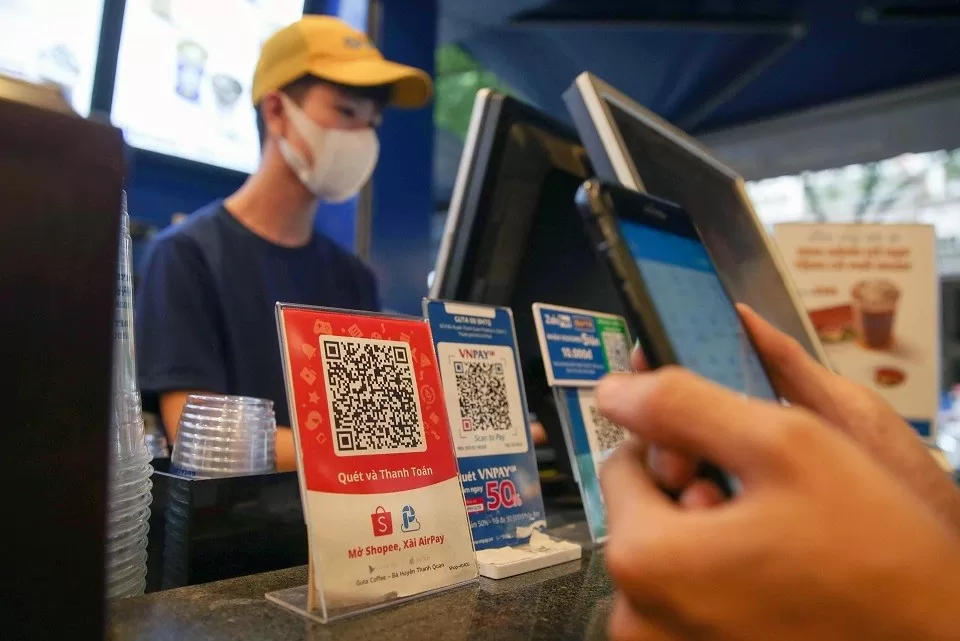 |
| 94.4% of sellers accept at least one cashless payment method, with bank transfers via VietQR or bank account numbers being the most popular. (Source: VnEconomy) |
The trend of displaying dynamic QR codes and using speakers to read out payment transactions enhances security and reduces errors in the payment process. 29.6% of stores use dynamic QR codes integrated into their sales software. In particular, payment devices with NFC (contactless payment) are predicted to be prominent in the market in 2025, improving customer experience and enhancing security in payment operations.
“Today, the need goes beyond simply choosing a payment method; it requires retailers to integrate payment methods into their sales management systems to create a seamless shopping experience,” said Ms. Vu Thi Hien, Director of Digital Finance, Sapo Technology Joint Stock Company.
AI has become an indispensable tool in sales in Vietnam.
From analyzing customer data and providing automated product recommendations to optimizing advertising and marketing campaigns, AI helps retailers increase efficiency and improve profitability. A retailer who is a Sapo client stated that "AI assists in daily work" and they need "to add AI-savvy personnel to reduce operating costs."
Statista's Tech Trends 2024 report highlights the widespread adoption of artificial intelligence (AI) across industries, including retail, requiring retailers to enhance the shopping experience through technology.
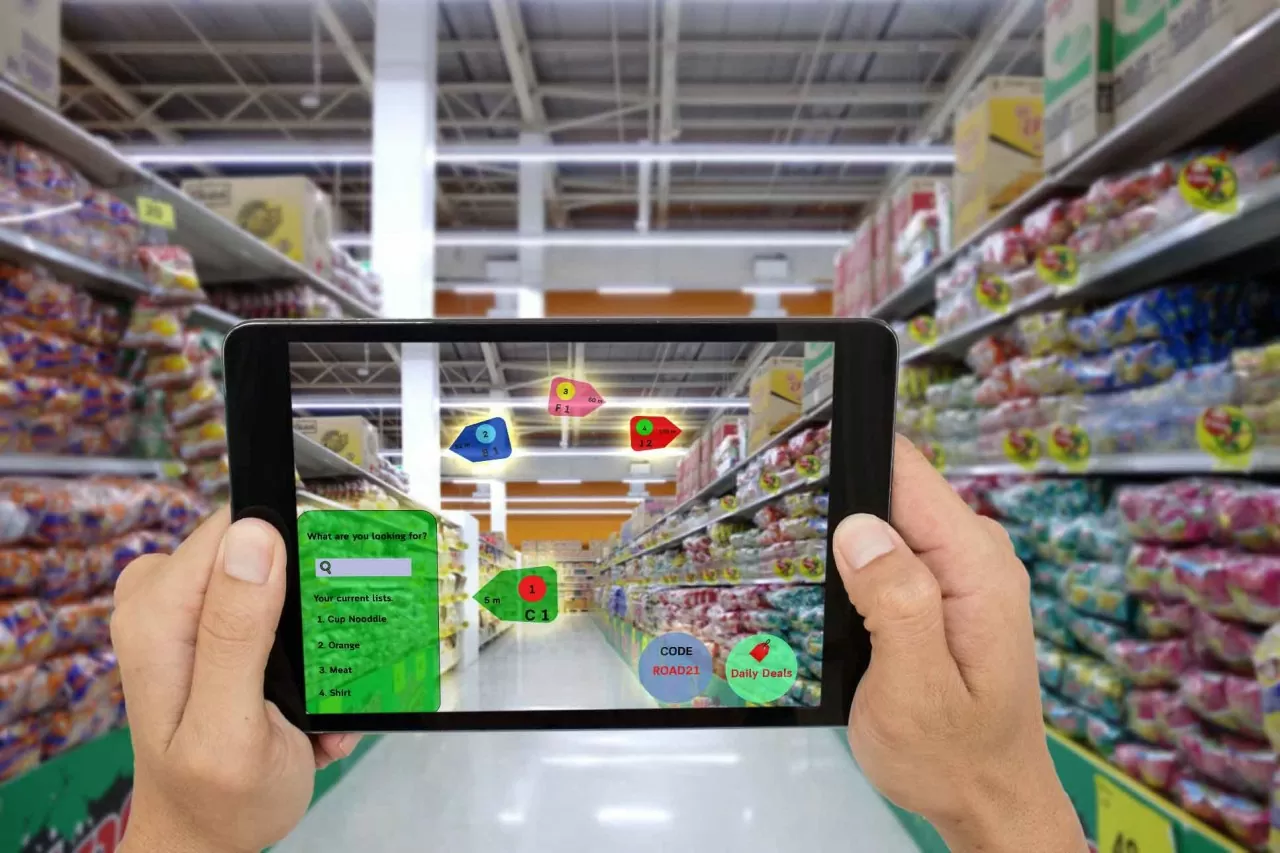 |
| AI technology not only automates repetitive tasks but also provides the ability to perform in-depth data analysis. (Source: Sapo) |
Mr. Nguyen Minh Khoi, Chief Technology Officer (CIO) of Sapo Technology Joint Stock Company, emphasized: "Investing in modern technology solutions, especially AI-integrated sales management software, is a key factor in optimizing operational processes and improving business performance."
AI technology not only automates repetitive tasks but also provides the ability to perform in-depth data analysis, predict trends, and optimize sales strategies. In particular, training sales teams to effectively leverage the benefits of AI will help businesses achieve breakthroughs and outstanding success.
Forecast of trends in 2025 and recommendations for sellers.
59% of retailers are very optimistic about business prospects in 2025. Therefore, a large number of retailers want to expand their business rather than save costs: 46% want to open more sales channels, 45.8% plan to diversify their product range, and 30.8% want to expand their scale, adding branches and staff. Expanding sales channels is a key strategy for 2025, including social media (28%), e-commerce platforms (23%), and TikTok Shop (21%).
To quickly adapt to the market and achieve expected revenue targets, retailers should prioritize adopting technology and customer service within a budget, ensuring profitability and preventing excessive cost overruns.
Adopting technology appropriate to the current business scale: Sellers should consider technology solutions that suit their scale and financial capabilities, while also being easily expandable as needed. Investing in technology can help reduce the burden of personnel costs and generate higher revenue. A fundamental need for most sellers is to integrate technology systems into their sales management software, from CRM for customer information management and electronic invoicing to human resource management, timekeeping, and payroll. One tool can solve many problems for various models, from individuals and small businesses to large enterprises.
Focus on strategies to enhance the customer experience and loyalty programs to retain customers: Instead of pursuing expensive customer care programs, retailers can implement smaller promotions such as discounts on product bundles or low-cost free gifts. Simple programs that target customer needs can significantly increase purchase frequency. For small retailers, programs offering reduced local shipping fees or happy hour promotions can also be effective without requiring large expenditures.
Enhancing social commerce to reduce tax and fee pressure, creating content, and leveraging low-cost promotional sources: Small retailers can utilize livestreams, short videos, or affiliate marketing on Facebook and TikTok to interact directly with customers, build brand credibility, and increase revenue without spending heavily on paid advertising.
Additionally, incorporating small promotional programs such as giveaways or discounts during live streams can attract more potential customers, effectively increasing the chances of converting orders.
Source: https://baoquocte.vn/buc-tranh-kinh-doanh-ban-le-nam-2024-ban-hang-da-kenh-len-ngoi-300922.html




![[Photo] General Secretary To Lam works and extends New Year greetings to the Party Committee, government and people of Dak Lak province.](https://vphoto.vietnam.vn/thumb/1200x675/vietnam/resource/IMAGE/2026/02/11/1770808701306_ndo_tl_img-4099-5201-jpg.webp)

























































































Comment (0)