

According to an analysis by a team of international scientists from World Weather Attribution, an organization that assesses the role of climate change in extreme weather patterns worldwide, global warming increases the likelihood of droughts by 30 times, leading to extremely high temperatures and contributing to reduced rainfall.
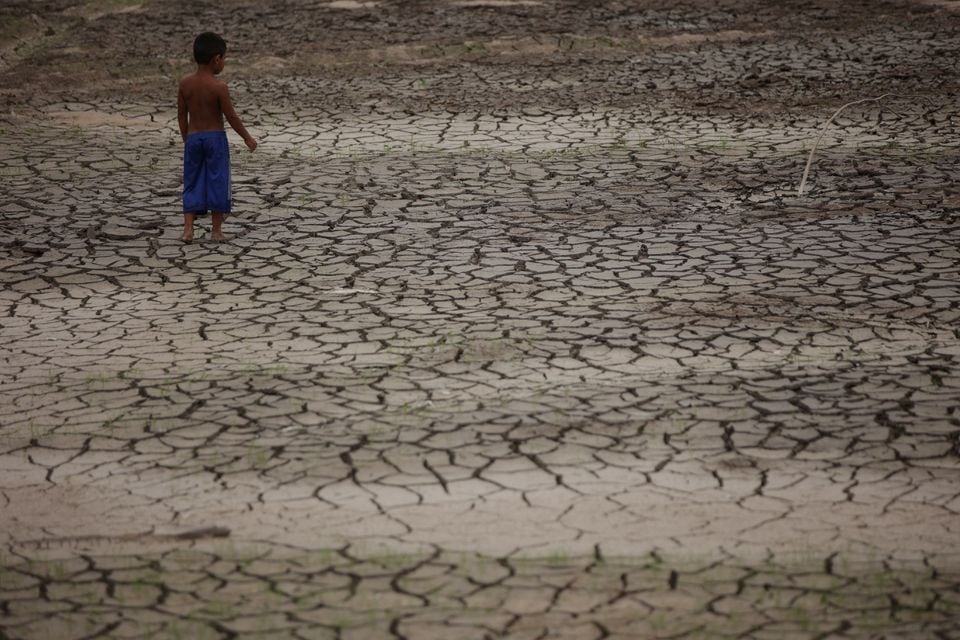
A boy walks along the dry side of the Igarape stream, as water levels at a major river port in Brazil's Amazon rainforest hit their lowest in at least 121 years in Manaus, Brazil. Photo: Reuters
The study, conducted from June to November 2023, predicts that droughts in nine Amazon rainforest countries, including Brazil, Colombia, Venezuela, and Peru, will worsen in 2024 after the rainy season begins to subside in May.
Protecting the Amazon rainforest, the world's largest rainforest, is considered a crucial task in mitigating climate change, as the forest plays a vital role in absorbing the Earth's enormous amount of greenhouse gases.
Regina Rodrigues, co-author of the study and researcher at the Federal University of Santa Catarina in Brazil, said: "We really should be worried about the health of the Amazon rainforest."
However, researchers say the drought has reduced river levels in many parts of the Amazon rainforest to record lows. This could exacerbate wildfires, which, combined with climate change and deforestation, could push the Amazon to the brink of irreversible damage. Biodiversity in the forest will dwindle, and the Amazon will no longer be a thriving rainforest.
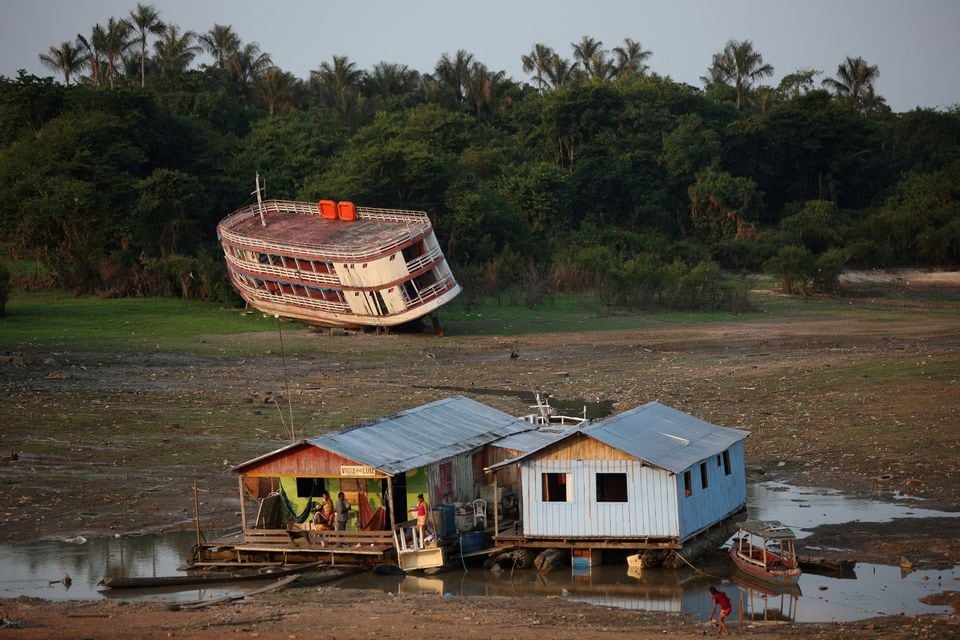
Houseboats and a boat are stranded on the Rio Negro river in Cacau Pirera, Iranduba. Photo: Reuters
In addition, research shows that the El Niño phenomenon – the periodic warming in the Eastern Pacific – also contributes to the reduced rainfall. While the region has faced at least three other severe droughts in the past 20 years, the scale of this drought is unprecedented and affects the entire Amazon River basin.
In Brazil, water levels on a major tributary of the Amazon River have dropped to their lowest levels since 1902. Smaller streams off this tributary have almost disappeared.
"In just a few months, waterways have been depleted, forcing people to make arduous journeys, pulling boats across dry stretches of river to access food, medicine, and other essential goods," said study co-author Simphiwe Stewart of the Red Cross Climate Centre based in the Netherlands.
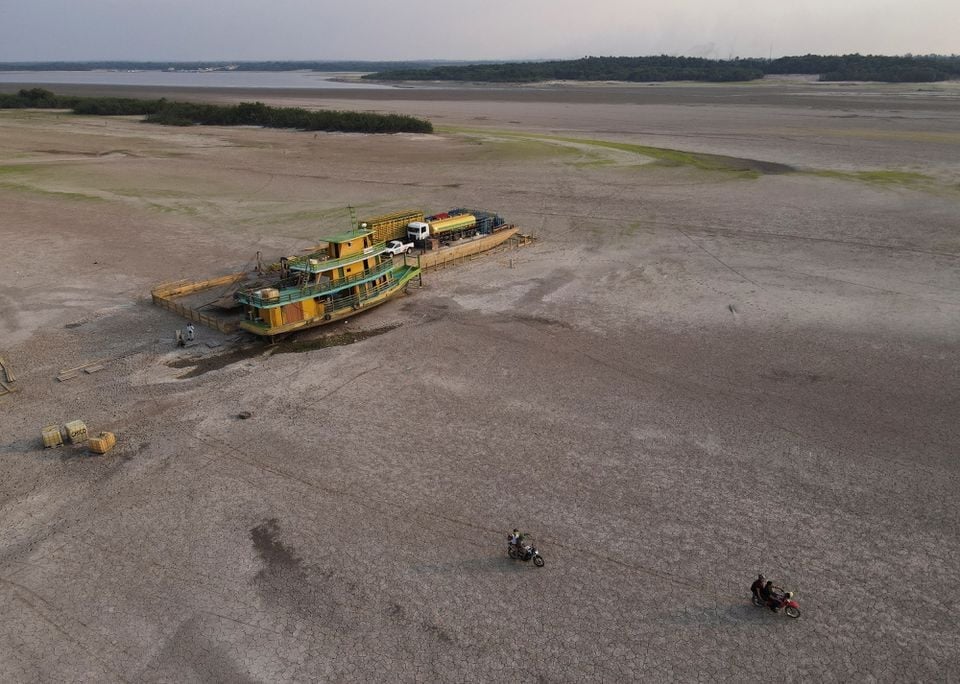
A tugboat and a barge carrying three trucks, 2,000 empty gas cylinders, and an excavator are stranded on the sandbanks of the drying Rio Negro river on October 10, 2023. This is a severely drought-stricken area in Cacau Pirera, Brazil. Photo: Reuters
Researchers in Brazil say that last year, low water levels and high temperatures led to the deaths of at least 178 endangered Amazonian pink and gray dolphins. Thousands more also died due to low oxygen levels in the Amazon's tributaries.
Ngoc Anh (according to Reuters)
Source

![[Photo] General Secretary and President To Lam presides over the meeting to approve the draft report on the results of the second inspection by the Politburo of the Standing Committee of the Hanoi City Party Committee.](https://vphoto.vietnam.vn/thumb/1200x675/vietnam/resource/IMAGE/2026/05/26/1779789811432_a2-bnd-4430-9620-jpg.webp)






























































































Comment (0)